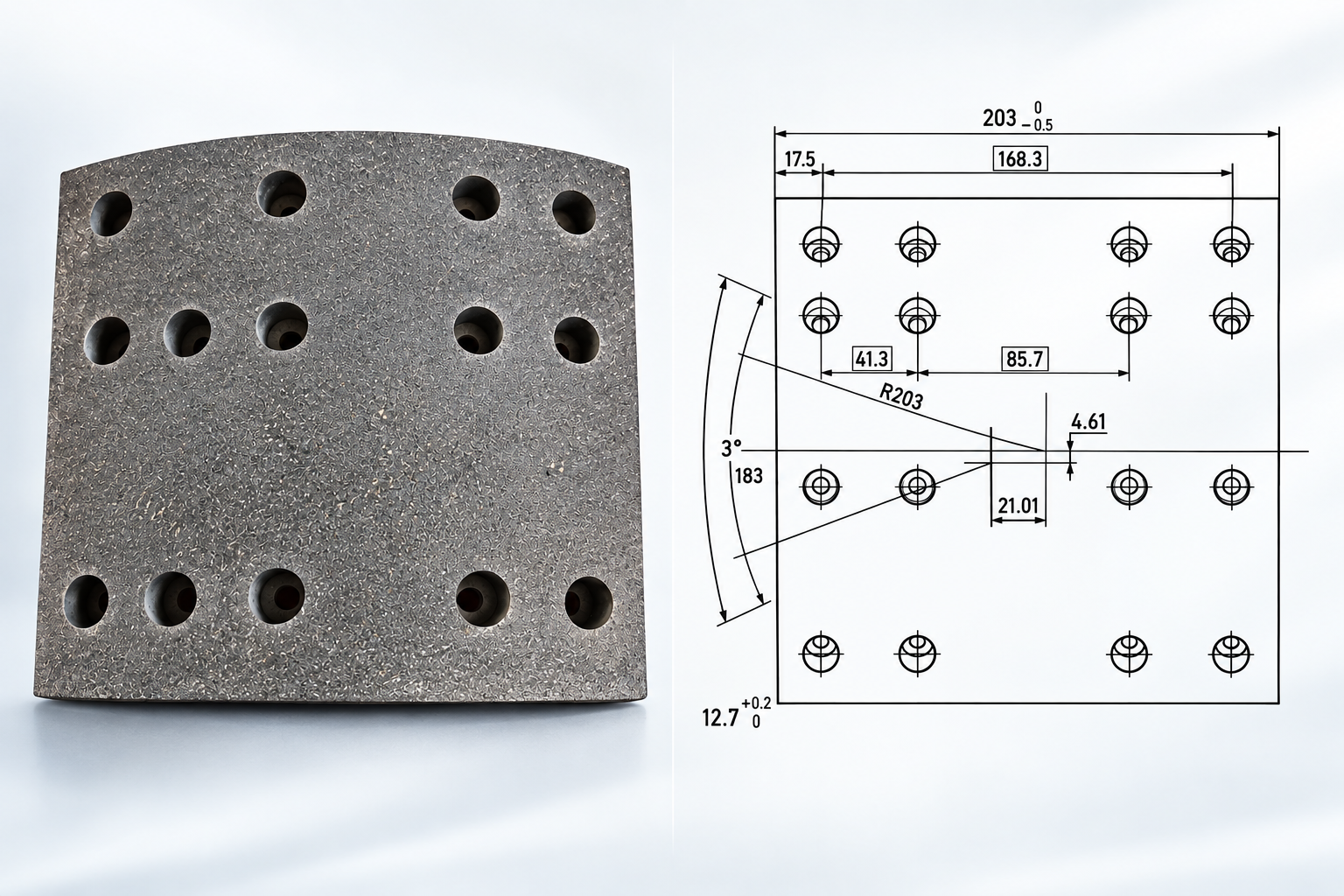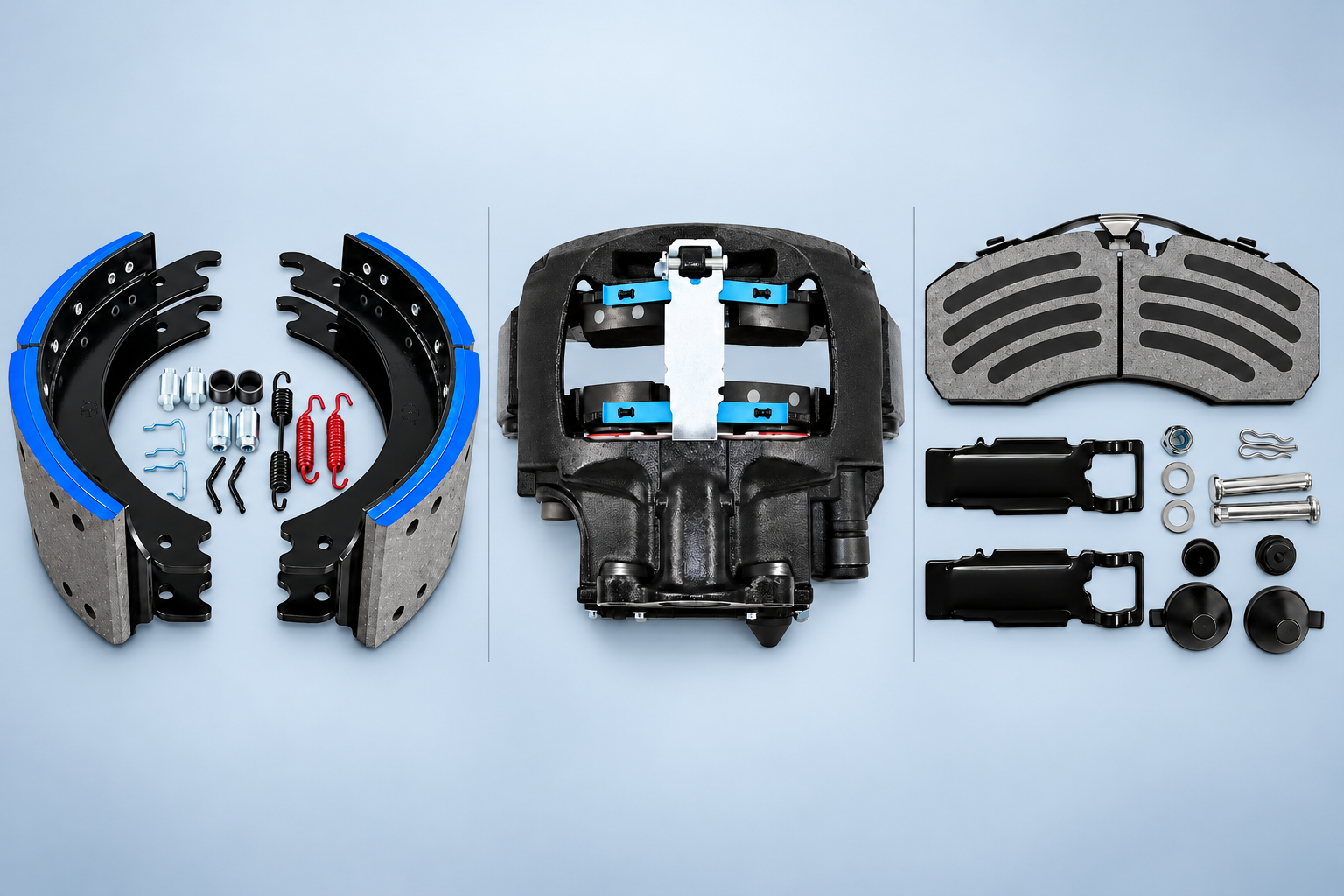

Here’s our brake pad production at a glance, from raw material checks to packing. Pictures and short steps only. If you want to know why each stage matters for friction stability, noise and pad life on commercial vehicles, read our step-by-step guide to commercial vehicle brake pad manufacturing.
Raw Materials
1. Inspect and accept raw materials used for friction material production, including critical brake pad raw materials such as fibers, fillers, and resins that determine friction stability and wear resistance.

2.Mix dozens of raw materials to produce the friction material compound.

Backing Plate
1. Inspect and accept the backing plates used for bonding the friction material.

2. Clean the backing plates and apply adhesive coating.

Brake Pad Production
1. Mold the friction material into brake pad shape.
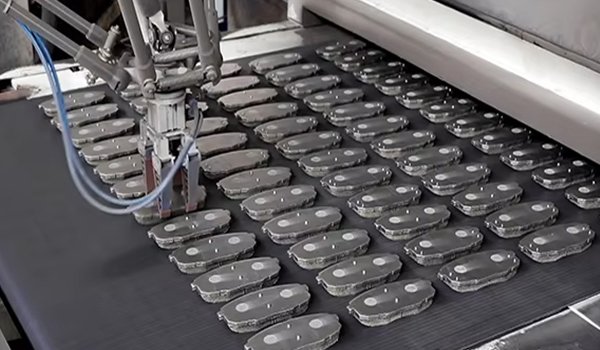
2. Bond the friction material to the backing plate using heat and pressure.

3. Create slots and chamfers.

4. Apply powder coating to the brake pads and heat it until it melts.

5. Polish and stamp the brake pads, then inspect for defects.

6. Burn (scorch) the friction surface of the brake pads.

7. Install the wear sensor onto the brake pad.

8. Package the brake pads as a set.

9. Conduct random sampling inspection for each batch.

10. Ship only products that have passed inspection.

Related reading
- How Commercial Vehicle Brake Pads Are Manufactured Step by Step
- Brake Pad Production Line: From Raw Material to Final Inspection
- Brake Pad Manufacturer for OEM, Fleet, and Distributor Buyers: How to Evaluate a Production Line
Reviewed by: Robert, Chief Executive Officer, Tuoba Auto Parts
Need a quote or a part-number check? Send your OE, FMSI or WVA references, quantities and destination market to our team through the contact page, or email [email protected].