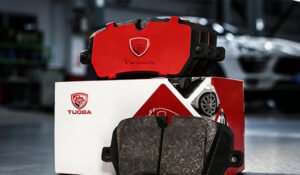

The braking system is the “lifeline” of any vehicle. It is a core safety component that protects drivers, passengers, and all road users. Its performance directly determines braking response, stopping distance, and vehicle stability during emergency situations.
When brake components wear out, age, or need replacement due to modifications or heavy-duty use, many buyers face the same question:
Are aftermarket brake pads as good as OEM brake pads? Which one should you choose?
This complete guide breaks down the core differences between OEM and aftermarket brake pads, analyzing materials, performance, cost, and suitability for different buyers—including individual car owners, distributors, wholesalers, Fleet Brake operators, and E-Commerce Platform sellers. It will help you avoid common purchasing mistakes and select the right solution.
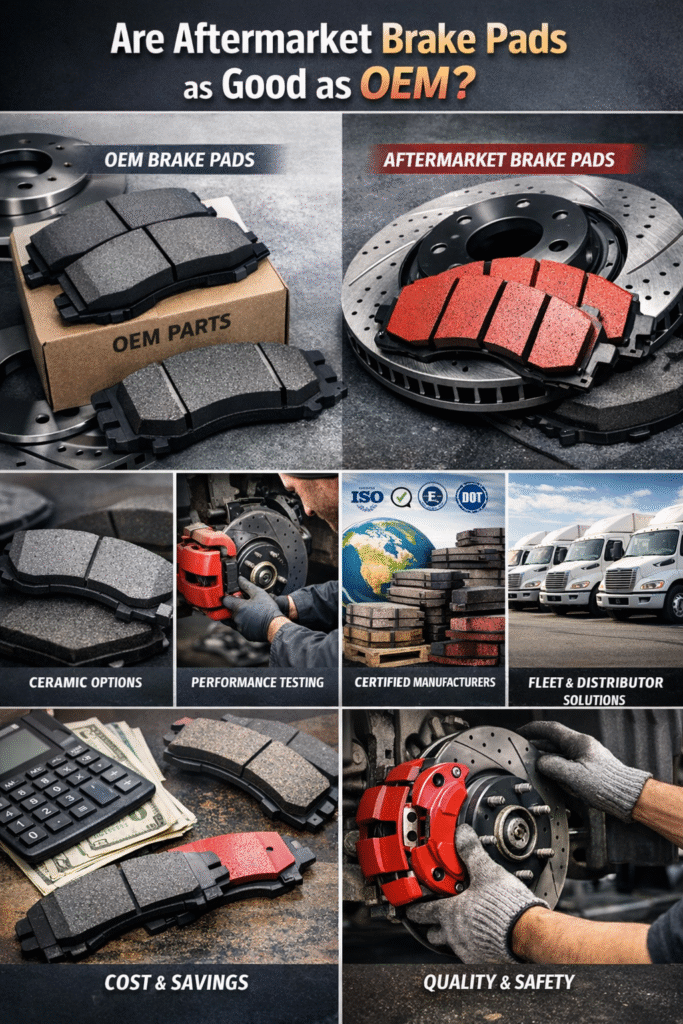
What Are OEM Brake Parts?
OEM (Original Equipment Manufacturer) brake parts are produced by authorized suppliers according to the exact specifications, standards, and manufacturing processes defined by the vehicle manufacturer. Their design, size, material, and performance are identical to the original factory-installed components.
In simple terms:
- The brake pads, brake discs, and calipers installed when your vehicle leaves the factory are OEM parts.
- When you replace parts at a dealership, you are typically purchasing OEM brake pads.
Core Advantages of OEM Brake Pads
- Perfect Fit, No Adjustment Required
OEM parts strictly follow factory specifications, ensuring precise installation without modification or adjustments. - Stable Quality and Strict Quality Control
OEM suppliers must pass rigorous qualification audits. Production follows the automaker’s quality standards, ensuring consistency and reliability. - Full Compatibility with Vehicle Systems
OEM brake pads are fully compatible with ABS and electronic braking systems, minimizing safety risks such as uneven braking or system errors. - Warranty Protection
If your vehicle is still under warranty, using OEM parts helps maintain manufacturer coverage and support.
Limitations of OEM Brake Pads
1. Higher Cost
OEM parts often cost 30%–80% more due to brand premiums, licensing fees, and dealership operating costs.
2. Limited Material Options
OEM brake pads usually use standard formulations suitable for normal city driving but may not meet specialized demands such as heavy loads or performance upgrades.
3. Limited Performance Customization
OEM products are fixed in specification and cannot be customized for enhanced friction, heat resistance, or performance needs.
It is a common belief that “original is always best.” However, this is not entirely accurate. In many cases, high-quality aftermarket brake pads can match or even outperform OEM products.
Are Aftermarket Brake Pads as Good as OEM?
The key difference is not the label (“OEM” vs “aftermarket”), but:
- The strength of the brake pad manufacturer
- Material formulation
- Quality control standards
- Certification compliance
While low-quality products exist in the market, reputable brake pad manufacturers produce aftermarket brake pads that meet or exceed OEM standards—often at a lower cost and with greater flexibility.
Four Key Comparisons: Aftermarket vs OEM Brake Pads
1.Material Quality: More Flexible Options
OEM brake pads typically use standard semi-metallic or low-metal formulations designed for general use.
In contrast, professional brake pad manufacturers offer multiple material options:
- Ceramic brake pads – Low noise, low dust, high comfort, ideal for city driving
- Semi-metallic brake pads – Strong friction, excellent for highway and moderate performance use
- Low-metal formulations – Balanced performance and durability
- High-performance metallic pads – Designed for heavy-duty vehicles, modified cars, or high-frequency braking applications
This flexibility allows aftermarket brake pads to serve diverse markets, including Fleet Brake operations and commercial vehicles.
2.Performance: Aftermarket Can Match or Exceed OEM
Key performance factors include braking power, heat resistance, fade resistance, and stability.
Braking Force:
OEM pads meet factory standards. High-quality aftermarket brake pads can be engineered with optimized friction coefficients, sometimes improving braking performance.
Heat Resistance:
During long downhill driving or heavy braking, temperature increases significantly. Premium aftermarket brake pads may withstand temperatures above 600°C, helping prevent brake fade.
Fade Resistance:
Well-formulated aftermarket pads often perform better under repeated high-temperature braking conditions.
Stability:
Reputable manufacturers conduct compatibility testing to ensure stable performance across different vehicle models.
For daily commuting, performance differences may be minimal.
For heavy-duty, fleet, or performance use, aftermarket solutions often provide advantages.
3.Cost Efficiency: Strong Advantage for Buyers
Aftermarket brake pads typically cost 30%–80% less than OEM equivalents.
For example:
OEM brake pads: Higher price, shorter lifespan
Premium aftermarket brake pads: Lower price, often longer lifespan depending on material
For individual buyers, this reduces maintenance expenses.
For distributors, wholesalers, Fleet Brake operators, and E-Commerce Platform sellers, lower procurement costs increase profit margins and competitiveness.
4.Customization and Market Flexibility
- OEM parts are fixed in specification.
- Aftermarket brake pads allow:
- Custom friction formulations
- Vehicle-specific design adjustments
- Performance upgrades
- Solutions for discontinued or rare vehicle models
This is particularly valuable for international markets and diverse vehicle fleets.
A professional brake pad manufacturer can develop tailored solutions based on regional standards and customer requirements.
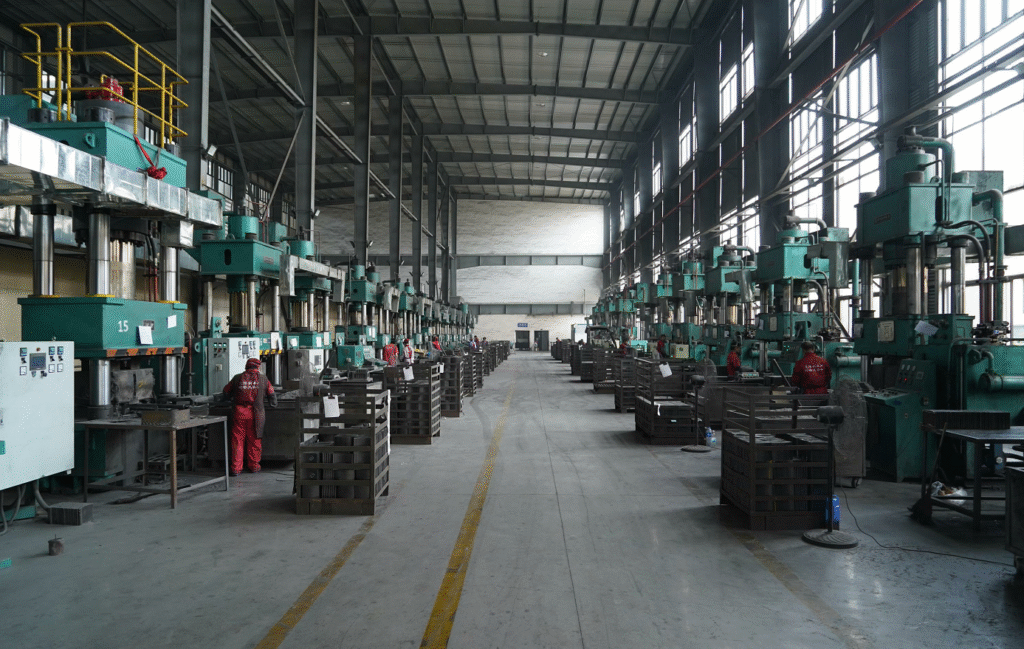
How to Choose a Reliable Brake Pad Manufacturer?
When selecting aftermarket brake pads, the most important factor is choosing a qualified brake pad manufacturer.
- Manufacturing Capability
Look for advanced production equipment, automated systems, and consistent quality control processes. - Certifications
Reliable products should meet international standards such as:
ECE certification (Europe)
DOT standards (USA)
ISO quality management systems
Regional compliance requirements - R&D Strength
Strong research and development ensures continuous product improvement, new material innovation, and customized solutions. - International Experience
Manufacturers with global export experience understand different market requirements and provide stable supply chains—essential for distributors and Fleet Brake customers.
Purchasing Guide for Distributors, Wholesalers, and Fleet Operators
- If you are a Brake Pads Distributor, Fleet Brake operator, or sell through an E-Commerce Platform, consider the following steps:
- Verify certifications before bulk purchase
- Request product samples for real-world testing
- Review friction performance data
- Confirm vehicle compatibility lists
- Evaluate long-term production capacity and supply stability
Building long-term cooperation with a professional brake pad manufacturer ensures stable quality, better pricing, and reliable inventory supply.
Final Conclusion: Which Should You Choose?
Are aftermarket brake pads as good as OEM?
Final Answer:
High-quality aftermarket brake pads can be just as good as OEM—and sometimes better in performance, flexibility, and cost efficiency.
However, low-quality products in the market can be unsafe. Therefore, the key is not the label, but the supplier.
- Choose based on:
- Your driving conditions
- Your budget
- Product certification
- Manufacturer credibility

For individual car owners seeking value, premium aftermarket brake pads are an excellent choice.
For distributors, wholesalers, Fleet Brake businesses, and E-Commerce Platform sellers, working with a reliable brake pad manufacturer offers stronger profitability and supply stability.
Ultimately, braking safety is the priority. Whether OEM or aftermarket, as long as the product meets strict quality standards and matches your application needs, it is a smart choice.