Have you ever heard a sharp squeal, grinding sound, or even a strange clicking noise when pressing the brake pedal? If so, you’re not alone—but it’s not something you should ignore.
Brake noise is a common issue for many drivers, especially as vehicles age or components begin to wear. While not every sound indicates a serious safety risk, understanding the “signals” from your braking system is extremely important.
This article explains the most common causes of brake noise, helps you identify which sounds may be normal, and outlines when you should consider taking your vehicle to a service center for inspection.
The Most Common Brake Noises
Squealing or Screeching
This is the most frequently heard brake sound. Common causes include:
Worn brake pads
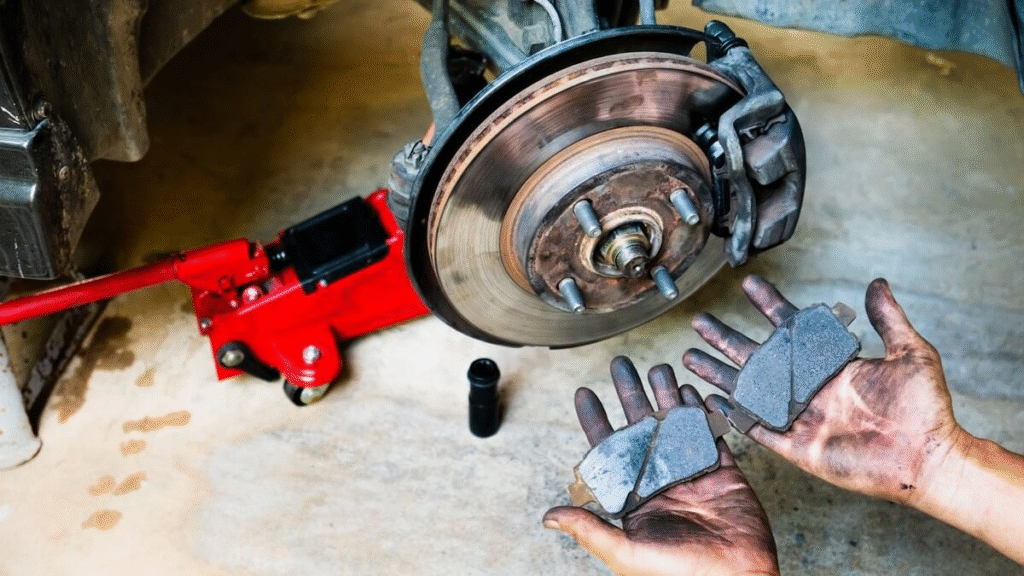
Most brake pads are equipped with a metal wear indicator. When the pad thickness drops below a certain level (usually around 2 mm), the indicator contacts the brake rotor and produces a high-pitched sound. This is your vehicle’s way of saying, “It’s time to replace the brake pads.
Dust or moisture
Light squealing may also be caused by dust, rust, or moisture on the brake rotor—especially after rain or a car wash. This type of noise typically disappears after a few braking cycles.
If the noise lasts more than a day or two, it’s best to have it checked. Severely worn brake pads not only reduce braking performance but may also damage the rotor.
Grinding Noise
Grinding is usually more serious and requires immediate inspection. Common causes include:
- Brake pads completely worn out, causing the metal backing plate to contact the rotor directly
- Rusted rotors or low-quality brake pads
- Foreign objects lodged in the brake caliper area, such as small stones
Important reminder: Ignoring grinding noises can lead to costly repairs and may compromise driving safety.
Knocking or Vibration
If you feel knocking, pulsation, or vibration when braking, it may indicate:
- Warped brake rotors, often caused by overheating or uneven wear
- Unevenly worn brake pads or contaminated braking surfaces
- Deformed brake drums (if the rear wheels use drum brakes)
These issues can affect braking stability, especially at higher speeds.
Can Brake Noise Sometimes Be Normal?
In some cases, yes.
Mild squealing after a cold start or during humid weather is common and usually harmless. Additionally, some high-performance brake pads—especially those made with metallic or ceramic materials—may naturally produce more noise.
However, if the noise persists, becomes louder, or is accompanied by changes in braking performance, you should schedule an inspection.
The Impact of Age, Environment, and Maintenance
Older vehicles—particularly those over five years old—are more likely to develop brake-related noises due to natural component wear. Environmental factors such as humid conditions, dusty roads, or frequent uphill and downhill driving can also increase stress on the braking system.
Poor maintenance, neglecting regular service, or using low-quality brake components (such as poorly fitted pads or rotors with weak heat dissipation) can also lead to noise and performance issues.
Therefore, regular inspections and choosing parts from reliable manufacturers are essential.
What You Can Do: How to Reduce Brake Noise and Maintain Performance
Here are some practical tips to help prevent brake noise and keep your braking system in good condition:
✅ Inspect brake pads regularly, especially if sharp or unusual noises occur. Replace them promptly if the thickness is below 2 mm.
✅ Replace brake fluid every 2–3 years and check its moisture content.
✅ Check brake rotors for scratches, warping, or uneven surfaces.
✅ Use high-quality components from reputable suppliers that meet industry standards.
✅ Clean the braking system periodically to remove dust and rust buildup.
✅ If your vehicle is over five years old or develops unusual brake noises, arrange a comprehensive brake system inspection.
Proactive maintenance not only reduces repair costs but also ensures safer driving for you and others on the road.