
Brake Pad Materials and Technology at Tuoba
Learn how brake pads are made, including brake pad materials, manufacturing processes, and friction material formulation. Understand what defines brake pad performance in real applications—and how this helps you make more informed sourcing decisions.
Why Brake Pad Technology Matters
Brake pad technology directly affects how braking systems perform under load—especially for commercial vehicle brake pads and high-demand applications. In real use, inconsistent performance, poor heat resistance, or excessive noise can quickly lead to safety risks, more frequent maintenance, and higher operating costs.
Braking performance is not determined by a single factor. It depends on how brake pad material selection, friction material formulation, bonding integrity, and brake pad manufacturing process work together. These combinations are often reflected in different brake pad types, such as semi metallic brake pads, ceramic brake pads, and low metallic brake pads, each designed to balance performance, noise, and durability in specific applications.
When any of these elements is not properly controlled, the result is often uneven wear, unstable braking, or noise and vibration issues. These problems are typically identified through brake performance testing and NVH testing, as well as long-term use under repeated braking and changing temperature conditions.
Understanding how brake pad materials, brake pad formulation, and brake pad manufacturing process work together makes it easier to select brake pads that deliver consistent performance and fit your application requirements.
Stable Friction Output in Brake Pad Performance
Inconsistent friction is a common cause of uneven braking and unpredictable performance. A stable formulation helps maintain consistent braking behavior across different loads, speeds, and temperatures—reducing performance variation in operation.
Low Noise and Vibration (NVH) Control
Brake noise and vibration are often early signs of material or design imbalance. Effective NVH control helps reduce squeal and harsh feedback, improving driver comfort and avoiding unnecessary inspections or replacements.
Long-Term Value and Wear Performance
Uncontrolled wear can shorten service life and increase maintenance frequency. Balanced pad and rotor wear helps extend replacement intervals, reduce downtime, and lower total operating cost over time.
What Are Brake Pads Made of
Brake pads consist of a steel backing plate and an engineered friction material, typically formulated from metal fibers, ceramic compounds, and organic materials bonded with resins.
This material composition directly determines friction characteriticss, thermal stability, wear behavior, noise performance, and braking consistency. Through controlled friction against the brake rotor, brake pads convert kinetic energy into heat, delivering stable and predictable braking performance under a wide range of operating conditions.The primary friction material categories include Semi-Metallic, Low-Metallic, Ceramic, Organic (NAO), and Special Performance formulations, each engineered to meet specific vehicle requirements, driving environments, and performance expectations.
Choosing the right brake pad material is not about selecting the highest-performing option in every category—it is about matching the material to the vehicle, operating conditions, and performance requirements.
- Commercial Vehicle Fleets: Semi-Metallic Brake Pads
- Heavy-Duty Trucks & Buses: Semi-Metallic Brake Pads
- Trailers & Construction Equipment: Semi-Metallic or Special Performance Brake Pads
- Mining & Severe-Duty Applications: Special Performance Brake Pads
- Passenger Cars & SUVs: Low-Metallic Brake Pads
- Electric Vehicles (EVs): Ceramic Brake Pads
- Luxury Passenger Vehicles: Ceramic Brake Pads
- Daily Urban Commuting: Organic (NAO) Brake Pads
- Budget-Conscious Drivers: Organic (NAO) Brake Pads
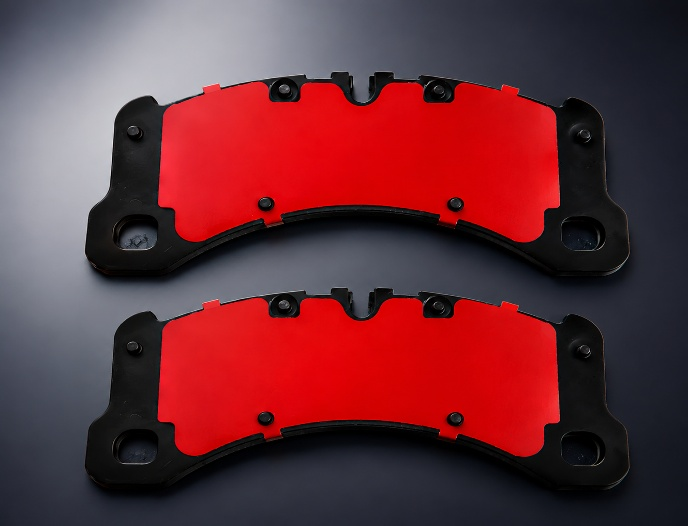
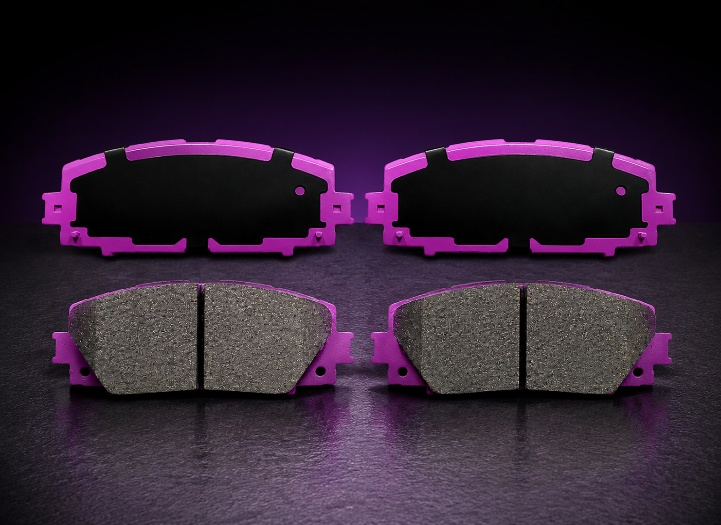
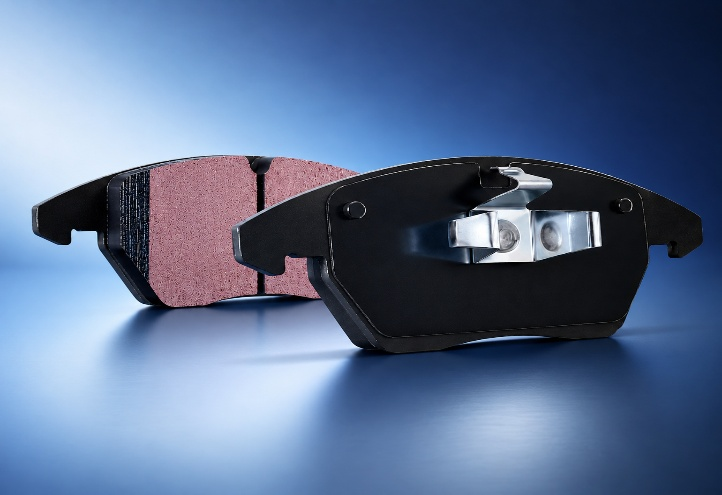
To make these differences clearer, the comparison below highlights how each brake pad material performs across typical applications.
| Comparison Item | Semi-Metallic | Low-Metallic | Ceramic | Organic (NAO) | Special Performance |
|---|---|---|---|---|---|
| Brake Pad Product Images | 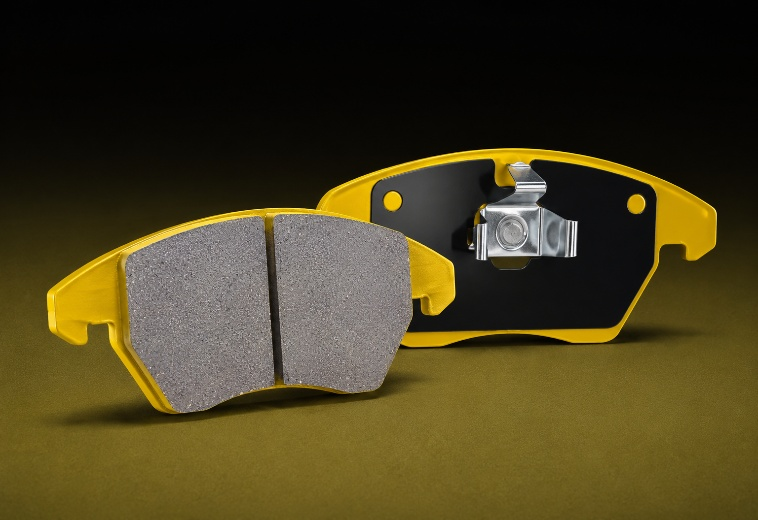 |
 |
 |
 |
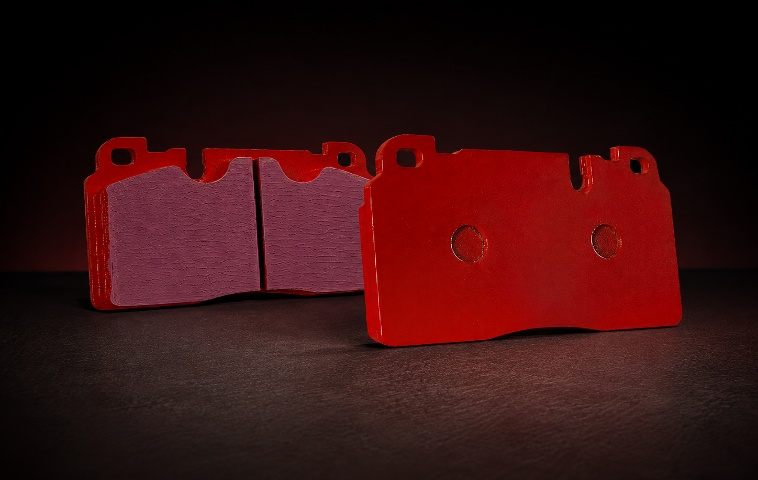 |
| Main Composition | 30%-65% metal fibers, graphite, resin | 10%-30% metal fibers, graphite, resin | Ceramic fibers, ceramic fillers | Rubber, glass fibers, resin, Kevlar | Customized friction materials, carbon fiber, aramid fiber, specialty fillers |
| Braking Performance | ★★★★★ | ★★★★★ | ★★★★★ | ★★★★★ | ★★★★★ |
| Heat Resistance | ★★★★★ | ★★★★★ | ★★★★★ | ★★★★★ | ★★★★★ |
| Heat Dissipation | ★★★★★ | ★★★★★ | ★★★★★ | ★★★★★ | ★★★★★ |
| Noise Level | ★★★★★ | ★★★★★ | ★★★★★ | ★★★★★ | ★★★★★ |
| Brake Dust | ★★★★★ | ★★★★★ | ★★★★★ | ★★★★★ | ★★★★★ |
| Service Life | ★★★★★ | ★★★★★ | ★★★★★ | ★★★★★ | ★★★★★ |
| Rotor Wear | Higher | Medium | Lower | Lowest | Medium |
| Cost | Medium | Medium-High | High | Low | Highest |
| Cold Braking Performance | ★★★★★ | ★★★★★ | ★★★★★ | ★★★★★ | ★★★★★ |
| High-Speed Stability | ★★★★★ | ★★★★★ | ★★★★★ | ★★★★★ | ★★★★★ |
| Heavy Load Capability | ★★★★★ | ★★★★★ | ★★★★★ | ★★★★★ | ★★★★★ |
| Driver Comfort | ★★★★★ | ★★★★★ | ★★★★★ | ★★★★★ | ★★★★★ |
| Typical OEM Usage | Commercial Vehicles | Passenger Vehicles & SUVs | Premium Vehicles & EVs | Economy Vehicles | Performance & Specialty Applications |
Brake Pad Manufacturing Process
On a typical brake pad manufacturing process, the work begins with raw materials being accurately measured and mixed. Metal fibers, ceramic compounds, and resins are combined according to a defined formulation to keep the friction material consistent from one batch to the next. In brake pad manufacturing, this step sets the foundation for stable braking performance.
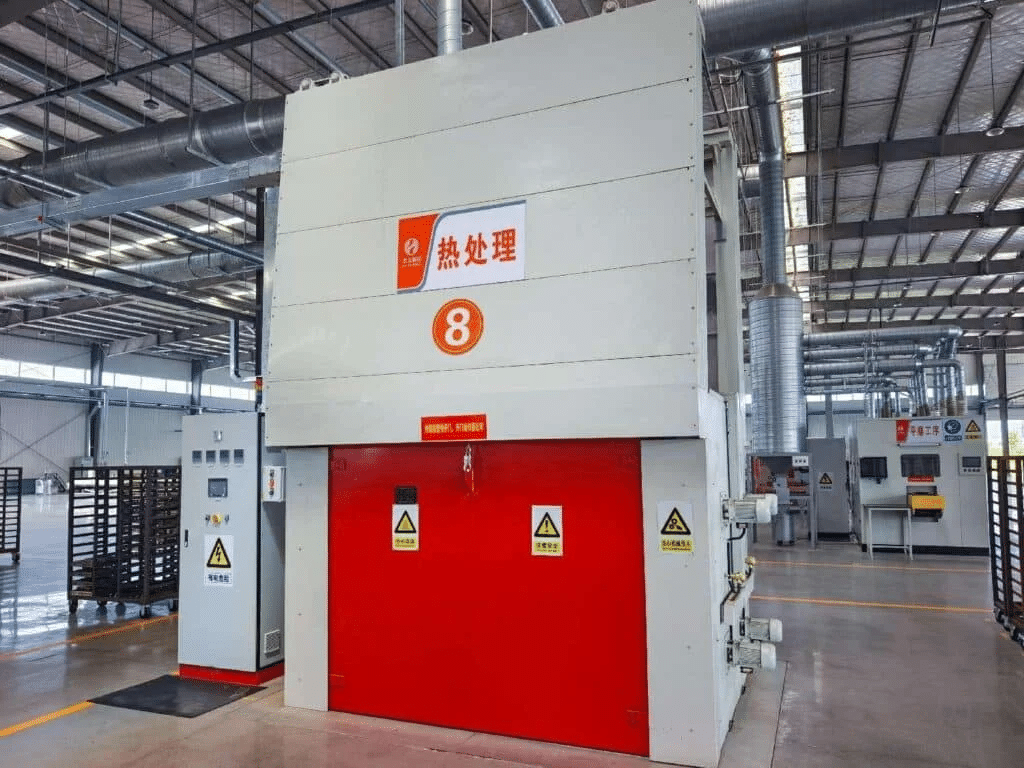
The mixture is then pressed onto a steel backing plate under controlled pressure to form the brake pad. From there, the pads go through high-temperature curing, where heat stabilizes the material structure and strengthens the bond between the friction layer and the backing plate. Once cured, each piece is ground and finished to meet thickness and surface requirements, ensuring proper fit and contact with the brake rotor.
Before final delivery, the finished pads undergo brake performance testing and NVH testing, where performance based brake testing is applied to assess friction stability, wear behavior, and noise levels under simulated operating conditions. This complete brake pad manufacturing process helps ensure consistent performance across different vehicles and working environments.
The video below, based on Brembo brake pad production, shows how brake pads are made in practice.
How Brake Pad Materials Affect Performance
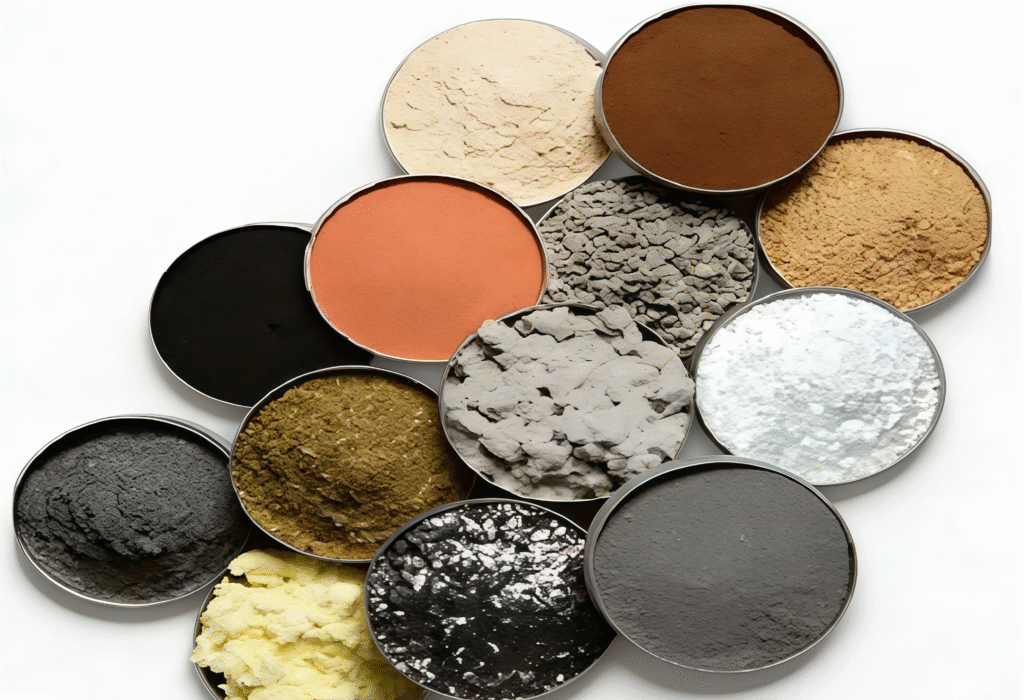
We source key friction ingredients such as resin, titanate, aramid fiber, graphite, mineral fibers, zirconium silicate, anti-squeal shims, and friction powder from selected suppliers with stable supply capabilities. Through controlled supplier management, we ensure consistency and repeatability from batch to batch.
- Formulation stability:Consistent raw materials mean your brake pads deliver predictable friction and reliable stopping power every time—reducing surprises and downtime.
- Heat Resistance: High-quality fibers, fillers, and binders keep performance stable even under extreme temperatures, protecting your brakes from fade and wear.
- Noise Control: Optimized material blends and shim systems minimize squeal and vibration, ensuring smoother, quieter braking for drivers and passengers.
In addition, we have developed 32 proprietary brake pad formulations based on engineered material systems, allowing precise adaptation to different vehicle types, load conditions, and thermal requirements. If you’re not sure which materials fit your application, our team can help you evaluate the right options.
Friction Material Formulation Performance Comparison
As a manufacturer primarily focused on commercial vehicle brake systems, Tuoba places greater emphasis on heavy-duty performance and reliability. At the same time, we also maintain a range of passenger vehicle formulations to support diversified market requirements and provide complementary solutions for different applications.
This table presents the performance profiles of our current friction material formulations under different application scenarios. Among them, ITF 1XX and ITF 8XX target commercial/heavy-duty duty cycles, focusing on load capacity, thermal stability, and durability under continuous high-intensity braking, while ITF 7XX is intended for racing and high-performance applications. These formulations represent our core development direction and are widely used in trucks, buses, and other heavy-duty platforms. ITF 2XX, ITF 5XX, and ITF 6XX are designed for passenger vehicle applications, with an emphasis on braking smoothness, noise control, and overall driving comfort. These formulations are mainly used to support specific customer requirements and complementary market demands.
| Formulas | ITF 1XX | ITF 2XX | ITF 6XX | ITF 5XX | ITF 8XX | ITF 7XX |
|---|---|---|---|---|---|---|
| Application | Duty Heavy Brake | High u | NAO For Passenger | NAO Cu&Sb Free | Commercial Vehicle | Racing Car |
| Material Type | Semi-Metallic | Low-Metallic | NAO | NAO | Low-Metallic | Low-Metallic |
| Braking Output | 8.5 | 9 | 8.5 | 8 | 8.5 | 9.5 |
| Heat Fade | 7.5 | 8.5 | 7.5 | 7.5 | 8 | 9 |
| Noise | 8 | 8.5 | 9 | 9 | 8 | 7.5 |
| Rotor Wear | 7.5 | 7.5 | 8.5 | 8.5 | 8 | 7.5 |
| Pad Wear | 8.5 | 8 | 8.5 | 8.5 | 7.5 | 7.5 |
| Clean | 8.5 | 8 | 9 | 9 | 8 | 8 |
Tuoba Brake Pad Testing and Performance Comparison with Leading Brands
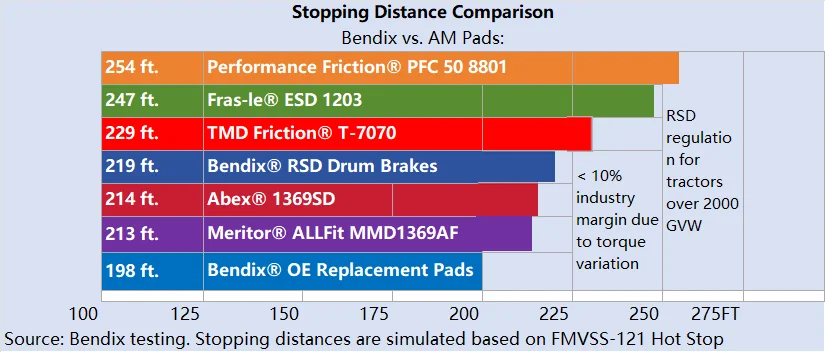
We benchmark under repeatable dynamometer conditions (e.g., against Bendix, Fras‑le, TMD Friction, and Meritor), and for heavy‑duty air‑brake applications we reference FMVSS No. 121 as system‑level boundary conditions when defining duty cycles. Key comparison outputs focus on dynamometer torque/effectiveness, fade behavior, and wear trends; any stopping‑distance values are derived under stated assumptions for engineering comparison only and do not constitute an FMVSS certification result.
Readable benchmark section
This chart provides a controlled, like-for-like comparison under dynamometer conditions. “Stopping distance” values are derived from dyno torque/effectiveness under consistent assumptions for reference only, not actual on-road or full-vehicle measurements. Shorter distances indicate faster braking response, while consistent results reflect better stability under load.
Tuoba Brake Pad Formulation Performance Advantages
Our brake pads deliver stable friction, reduced high-temperature fade, and balanced wear. Benchmark testing helps customers quickly evaluate braking performance, durability, and choose the right solution for fleet, commercial, or passenger applications.
- Safety value: Under identical test conditions, more stable brake torque/effectiveness supports shorter system‑level stopping distances and improved controllability; final results depend on the complete brake system and regulatory test conditions.
- Durability value: Under continuous braking duty cycles, lower fade and more controlled wear trends help extend service life; quantify wear using dedicated inertia‑dynamometer wear procedures (e.g., SAE J2707).
- Decision value: Clear benchmarking allows buyers to select the right material based on performance requirements, not just cost.
Brake Pad Testing: Methods & Standards References (ISO / SAE)
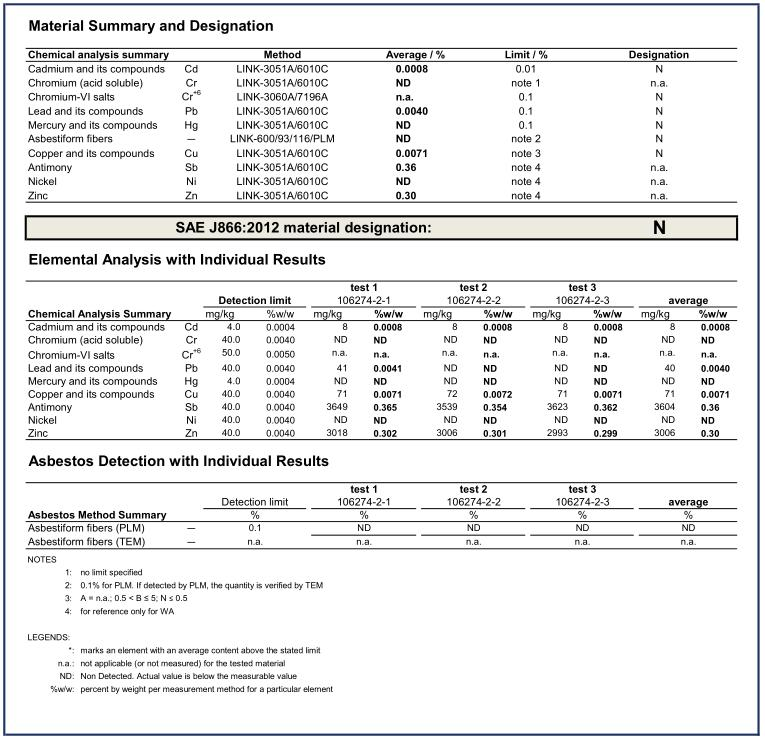
Our brake pad materials are characterized using ISO test methods (e.g., ISO 6310/6311/6312) and, where required by jurisdiction, are edge‑marked for identification and environmental marking per SAE J866. The ISO standards cited on this page specify laboratory test procedures and reporting methods (e.g., shear strength materials and compressive strain/deflection). SAE J866 is a friction‑coefficient identification and environmental marking system. Regulatory compliance (where applicable) is demonstrated through the applicable regulations and third‑party testing/registration documentation.
SAE J866 Material Classification and Test Report
SAE J866 Test Report
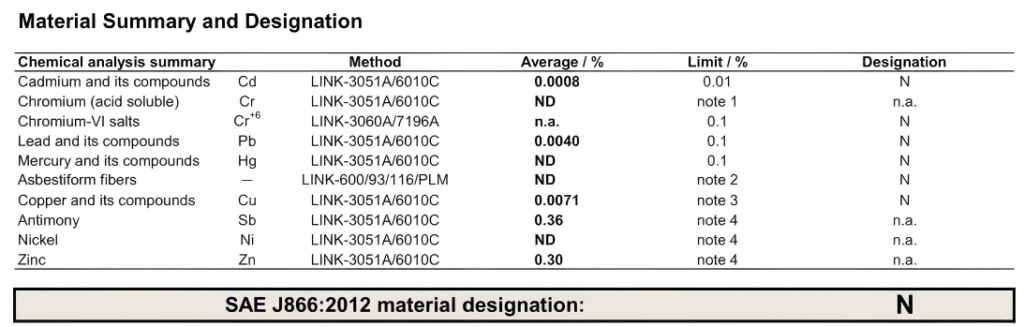
Key Material Indicators & QC (with referenced test methods)
- Bond shear strength (ISO 6312): ≥4.0 N/mm² (per specification)
- Internal shear strength (ISO 6311): ≥8.0 N/mm² (per specification)
- Compressibility C (ISO 6310): Reported in µm; method conditions specified.
- Cold compressive limit (ISO 6310): Reported in µm (or % with basis)
- Hot compressive limit (ISO 6310, e.g. C400): Reported in µm with temperature/load conditions
- Hardness (HRR, ASTM D785): Typical value: 90
- Density (ASTM D792 / ISO 1183): Typical value: 3.5 g/cm³
- Acetone extraction (ASTM D494): ≤0.3% (indicator of cure level)
Standardized Brake Pad Testing and NVH Analysis via Dyno & CAE
We validate brake-pad NVH, effectiveness, and durability through repeatable dynamometer testing and CAE simulations. Our workflow follows widely recognized SAE standards used across OEM and Tier 1 validation systems, ensuring consistency and comparability of results. It includes NVH squeal screening (SAE J2521), an industry benchmark for high-frequency noise evaluation, brake effectiveness testing (AK Master / SAE J2522), which simulates real-world braking scenarios across varying pressure, speed, and temperature conditions, and wear/life evaluation (SAE J2707) for controlled durability assessment. These results provide reliable engineering references for formulation development, performance comparison, and system-level optimization.If you’re looking for validated brake pad performance data for your project, feel free to contact our engineering team.
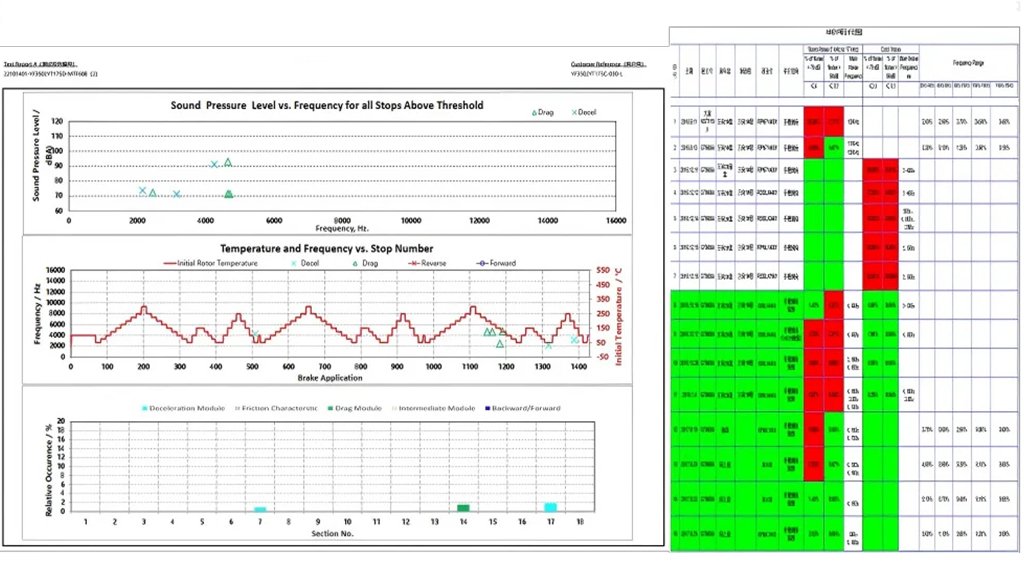
SAE J2521 Squeal/Noise Test Report
SAE J2521 dynamometer testing evaluates high-frequency squeal propensity (passenger/light-truck). It records acoustic and vibration signals across varying speed, pressure, and temperature, supporting frequency-based diagnostics and optimization of friction materials, shims, and hardware.
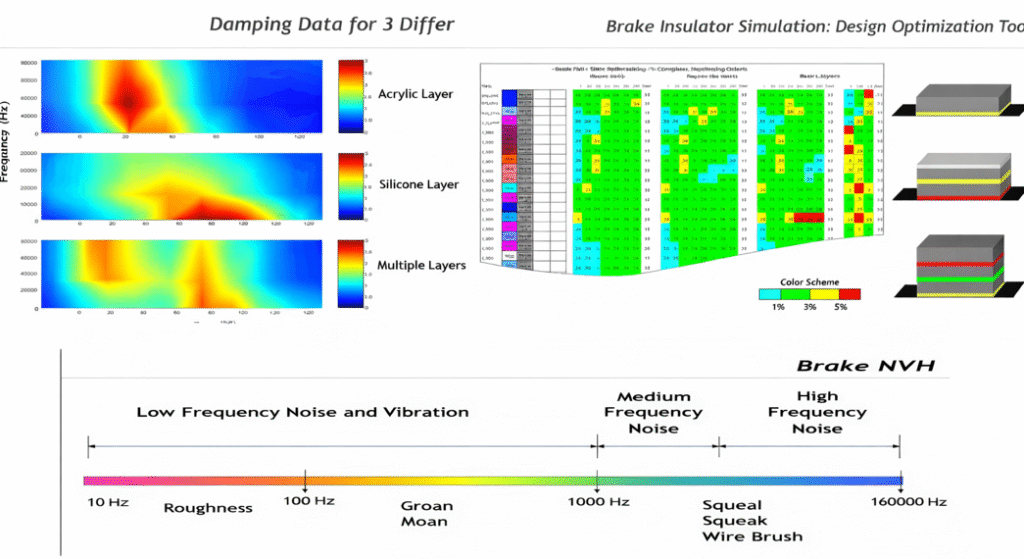
NVH Damping and Shim Simulation
CAE-based damping and multi-layer shim simulations help optimize brake pad NVH performance by analyzing vibration behavior, frequency response, and noise-sensitive regions. This enables faster noise reduction development, minimizes costly dyno and vehicle testing, and delivers quieter, more stable braking performance.
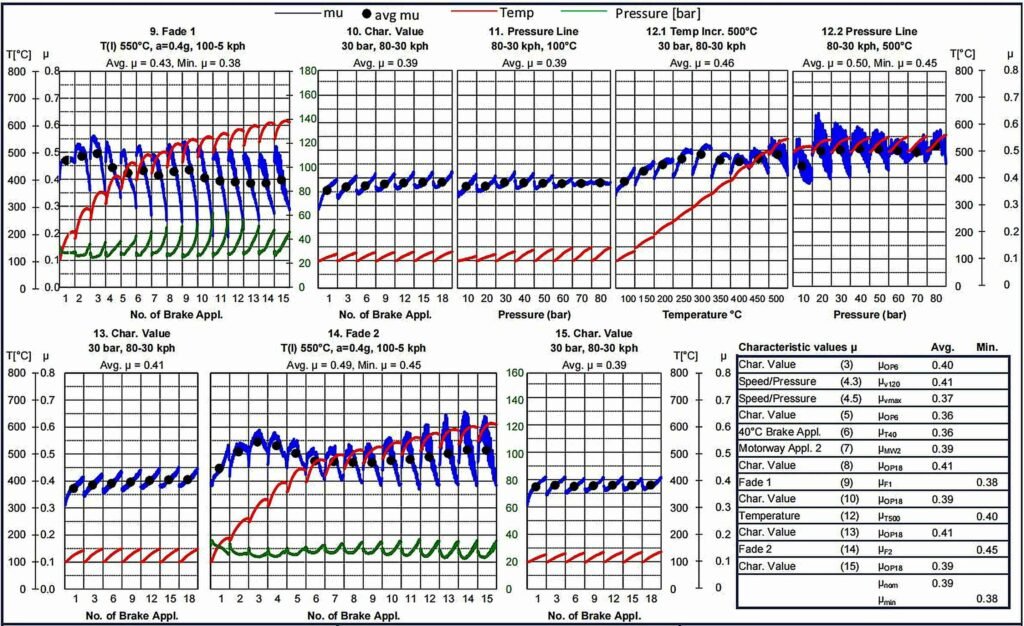
SAE J2522 Friction Performance Testing
SAE J2522 dynamometer testing validates friction stability, fade resistance, and recovery performance under varying temperature, pressure, and speed conditions. This helps optimize friction formulations and ensure consistent, reliable braking performance.
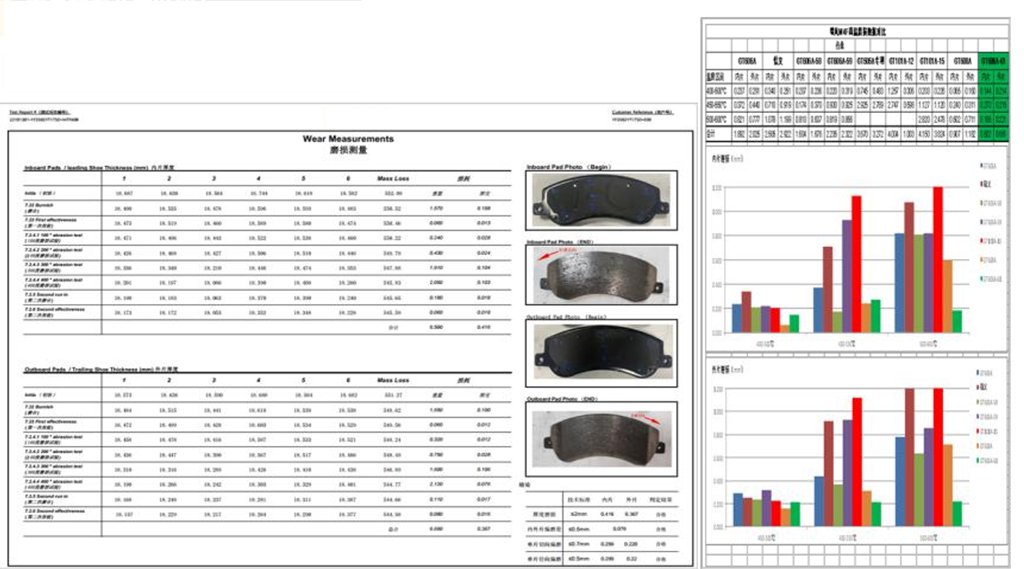
SAE J2707 Wear Test Report
We conduct standardized inertia dynamometer testing (e.g., SAE J2707) to assess wear performance and durability trends, supporting accurate benchmarking and ongoing formulation improvement.
Brake Pad Manufacturing and Bonding Technology
Brake pad performance isn’t just about the materials—it also comes down to how they’re handled in production. From bonding to pressing and curing, each step plays a role in how the pad performs in real use. The sections below walk through how we manage these processes to keep performance consistent and reliable.
Advanced Brake Lining Adhesive for Stable Friction Materials
Our controlled adhesive system, developed with imported materials and enhanced by mechanical retention design, ensures exceptional bonding strength under high load and temperature conditions while maintaining strong integrity between the friction material and backing plate—delivering stable, long-lasting performance throughout the entire service life.
This directly helps our partners:
- Reduce delamination and bonding failures, minimizing warranty claims
- Lower after-sales risks caused by pad separation or instability
- Improve product consistency across different operating conditions
- Enhance safety and service reliability for end users
- High-Strength Adhesion Design: Secure bonding through mechanical retention and advanced material
- Heat-Resistant Bonding: Stable under repeated high-temperature braking.
- Controlled Production Process: Consistent bonding quality in mass production.
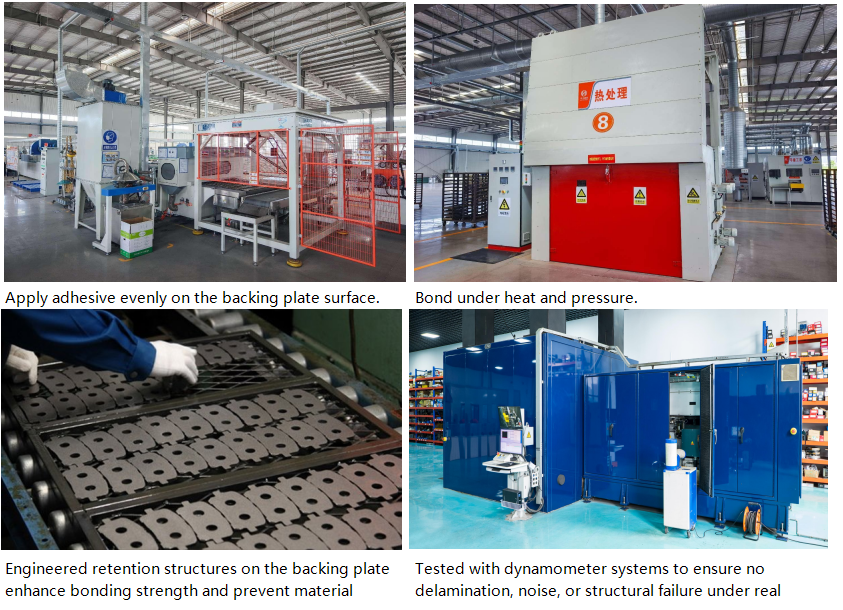
Bonding and forming process visualization
This process image highlights key bonding and forming stages in production, including adhesive application, high‑pressure pressing, mechanical retention integration, and thermal curing. Each step is precisely controlled to ensure proper material integration and consistent bonding quality during mass production.
Precision Brake Pad Production for Consistent Performance
Our brake pad production process integrates automated weighing, forming, testing, and inspection to control every critical stage. This ensures uniform quality, stable performance, and dependable supply for OEM and aftermarket customers.
Accurate MaterialWeighing
Automatic weighing systems help maintain formula consistency before molding.
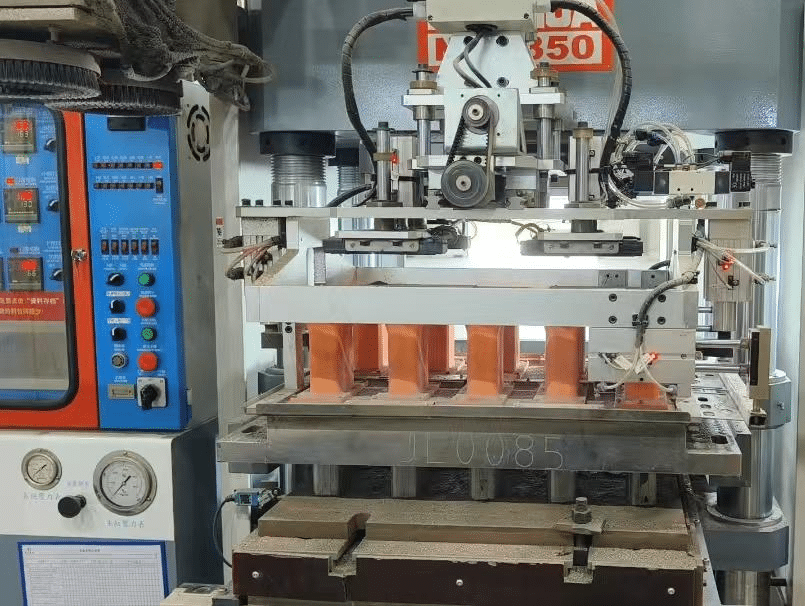
Pressing & Bonding
Fully automatic press equipment improves dimensional consistency and production efficiency.
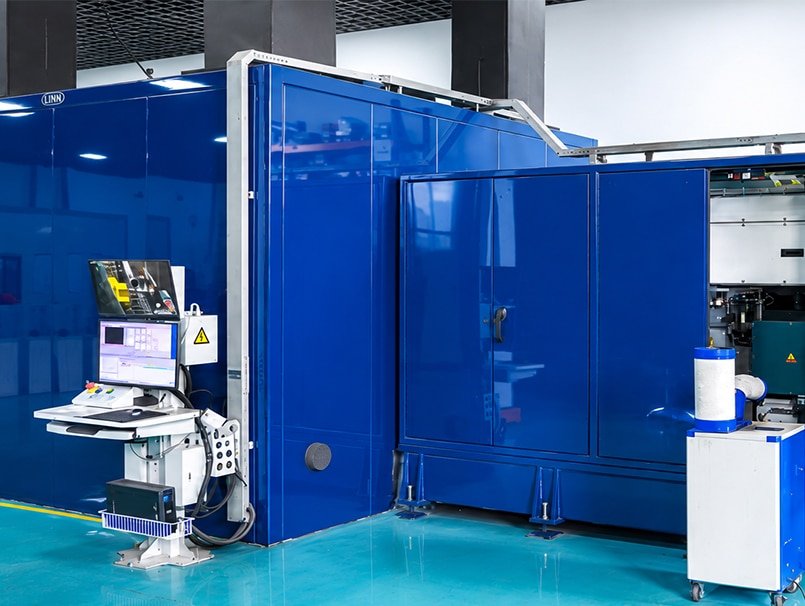
NVH & Shear Testing
Dedicated test equipment helps verify both acoustic behavior and bond strength.
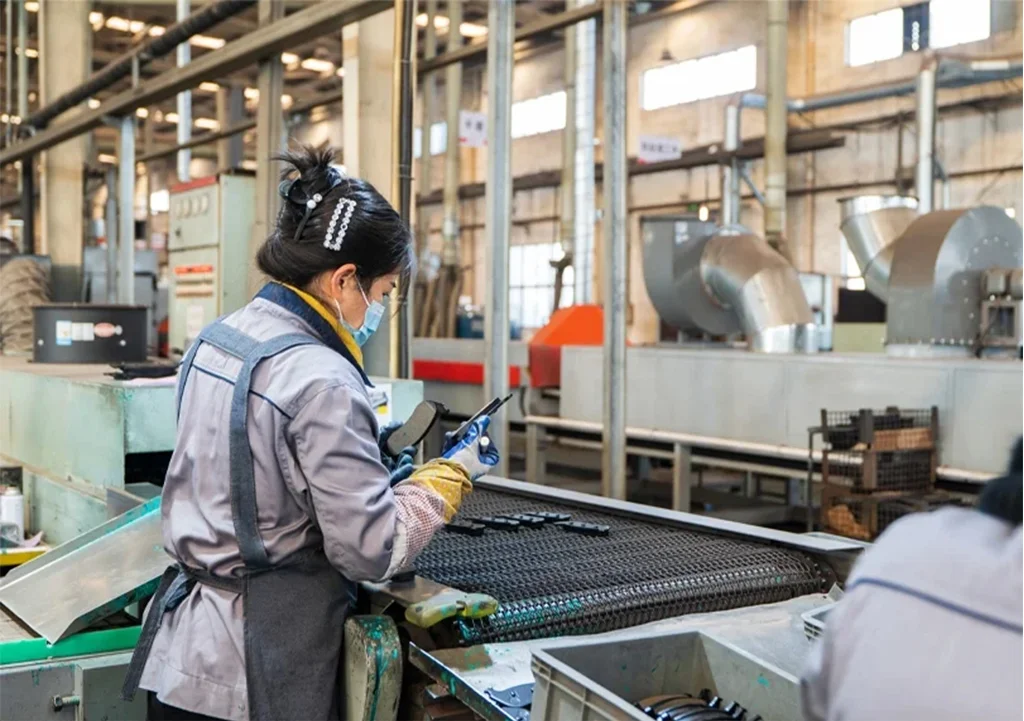
Batch Quality Inspection
Final checks support stable outgoing quality for OEM and aftermarket programs.
One-Stop OEM Brake Pad Solutions with Proven Capability
From OEM-matched hardware kits and platform-specific fitment to EV brake pad development and compliance support, we provide fully integrated solutions for OEM, private-label, and custom projects. Supported by our 10 brake pad production lines and advanced brake pad manufacturing equipment, we build our process around consistency, traceability, and scalability across every stage of production.
We cover brake pad design, brake pad production, and brake pad formulation development—forming a structured workflow from material engineering through to finished product validation. Beyond component supply, we develop brake system solutions, custom brake pad solutions, and custom friction formulations tailored to specific vehicle platforms and operating conditions.
Whether for passenger vehicles or commercial vehicle brake pads, including demanding fleet braking solutions, we provide dedicated technical support for brake pads to ensure accurate fitment, stable performance, and reliable behavior in real-world use. This allows our customers to reduce validation risk and bring products to market faster with confidence.
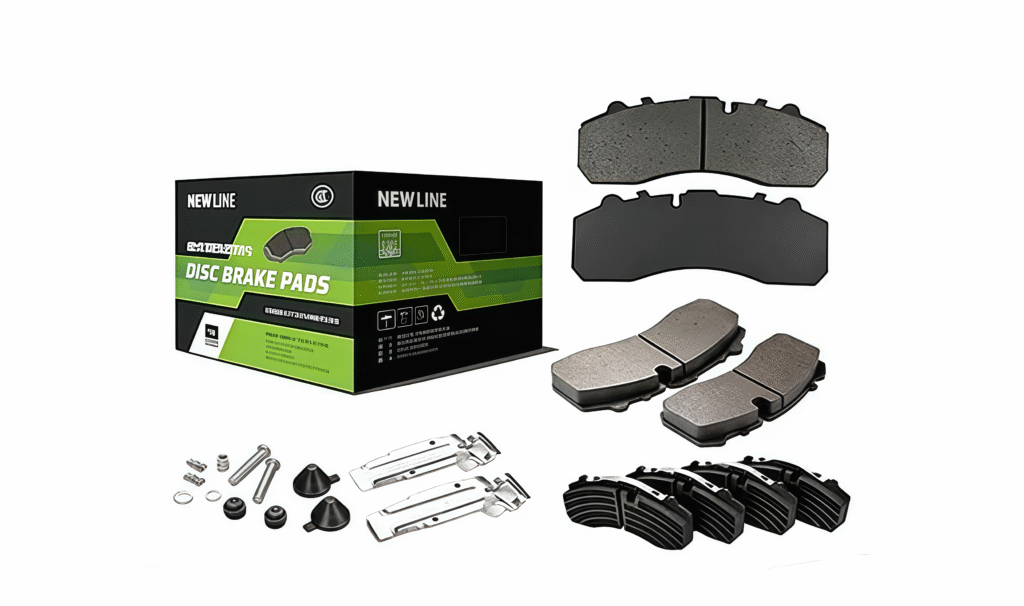
Full OEM Brake Pads
Our brake pads are supplied with complete OEM-matched hardware kits, including clips, springs, shims, and related components.
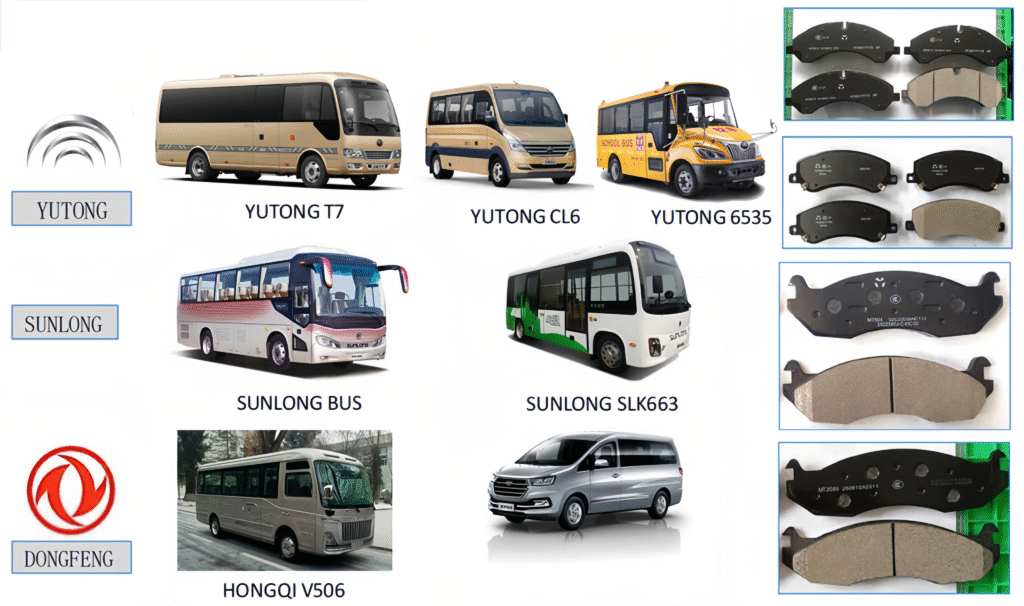
Proven OEM Fitment Across Commercial Vehicle Platforms
Brake pad solutions developed for major OEM models, ensuring accurate fitment, reliable performance, and application-specific optimization.
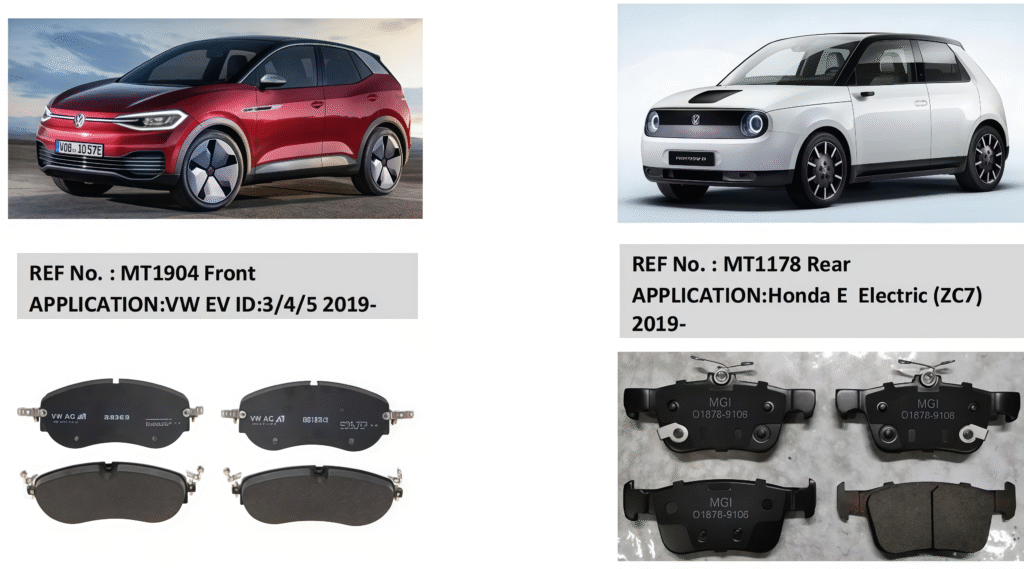
EV Brake Pad Solutions for Modern Platforms
Custom-developed brake pads for EV models, optimized for low-load braking conditions in regenerative systems, with enhanced corrosion resistance and low-frequency NVH control, and regenerative braking systems.
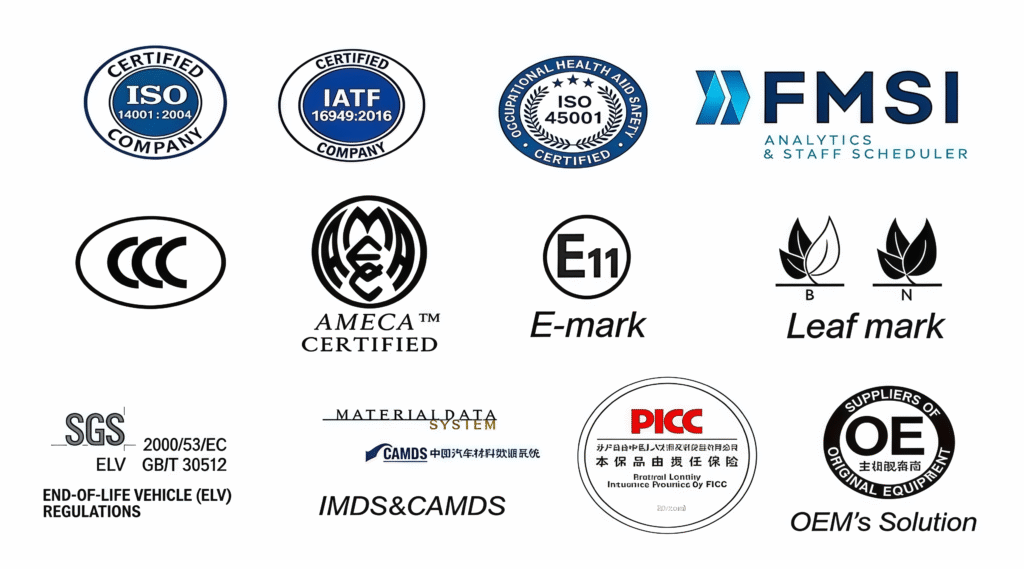
Brake Pad Certification and Regulatory Compliance
We support OEM and aftermarket needs with ELV-compliant materials and IMDS traceability, with both material compliance and braking performance validated separately through standardized testing to ensure consistent production quality.
Our Brake Pad Partners
Since 2006, we’ve built long-term relationships with OEM and aftermarket partners across global markets, including Europe, the United States, Latin America, Africa, the Middle East, and Southeast Asia. Many of our customers come from regions like Germany and North America, where product standards and performance expectations are high.We’ve grown by meeting those expectations—through consistent quality, reliable supply, and practical support in real applications. Today, we work with more than 110 brands worldwide.If you’re evaluating a brake pad supplier, feel free to contact our team—we’re happy to discuss your project.
Frequently Asked Questions About Brake Pad Technology
What determines brake pad performance?
Brake pad performance depends on formulation design, raw material quality, bonding reliability, heat management, NVH optimization, and validation through recognized tests such as ISO and SAE methods.
Why is NVH technology important for brake pads?
NVH technology helps reduce squeal, vibration, and harshness. It improves driver comfort and product perception, especially in passenger cars and premium commercial applications.
Can Tuoba provide different formulas for different vehicle types?
Yes. Different formulas can be developed or recommended based on braking intensity, temperature demand, noise targets, environmental requirements, and vehicle application.
Do you support OEM and private label projects?
Yes, we support OEM and private label projects. Just share your requirements—such as specifications, branding, or packaging—and we will provide a customized solution with reliable quality.
Need a Brake Pad Formula for Your Market or Vehicle Program?
Tell us your application, target market, vehicle type, and performance priority. We can support product selection, custom formula development, packaging, and OEM project coordination.
Who Are Tuoba Brake Pads Designed For?
- Brake Pads Distributor
- Commercial vehicle fleet operators
- OEM and private-label buyers
- Aftermarket brand owners