
As one of the essential federal motor vehicle safety standards, FMVSS 135 became mandatory for passenger cars manufactured on or after September 1, 2000. Its scope was later expanded to include multi-purpose passenger vehicles, trucks, and buses with a gross vehicle weight rating (GVWR) of 3,500 kg (7,716 lbs) or less, with compliance required starting September 1, 2002.
Following its publication by the National Highway Traffic Safety Administration, manufacturers were permitted, during the transition period, to voluntarily comply with FMVSS 135 ahead of the mandatory implementation dates, instead of continuing with the earlier FMVSS 105 requirements.
It is important to note that FMVSS 135 establishes performance requirements for complete vehicle braking systems rather than individual components such as brake pads. As a result, compliance is evaluated at the system level, covering both service brake and parking brake performance under defined test conditions.
These requirements define how braking performance is evaluated across both routine driving and high-demand conditions. For engineers involved in brake system or friction material development, this standard provides the baseline framework that shapes design, validation, and performance targets.
Building on this foundation, the following sections break down the technical structure of FMVSS 135, including testing protocols, performance benchmarks, and the practical challenges associated with meeting light vehicle brake system requirements in both OEM and aftermarket applications.
Understanding FMVSS 135 in Brake Pad Development
FMVSS 135 sets the federal safety standard for hydraulic brake systems on light vehicles sold in the United States. If you work in brake pad development, you need a clear grasp of this regulation — from its brake system application rules to vehicle-specific timelines. Let’s break down the essentials.
Scope and Application Requirements
FMVSS 135 applies to light vehicles equipped with hydraulic service brake systems, including passenger cars, multi-purpose passenger vehicles, trucks, and buses within the specified GVWR range. The standard requires that the service brake act on all wheels and incorporate automatic adjustment mechanisms to account for lining wear over time.
Compliance testing is conducted under controlled conditions using high-friction dry road surfaces and standardized reference tires to ensure repeatability. Parking brake performance is evaluated on specified gradients, with defined holding requirements. Test vehicles must meet prescribed conditions, including proper burnishing and system readiness, prior to evaluation.
These requirements reflect a system-level approach, where braking performance is assessed through complete vehicle testing rather than individual component validation.
Key Differences from FMVSS 105
FMVSS 135 replaced FMVSS 105 for light vehicles within its defined scope, while FMVSS 105 continues to apply to heavier vehicle categories outside this range. Compared to its predecessor, FMVSS 135 introduced updated performance criteria, including more stringent requirements for stopping distance, fade resistance, and brake system performance under partial failure conditions. It also reflects the integration of modern braking technologies such as anti-lock braking systems (ABS).
The transition from FMVSS 105 to FMVSS 135 was implemented over a phased timeline based on vehicle category. During this period, manufacturers were permitted to adopt FMVSS 135 requirements ahead of the mandatory dates, allowing for early compliance as vehicle platforms were updated.FMVSS 135 replaced the older FMVSS 105 for covered vehicles. The newer standard introduced stricter performance metrics and updated brake system application criteria. A two-year transition window allowed manufacturers to shift platforms from FMVSS 105 to 135. During that gap, vehicles could optionally meet FMVSS 135 ahead of the mandatory implementation dates.During that gap, vehicles could optionally meet FMVSS 135 ahead of the mandatory implementation dates. This overlap period also highlights the practical differences between the two standards — particularly in how braking performance is evaluated across OEM and aftermarket validation approaches — as summarized below.
FMVSS 135 vs FMVSS 105
| Category | FMVSS 105 | FMVSS 135 |
| Regulatory Scope | Originally applied to both passenger cars and heavier vehicles; now primarily applies to vehicles above 3,500 kg GVWR | Applies to light vehicles (≤ 3,500 kg GVWR), including passenger cars, MPVs, light trucks, and buses |
| System Type | Hydraulic and electric brake systems | Hydraulic brake systems for light vehicles |
| Testing Approach | Baseline vehicle-level braking tests under defined conditions | Expanded test matrix with more detailed procedures and condition controls |
| Stopping Distance Requirements | Defined but less stringent compared to newer standards | More stringent stopping distance and performance consistency requirements |
| Fade Performance | Includes fade testing | Enhanced fade resistance requirements with stricter evaluation criteria |
| Partial Failure Performance | Limited system failure evaluation | More comprehensive requirements for performance under partial system failure |
| ABS Consideration | Not originally designed for ABS integration | Developed with ABS-equipped systems in mind |
| Implementation Status | Legacy standard (still applicable to certain vehicle categories) | Current standard for light vehicle brake system compliance |
Vehicle Classification and Implementation Timeline
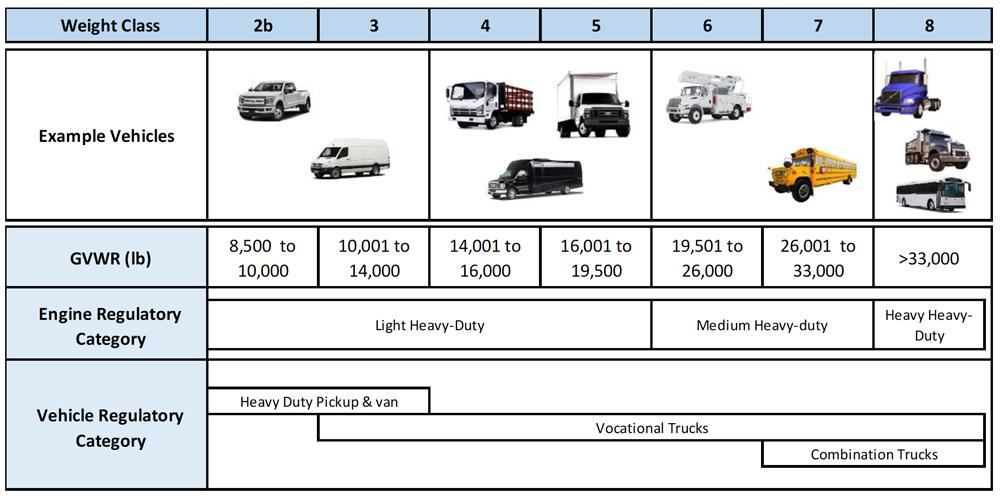
Vehicle classification under FMVSS 135 is based on gross vehicle weight rating (GVWR), which determines both the applicable regulatory standard and the corresponding compliance timeline. Vehicles with a GVWR of 3,500 kg (7,716 lbs) or less fall under FMVSS 135, while heavier vehicles remain subject to FMVSS 105.
The brake pad compliance timeline depends on vehicle weight classification. Here’s how the rollout worked:
- Passenger cars: Required to comply starting September 1, 2000
- Light trucks, MPVs, and buses: Must meet GVWR requirements under 3,500 kg — compliance kicked in September 1, 2002
These staggered implementation dates reflect differences in vehicle design complexity, platform architecture, and braking system requirements across categories. Passenger cars, typically built on more standardized platforms, transitioned earlier, while light trucks and multi-purpose vehicles required additional time due to variations in load distribution, chassis configuration, and braking system sizing.
In practice, this classification does more than define regulatory scope — it directly shapes how brake systems are designed, validated, and sourced. From an engineering standpoint, GVWR classification directly affects brake sizing and torque requirements, thermal capacity and fade resistance targets, load transfer behavior during braking, and stopping distance validation criteria under FMVSS protocols. Incorrect classification at the design stage can lead to misaligned test procedures, non-compliant stopping performance, repeated validation failures, and late-stage design revisions. Because FMVSS 135 evaluates braking performance at the complete vehicle system level, friction material development must be aligned with system-level requirements from the outset—not adjusted after testing begins.
At the same time, many issues encountered in real-world applications arise not from product defects, but from misalignment between the selected brake pad specification and the actual vehicle classification. This can result in products passing internal checks but failing compliance validation, inconsistent performance across different vehicle platforms, increased return rates or field complaints, as well as additional testing cycles and delayed product launches. Understanding GVWR classification early allows procurement teams to specify the correct performance level when sourcing brake pads, avoid selecting products validated under the wrong regulatory framework, reduce dependency on repeated testing and requalification, and align suppliers with the correct FMVSS requirements from the start.
In many aftermarket and mixed-fleet scenarios, these challenges become more pronounced when a single brake pad formulation is expected to cover multiple vehicle classes, supplier validation data does not clearly define FMVSS applicability, vehicle classification is assumed rather than verified, or testing data is based on non-equivalent conditions. These gaps may not be immediately visible during procurement, but tend to surface during compliance testing, fleet deployment, or long-term durability evaluation.
These staggered implementation dates gave manufacturers time to adapt designs across different vehicle categories. At the same time, they highlight how regulatory classification continues to influence braking system development and sourcing decisions today. Understanding the correct vehicle weight classification ensures your brake pad development process aligns with current GVWR requirements from the start — helping avoid misaligned test conditions, reducing validation risks, and preventing costly redesigns or delays during compliance verification.
Technical Requirements and Performance Standards
FMVSS 135 lays out strict technical benchmarks you need to understand before developing any brake pad. These standards cover everything from how brakes engage at the wheel to how drivers receive critical alerts. Let’s break down the key areas.
Service Brake System Specifications
Under FMVSS 135, the service brake specifications require brakes to act on all wheels of the vehicle. This ensures balanced stopping power and predictable handling during emergency stops. Each brake subsystem must deliver a minimum level of deceleration — even if one circuit fails.
Automatic Wear Adjustment and Indication Systems
The standard mandates automatic wear adjustment to compensate for lining wear over time. This keeps pedal travel consistent without manual intervention. Wear indication systems must alert the driver through one of these methods:
- Acoustic or optical warning devices inside the cabin
- Visual inspection points accessible from the outside or underside using standard tools
Reservoir Capacity and Fluid Requirements
Master cylinders must feature separate reservoir compartments for each brake subsystem. This design prevents cross-contamination if one circuit loses pressure. The total reservoir capacity must equal the fluid displaced when pads move from new to fully worn positions. Brake fluid requirements specify DOT 3 fluid as the baseline standard for most light vehicles.
Warning Indicator Systems and Labeling Standards
Warning indicators must activate when fluid drops below one-fourth of reservoir capacity — or when a 1.5 MPa pressure differential occurs in split systems. Approved indicator labels include “Brake,” “Brake Fluid,” “Brake Pressure,” “ABS,” “Brake Wear,” or “RBS” based on function.
Each reservoir cap area must display a label reading: “WARNING: Clean filler cap before removing. Use only DOT 3 fluid from sealed container.” The lettering must stand at least 3.2 mm high. For electric vehicles equipped with regenerative braking, the ABS must control the RBS when both systems are present.
Understanding these requirements gives you a solid foundation before moving into testing protocols and compliance verification.
Testing Protocols and Compliance Verification
Meeting FMVSS 135 demands strict adherence to defined brake testing protocols, with additional validation through standardized methods used to assess friction stability and structural performance.You need to control every variable — from weather conditions to how the vehicle is loaded. Let’s break down the three critical areas that shape your compliance verification process.
Ambient Conditions and Road Test Surface Requirements
Your test environment must fall within tight parameters. Ambient temperature needs to stay between 0°C and 40°C (32°F–104°F), and wind speed cannot exceed 5 m/s (11.2 mph). The road surface carries its own PFC requirements — a peak friction coefficient of at least 1.02, measured with an ASTM F2493 reference tire per ASTM E1337-19 at 64.4 km/h on a dry surface.
The test lane must be at least 3.5 meters wide. Surface gradient can’t exceed 1% in the direction of travel or 2% perpendicular to it. These ASTM standards ensure repeatable, comparable results across different test facilities.
Vehicle Loading and Weight Distribution Parameters
Proper vehicle loading parameters directly impact stopping distance results. For GVWR testing, you load the vehicle proportionally to each axle’s GAWR rating with the fuel tank at 100% capacity. Fuel must remain at a minimum of 75% throughout the test sequence.
LLVW testing takes a different approach. You add 180 kg (396 lbs) — accounting for the driver and instrumentation — distributed in the front passenger area. Understanding these distinctions is essential for accurate test planning.
Brake System Integrity Standards
Brake system integrity goes beyond stopping power. During and after testing, no component can detach or fracture — minor surface cracks being the only exception. Friction facing tearout must not exceed 10% on any single element. We should note that visible fluid leakage or lubricant contamination on friction surfaces is grounds for immediate failure.
- No component detachment or structural fracture permitted
- Friction material tearout capped at 10% per element
- Zero tolerance for fluid leaks on braking surfaces
These strict criteria set the stage for the aftermarket development challenges we’ll explore next.
Aftermarket Brake Pad Development Challenges

Developing aftermarket brake pads that meet federal safety standards is no small feat. You need access to specialized infrastructure — proving grounds with 0.9 friction coefficient concrete, specific incline hills, and maintained vehicle fleets spanning decades. For FMVSS 105, that means vehicles from 1968 through 2002. For FMVSS 135, you need models from 2000 to the present day. The sheer scope of these requirements creates steep FMVSS certification challenges for smaller manufacturers.
Brake pad testing costs can climb quickly when you factor in robotic leg equipment, fleet maintenance, and track time. Many companies spend hundreds of thousands of dollars just to validate a single product line. This financial burden makes universal compliance difficult — and NHTSA enforcement across the aftermarket sector remains uneven compared to OEM oversight.
Some manufacturers have turned to dynamometer testing as a workaround. Brake dynamometers can simulate FMVSS conditions in a lab setting, cutting both time and expense. The catch? NHTSA does not officially recognize these virtual test results for compliance purposes. Trade groups like the Brake Manufacturers Council have stated that selling non-compliant products is illegal, yet the complexity of on-vehicle testing makes full enforcement impractical.
This is where ECE R90 standards offer an appealing alternative. The European regulation uses a dynamometer-based approach that requires replacement parts to perform within 15% of original equipment. Key advantages of the ECE R90 pathway include:
- Lab-based dynamometer testing instead of full vehicle track tests
- Clear performance benchmarks tied to OE baseline data
- Lower overall brake pad testing costs compared to FMVSS protocols
- Faster time-to-market for new friction formulations
As the aftermarket brake pads industry evolves, you should keep a close eye on whether U.S. regulators begin accepting dynamometer testing data as a valid compliance pathway — a shift that could reshape development strategies across the sector.
Conclusion
FMVSS 135 implementation sets the bar for brake system safety standards across all light vehicles with a gross vehicle weight rating under 3,500 kg. The standard requires automatic wear adjustment, adequate fluid reservoir capacity, and reliable warning indicator systems — all designed to protect drivers on American roads. As a brake pad compliance summary, these requirements form a unified framework that ties together material performance, system integrity, and real-world stopping capability.
For aftermarket brake pad developers, meeting these requirements is no small task. Full vehicle testing demands expensive infrastructure and significant time investment. Effective regulatory compliance strategies must account for these costs while still delivering products that match or exceed OEM-level safety performance. Companies like Bosch, Akebono, and Wagner navigate this landscape by investing in robust R&D and testing programs.
Looking ahead, the industry may shift toward dynamometer-based testing methods — much like the ECE R90 approach used in Europe. This change would make compliance more accessible for aftermarket manufacturers without weakening brake system safety standards. Until that shift happens, you need to stay informed about current FMVSS 135 implementation requirements and build your development process around them from the start.
If you’re evaluating brake pad suppliers or developing new friction formulations, aligning your validation approach with both FMVSS requirements and ECE R90 benchmarks can significantly reduce compliance risk and development uncertainty. Need technical input on testing methods, material selection, or compliance pathways? Explore our brake pad technology resources or connect with our engineering team for application-specific guidance.