Brake pads are one of the most critical components of a vehicle’s braking system. When you press the brake pedal, the pads create friction against the brake disc or drum, slowing down or stopping the vehicle.
If your brakes start to feel soft or the braking distance increases, it may indicate that the brake pads have lost most of their friction material. In such cases, replacing them immediately is essential to avoid serious safety risks, which highlights the importance of replacing brake pads.
Before discussing replacement timing, it is important to understand the structure of a brake pad.
Brake Pad Structure
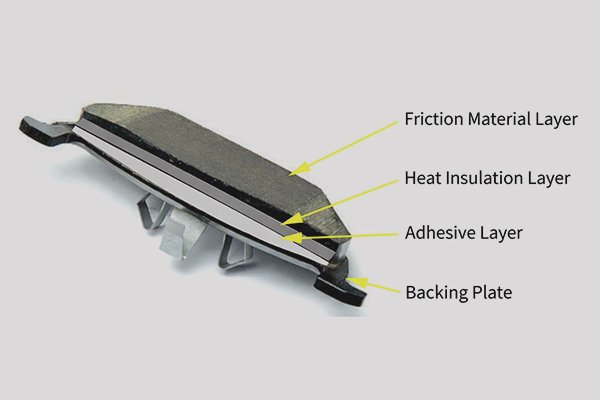
This diagram explains the internal structure of a heavy-duty brake pad, including the friction material, adhesive layer, and steel backing plate.
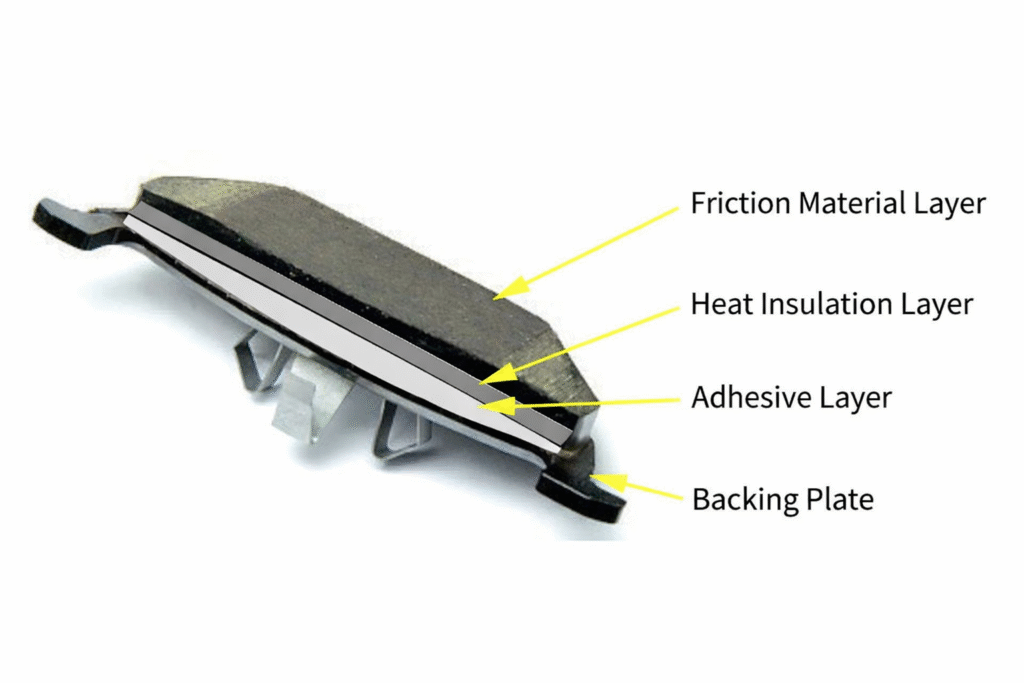
A typical brake pad is composed of several layers:
- Friction Material Layer – The surface that contacts the brake disc and generates braking force.
- Heat Insulation Layer – Reduces heat transfer from braking friction.
- Adhesive Layer – Bonds the friction material to the backing plate.
- Backing Plate – The metal base that supports the entire brake pad.
Each component works together to ensure efficient braking performance, heat resistance, and durability.
How Often Should Brake Pads Be Replaced?
Brake pads do not have a fixed replacement interval because their lifespan depends on several factors such as driving habits, road conditions, vehicle type, and brake system design.
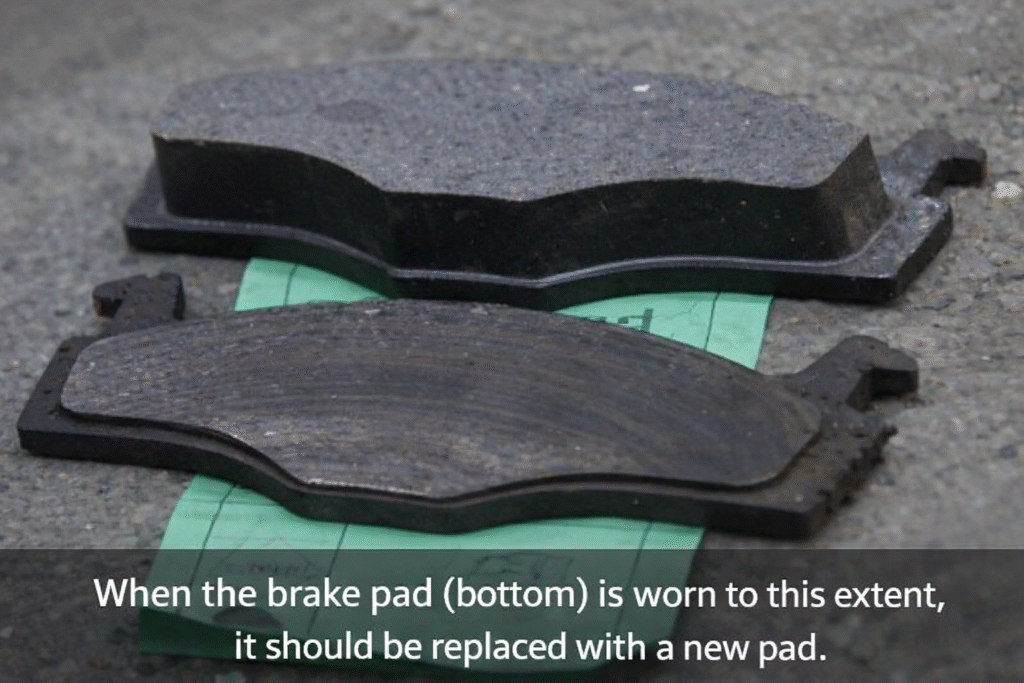
Extensive testing shows that once the thickness drops below this level, brake pads tend to wear and However, in most cases:
- Front brake pads typically last 30,000 to 50,000 km
- Rear brake pads can last 100,000 to 130,000 km
Front brake pads usually wear faster because most of the braking force is applied to the front wheels.
Manufacturers also recommend that the minimum thickness of brake pad friction material should not be less than 1.2 mm. When the pad reaches this thickness, braking performance decreases rapidly and replacement is necessary.
As a general rule, drivers should consider inspecting their brake pads when the vehicle reaches around 60,000 km.
3 Ways to Check If Your Brake Pads Need Replacement
Regular inspection is the best way to ensure your braking system remains safe and effective. Here are three simple methods drivers can use to check brake pad condition.
1. Check Brake Pad Thickness
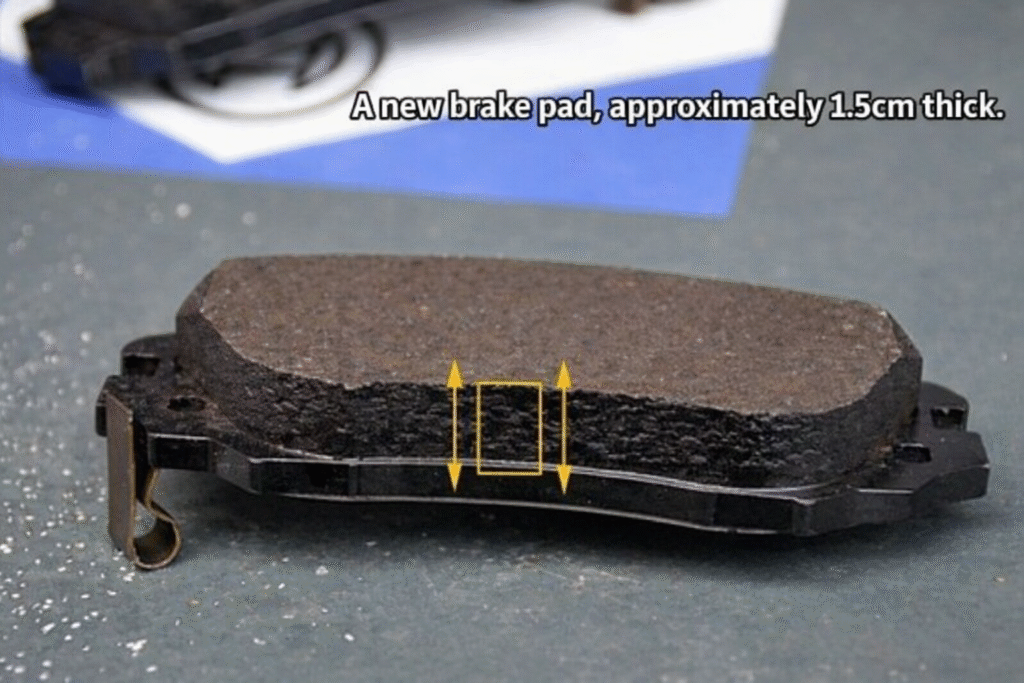
A brand-new brake pad is typically around 15 mm (1.5 cm) thick. Over time, continuous friction will gradually reduce its thickness.
When the pad wears down to about one-third of its original thickness (around 5 mm), drivers should increase inspection frequency and prepare for replacement.
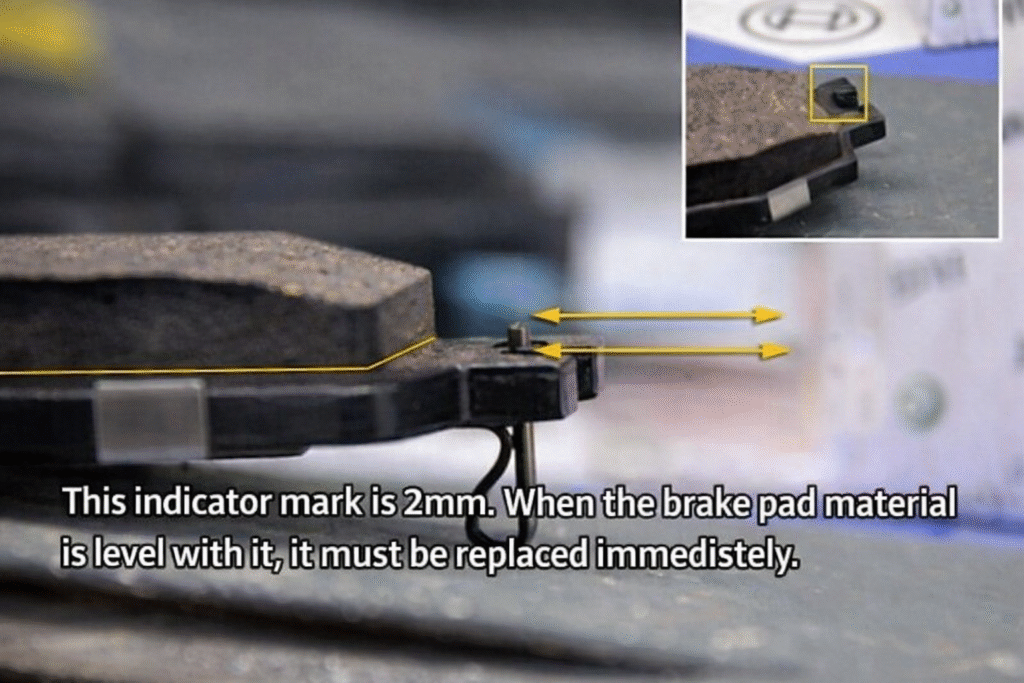
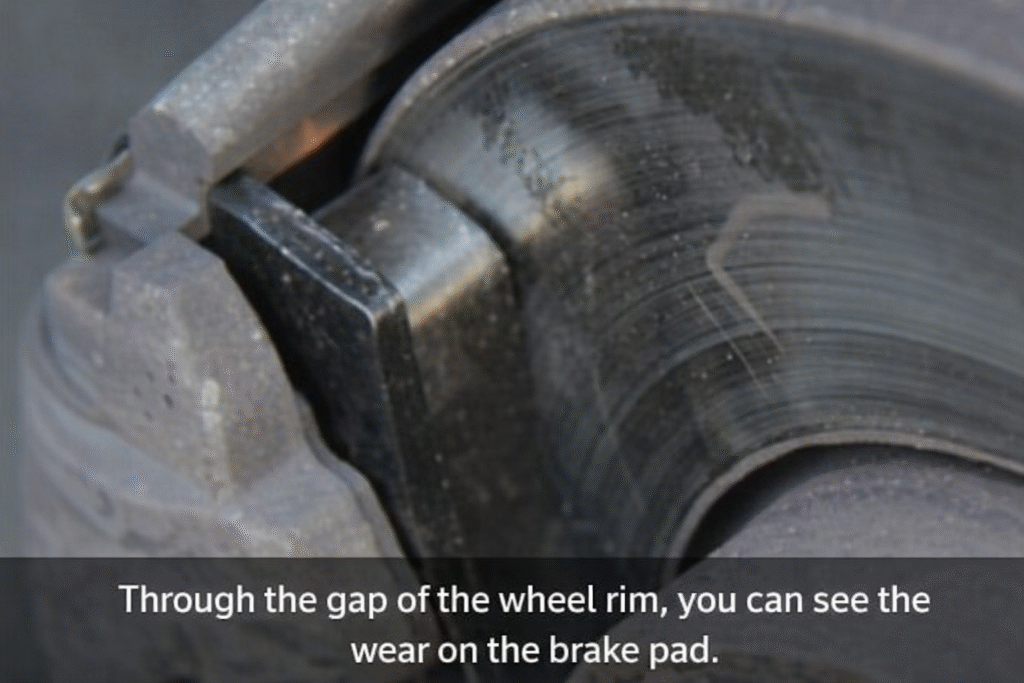
Each brake pad also has a wear indicator mark, usually about 2–3 mm thick, which represents the minimum safe thickness. If the pad surface becomes level with this indicator, the brake pad must be replaced immediately.
However, due to wheel design, some vehicles do not allow direct visual inspection. In such cases, the wheel must be removed for accurate checking.
Many modern vehicles also include dashboard warning lights that indicate when brake pads are worn out, making monitoring easier.
Tip:
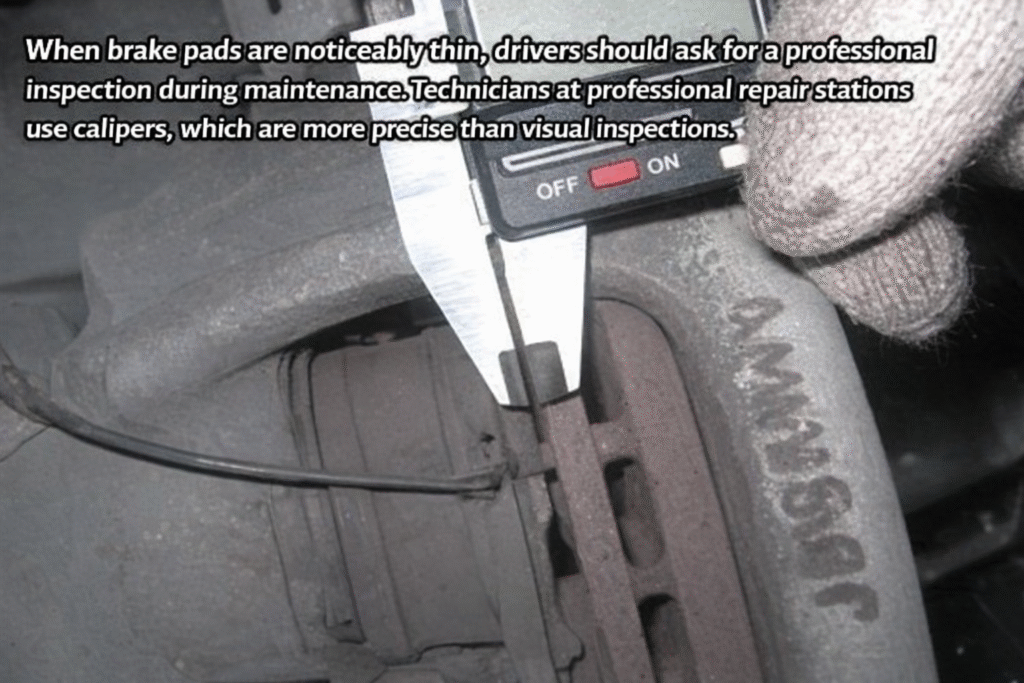
Brake pads do not have a strict replacement interval. However, once a vehicle reaches around 60,000 km, it is recommended to have them professionally inspected during routine maintenance. Mechanics can measure pad thickness accurately using specialized tools rather than relying solely on visual estimation.
2. Listen for Unusual Noises
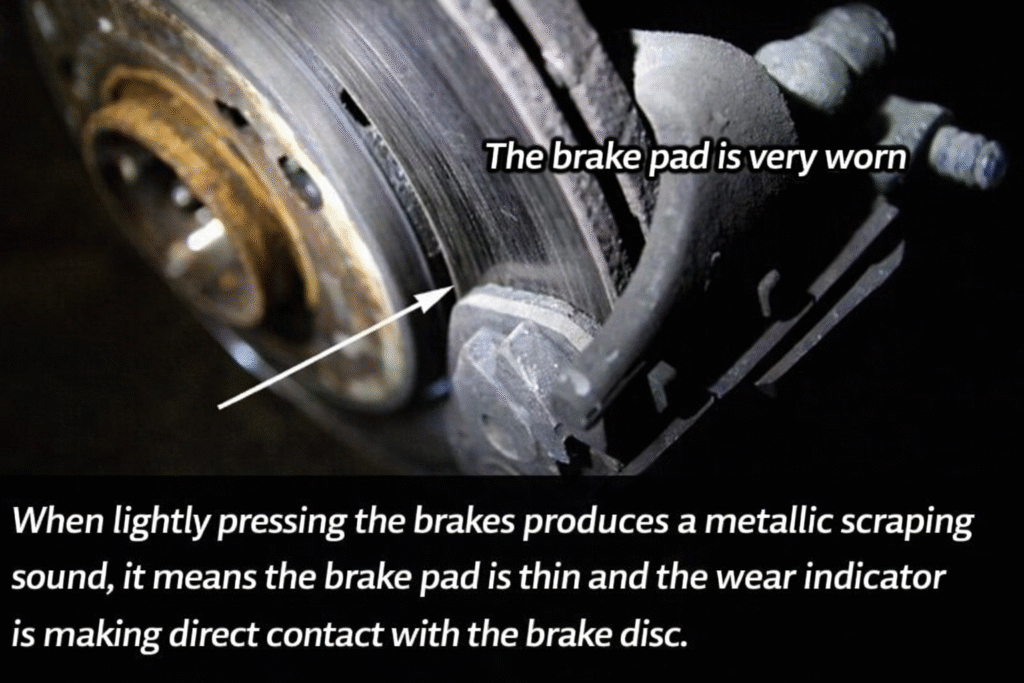
If you hear a high-pitched metal scraping sound when lightly pressing the brake pedal, it often means the brake pad has worn down to its limit and the metal wear indicator is rubbing against the brake disc.
In this situation, the brake pads must be replaced immediately.
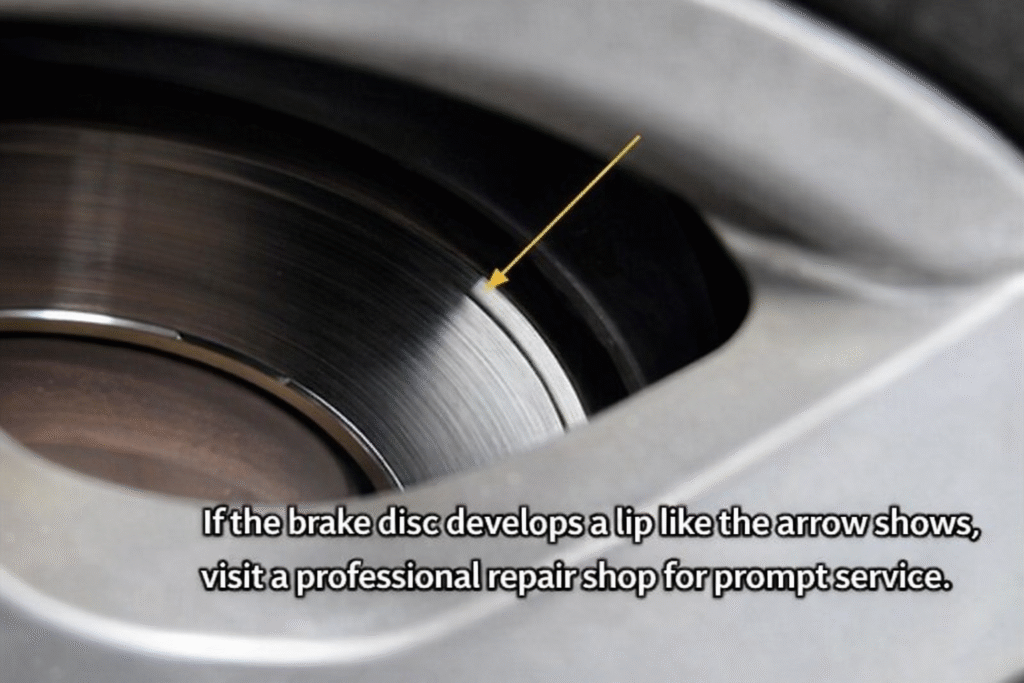
When this occurs, the brake disc may already be damaged, and simply replacing the brake pads might not eliminate the noise. In severe cases, the brake disc may also need to be replaced.
Sometimes, lower-quality brake pads contain hard particles that can cause temporary noise. In many cases, the sound may disappear after a period of normal use.
Tip:
If braking noise appears, it often means the brake disc has already experienced some wear. Since brake discs are significantly more expensive than brake pads, regular inspection of brake pads is highly recommended.
3. Feel the Braking Performance
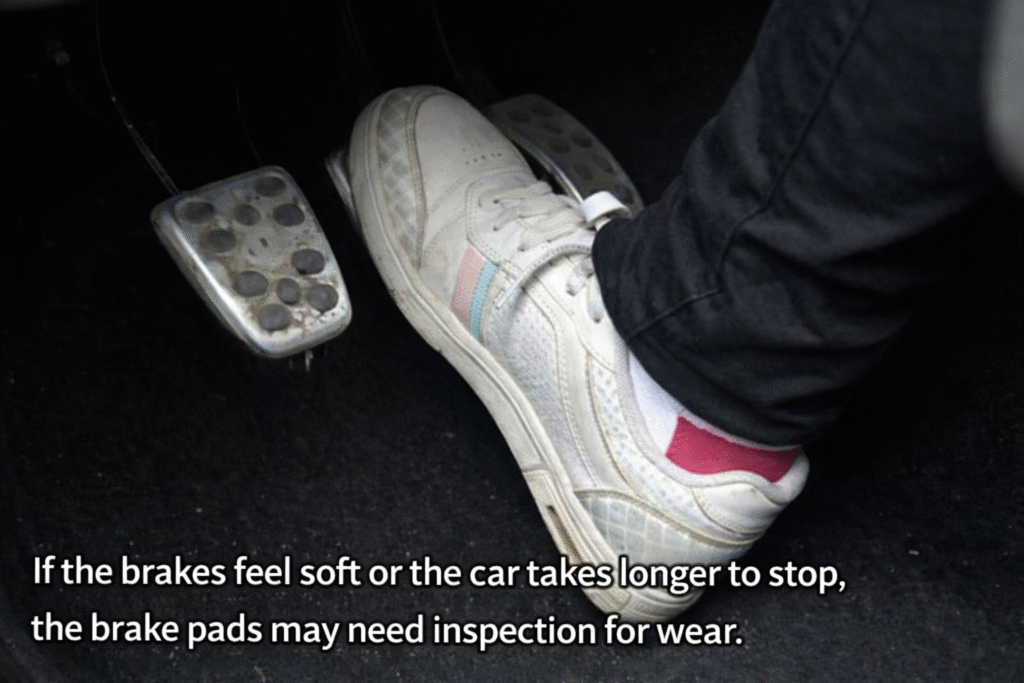
Another sign of worn brake pads is reduced braking performance.
If the brake pedal feels softer than usual or the stopping distance becomes longer, the friction material of the brake pads may already be severely worn.
In such cases, the brake pads should be replaced immediately to prevent potential accidents.
Tip:
This method can be somewhat subjective, as it depends on driver experience. Therefore, combining it with regular visual inspections is the safest approach.
Additional Tips for Extending Brake Pad Lifespan
Drivers can extend the lifespan of brake pads by adopting better driving habits.
Avoid Frequent Hard Braking
Sudden braking generates excessive heat and accelerates brake pad wear.
Maintain Safe Following Distance
Keeping enough distance from other vehicles reduces the need for constant braking.
Perform Regular Brake Inspections
Routine inspections help detect problems early and prevent expensive repairs.
Choose High-Quality Brake Pads
Reliable brake pad manufacturers provide products with better heat resistance, durability, and stable braking performance.
In regulated markets, brake components must meet safety standards such as ECE R90 certification to ensure consistent braking performance and safety compliance.
For example, professional brake pad manufacturers like Tuoba, a trusted brake pad manufacturer, design and produce high-quality brake components with validated materials and testing processes to meet regulatory requirements across global markets.
FAQ About Brake Pads
How long do brake pads usually last?
Most brake pads last between 30,000 and 50,000 kilometers, although driving habits and road conditions can significantly affect their lifespan.
Can I drive with worn brake pads?
Driving with worn brake pads is dangerous. Once the friction material is nearly gone, braking performance decreases dramatically and may damage the brake disc.
Do front brake pads wear faster than rear ones?
Yes. Front brake pads usually wear faster because most of the braking force is applied to the front wheels during deceleration.
How much brake pad thickness is considered unsafe?
When the brake pad thickness reaches around 1.2 mm, it is considered the minimum safe limit and the pads should be replaced immediately.
Conclusion
Brake pads are essential for vehicle safety and should be inspected regularly. Monitoring pad thickness, listening for unusual noises, and paying attention to braking performance are simple ways drivers can determine when replacement is needed.
Regular maintenance and the use of high-quality brake pads will ensure reliable braking performance and help prevent costly damage to other braking components.
If you are managing a fleet or sourcing brake components for commercial vehicles, regular inspection is only part of the solution. Choosing high-quality brake pads with stable performance and certified testing is equally important.
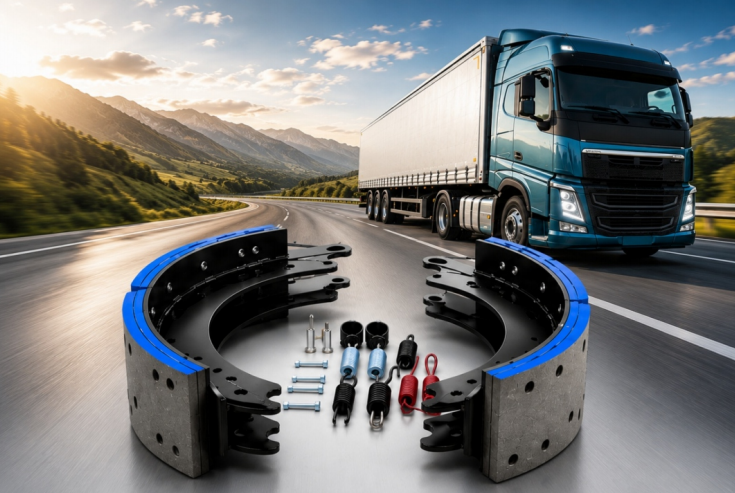
As a trusted Tuoba brake pad manufacturer, we provide OEM and aftermarket brake pad solutions designed for heavy-duty applications, including long-haul trucks, buses, and industrial vehicles.
👉 Contact us today to get reliable brake solutions tailored to your market.