
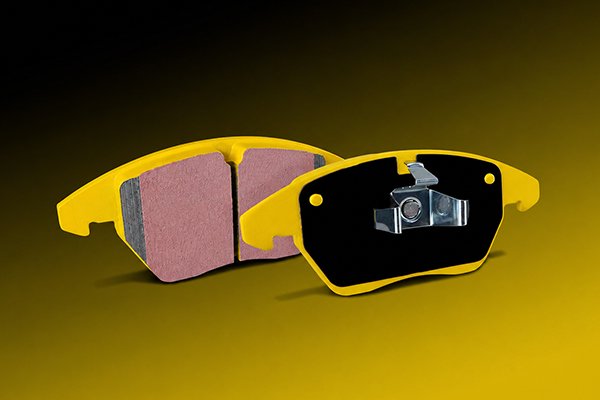
At first glance, brake pad color can seem like a quick way to judge performance. Black, blue, yellow, or green—these variations often appear to signal different levels of capability or intended use. In practice, however, this assumption is often misleading. From a product and engineering perspective, color is not a standardized indicator of braking performance. It is more closely tied to manufacturing processes, material systems, and brand-level positioning. While some brands use color coding to differentiate product lines, these systems are not universal and do not represent a consistent technical benchmark.
This article looks at brake pad color in that context, focusing on its relationship with materials, manufacturing, and product positioning.
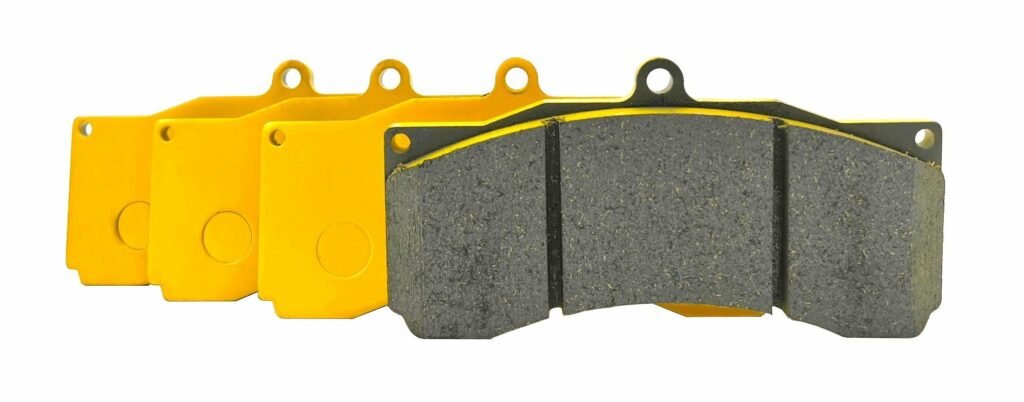
Why Do Brake Pads Have Different Colors?
When comparing brake pads, one of the most noticeable differences is color. From a black brake pad to a blue brake pad, green brake pad, or yellow brake pad, the variation often raises a common question: does brake pad color indicate performance?
From a product and market perspective, brake pad color is not designed as a performance indicator. Instead, it is primarily influenced by manufacturing processes, brake pad design choices, and product positioning strategies.
Most visible colors originate from the backing plate coating. A black brake pad is typically treated with anti-corrosion processes such as phosphating or coating, making it the most common finish in large-scale brake pad manufacturing. Colored variants—such as blue brake pad, yellow brake pad, or red brake pad—are usually introduced to differentiate product lines or strengthen brand identity. In some cases, raw metal finishes are used where minimal surface treatment is applied.
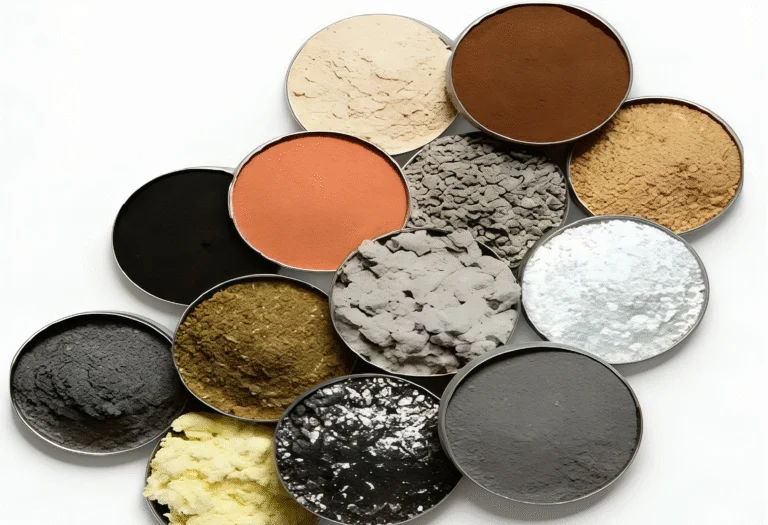
The friction surface itself may also show color variations depending on brake pad formulation and brake pad material composition. Semi-metallic brake pads tend to appear darker, ceramic brake pads lighter, and organic formulations may present a brown brake pad appearance. From a market perspective, brake pad colors tend to follow patterns based on application and positioning.
In the aftermarket, color is sometimes used as a classification tool. Terms such as brake pad color code, brake pad friction codes, and brake pad manufacturer codes may appear in product documentation. However, these systems are not universal and are typically brand-specific rather than technically standardized.
Common Brake Pad Colors and Their Market Applications
From a market segmentation perspective, brake pad colors follow identifiable patterns based on application and positioning.
Black brake pad designs dominate OEM and replacement markets. These products are optimized for corrosion resistance, consistency, and cost efficiency, making them suitable for high-volume brake pad production line environments and commercial applications.
Colored brake pads, including blue brake pad, yellow brake pad, and red brake pad variants, are more commonly associated with performance-oriented segments. These colors are used to differentiate product lines and communicate intended usage, such as street performance, fast road driving, or track conditions. However, these distinctions are not standardized across the industry.
Green brake pad and brown brake pad variations are more closely related to material systems. Green brake pad formulations are sometimes linked to low-metallic or environmentally oriented materials, while brown tones are common in organic friction material systems. These differences reflect brake pad materials, brake pad material types, and brake pad material differences rather than purely visual design decisions.
Raw metal or silver-gray finishes are typically found in industrial or cost-sensitive products, where functionality and manufacturing efficiency take priority over appearance.
EBC Brake Pad Colors Guide
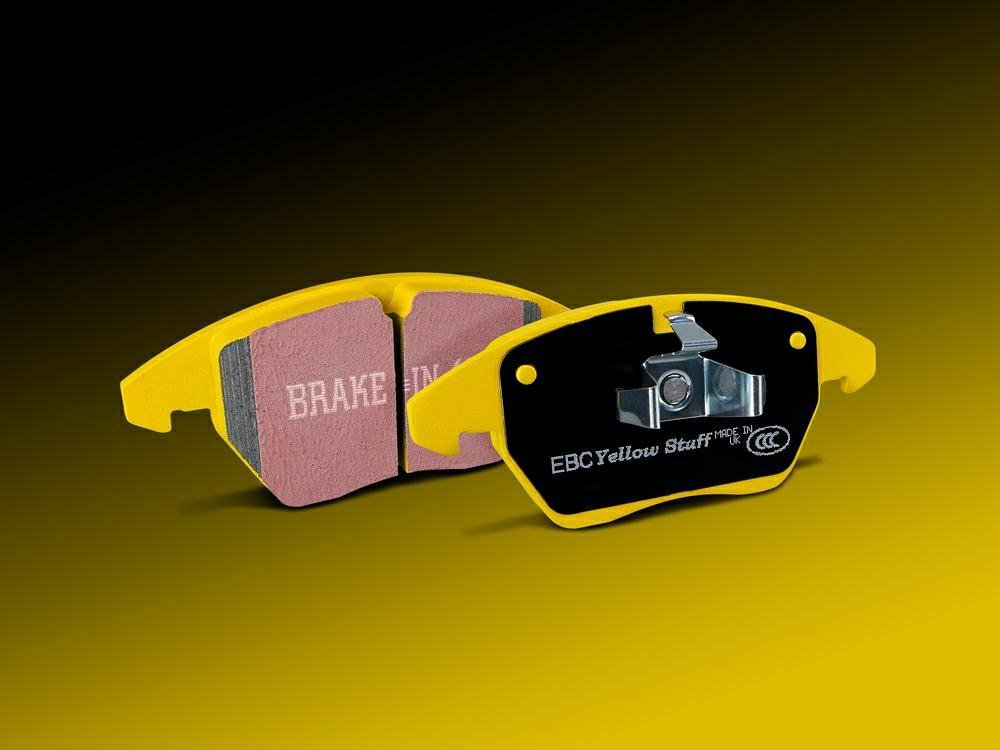
If you’ve ever looked into aftermarket brake pads, you’ve probably come across the EBC brake pad color chart. It’s one of the more recognizable systems where color is used to label different product lines.
At a glance, it can look like color reflects performance. In reality, it’s more about how the product is positioned.
Here’s the simplified breakdown:
| EBC Color | Typical Use | What It Really Means |
| Green | Daily driving | Entry-level, easy to use, focused on comfort |
| Yellow | Fast road / aggressive driving | Higher friction, more responsive |
| Red | Performance street | Designed for higher loads and temperatures |
This is why people search for terms like EBC brake pads color difference or EBC green vs yellow vs red—they’re trying to use color as a shortcut to judge performance.
That instinct makes sense, but from an engineering standpoint, it only tells part of the picture. Even in structured systems like EBC’s brake pad product range, colors are used to differentiate product lines based on intended use—such as daily driving, performance street, or light track applications—rather than to define a universal performance standard.
Color can give you a quick sense of how a product is positioned within a lineup. What it doesn’t show is how the pad is actually built. Two brake pads with similar colors—even across different brands—can behave very differently, because their brake pad formulation, brake pad friction material, and brake pad material properties are not the same.
So the color chart is useful, but it should be treated as a reference point, not a basis for decision-making.
Visual Guide: Brake Pad Color vs Material vs Application
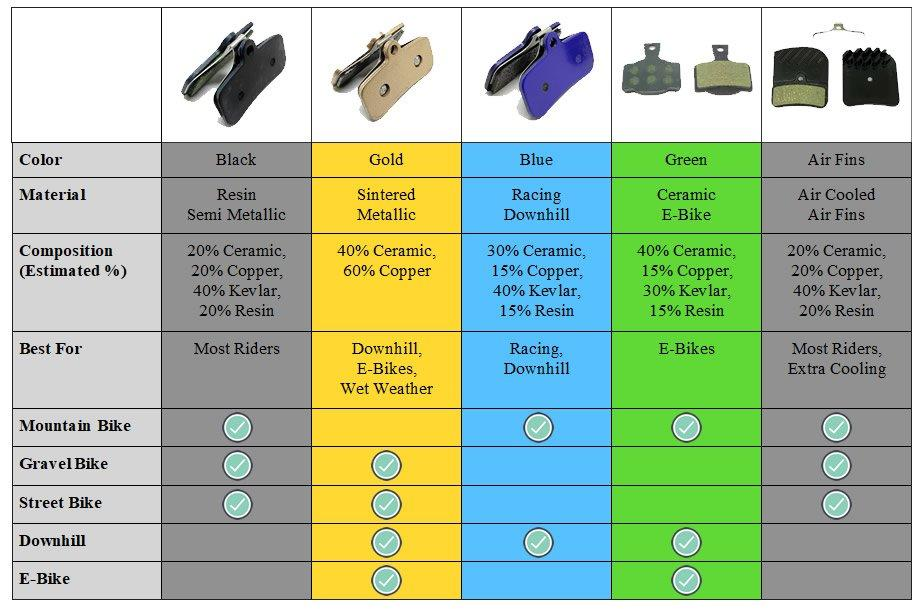
When viewed from a production or sourcing standpoint, brake pad color, material, and application are often interconnected—but they should not be treated as equivalent.
A more practical way to interpret these relationships is outlined below:
| Color Appearance | Typical Material | Where You See It | What Matters |
| Black brake pad | Semi-metallic / standard | OEM, commercial vehicles | Stable, consistent, easy to scale |
| Blue brake pad | Performance blends | Track / sport use | Heat resistance, responsiveness |
| Yellow brake pad | Enhanced friction materials | Fast road / mixed use | Balanced feel and control |
| Red brake pad | Performance street materials | Passenger performance cars | Strong bite, brand positioning |
| Green brake pad | Low-metallic / eco | Daily driving | Lower noise, smoother feel |
| Brown brake pad | Organic materials | Light-duty use | Softer braking, faster wear |
| Raw metal | Standard industrial | Industrial / cost-driven | Functional, minimal processing |
A common mistake is treating color as if it were a standardized indicator.
In reality, there is no universal brake pad color code that defines performance across the industry. What appears as color differentiation is typically the result of coating choices in brake pad manufacturing, variations in brake pad material composition, and brand-level labeling systems.
From a product selection standpoint—whether for development or sourcing—color is one of the least reliable indicators of performance.
What actually matters comes down to a few core factors:
- Brake pad material
- Brake pad formulation
- Brake pad material properties
- Verified testing data
Color may help identify or categorize a product within a lineup. However, it does not provide meaningful insight into how the brake pad will perform under real operating conditions.
Brake Pad Material Comparison: What Really Determines Performance
While brake pad color may vary, braking performance is governed by engineering variables rather than visual attributes.
The key determinants include friction material selection, formulation design, material composition, and the resulting performance properties. Together, these factors define friction behavior, thermal stability, wear characteristics, and overall braking consistency under load.
Semi-metallic formulations are widely applied in heavy-duty and high-load conditions due to their durability and heat tolerance. Ceramic materials are more commonly used in passenger vehicles, where lower noise, reduced dust, and stable operation are prioritized. Organic formulations offer smoother engagement but typically involve shorter service intervals.
From a sourcing and engineering perspective, material-based comparison provides far more actionable insight than color differentiation. Variations in material systems and formulation design directly translate into differences in real-world braking performance.
How to Choose Brake Pads Based on Application
From a product and procurement standpoint, brake pad selection should be driven by application requirements rather than visual characteristics.
For daily passenger vehicles, ceramic-based formulations are often preferred for their stable performance, reduced noise, and consistent wear behavior. In these scenarios, material properties and NVH performance take precedence over appearance.
In commercial and heavy-duty applications, semi-metallic systems are more commonly specified. These applications demand higher thermal capacity, stable friction under load, and extended service life, placing greater emphasis on formulation design and friction material performance.
For performance-oriented or mixed driving conditions, selection should prioritize friction stability, fade resistance, and validated testing data. While color-coded products—such as blue or yellow variants—may be associated with this segment, evaluation should be based on measurable performance criteria rather than branding cues.
In practice, a reliable selection framework should prioritize:
- Application-specific material matching
- Verified performance testing data
- Supplier manufacturing capability and quality control systems
- Compatibility with vehicle classification and braking system requirements
Brake pad color should be treated as a secondary attribute. Engineering validation remains the primary basis for decision-making.
Why Brake Pad Manufacturers Rarely Customize Colors
From a manufacturing and supply chain perspective, the limited adoption of customized colors is a deliberate choice rather than a constraint.
Color does not contribute functional value to the braking system. It does not enhance friction performance, material properties, or durability, and therefore does not justify additional process complexity from an engineering standpoint.
Introducing customized colors adds extra steps to the brake pad manufacturing process, including coating application, curing control, and additional inspection requirements. These steps increase production cost and operational complexity without delivering measurable performance benefits.
In large-scale production environments, efficiency and consistency are critical. Standardized finishes—such as black-coated backing plates or raw metal surfaces—support stable processing conditions, reduce variability, and improve overall manufacturing control.
In B2B markets, customers prioritize brake pad materials, compliance with industry standards, and validated testing data over visual differentiation. As a result, brake pad manufacturing typically focuses on performance consistency and process reliability rather than appearance.
How Brake Pad Color Influences Selection and Sourcing Decisions
From a product manager’s perspective, the role of brake pad color in brake pad design is limited. While color can support branding or help communicate positioning, it does not replace technical validation.
Even in structured systems such as EBC brake pad colors or an EBC pads chart, the underlying performance is still defined by brake pad formulation and material engineering, as well as brake pad friction material and brake pad material properties.
For manufacturers, maintaining standardized finishes aligns with brake pad manufacturing efficiency, cost control, and quality consistency. Custom colors are rarely prioritized unless required for branding.
For buyers and engineers, decision-making should focus on measurable criteria such as brake pad materials, brake pad material composition, and validated testing data. Tools like brake pad number chart and brake pad materials explained are more relevant than color.
Conclusion
Brake pad color does not determine braking performance. It reflects coating processes, material composition, and product positioning rather than engineering capability.
In practical terms, backing plate color relates to corrosion protection or branding, while friction surface color may indicate differences in material systems. However, performance is defined by brake pad formulation, brake pad material properties, and validated testing.
When selecting brake pads, focusing on brake pad materials, brake pad material comparison, and application-specific requirements will always lead to more reliable decisions than relying on visual attributes.
In the end, color can help you recognize a product—but it should never be the reason you choose it. What matters is how the brake pad performs under real conditions, not how it looks.