In the realm of brake pad development, managing brake dust and wear is a critical focus to ensure safety, durability, and environmental compliance. Brake dust control not only enhances vehicle aesthetics but also addresses health and ecological concerns by reducing particulate emissions. This is especially relevant as regulatory standards like Euro 7 push for advancements in low emission brakes.
Brake wear management involves a deep understanding of the interaction between brake pads and discs, where disc abrasion contributes the majority of dust particles. At Tuoba, a leading custom brake pad manufacturer, we optimize material formulations and production techniques to strike an effective balance between performance and emission goals.
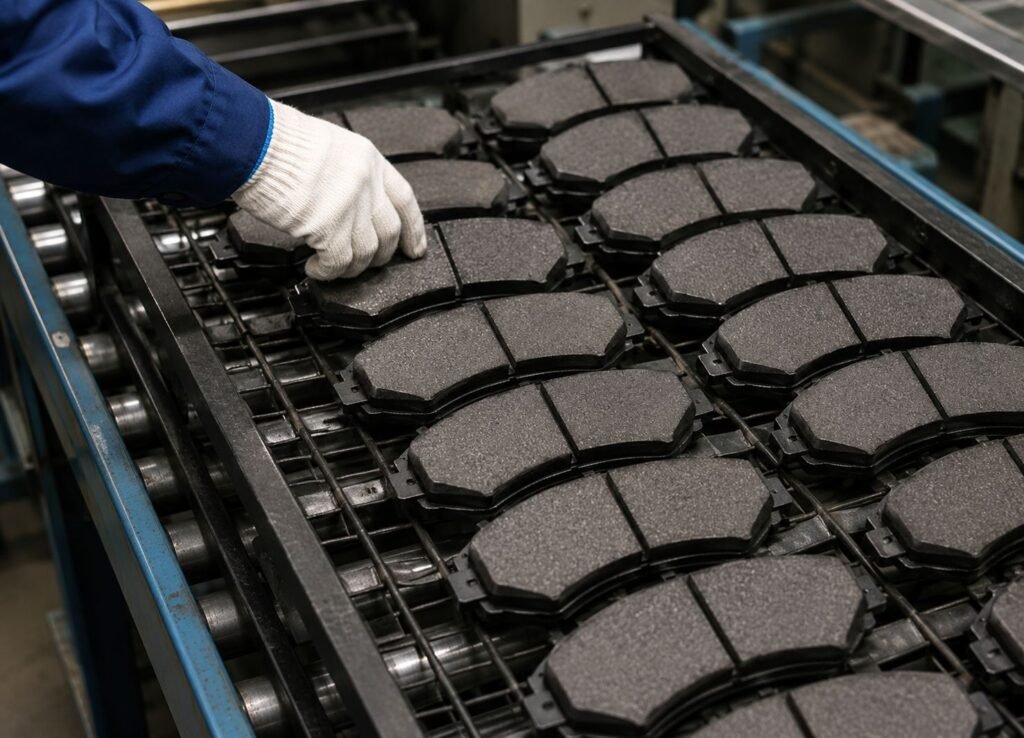
By tailoring brake pad manufacturing processes to specific vehicles and conditions, we help engineers and designers achieve more efficient braking systems that meet the demands of modern automotive applications while minimizing environmental impact.
Understanding Brake Dust: Origins and Impacts
When you examine your vehicle, you might often notice a dark or rust-colored powder coating the wheels. This is known as brake dust, a byproduct of the braking process that is often misunderstood in terms of its origins and potential impacts. Through a deeper exploration of this phenomenon, you can better understand not only where it comes from but also how it can affect both the environment and human health.
What is Brake Dust?
Brake dust is composed of tiny particles that arise primarily from the interaction between the brake pad and the disc. As the brake pad presses against the rotating disc, it experiences wear, generating dust. This dust is then expelled into the environment, settling on various surfaces including the vehicle’s wheels.
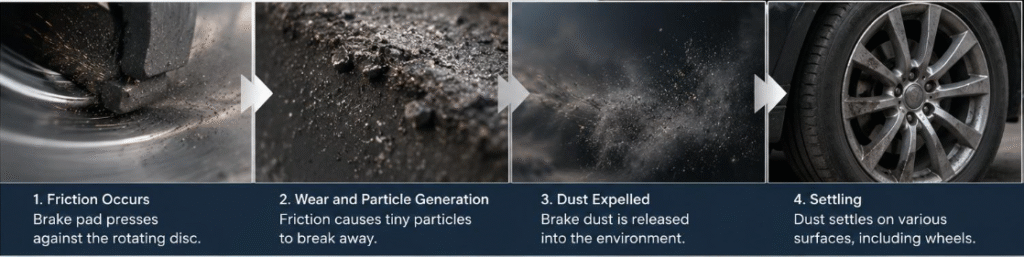
Sources of Brake Dust in the Braking System
Brake dust sources are multifaceted but are predominantly tied to the materials used in brake pads and discs. As these components undergo friction during braking, particles are inevitably produced. It’s estimated that around 80% of brake dust originates from the brake discs themselves, with the remainder coming from the brake pads. This distribution significantly depends on the different types of brake pad materials used in the braking system components.
The Role of Brake Pad Materials in Dust Generation
Brake pad dust generation varies significantly based on the composition of the brake pads. Options range from metallic pads, which tend to produce more dust, to ceramic and non-asbestos organic pads, which typically generate less. Understanding these materials helps in selecting the appropriate type for your vehicle, balancing performance needs with environmental considerations.
Environmental and Health Concerns Related to Brake Dust
- Environmental Impact: Brake dust contributes microscopic particulate matter to the atmosphere, which can degrade air quality and lead to pollution. This is a particularly significant issue in urban environments where vehicle usage is high.
- Health Effects: The particles in brake dust can pose health risks, especially in densely populated areas. Inhaling these fine particles may lead to respiratory issues and other health problems, prompting increasing concern from public health professionals.
In response to these concerns, manufacturers and researchers are developing low emission braking technologies to minimize both environmental impact brake dust and health effects brake dust. The introduction of stringent regulations, like the upcoming Euro 7 standards, is pushing the automotive industry towards innovations that reduce brake dust emissions.
The Physics Behind Brake Wear and Dust Formation
At the core of our braking systems, the intricate dance of brake wear physics and brake pad friction defines how efficiently vehicles are brought to a halt. Grasping these dynamics is crucial for advancing the performance and environmental compatibility of brake systems.
Frictional Interaction between Brake Pads and Discs
In braking systems, the conversion of kinetic energy into thermal energy is achieved through friction between the brake pad and disc. This process, fundamental to brake wear physics, involves the brake pad applying pressure to the rotating disc, generating heat and eventually causing wear on both components. Brake pad friction not only dictates the efficacy of the braking process but also influences brake dust formation, as bits of worn-off material become airborne particulates.
Impact of Driving Style and Environmental Factors
Driving style significantly affects brake wear and dust production. Aggressive driving, characterized by frequent, hard braking, increases brake pad friction, thereby escalating brake dust formation. Contrariwise, smoother driving practices tend to preserve pad and disc life while reducing emissions. Additionally, environmental conditions such as road grit, temperature, and moisture can alter the rate at which wear and dust generation occur, necessitating context-specific adjustments in brake system design.
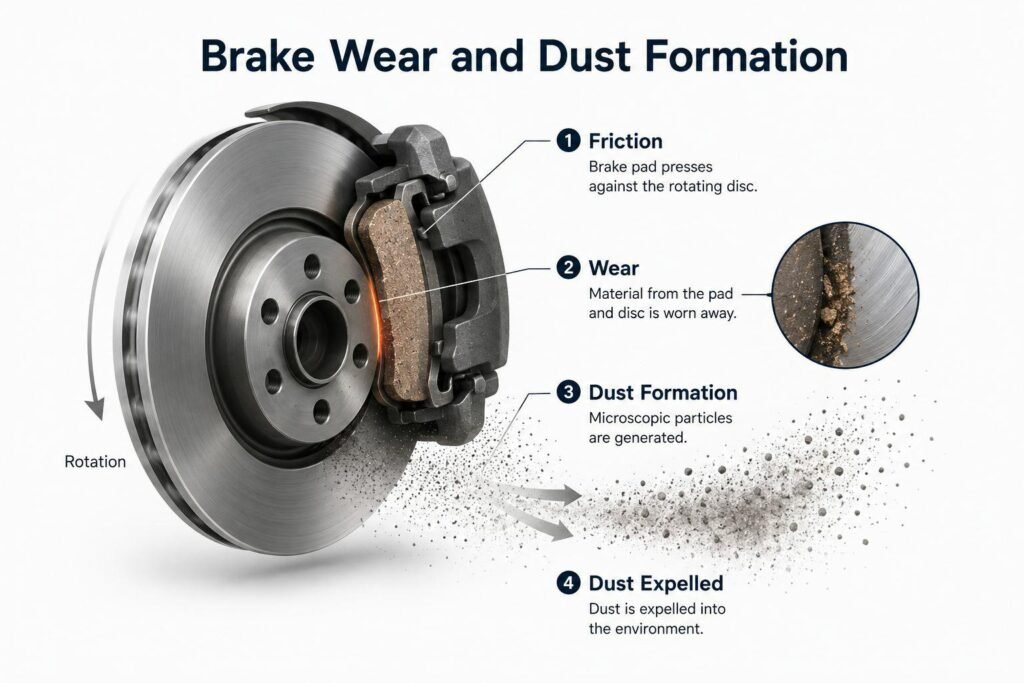
Contribution of Brake Disc Abrasion to Dust Emissions
Disc abrasion plays a critical role in the generation of brake dust. As brake pads clamp down on the discs, minute particles are shed from both surfaces. The composition and durability of the disc significantly dictate the volume and characteristics of dust emitted, pushing the need for materials that balance performance with minimal environmental impact.
Understanding these elements allows us to tackle one of the most pressing concerns in brake design—minimizing the environmental impact of brake dust formation while maintaining optimal brake performance. This balance is not straightforward but can be achieved with careful consideration of brake pad friction, driving style impact on brake dust, and disc abrasion. It’s a pivotal challenge that continues to spur innovation in brake technology.
Brake Pad Material Types and Their Effect on Dust and Wear
Understanding the different types of brake pad materials is essential for any engineer or designer aiming to optimize performance while managing dust and wear in vehicle braking systems. Each material type—low steel, semi-metallic, and NAO—offers unique benefits and challenges.
Low Steel Brake Pads
Low steel brake pads are a staple in the industry, known for their balance between cost, performance, and reduced brake dust emission materials. Designed with minimal metallic content, these pads favor environmental considerations by significantly lowering dust emissions, making them suitable for street applications where minimizing particulate matter is crucial.
Semi-Metallic Brake Pads
Semi-metallic pads, which incorporate a higher proportion of metal, are prized for their robust performance, particularly in demanding situations like high-speed driving or heavy vehicles. However, this increase in metallic content tends to elevate dust production. The key is to align the brake pad materials with the specific needs and conditions of the vehicle to harness their full potential without undue environmental impact.
Non-Asbestos Organic (NAO) Brake Pads
NAO brake pads stand out in the realm of brake pad materials for their low noise and minimal dust traits. These pads, primarily made from organic fibers and filler materials, are increasingly preferred in passenger cars, especially those in urban settings, because of their quieter operation and lower particulate emissions.
Material Selection for Balancing Performance and Emissions
Selecting the right brake pad material is a complex decision that weighs several factors including vehicle type, intended use, desired longevity, and environmental impact. Engineers at Tuoba continuously work to refine these materials to optimize the balance between efficient braking and minimal emissions, tailoring solutions to individual vehicle demands to ensure optimal performance across varied conditions. The following video provides a more visual comparison of Low Steel Brake Pads, Semi-Metallic Brake Pads, and Non-Asbestos Organic (NAO) Brake Pads, helping you better understand their material characteristics, dust behavior, and application differences.
Innovations in Brake Pad Development by Tuoba
At Tuoba, our mission is centered on pushing the boundaries of brake pad technology with cutting-edge Tuoba brake innovation. Understanding that each vehicle and its operating conditions are unique, we dedicate ourselves to crafting custom brake pads tailored to meet these specific needs.
- Customization for Specific Vehicle and Driving Conditions – We develop brake pads that adapt seamlessly to varying driving demands, ensuring optimal performance and safety in diverse scenarios, from urban commuting to high-performance track racing.
- Low Emission Brake Pad Technologies – Our commitment to environmental stewardship is reflected in our pioneering of low emission brake technology. These advanced solutions are designed to substantially reduce brake dust and particulates, aligning with the latest emission standards and enhancing air quality.
- Research and Collaboration for Sustainable Brake Solutions – Collaboration lies at the heart of our strategy. By partnering with leading researchers and institutions, we engage in extensive brake pad research aimed at developing sustainable brake products that do not compromise on durability or effectiveness.
With relentless innovation and a deep commitment to sustainability, Tuoba continues to lead the way in enhancing the braking systems of tomorrow. Through our efforts, we contribute to defining industry standards and exceeding the expectations of automotive professionals and enthusiasts alike.
Testing and Measuring Brake Dust and Wear
Understanding how to effectively test and measure brake dust and wear is pivotal in the development of safer, environmentally-friendly brake systems. With the advancement of technology, the methodology for capturing this data has become more sophisticated, allowing for more accurate and reliable results. Let’s explore some of the key methods and tools used in this critical area.
- Detailed assessment using advanced brake dynamometer setups to simulate realistic driving scenarios, which aids in defining the wear characteristics of different brake materials.
- Measurement of particulate matter emissions from brakes, offering insights into brake dust production under various conditions.
- The integration of temperature and pressure sensors to monitor the performance characteristics of brake systems under controlled laboratory settings.
Real-World Emission Studies and Data Analysis
- Deployment of sensors and collection devices near roadways to monitor the dispersion of brake dust particles in real-time and over extended periods.
- Data analysis from these studies helps in understanding the correlations between traffic density, brake usage, and particulate emissions.
- Evaluation of environmental impact through long-term tracking and analysis, contributing to eco-friendlier brake solutions.
Standardized Cycles and Protocols for Accurate Measurement
- Development and adoption of standardized testing cycles that ensure consistency and comparability of brake emission studies across different laboratories and studies.
- Use of normalized protocols for brake wear measurement to eliminate discrepancies and improve the precision of data collected during brake testing protocols.
- Collaborative efforts internationally to establish uniform guidelines that accommodate various driving settings and brake technologies.
By employing comprehensive brake dust testing, precise brake wear measurement strategies, and dependable brake dynamometer systems, the industry aims to achieve a balance between performance and environmental conservation. These practices not only optimize the functionality of brake systems but also contribute significantly to global sustainability efforts.
Controlling Brake Dust Through Design and Material Engineering
In the quest for superior brake dust control and vehicle safety, the interplay between design and material engineering takes center stage. As technology advances, so does the ability to engineer low dust brake designs that do not compromise performance. Here we delve into how strategic choices in friction material formulation, abrasion minimization, and the development of durable brake components collectively contribute to more sustainable braking solutions.
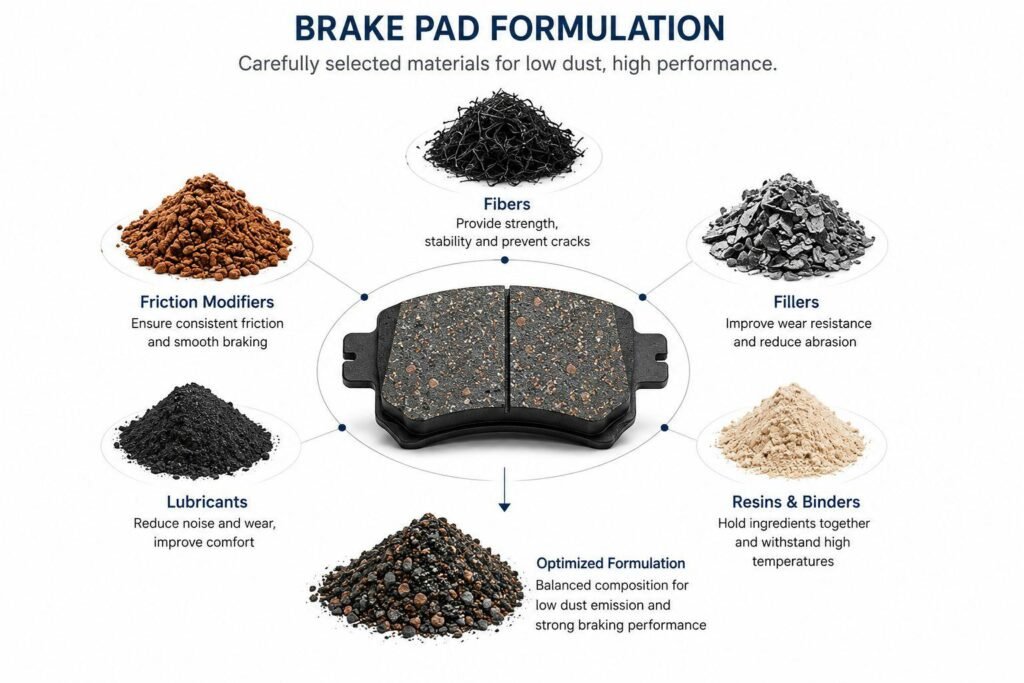
The Role of Friction Material Formulation
At the heart of brake dust control is the friction material formulation. This involves a precise balance of materials that either enhance or inhibit the abrasion of brake components. By selecting specific compounds that are robust yet less prone to degradation, manufacturers like tuoba are able to design brake pads that emit lower amounts of dust while maintaining strong braking power.
Minimizing Abrasion and Particle Generation
A key factor in low dust brake design is abrasion minimization. Strategies include the integration of materials that are inherently tougher and more resistant to wear. This reduction in the rate of abrasion directly correlates with fewer dust particles being released into the environment, thereby promoting clearer air and cleaner vehicle components.
Ensuring Durable and Low Dust Emission Brake Components
- Material Durability: Durable brake components are essential for long-term performance and minimal maintenance. Using advanced metallurgical processes and heat treatments, components are engineered to withstand harsh conditions without deteriorating.
- Consistent Performance: Durability also ensures that the brake’s performance doesn’t degrade over time, which can lead to increased dust production. Consistent material integrity helps maintain low dust emissions.
- Extended Lifespan: Longer-lasting brake components not only reduce the frequency of replacements but also contribute to waste reduction. This sustainability aspect is crucial for manufacturers aiming to lower their environmental impact.
Through careful planning and scientific innovation, the design of brake systems has progressively adapted to meet both functional demands and environmental standards. By focusing on friction material formulation, minimizing abrasion, and ensuring the durability of brake components, manufacturers can significantly reduce brake dust emissions while enhancing the overall efficiency of the braking system.
How Dust and Wear Are Controlled in Brake Pad Development
In the evolving landscape of the automotive industry, controlling brake dust and managing brake wear are paramount for both environmental sustainability and vehicle safety. With a focus on brake pad performance, emission reduction, and innovative brake pad manufacturing, professionals are tackling these challenges head-on.
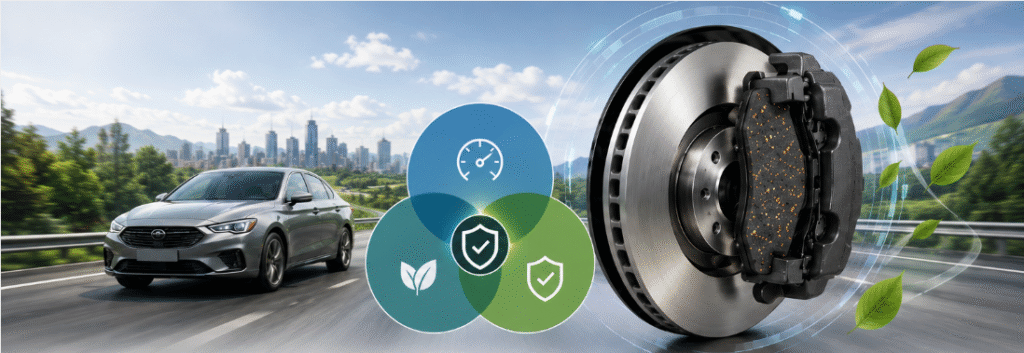
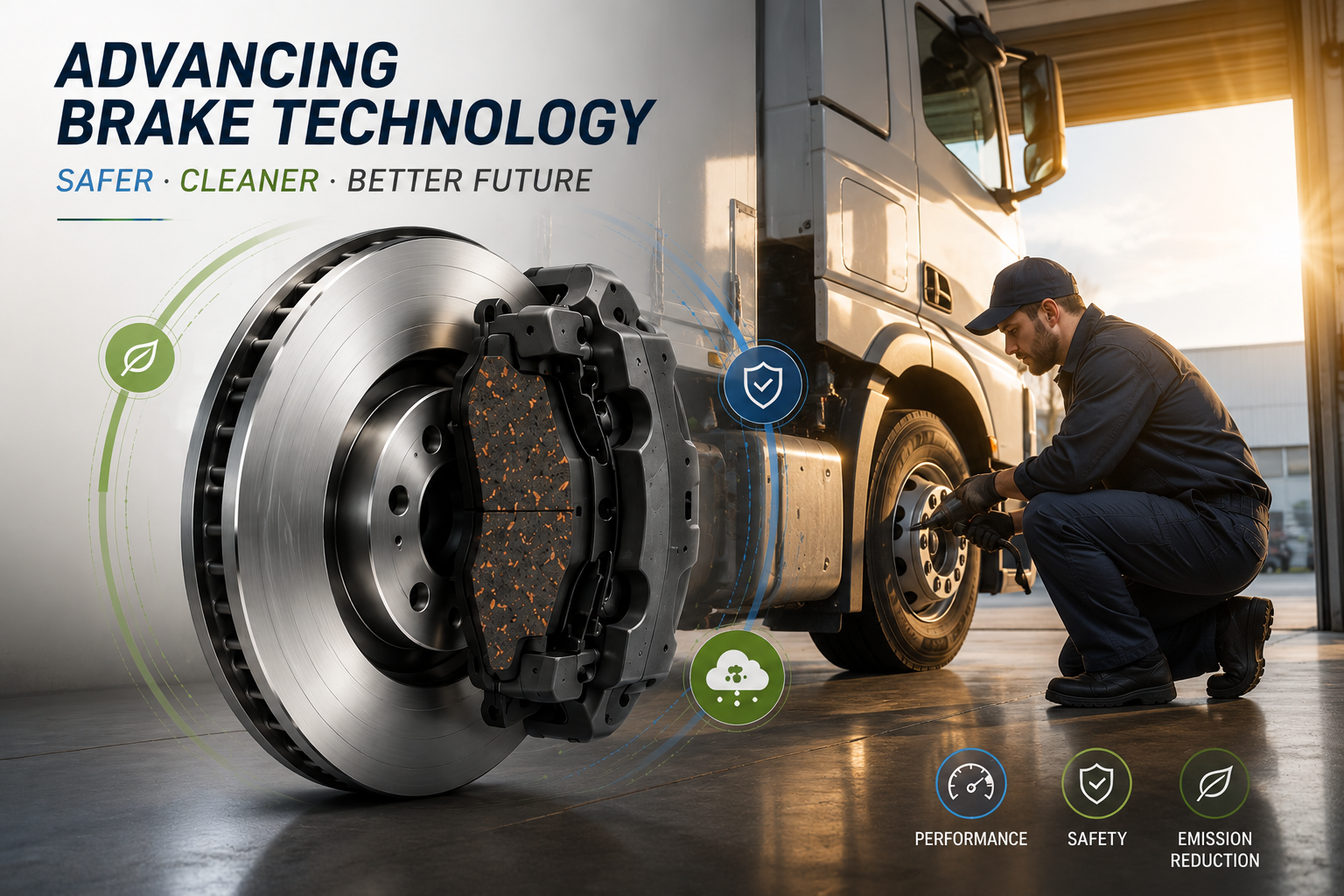
Balancing the threefold objectives of performance, safety, and emission reduction, the development of brake pads is a complex yet crucial aspect of automotive engineering. To achieve these goals, engineers utilize a detailed understanding of materials science and manufacturing processes to refine the functionality and environmental impact of brake systems.
Balancing Performance, Safety, and Emission Goals
The approach to brake pad design is significantly influenced by the need to balance robust brake pad performance with stringent safety standards and environmental regulations. This balance is achieved through meticulous testing and refinement of brake pad materials and designs, ensuring optimal control and minimal dust emission.
Innovative Materials and Manufacturing Techniques
Advancements in brake pad manufacturing innovation play a critical role in emission reduction and enhancing overall brake wear management. By integrating new materials like low steel, semi-metallic, and non-asbestos organic blends, manufacturers at leading companies like Tuoba are setting new benchmarks in brake technology.
Adjusting Brake Pad Properties Based on Usage and Environment
Adapting brake pad properties to suit specific driving conditions and environmental factors is essential for controlling brake dust effectively. Whether it’s for urban settings with frequent stopping or long-distance highway drives, tailored brake pad configurations ensure durability and reduced emissions, aligning with modern environmental expectations.
Through these innovative strategies, the industry continues to progress toward more sustainable and efficient braking solutions, significantly contributing to global emission reduction efforts and enhancing public health and safety.
Conclusion
Addressing brake dust and wear requires more than simply reducing visible dust. It involves balancing friction materials, braking stability, durability, and emission performance under different operating conditions. Because brake dust generation is heavily influenced by brake pad composition, disc interaction, vehicle application, and driving behavior, selecting the right brake pad material becomes a critical part of long-term brake system performance.
As vehicle platforms and emission regulations continue evolving, manufacturers are under increasing pressure to develop braking solutions that not only meet standards such as Euro 7, but also maintain stable performance across various applications and working environments. At Tuoba, we focus on combining low emission brake technologies, application-based material development, and production consistency to support more reliable brake system performance throughout different usage conditions.
For fleet operators, distributors, OEM projects, and aftermarket brands, reducing brake dust is no longer only about cleanliness — it directly affects maintenance frequency, operating costs, service stability, and long-term user experience.
If you are evaluating brake pad materials, developing low emission brake solutions, or looking for more stable braking performance across different vehicle applications, the Tuoba team can help you explore customized brake pad solutions based on your operating requirements.