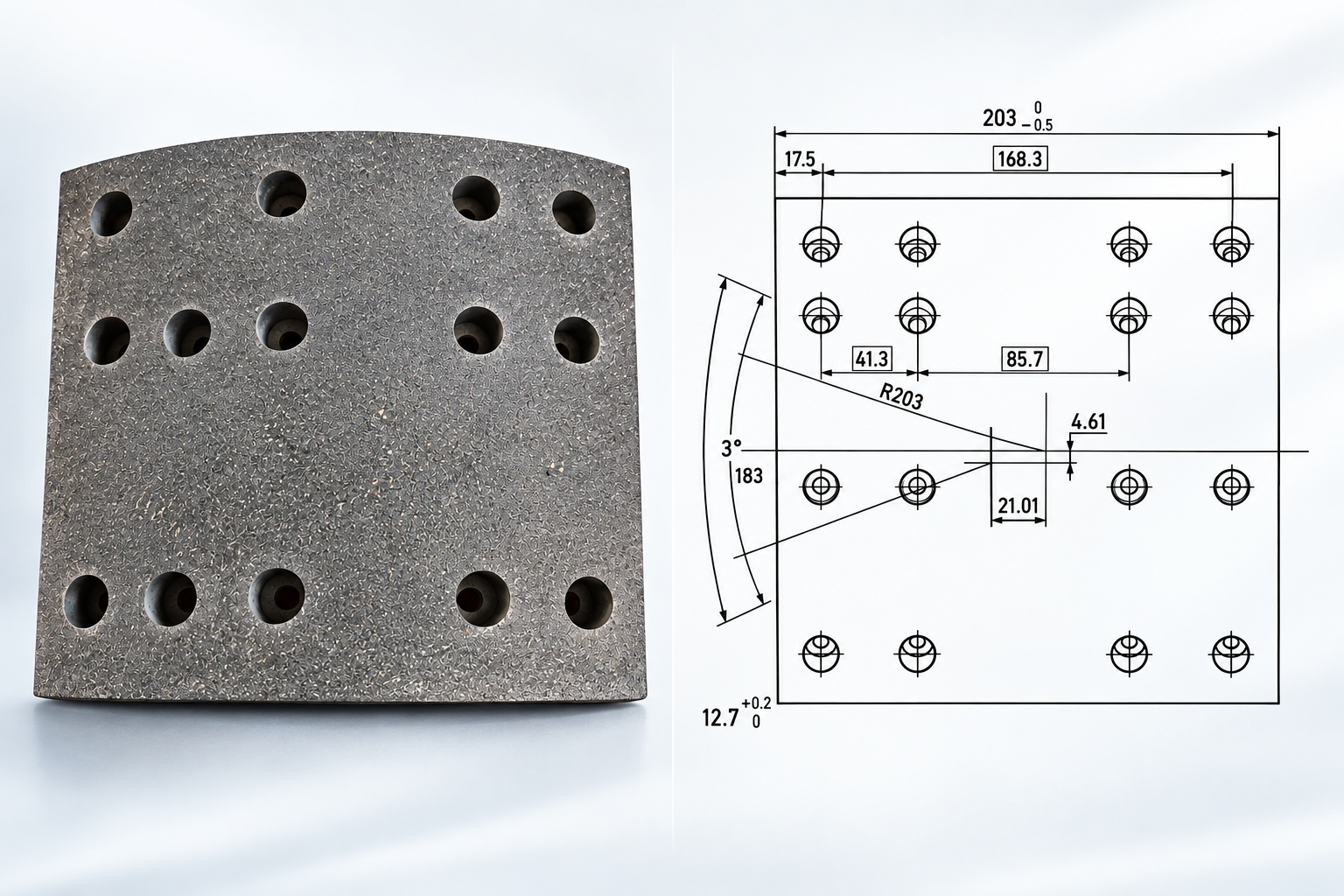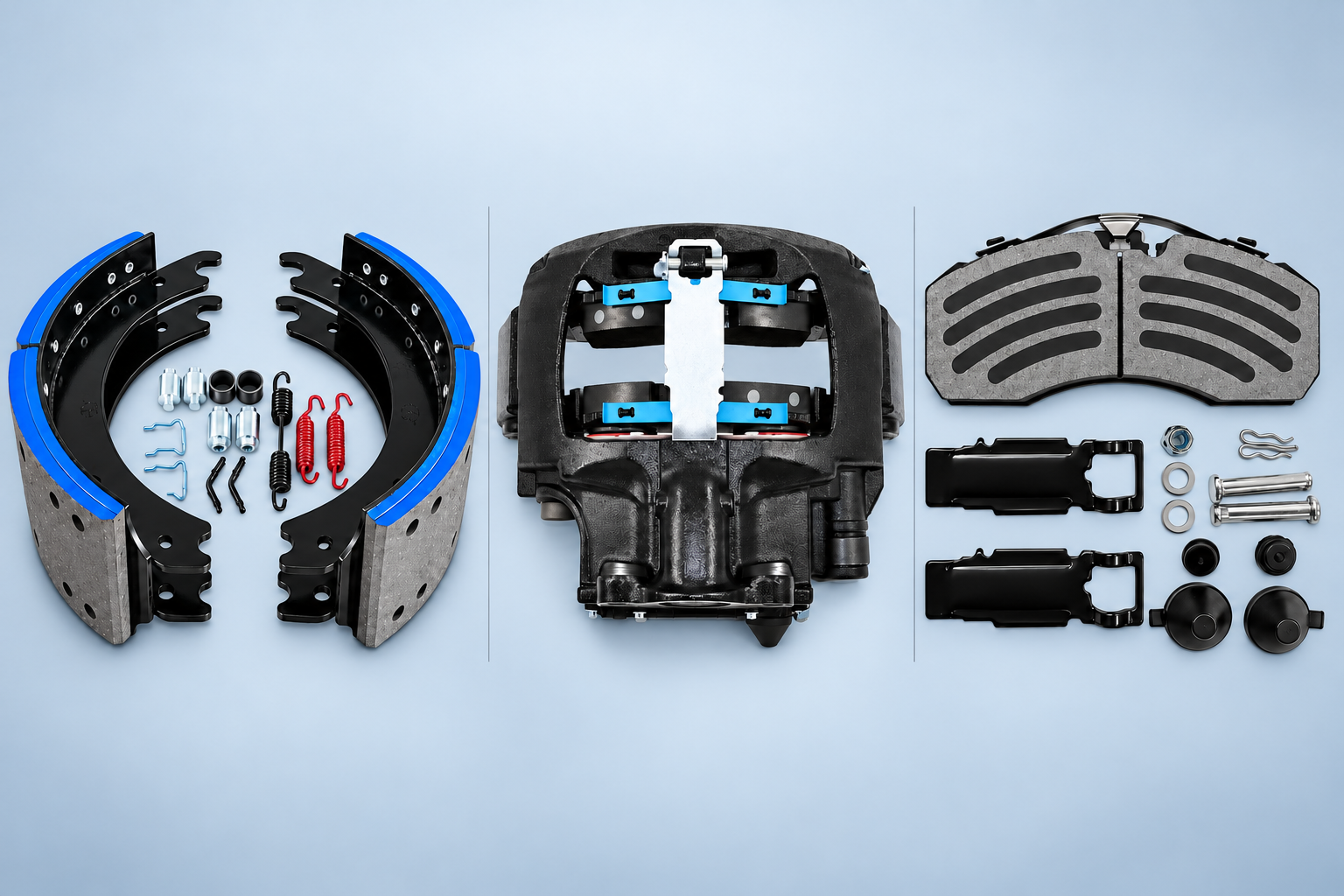
When sourcing truck brake pads for commercial vehicles, fleets, or distribution, the decision goes far beyond price. For B2B buyers, the real risk lies in choosing the wrong product or supplier—leading to complaints, returns, or even safety liabilities.
As critical safety components, brake pads directly affect braking stability, operational safety, and long-term cost efficiency. In practice, sourcing is about evaluating whether a supplier can deliver consistent performance, regulatory compliance, and reliable supply over time.
If you are currently comparing suppliers, it is recommended to request detailed technical data and testing reports early in the process to support more informed decision-making.

Truck Brake Pads Performance: Friction Stability and Braking Efficiency
For heavy-duty trucks, braking systems operate under high load, high temperature, and frequent braking conditions. Under these conditions, friction stability is more important than initial braking force.
When evaluating truck brake pads, buyers should request:
- Friction coefficient range (e.g., whether 0.35–0.45 remains stable across temperatures)
- Fade resistance performance under high heat
- Recovery performance after thermal stress
- Consistency during repeated braking cycles
Inconsistent friction performance can lead to longer stopping distances and unstable braking behavior, especially during downhill driving.
Professional suppliers are typically able to provide dynamometer test data and explain how results translate into real-world performance.
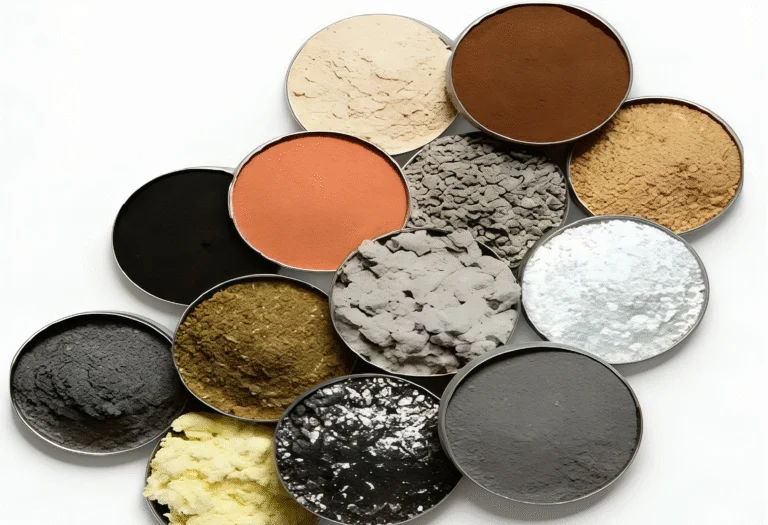
Friction Material Types Explained: Semi-Metallic vs Ceramic vs Heavy-Duty Formulations
Brake pads performance is largely determined by friction material formulation. To better understand how different materials influence braking behavior under different operating conditions, you can refer to our brake pad technology page for a more detailed breakdown.
In practical applications, different formulations are designed to match specific use cases:
Common material types and applications:
- Semi-metallic brake pads
Ideal for long-haul and heavy-load trucks
High heat resistance and strong braking force - Low-copper ceramic brake pads
Suitable for urban fleets and regulated markets
Lower noise and reduced dust emissions - Fiber-reinforced heavy-duty formulations
Designed for extreme conditions and industrial use
Enhanced wear resistance and durability
A reliable brake pad manufacturer should offer multiple formulation options rather than a single standard product.
Experienced suppliers will typically recommend suitable formulations based on your target market (Europe, Southeast Asia, Middle East, etc.), helping reduce the risk of mismatched performance.
ECE R90 and Brake Pad Certification Requirements for Global Markets
In many regions, certification is not optional—it is mandatory.
When sourcing truck brake pads, you should confirm:
- Compliance with ECE R90 certification (Europe)
- Compatibility with North American or other regional standards
- Availability of valid certification documents and test reports
Certification ensures not only compliance but also consistent braking performance compared to original equipment.
In practice, buyers should always request actual certification documents and model-specific test reports, rather than relying on general claims.
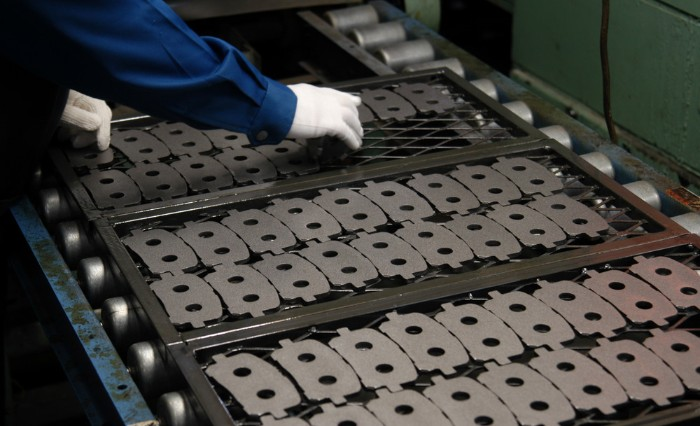
Ensuring Brake Pads Quality Consistency in Mass Production
For distributors and fleet buyers, one of the biggest risks is inconsistent product quality between batches.
The key concern is not the first order—but long-term stability.
You should ask suppliers:
- Do you use automated material mixing systems?
- Is there a batch traceability system in place?
- Are products tested for every production batch?
Manufacturers with automated production processes and strict quality control systems are generally more capable of maintaining stable performance.
In long-term cooperation, consistency of braking components often matters more than price.
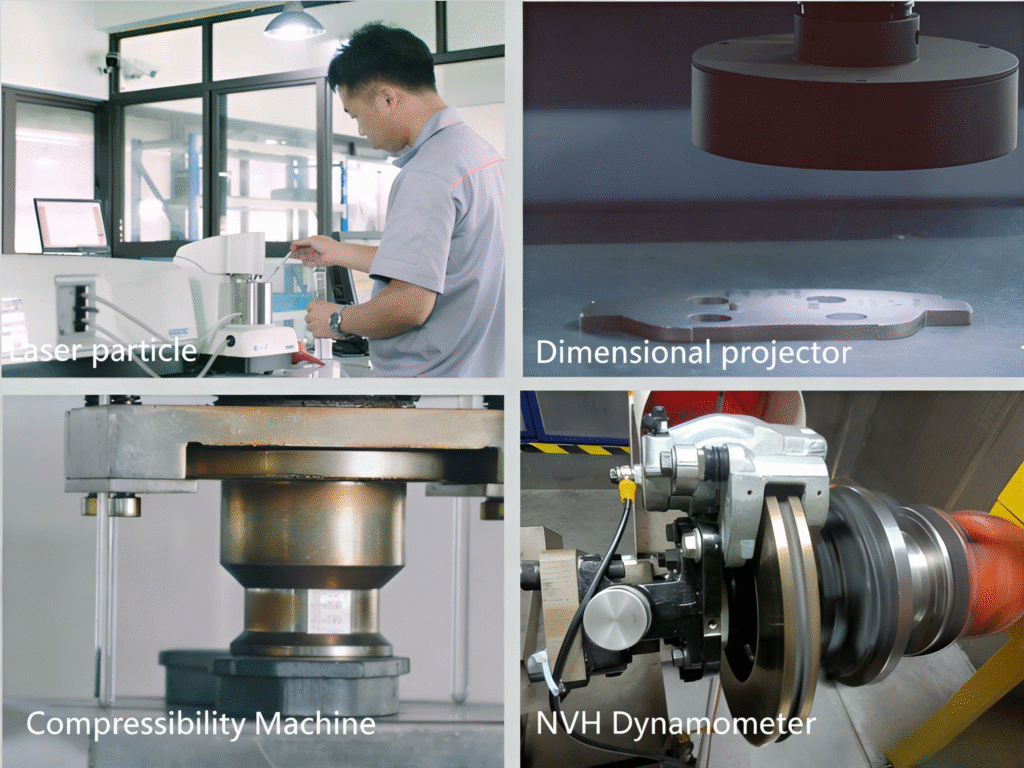
Brake Pad Testing Methods: Dynamometer, Wear and NVH Testing Explained
Testing capability is one of the clearest indicators of a supplier’s technical strength.
When evaluating a truck brake pad manufacturer, confirm whether they provide:
- Inertia dynamometer testing (simulating real braking conditions)
- Wear testing and lifecycle evaluation
- NVH testing (Noise, Vibration, Harshness)
Dynamometer testing helps verify braking performance under controlled conditions, including fade and recovery behavior.
Suppliers with strong testing capabilities are better equipped to ensure product reliability and support performance optimization.
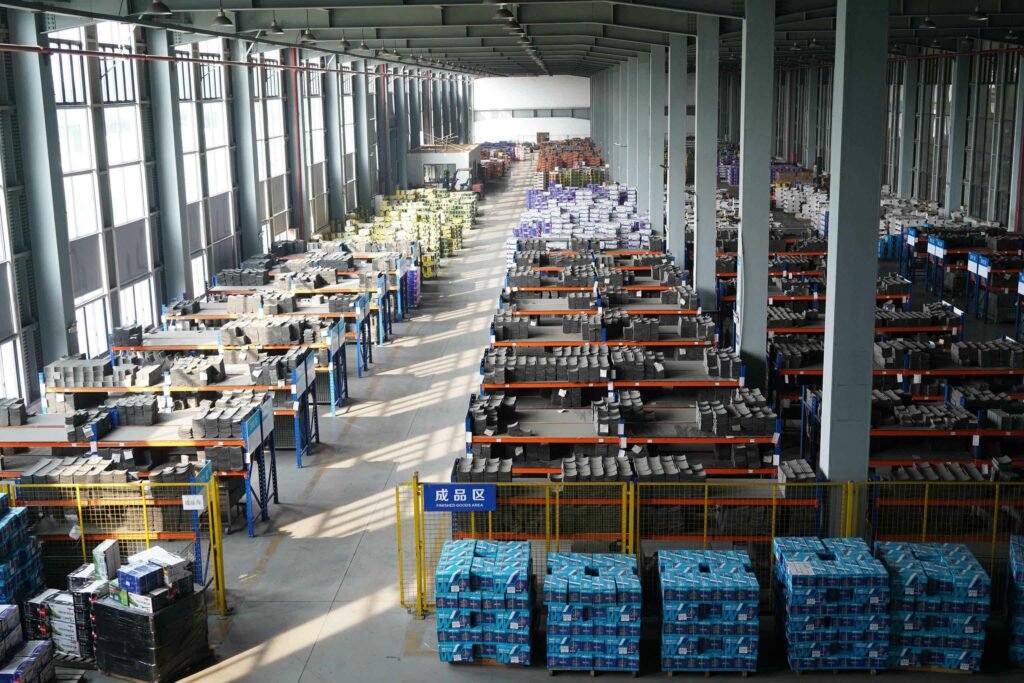
Truck Brake Pad Supplier Capacity and Lead Time for Bulk Orders
For B2B buyers, supply reliability is just as important as product quality.
Key factors to evaluate include:
- Monthly production capacity
- Standard lead time for bulk orders
- Ability to handle urgent or large-volume requirements
Insufficient capacity or unstable delivery can disrupt your business operations and affect customer commitments.
A reliable truck brake pad supplier should be able to provide stable delivery schedules and flexible production planning.
OEM Manufacturer Solutions for Distributors and Automotive Brands
For distributors, importers, and brand owners, customization plays a key role in market competitiveness.
You should confirm:
- Availability of OEM/ODM services
- Custom packaging and branding options
- Ability to adapt products for specific markets
A reliable brake pad manufacturer should be able to offer flexible customization options rather than just standard products.
Custom solutions allow you to differentiate your brand, improve margins, and better meet local market demands.
Conclusion
Sourcing truck brake pads is not just about selecting a product—it is about choosing a reliable long-term partner.
By focusing on friction performance, material formulation, testing capability, compliance, and supply reliability, buyers can significantly reduce risks and improve overall business performance.
Related reading
- China Brake Pad Manufacturer: A Practical Sourcing Guide for Global Buyers
- Top Brake Pad Manufacturers in 2026: A Global Buyer’s Sourcing Guide
- What Defines High-Quality Brake Pads for Trucks and Trailers?
Reviewed by: Robert, Chief Executive Officer, Tuoba Auto Parts
Technical basis: UN ECE Regulation No. 90
Need a quote or a part-number check? Send your OE, FMSI or WVA references, quantities and destination market to our team through the contact page, or email [email protected].