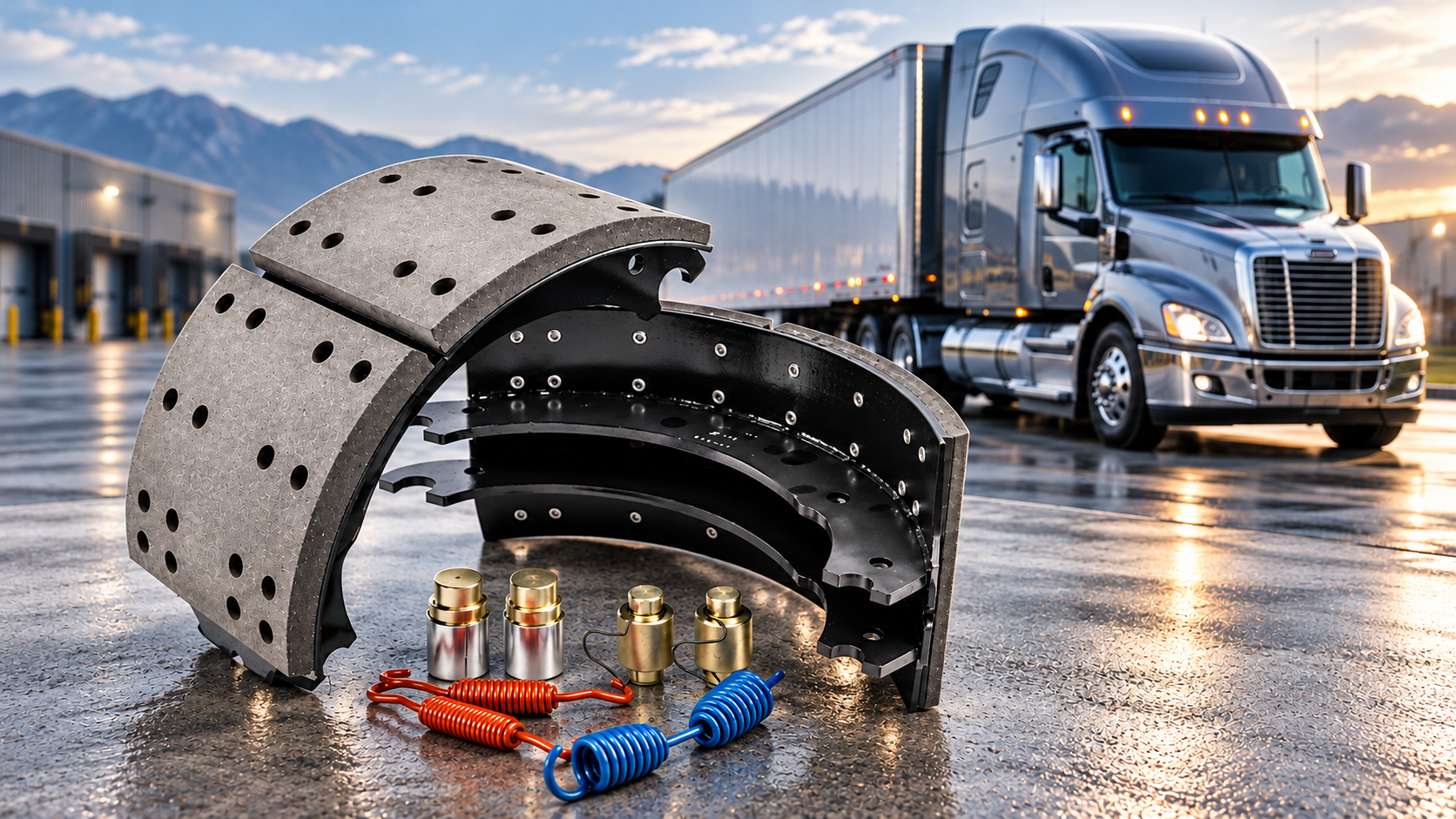
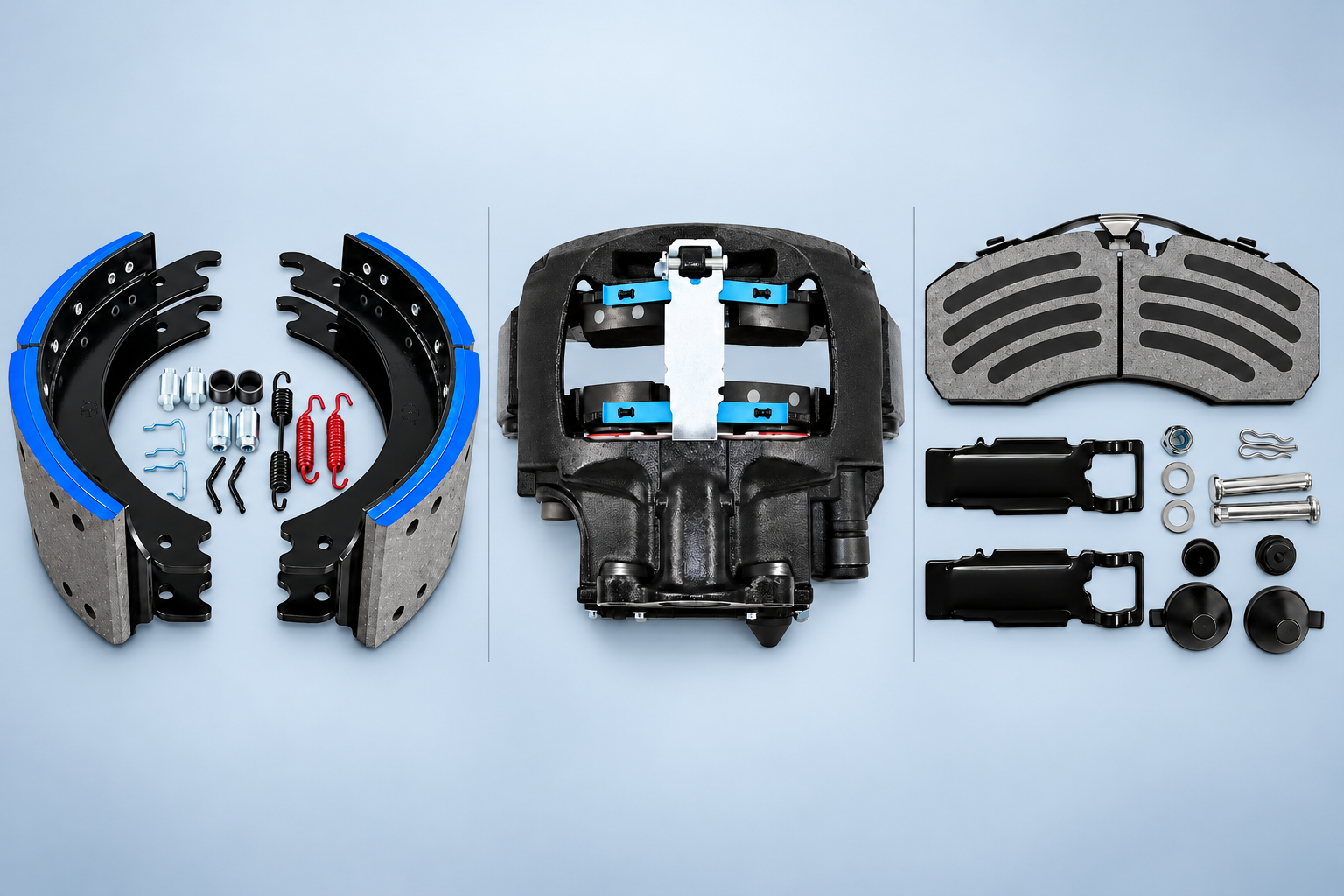
I’m Robert, founder and CEO of TUOBA. When a buyer asks us for brake parts for a semi truck, I usually start with one question: are we talking about air disc brakes or drum brakes?
It sounds simple, but the difference matters. Air disc brakes use pads, while drum brakes use shoes with bonded or riveted friction linings. A tractor-trailer combination may use both designs on different axles. Start with the brake type on each axle, then check dimensions, part references and the truck’s operating conditions. An OE or cross-reference number is a useful starting point, but it may not be enough on its own.
This guide covers one job: working out which brake type each axle has and what to record before you ask for a quote. For choosing and sourcing pads, see our semi truck brake pads buying guide.
Key Takeaways
- Identify the brake type per axle first. Drum shoes and air disc pads are different parts and do not substitute for each other.
- Use the build sheet or brake specification first, then confirm each wheel end. A quick look through the wheel is not enough on its own.
- Record the brake type, model, size, axle position and part reference for each axle.
- Send photos and the cross-reference number with your request so the part can be matched to the exact brake.
Which Brake Type Does Your Semi Truck Use: Drum Shoes or Air Disc Pads?
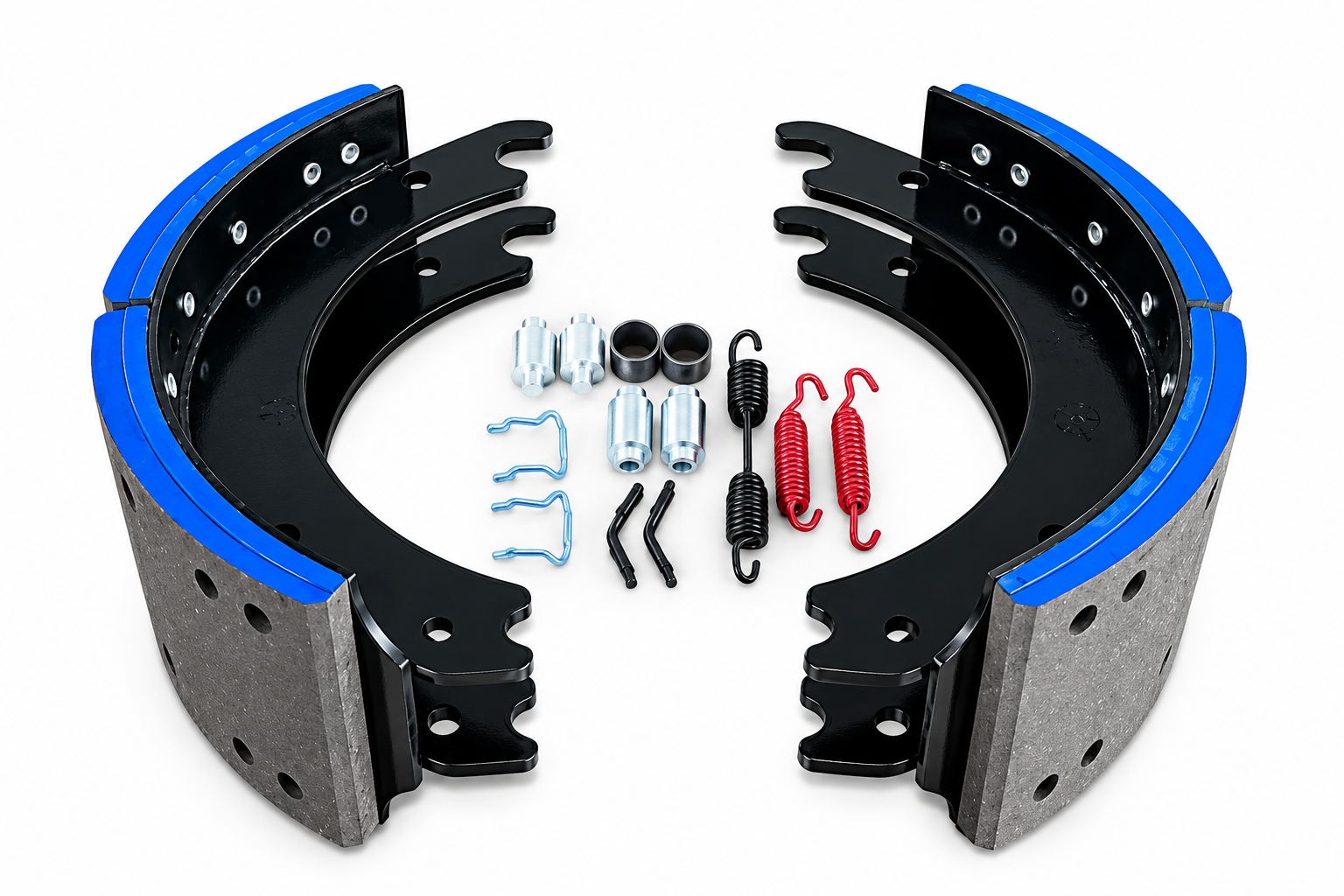
Check each axle separately. Drum-brake axles use brake shoes with friction linings inside a drum, while air disc axles use pads that clamp a rotor. These are different parts, so one tractor can need shoes on one axle and pads on another; neither substitutes for the other.
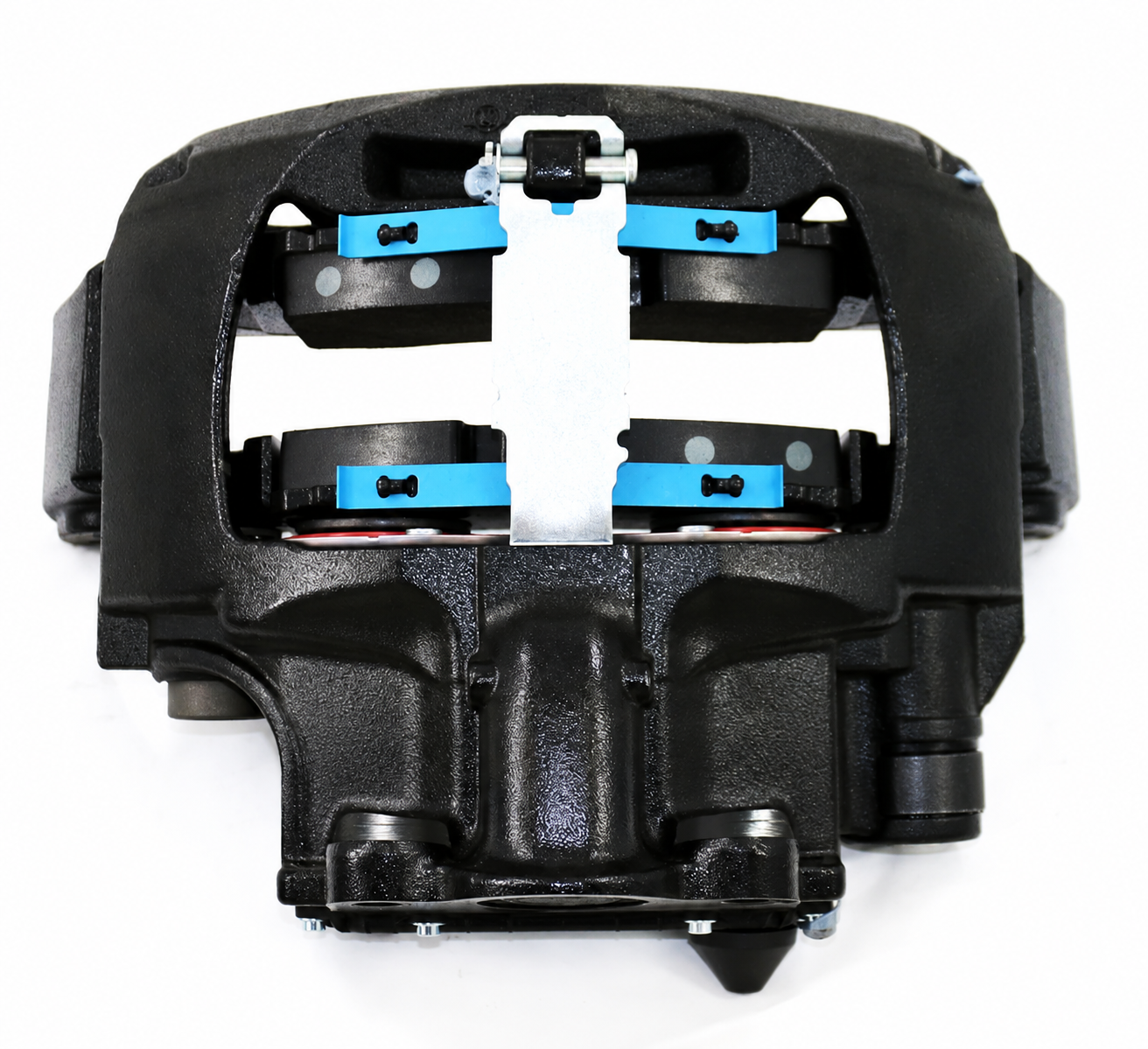
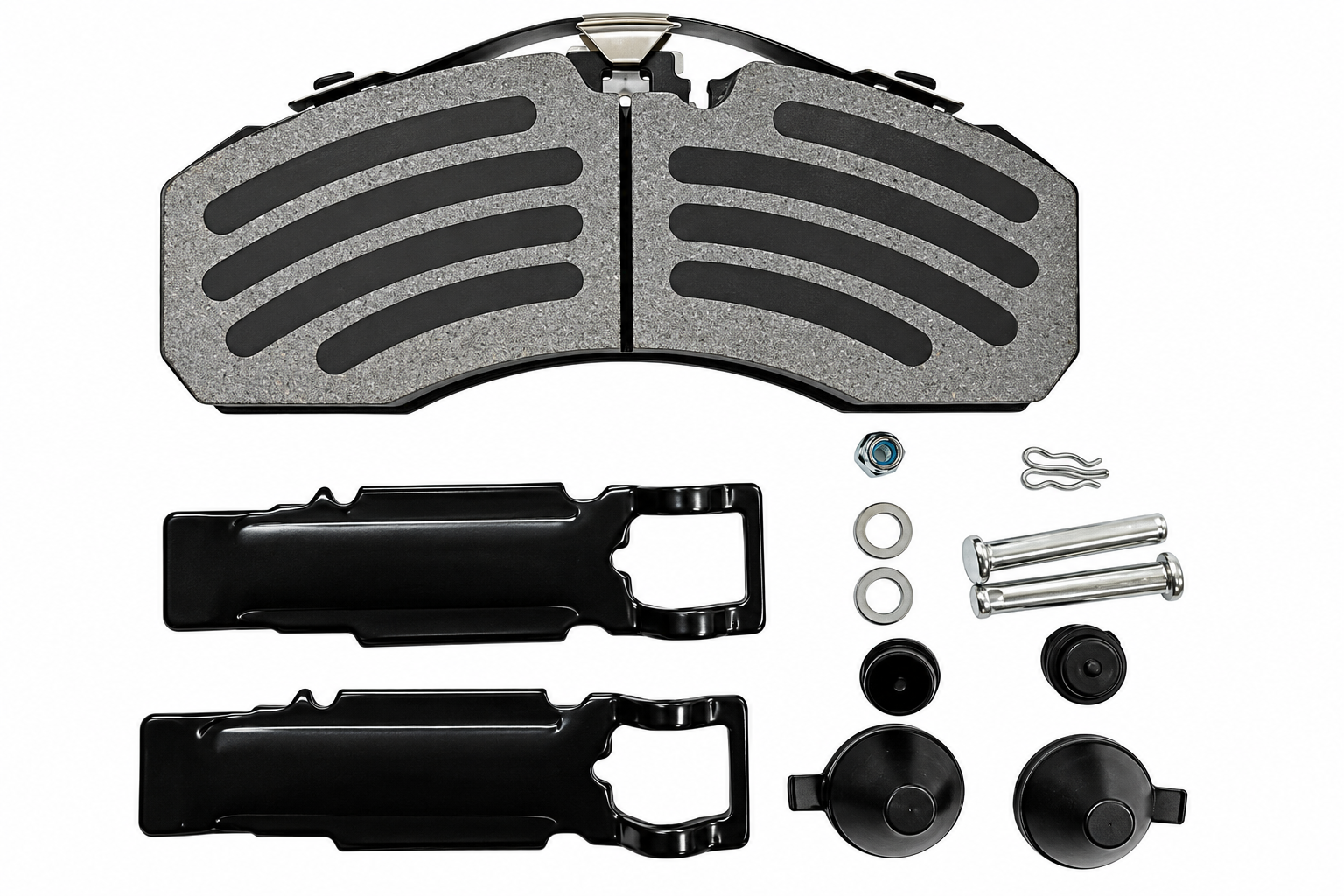
The federal brake rule treats the two designs separately. 49 CFR 393.47(d), headed “Linings and pads,” sets minimum thickness by brake type and by whether the axle is a steering or non-steering axle. It does not tell a buyer which design a particular axle has, so the vehicle itself or its build record has to answer that question. The actual limits are laid out in our brake pad thickness and inspection guide.
Here’s what to check on each axle:
- Brake type per axle: Steer, drive and trailer axles can use different designs on the same combination.
- Part form: A drum brake takes a shoe with lining; a disc brake takes a pad on a backing plate.
- Axle position: Steer and non-steer axles are listed separately in the thickness rule, so record the position with the part.
- Trailer axles: Trailer brakes follow their own sizing and fitment; see semi trailer brake pads.
How Do You Confirm the Brake Type at Each Wheel End?
Start with the vehicle build sheet or brake specification, then confirm each wheel end. If the components are visible through the wheel opening, a caliper around a flat rotor points to an air disc brake; a drum assembly points to drum brakes with shoes inside. Wheel design can block the view, so don’t rely on a quick visual check alone.
A brake assembly label, where fitted, or the manufacturer’s documentation can help identify the model. Bendix’s drum-brake product information is one example of a manufacturer’s reference. Record the brake type, model, size and part reference for each axle before requesting a quote.
If you are still deciding between the two designs for a fleet or trailer, our air disc vs drum brake comparison covers that choice.
What Should You Record for Each Axle Before Requesting a Quote?
Table 1. Axle record for a brake parts request
| Item | Why it matters | What to send or ask |
|---|---|---|
| Brake design and dimensions | Disc and drum friction parts differ; dimensions must match | Vehicle spec sheet; brake make/model and wheel-end photos |
| Axle position | Steer and non-steer axles are treated separately in the thickness rule | Steer, drive or trailer axle for each line item |
| Part number or cross-reference | Matching shape alone does not verify compatibility | OE number, cross-reference and brake-assembly model |
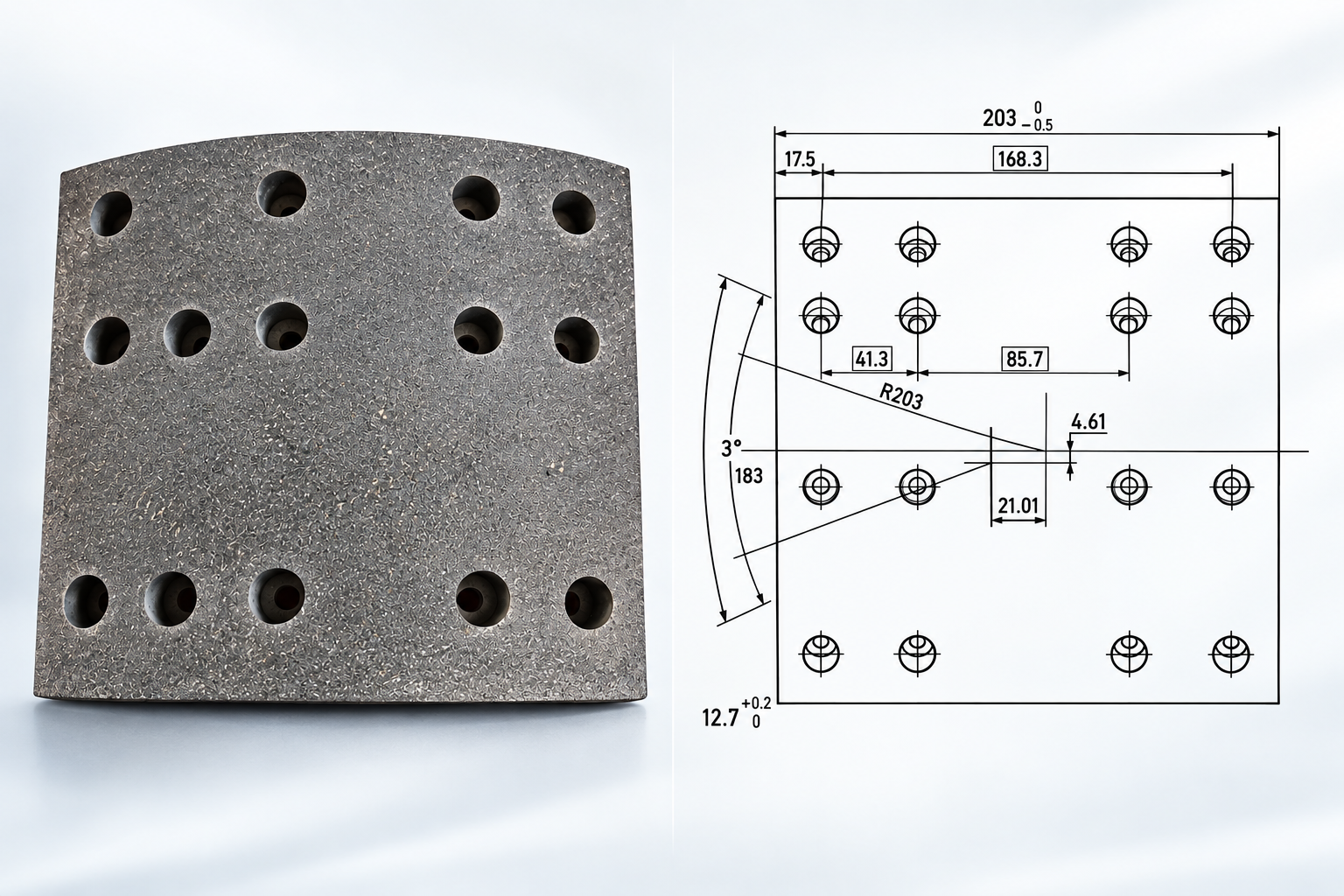
For air disc pads, share the caliper make and model, pad shape and OE or cross-reference number where available. For drum shoes, provide the drum diameter, shoe width, lining arrangement and attachment method. Also include quantities, axle position and destination market.
Once the brake type is settled, the next questions have their own guides: ceramic vs semi-metallic friction material, what FMVSS 121 and test reports do and do not show, and the full semi truck brake pads buying guide.
FAQ
How can I tell if my semi truck has air disc or drum brakes?
Check the vehicle build sheet or brake specification first, then confirm each wheel end. A caliper around a flat rotor points to an air disc brake; a drum assembly points to drum brakes with shoes inside. Wheel design can block the view, so don’t rely on a visual check alone.
Can one tractor have both drum and air disc brakes?
Yes. Steer, drive and trailer axles can use different designs on the same combination, so check each axle separately.
Can the same parts be used on the steer and drive axles?
Not necessarily. Steer and drive axles can have different brake types, sizes and duty. Confirm the part number for each axle position, because one part may not fit both.
Where do I find my brake model?
A brake assembly label, where fitted, or the manufacturer’s documentation can help identify the model. Record the model, size and part reference for each axle before requesting a quote.
Related reading
- Semi Truck Brake Pads: How to Identify, Compare and Source the Right Pads
- How Fleets Decide Between Air Disc and Drum Brakes
- Commercial Truck Brake Pad Thickness: Minimum Limits and Inspection Guide
- Semi-Metallic vs Ceramic Brake Pads: Which Is Better?
Reviewed by: Robert, Chief Executive Officer, Tuoba Auto Parts
Technical basis: 49 CFR 393.47(d), eCFR · Bendix drum-brake product information (general product reference)
Not sure which brake type or parts you need? Send TUOBA your brake type, OE or cross-reference number, axle details and operating conditions. Our team can help review fitment information and suitable options. Contact TUOBA.