Source brake pads from China for a while and you notice something frustrating. Every supplier looks about the same online: the same factory photos, the same certificate list, the same promise of “OEM quality at competitive prices.” The pads that actually arrive are another story. Some are genuinely OE-grade. Others are repackaged friction material with batch consistency nobody can vouch for.
That’s the real problem with sourcing here today. China is now the largest brake pad manufacturing base in the world, and the gap between top-tier factories and back-street workshops has never been wider. Pick well and you get a partner who can grow with you across several markets for years. Pick badly and you’re the one absorbing the warranty claims, the bad reviews and the damage to your channel.
This guide walks through how experienced buyers actually check brake pad manufacturers in china: how to tell a real factory from a trading company, what certifications do and don’t prove, what to ask before the first order, and why long-term partnerships beat spot buying.
Why Global Buyers Source Brake Pads from China
Most buyers already know why China. The supply chain for friction materials, backing plates, shims and packaging sits in a few industrial clusters, so a serious factory rarely waits more than a few days for any input. We cover the clusters, the OEM shift and how to plan a sourcing trip in our guide to sourcing brake pads from China. This page is about the next step: telling a real manufacturer from everyone else.
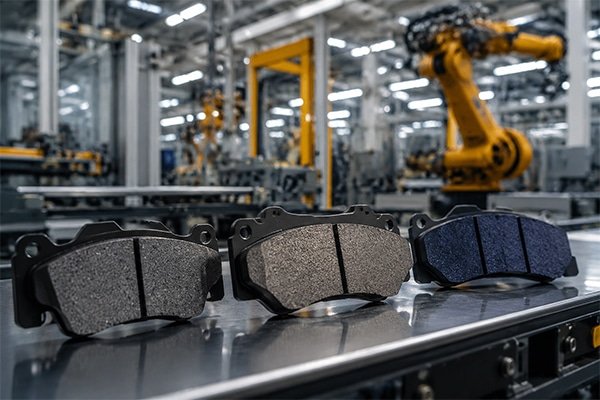
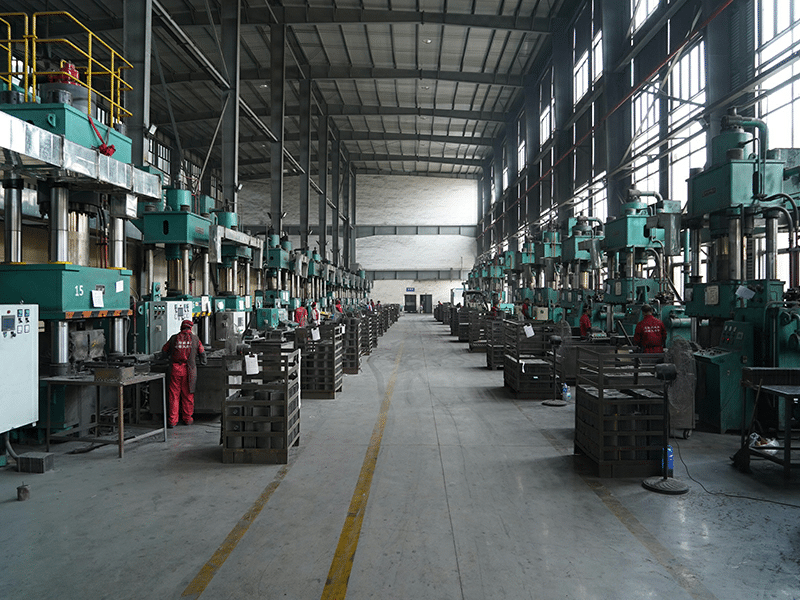
For reference, our own plant makes over 10,000 tons of brake pads and 600,000+ brake shoe assemblies a year. Batching runs through an automated system with 48 silos and barcode tracking, and pads are formed in a one-step molding process with pressure control. You can see our Chinese brake pad factory below.
What Separates a Professional Brake Pad Manufacturer from a Trading Company
Factory or trading company? Both have their place. Trading companies give you flexible sourcing and access to several suppliers. A factory gives you the most control over how the pad actually performs, from raw material to finished box.
Factory Advantages
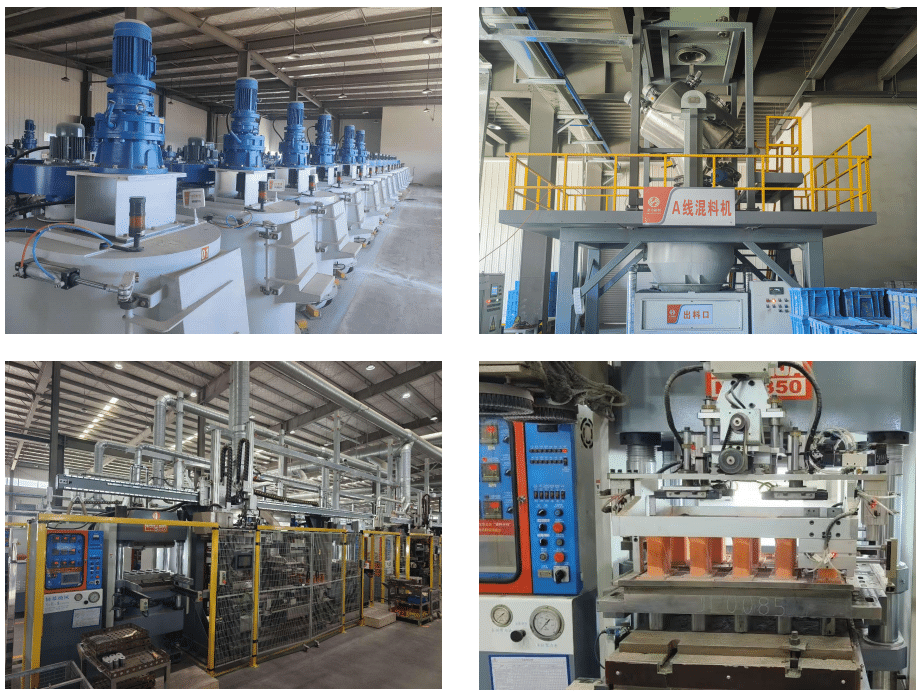
Buy direct from a factory and you can see the whole process. These are the capabilities that matter:
- Automated weighing and mixing systems: hold the formula precisely and cut batch-to-batch variation.
- Hot-pressing presses with controlled pressure and temperature curves: give the pad the right density and structure.
- In-house scorching ovens: stabilize early bedding behavior, with no variation from outsourced steps.
- Dedicated production lines for different friction systems: no cross-contamination between ceramic and semi-metallic pads.
Control like this means fewer warranty problems, steadier performance and room to scale. A verified factory tour, on site or by live video, is the quickest way to check it’s real.
Trading Company Advantages
Trading companies are useful for smaller volumes or when you want access to several factories at once. They can handle logistics, price competitively and turn things around quickly.
They’re also good at coordinating several suppliers, consolidating orders and reacting fast to urgent requests. If you need shorter lead times or want to test a few product lines before committing to one factory, a trader can be the easier option.
For a long-term program built on quality, traceability and consistency, though, go to the factory. Buyers who care about predictable performance and end-to-end control usually get more value working directly with a dedicated brake pad manufacturer.
Formula Development
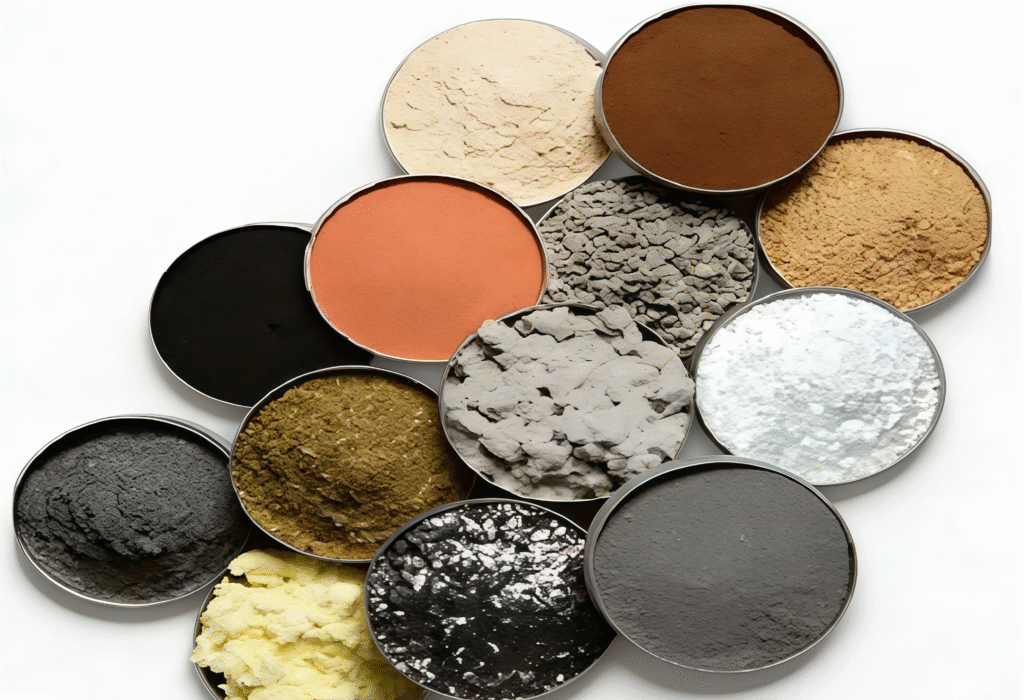
A real manufacturer is a friction material company first. Pressing and packing are commodity steps. The engineering value sits in the formula.
Ask whether your supplier’s in-house R&D is running:
- Multiple ceramic compounds tuned for different vehicle weights and duty cycles
- Semi-metallic formulations engineered for sustained thermal load
- Low-metallic compounds for European OE-equivalent applications
- Heavy-duty and commercial vehicle formulations
- EV-specific compounds designed for regenerative braking duty cycles, lower base loads, and corrosion exposure between brake applications
A supplier that can only offer “one ceramic and one semi-metallic” off the shelf isn’t a development partner. It’s reselling someone else’s formula. For a benchmark, Tuoba runs a 50+ member R&D team and supplies more than 110 brand customers with brake pad formulation work tuned to specific applications: long-haul trucking, mining, port operations, mountain transport and extreme climates.
Testing Equipment
In-house testing is one of the cleanest ways to tell a manufacturer from a trader. Look for:
- Inertia dynamometer: the core rig for ECE R90 validation, fade testing and friction characterization. Without one, a factory has no way to check its own product before it ships.
- CHASE friction tester: SAE J661 friction coefficient testing.
- Noise dynamometer (SAE J2521): NVH validation.
- Shear strength tester: measures the bond between friction material and backing plate.
- Compressibility tester: checks pedal feel.
A real manufacturer can show you test reports for the exact part numbers you’re buying, dated within the last 12 months and run on its own equipment. A trader shows you a generic third-party report that doesn’t name your part number.
Production Traceability
Traceability is what protects you when something goes wrong. In any long-term program, something eventually will. The question is whether you can isolate the problem or end up staring at a black box.
Check that your supplier keeps:
- Batch numbering on every production lot, printed or stamped on the backing plate or packaging
- Raw material traceability linking each batch back to specific supplier lots and incoming inspection records
- Process parameter records for pressing pressure, cure temperature and cure time, kept for years rather than overwritten weekly
- Final inspection records including friction coefficient samples from each batch
- Customer-specific batch records so a noise complaint from a fleet customer can be traced to the exact production day
This level of recordkeeping is standard at IATF 16949 certified facilities and almost nonexistent at trading-company operations.
Export Experience
Export history tells you more than any sales deck. A manufacturer that routinely ships to 50+ countries has already learned what new exporters are still finding out: country-specific homologation, regional packaging rules, certificate of origin paperwork, container loading for FOB vs CIF, and how disputes get settled in different markets.
So ask about your markets. A real exporter will talk specifics: labeling rules in your country, the certificate set customs will want, typical lead time to your port, payment terms they’ve used in your region. A trader tends to answer in generalities.
How Buyers Evaluate Brake Pad Quality Before Cooperation
Once you’re sure it’s a real manufacturer, move on to the technical check. Don’t skip it just because the samples look good. A sample is one production run. What matters is what arrives in production batch #47, two years from now.
Most experienced buyers check five things before they commit:
Friction coefficient stability.
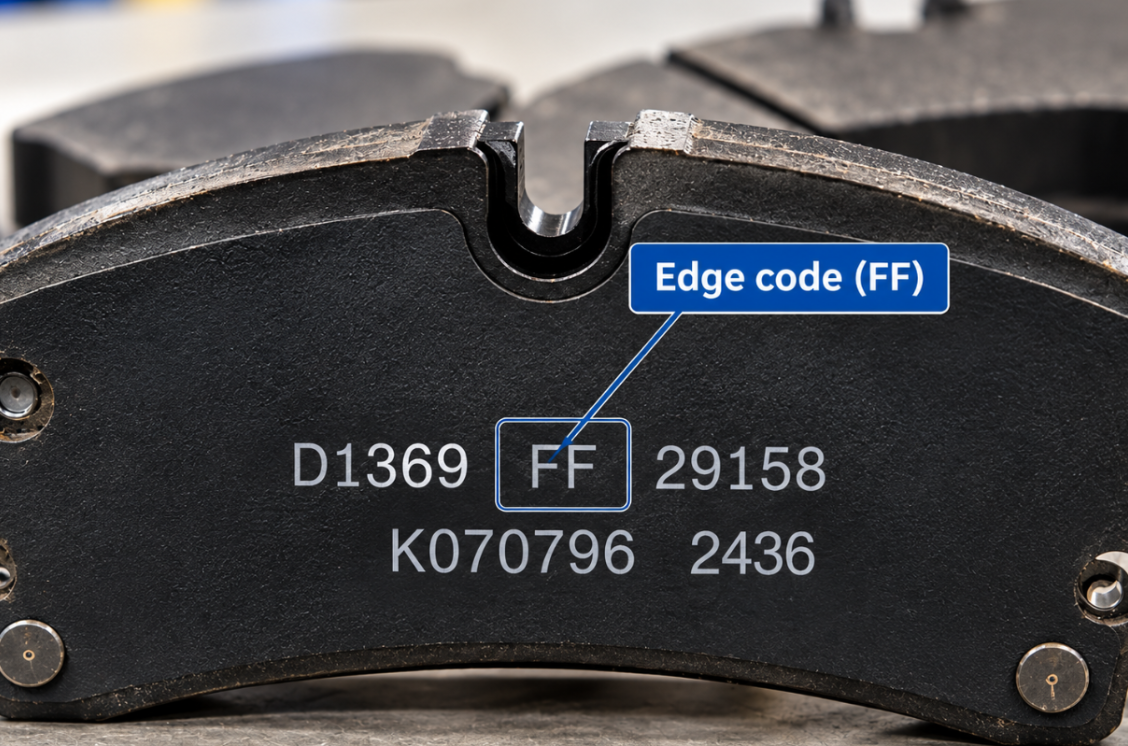
This is the spec that matters most. SAE J866 defines friction codes (FF, GG, HH) as bands, not single values, so two pads with the same “FF” code can differ in real braking force by 20% or more. You don’t want a high friction code. You want consistency: batch-to-batch friction coefficient variance under ±0.02. Anything wider shows up as a different pedal feel from one batch to the next, and your customers will notice.
Wear rate
A pad that lasts 80,000 km in one batch and 50,000 km in the next wrecks your warranty math, even if both numbers look fine on their own. Predictable wear beats maximum wear life.
Noise performance
Noise is the most common reason end customers reject a pad. Stopping performance can be perfectly acceptable and persistent squeal or low growl will still drive returns. SAE J2521 testing under controlled conditions shows whether the compound and the shim package work together.
Thermal fade resistance
A pad that’s fine at 100°C and falls apart at 350°C is dangerous, and “works well in city driving” hides exactly that failure. Dynamometer fade testing finds it before your customers do.
Rotor compatibility
A pad that chews through your customer’s rotors costs them money, however cheap the pad was. It’s one of the quiet reasons fleets drop suppliers. They measure total brake system cost, not pad price.
So the right question isn’t “what’s your friction coefficient?” It’s “Can I see the dynamometer test report for this part number, dated within the last 12 months, with batch-to-batch variance data?” The answer tells you whether you’re talking to a manufacturer or a confident trader.
Certifications and Standards Buyers Should Understand
Certifications are the minimum filter, and they’re often misread. A certificate says a specific product met a specific standard on the day it was tested. It says nothing about every batch for the next three years. You still need the traceability and consistency evidence above.
These four matter most for global brake pad sourcing:
ECE R90
The European homologation that requires aftermarket pads to perform within ±15% of OE friction behavior. It applies across the EU and has been adopted in over 50 additional countries, including Egypt, Malaysia, UAE, Colombia, South Africa and New Zealand. ECE R90 testing covers sample preparation, bedding, performance across temperature ranges, cold performance equivalence and dynamometer validation, and takes weeks per part number family. If your market requires R90 and the supplier can’t show a certificate that matches your exact part number, walk away.
FMVSS 135
The U.S. vehicle-level brake performance standard. It works differently from ECE R90: the United States has no mandatory replacement-part certificate like R90. What buyers should look for is evidence of OEM-compatibility testing against FMVSS 135 vehicle-level requirements. It’s also why “ECE R90 certified” doesn’t automatically mean “compliant in the U.S. market.”
SAE J2521
The dynamometer-based noise test. It matters for OE-quality programs because noise complaints make up an outsized share of warranty cases. A supplier with in-house SAE J2521 capability has already paid to get noise right.
SAE J2522 (AK Master)
The common friction characterization test behind most brake pad performance claims. When a supplier sends “test results,” ask whether it was J2522. If it was, ask for the full curve, not just the average.
Then check the system-level certifications:
- IATF 16949: automotive quality management, the baseline for any supplier serving OEM programs.
- AMECA registration: required for friction codes on pads sold in North America.
- ISO 14001: environmental management, which matters more as European buyers add ESG criteria.
The critical insight: certification ≠ batch consistency
A factory can hold every certificate on this list and still ship inconsistent pads if its daily process control is sloppy. Check certificates together with traceability, batch consistency data and, ideally, an on-site audit. At the very least, ask for a live video walkthrough of the actual line.
Common Problems Buyers Face When Importing Brake Pads from China
Even after careful vetting, buyers keep running into the same problems with Chinese sourcing. Spot the patterns early and you can head them off.
Batch inconsistency
The top complaint from buyers who source on price. Friction coefficient drifts, wear rates shift, NVH changes, and the supplier calls it “normal manufacturing variation.” Real manufacturing variation is ±0.02 friction coefficient. Anything beyond that is a process control failure.
Delayed shipments
This hurts most in peak season, September through December for most Northern Hemisphere markets. A factory that ships on time in March won’t necessarily do it in October, when global demand spikes. Ask about peak-season capacity utilization. A plant running at 95% in normal months has no room for your urgent order.
Unstable friction materials
Usually this goes back to raw materials. A factory that switches between three resin suppliers depending on the week’s prices makes pads with three different thermal behaviors. Make sure your supplier keeps stable raw material relationships with documented incoming inspection.
Poor packaging
Packaging gets underrated as a quality issue, but it hits your channel directly. Cracked corners, mislabeled boxes and inconsistent barcodes all cost money at the warehouse and on the shelf. Platform-ready packaging, with accurate fitment labels, scannable barcodes and consistent box sizes, is one of the practical signs of a manufacturer that understands the global aftermarket.
Lack of after-sales support
A fleet customer calls with a noise complaint or a warranty claim. What happens next? Does your supplier dig in, asking for batch numbers, requesting samples back, offering a replacement plan? Or does it go quiet and hope the problem disappears? After-sales support is one of the best predictors of whether you’ve found a long-term partner or just a vendor.
Knowing these patterns is, in practice, how you separate brake pad brands to avoid from reliable brake pad brands in the Chinese supplier base.
How Chinese Brake Pad Manufacturers Support Private Label and OEM Projects
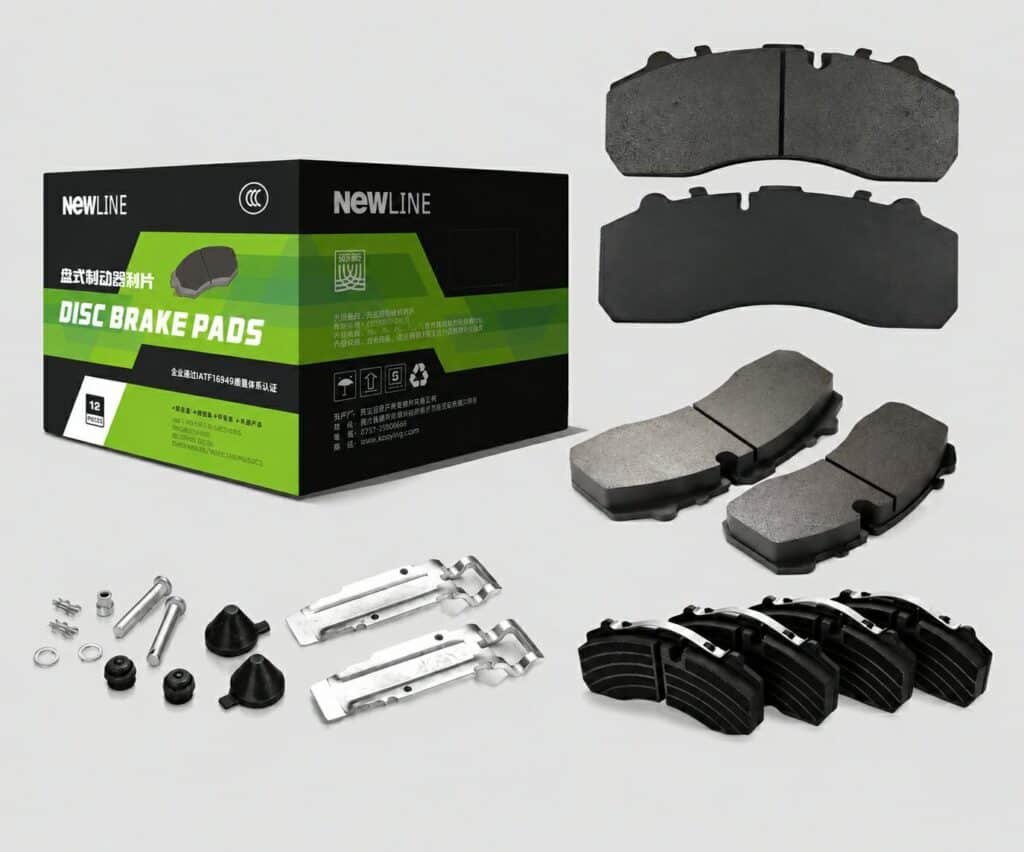
Customization is one of the strongest reasons to source from China. Legacy brands rarely offer this depth at a workable MOQ. A serious custom brake pads manufacturer in China usually supports:
Logo customization
Brand markings on the pad itself (backing plate, friction surface edge or shim) and on the box. The usual approach is in-mold marking on the backing plate and your own artwork on the packaging.
Packaging design
Full packaging customization: box sizes that suit your retail or e-commerce channel, custom inserts, multi-language labels, MAP-compliant barcodes, and the specific requirements of Amazon, MercadoLibre or regional B2B marketplaces. A good manufacturer treats packaging as part of the product.
Formula tuning
This is where the real value is. A factory with genuine R&D depth can adjust friction coefficient, wear rate, NVH behavior and rotor compatibility for your market. A pad built for German Autobahn driving uses a different compound from one built for Brazilian stop-and-go traffic or Middle Eastern heat. A real manufacturer will talk you through the trade-offs. A trader will just say “we can do anything.”
Regional market adaptation
Every market has its own priorities. Northern Europe wants cold-weather initial bite and low corrosion. The Middle East needs high-temperature stability. In Southeast Asia, humidity degrades binders. Latin American buyers often need pads that cope with extreme climate swings across the same vehicle parc. An experienced manufacturer has seen all of this and can match the formula to your market.
MOQ flexibility
This is a big commercial difference from legacy brands. A legacy brand may ask for a six-figure annual commitment before it customizes anything. A serious Chinese manufacturer usually accepts a lower entry-point MOQ for private-label programs and improves pricing as volume grows. That’s what makes a regional private-label brand affordable to build.
Why Fleet Buyers Focus on Consistency More Than Price
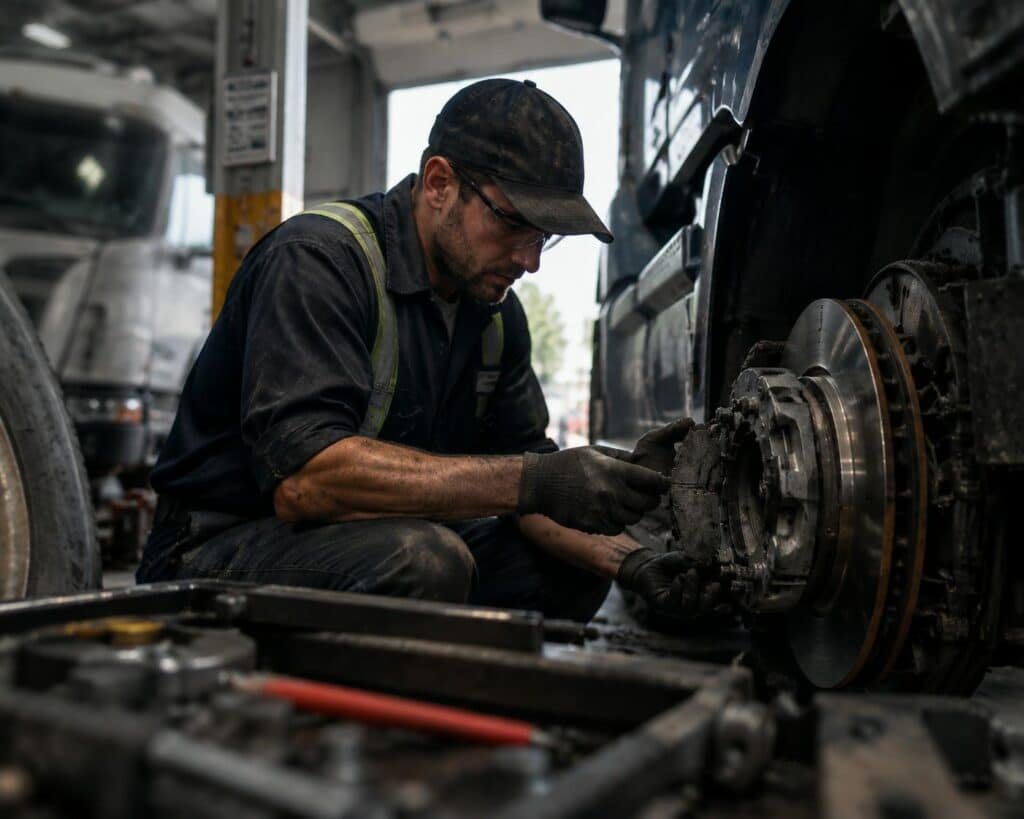
Fleet operators judge brake pads differently from distributors and retail buyers, and their priorities are worth knowing whatever kind of buyer you are. What fleet managers care about today, the rest of the market tends to care about tomorrow.
What fleets actually optimize for:
Predictable wear
A pad that lasts exactly 100,000 km in every truck is worth more than one that averages 150,000 km with wide variance. Maintenance schedules are built on predictability. A pad that fails early causes unplanned downtime. One that lasts far longer than planned ties up money in inventory.
Maintenance cycle alignment
Fleets change brakes together with other service work. A pad whose life matches that interval is worth more than one that lasts longer but forces an extra shop visit.
Downtime reduction
Every hour a truck sits in the shop is lost revenue. Fleets will pay a real premium for pads that make changes faster (proper hardware kits, no rotor scoring, clean release from caliper brackets) and cut down on repeat visits.
Thermal stability across duty cycles
Long-haul, urban delivery, mountain routes, refrigerated transport and heavy cargo all load brake pads differently. A fleet running mixed routes needs a pad that copes with all of them, not just the easy ones.
That’s why fleets often buy direct from manufacturers rather than through branded distribution. Branded distribution adds margin without solving the fleet’s consistency problem. A direct relationship lets the fleet specify the formula, track performance batch by batch and adjust as conditions change.
That’s the design priority for Tuoba’s commercial-vehicle brake pad line: predictable wear, steady thermal performance and lower maintenance overhead for long-haul trucking, mining heavy-duty transport, port operations and urban commercial fleets.
Questions Buyers Should Ask Before Choosing a China Brake Pad Manufacturer
Before your first order with any Chinese supplier, go through these questions. The answers, and how they’re given, will tell you more than any sales presentation.
1. Do you produce in-house?
Ask for a live video walkthrough of the production line — not pre-recorded footage. A genuine factory accommodates this readily. If you’d rather see it in person, our China factory visit guide covers what to prepare before the trip.
2. What certifications do you hold?
Don’t just collect certificate names. Ask for certificate numbers, issuing bodies and product scope, then check with the issuing body yourself. ECE R90 certificates are publicly verifiable. IATF 16949 certificates can be checked against the IATF Oversight database.
3. Can you provide dynamometer reports?
To be specific: dynamometer reports for the exact part numbers you’re buying, dated within the last 12 months, run on their own equipment or backed by third-party lab confirmation. A report for a different part number doesn’t help you.
4. How do you control batch consistency?
A real manufacturer will walk you through its brake pad manufacturing process: SPC charts, friction coefficient sampling from every batch, incoming raw material inspection, and retained samples for comparing batches.
5. What markets do you export to?
Ask for a country breakdown and, where possible, customer references. A manufacturer that ships to your market regularly already knows its homologation rules, packaging standards and logistics. One that has never shipped there will learn them on your first order, at your expense.
6. What’s your peak-season capacity utilization?
A factory running at 95% capacity all year has no buffer for urgent orders or new programs. One running at 70-80% with a clear way to ramp up can grow with you.
7. What’s your minimum order quantity for private-label programs?
This filters suppliers quickly. Real manufacturers have a worked-out MOQ structure that scales.
8. What happens when there’s a warranty issue?
Ask for the actual procedure: what documents they need, how fast they respond, how replacements work, how they do root cause analysis. The answer shows whether they treat warranty as part of the relationship or as a cost to keep down.
How Long-Term Brake Pad Supply Partnerships Reduce Procurement Risk
Buyers who treat brake pads as a string of spot purchases end up paying more overall than buyers who build multi-year supplier relationships, even when the spot price looks cheaper on the day. Switching suppliers has hidden costs, and they add up faster than most procurement teams expect.
What you gain from a long-term supplier relationship:
Price stability
A multi-year agreement smooths out raw material swings. Copper, aramid fibers, phenolic resins and steel all move, and a long-term partner shares that risk instead of passing every spike on to you. A spot buyer eats every cycle.
Quality stability
Over time the supplier learns your applications, your tolerance windows and what your customers complain about. A pad that worked in your market last year is more likely to work this year if it comes from the same factory with the same raw material suppliers. Switching brings back the variation you’d already got rid of.
Faster development cycles
Need a new part number, compound or packaging variant? An established partner moves faster because it already has your fitment data, packaging templates, label specs and preferences. A new supplier starts from zero every time.
Lower after-sales risk
A long-term supplier has a commercial reason to fix problems properly. It’s protecting years of business, not the margin on one shipment. That’s the difference between a partner who works through a warranty claim with you and a vendor who argues it line by line.
That’s why fleets, OEMs and serious distributors keep their main brake pad supplier for three-to-ten years. When they do switch, it’s usually because of a specific failure, such as a missed delivery, a bad batch or a regulatory problem, not because of price.
Conclusion
“Made in China” no longer says much about a brake pad’s quality. It tells you where it was made. The gap between the best and worst Chinese factories is now wider than the gap between countries.
In china brake pad manufacturer sourcing, the differences that matter are the same four that matter anywhere:
- Engineering capability: real R&D depth, several formulation systems and the ability to tune compounds to specific applications
- Validation infrastructure: in-house dynamometer testing, friction characterization and noise validation, backed by current test reports for the part numbers you’re buying
- Batch-to-batch consistency: process control tight enough to hold ±0.02 friction coefficient variance, with documented SPC and full batch traceability
- Long-term support: after-sales engagement, warranty support, capacity to scale and a focus on multi-year partnership rather than single orders
Find a Chinese brake pad manufacturer that delivers on all four and you get manufacturing capability that matches, and often beats, what any other region offers. Buy on price alone without checking them, and you’ll pay for the shortcut in warranty claims, complaints and channel damage that takes years to repair.
The good news is that serious brake pad manufacturers in china are easier to spot than ever. They have export histories, certifications you can verify, production you can see, and a record with OEM and aftermarket customers in markets like yours. You just need to know what to look for.
Looking for a long-term brake pad sourcing partner in China?
Tuoba is a family-run brake pad manufacturer in China with 20 years of production and export experience. We supply more than 110 brand customers in 50+ countries, hold ECE R90 and IATF 16949 certifications, run our own dynamometer testing, and have over 10,000 tons of annual brake pad capacity with full batch traceability.
If you’re comparing Chinese brake pad suppliers for OEM, fleet, private-label or aftermarket programs, contact our team. Send your part numbers, applications, certification needs and timeline, and we’ll come back with what we can supply and when.