
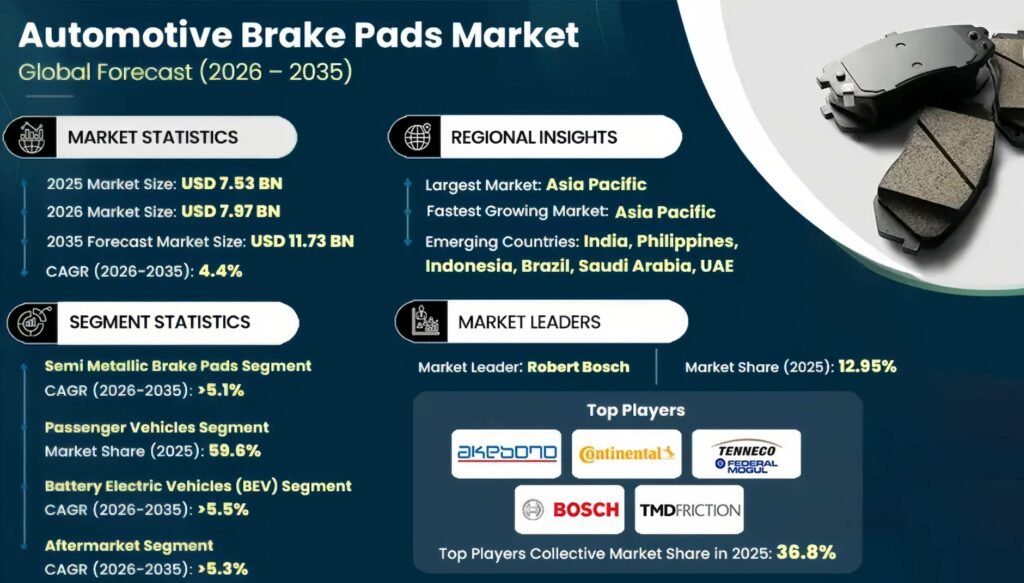
According to multiple industry reports, the global automotive brake pads market is expected to reach approximately USD 7.9–8.5 billion by 2026, with a steady CAGR of around 4%–5% projected through 2035, as highlighted in recent insights from Global Market Insights.
Quick answer: to sell replacement pads in Europe, you need ECE R90 approval, and the E-mark is how that approval shows on the pad. FMVSS 135 is the US standard for light-vehicle brakes. AMECA is where US buyers check copper and edge-code compliance. IATF 16949 is different. It certifies the factory, not the pad. Here is each one side by side.
| Certification | What it covers | How it is tested or checked | Where it matters | What to ask your supplier |
|---|---|---|---|---|
| ECE R90 | Replacement brake pads, linings and drums for cars, trucks and trailers. | Dyno and vehicle tests against the OE part. Results must stay within 15% of OE. | EU, UK and other UNECE markets. | The R90 approval number for the exact part number. |
| E-mark | The mark that proves R90 approval. It is not a separate test. | Printed on the pad and the box: “E”, the approving country’s number and the approval number. | Same markets as ECE R90. | A photo of the marking on the pad and on the box. |
| FMVSS 135 | Brake systems on US light vehicles up to 3,500 kg GVWR. | Vehicle-level stopping distance and fade tests. Aftermarket pads are often run on a dyno to SAE J2784. | United States. | The FMVSS 135 or SAE J2784 test report for that pad. |
| AMECA | US aftermarket compliance listing, including copper level (LeafMark A, B or N). | Accredited third-party lab tests, then a listing in AMECA’s database. | US aftermarket. | The AMECA listing and the LeafMark on the box. |
| IATF 16949 | The factory’s quality management system. | Audit by a certification body. No friction test. | Worldwide. Most OEMs and Tier-1 suppliers require it. | A valid certificate and its scope. |
One gap to watch: heavy trucks and trailers with air brakes fall under FMVSS 121, not FMVSS 135. Our guide to FMVSS 121 brake lining test reports covers that side.
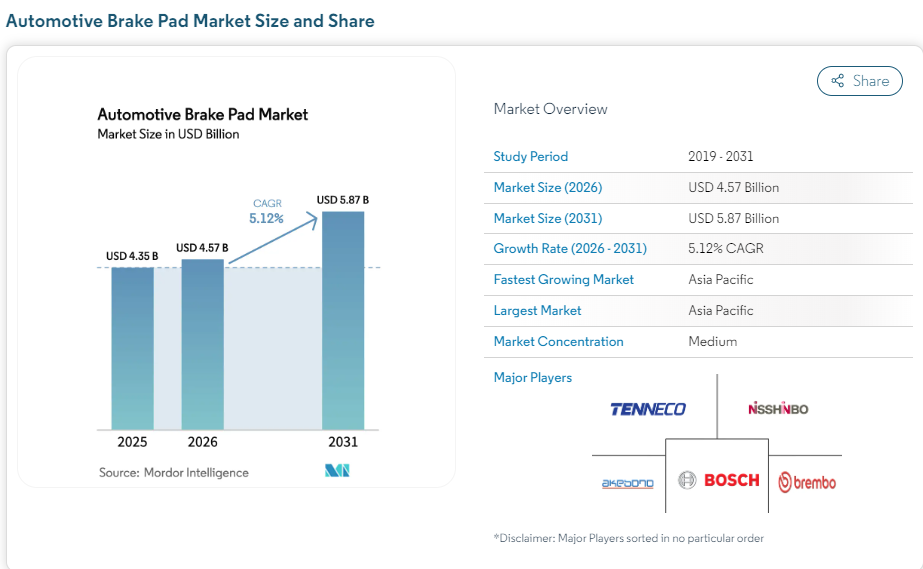
Asia-Pacific dominates the market with over 40%–48% share, driven by strong vehicle production in China and India, while North America and Europe together account for roughly 40%–50% of global demand, according to recent insights from Mordor Intelligence.
Meanwhile, regulatory requirements vary across regions. In the United States, brake components must comply with standards set by the U.S. Department of Transportation (DOT), while in Europe, ECE R90 certification ensures performance equivalence and safety compliance.
As regulatory requirements vary across regions—ranging from DOT compliance in the United States to ECE R90 standards in Europe—understanding certification standards is essential for manufacturers targeting international markets.
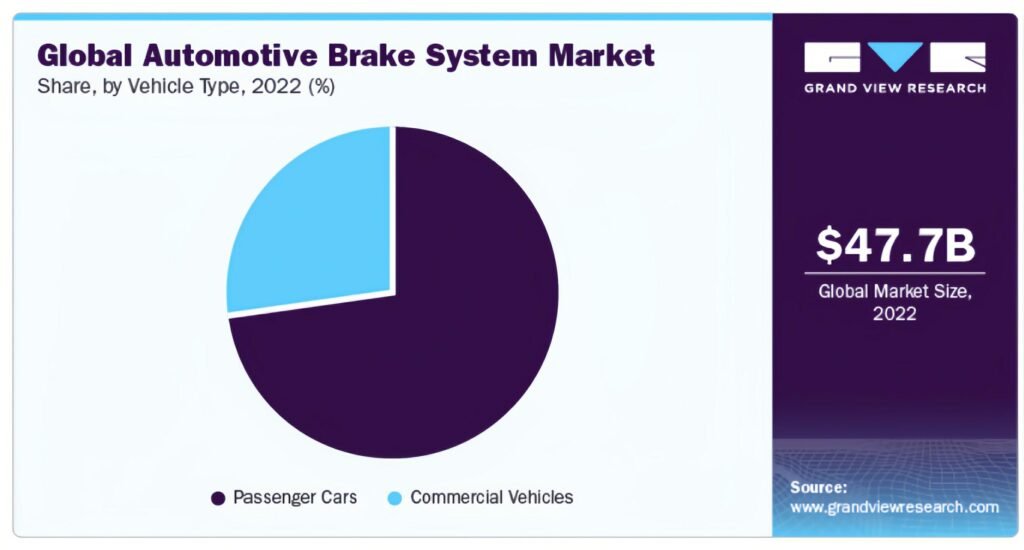
The broader brake systems market reached USD 47.75 billion in 2022 and is expected to climb to USD 72.70 billion by 2030, according to a recent analysis by Grand View Research. Disc brakes hold a 61.1% market share, and passenger cars represent 72.5% of demand.
These figures highlight the growing scale and technical importance of braking systems—making compliance with safety and certification standards a fundamental requirement for market entry.
For manufacturers like Tuoba and others competing on platforms such as Alibaba.com, certification is the very first filter B2B buyers use. Before price, before lead time, before anything else — buyers check your quality management systems and compliance credentials. Without recognized certifications, your products won’t even appear on the shortlist.
This guide breaks down the four major standards you need to know: ECE R90, IATF 16949, AMECA, and FMVSS 135. You’ll learn what each certification requires, how testing protocols differ, and which markets each one unlocks. Whether you’re pursuing DOT compliance for the North American market or aligning with European brake standards, this resource gives you a clear path forward.
Understanding the Global Brake Pad Certification Landscape
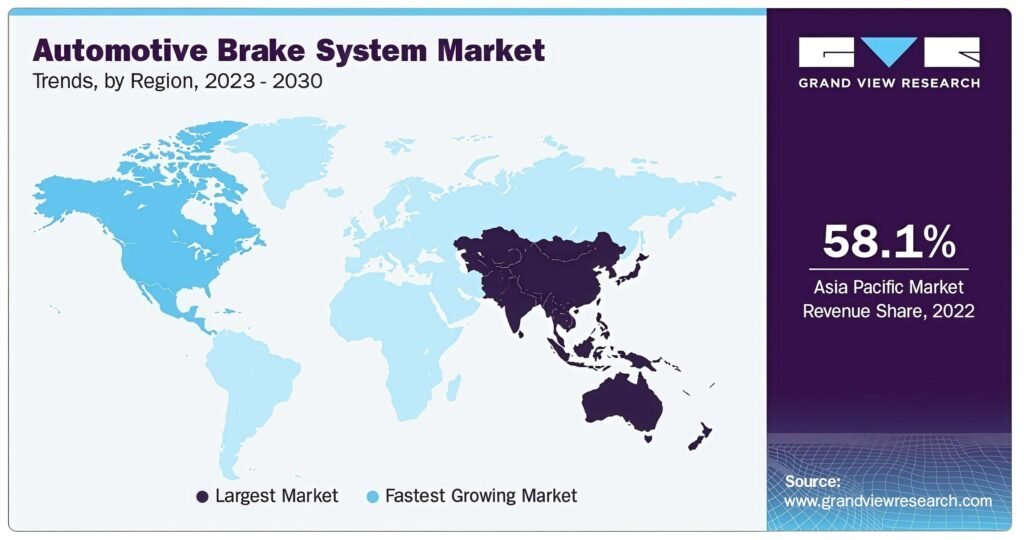
The global brake pad market size continues to expand at a rapid pace. Asia Pacific leads the charge with a commanding 58.1% market share, while North America posts the fastest compound annual growth rate at 5.7%. Before you source or sell B2B automotive parts across borders, you need a clear picture of how certifications shape this growing industry.
Market Growth and Revenue Projections for Certified Brake Pads
Brake pad revenue projections point to sustained demand driven by commercial vehicle expansion — growing at a 4.5% CAGR thanks to e-commerce and logistics needs. Ceramic pads represent the fastest-growing segment due to low dust output, quieter operation, and strong fit for electric vehicles. Semi-metallic pads still hold 45–50% of the market because of their cost-effectiveness and reliable heat dissipation.
Regional Distribution and Key Certification Standards
| Region | Primary Certification | Market Share | Key Requirement |
|---|---|---|---|
| European Union | ECE R90 | 22.3% | Mandatory for all replacement brake linings |
| North America | DOT / FMVSS 135 | 14.8% | Federal compliance with self-certification |
| Asia Pacific | Varies (ISO/TS 16949 common) | 58.1% | Country-specific OEM standards |
| Middle East | ECE R90 or DOT accepted | 2.4% | Dual-standard acceptance in most markets |
| Latin America (Brazil) | INMETRO | 2.4% | National certification body approval required |
Regional certification requirements vary dramatically. Understanding these distinctions is essential for meeting market access requirements in each territory.
Why Certification Matters for B2B Buyers and Suppliers
Certifications directly affect warranties, fleet safety compliance, insurance terms, and consumer trust. Research shows that 70% of B2B buyers investigate certifications online before ever reaching out to a supplier. If you skip the right credentials, you risk losing deals — and market access — entirely.
- Certified pads protect vehicle warranties and resale value
- Fleet operators require proof of compliance for safety audits
- Insurance providers may deny claims involving uncertified parts
With these market dynamics in mind, let’s examine specific standards — starting with ECE R90, the European benchmark for brake pad performance.
ECE R90 Certification: The European Gold Standard for Brake Pads
If you plan to sell aftermarket brake pads in the European Union or EEA, ECE R90 certification is not optional — it’s the law. Non-compliant products face import bans and cannot legally enter the market. This regulation sets European brake standards that require aftermarket pads to perform within 90% of original equipment specifications.
Performance Testing Requirements Under ECE R90
ECE R90 testing protocols evaluate brake pads across six critical dimensions. Each test ensures the replacement pad matches OEM-level safety and performance. You should expect testing costs between EUR 5,000 and EUR 15,000 per product family.
- Cold performance measurement at ambient temperature
- Speed sensitivity analysis across various velocities
- Friction behavior assessment under changing conditions
- Compressibility testing to prevent spongy pedal feel
- Shear strength evaluation for pad-to-backing plate adhesion
- Hardness specifications affecting wear and noise
Cold Performance and Speed Sensitivity Testing
Cold tests measure braking force before the system warms up — a real-world scenario every driver faces. Speed sensitivity analysis checks how the pad behaves at different velocities. Both tests confirm that the pad delivers consistent stopping power in varied driving conditions.
Friction Behavior and Compressibility Standards
Friction coefficient requirements under ECE R90 are strict. The deviation from the OEM reference pad must not exceed ±15%. Stable friction behavior across temperature ranges is essential. Compressibility testing ensures the brake pedal feels firm and responsive, giving drivers confidence during emergency stops.
Marking Requirements and Traceability
Brake pad marking requirements demand a specific format for every certified product. The E-mark certification code follows a pattern like E1 90R-012345. The prefix identifies the certifying country.
| E-Mark Code | Certifying Country |
|---|---|
| E1 | Germany |
| E4 | Netherlands |
| E11 | United Kingdom |
Each code is traceable to the testing laboratory and manufacturer. This traceability protects you as a buyer and builds trust across the supply chain.
FMVSS 135 and DOT Compliance for North American Markets
If you sell brake pads in the United States, you must meet strict federal rules. The National Highway Traffic Safety Administration (NHTSA) enforces Federal Motor Vehicle Safety Standards across all vehicles sold domestically. FMVSS 135 requirements specifically govern light vehicle brake systems — covering everything from passenger cars to light trucks. Separate standards like FMVSS 105 and FMVSS 121 address hydraulic brake systems and commercial air brake systems.
Testing Protocols Under Federal Standards
DOT brake certification demands that brake components pass rigorous performance evaluations. Testing protocols assess braking performance under a range of conditions — wet, dry, cold, and heated. Every regulated brake part must carry a permanent DOT symbol to signal compliance. Organizations like UL Solutions offer testing services that evaluate systems against these federal benchmarks.
Stopping Distance and Fade Performance
Two critical areas stand out in FMVSS 135 requirements: stopping distance standards and brake fade testing. Your brake pads must bring a vehicle to a full stop within specified distances at set speeds. Brake fade testing measures how well pads perform after repeated heavy braking cycles — simulating mountain descents or stop-and-go traffic.
| Test Category | What It Measures | Typical Condition |
|---|---|---|
| Cold Effectiveness | Initial braking at low temperature | Below 150°F rotor temp |
| Stopping Distance | Distance to full stop at 60 mph | Dry, level pavement |
| Brake Fade | Performance after repeated stops | 15 consecutive high-speed stops |
| Heat Recovery | Braking after fade cycle cooldown | Post-fade at reduced temperature |
Self-Certification vs. Third-Party Evaluation
Unlike Europe’s third-party ECE R90 approval process, the U.S. system relies on manufacturer self-certification. You — as the vehicle or component manufacturer — certify that your products meet all Federal Motor Vehicle Safety Standards. This means you need thorough internal testing, documentation, and traceability. Expect testing costs between $10,000 and $50,000 per product category, with ongoing retesting obligations.
- Vehicle manufacturers hold legal responsibility for FMVSS compliance
- Component suppliers must provide supporting test data and records
- NHTSA can audit or recall products that fail to meet stopping distance standards
- All brake fade testing data must be retained and available for review
Understanding these requirements prepares you for the next step — pairing DOT brake certification with quality management systems like IATF 16949 to strengthen your position across North American supply chains.
IATF 16949: Quality Management Systems for Automotive Suppliers
If you want to supply brake pads to major automakers or Tier-1 manufacturers, IATF 16949 certification is not optional — it’s a baseline expectation. This standard builds on the ISO 9001 automotive framework and adds a dedicated layer of automotive quality management requirements. The focus shifts from catching defects after they happen to preventing them through proactive quality planning across three-year certification cycles.

Five Core Quality Tools Required for IATF Certification
Your organization must master five core tools to earn and maintain certification. APQP PPAP FMEA represent three of these essential methods — Advanced Product Quality Planning, Production Part Approval Process, and Failure Mode and Effects Analysis. The remaining two are Statistical Process Control (SPC) and Measurement System Analysis (MSA). Each tool serves a distinct role in your quality system:
- APQP — structured product development planning from concept to launch
- PPAP — formal proof that your production process meets all design specifications
- FMEA — systematic identification of potential failure points before they occur
- SPC — real-time monitoring of process stability using statistical methods
- MSA — validation that your measurement systems produce reliable data
Cost Analysis and ROI of Implementation
Certification costs range from $30,000 to over $100,000 depending on your organization’s size and scope. Annual surveillance audits add another $10,000 to $30,000. The return is measurable — ISO 9001 automotive certified suppliers report 95% on-time delivery rates compared to an 85–88% industry average. They experience 40% fewer product recalls.
Customer-Specific Requirements from OEMs
Meeting OEM supplier requirements goes beyond the base standard. Companies like Ford, General Motors, and Toyota each layer on their own unique expectations. You must track and fulfill these customer-specific demands to remain an approved supplier.
Relationship Between ISO 9001 and IATF 16949
You cannot achieve IATF 16949 certification without first satisfying ISO 9001 requirements. Both standards are audited together — IATF adds the automotive-specific elements on top. With the global ISO certification market projected to grow from $20.16 billion in 2025 to $76.34 billion by 2034, investing in this foundation positions your business for long-term competitiveness in certified brake pad supply chains.
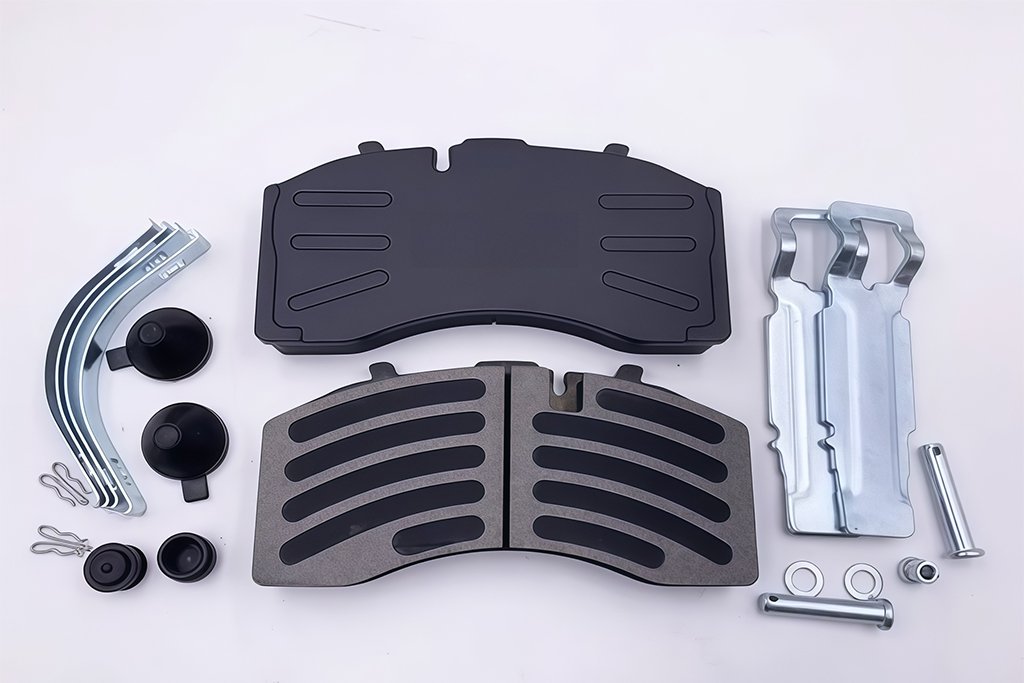
Brake Pad Certifications Explained: ECE R90, IATF 16949, AMECA, FMVSS 135
When you place these four major certifications side by side, their differences become clear. Each one targets a specific aspect of brake pad quality — from friction performance to supply chain management. A thorough brake pad certification comparison helps you decide which standards your products need to meet before entering a given market.
Comparing Testing Protocols Across Different Standards
Each standard relies on distinct certification testing protocols. ECE R90 measures cold performance, friction stability, and wear resistance against OE benchmarks. FMVSS 135 focuses on stopping distance, brake fade, and temperature effectiveness. IATF 16949 addresses process control and traceability rather than friction performance. AMECA certification validates aftermarket brake components through independent review and listing in its database.
Accredited labs — such as Intertek, TÜV, SGS, and Southwest Research Institute — conduct these tests using brake dynamometers, environmental chambers, and hydraulic test benches. ISO/IEC 17025 accreditation ensures global acceptance of results.
Material Composition Requirements by Certification Type
Different material composition standards apply depending on the certification and target application:
- Semi-metallic pads hold 45–50% market share for standard passenger vehicles
- Ceramic pads are the fastest-growing segment for premium and EV applications
- Organic NAO pads serve entry-level and eco-conscious markets
- Low-metallic pads meet specialized European vehicle requirements
Copper-free formulations are now required in California and Washington state under SB 346 legislation.
Market Access and Legal Requirements by Region
Your regional compliance requirements dictate which certifications you must hold. The table below breaks this down.
| Region | Required Certification | Legal Status | Primary Focus |
|---|---|---|---|
| European Union | ECE R90 | Legally mandatory | Friction and wear matching to OE |
| United States | DOT / FMVSS 135 | Legally mandatory | Stopping distance and fade resistance |
| United States (Aftermarket) | AMECA certification | Industry standard | Aftermarket credibility and listing |
| Asia-Pacific (OEM Supply) | IATF 16949 | OEM-required | Quality management and traceability |
Verification and Authentication of Brake Pad Certifications
Trusting a supplier’s word is not enough when safety-critical parts are on the line. A thorough authentication process protects your business — and the end users who depend on quality brake components. You need to know exactly how to confirm what’s real and what’s not.
Start your certificate verification by requesting complete documentation. Legitimate manufacturers will share full certificates without hesitation. Look for the certifying body’s name, a unique certificate number, the product scope, and the certification validity period. For ECE R90, approval numbers follow a specific format: E[country code] 90R-[unique number]. ISO 9001 and IATF 16949 certificates can be cross-checked using the IAF CertSearch database.
Accredited third-party testing labs — such as SGS, TÜV, UL, and Bureau Veritas — should be verifiable through the IAF member directory. You can email or call these bodies directly to confirm a certificate’s status. This simple step is one of the most reliable tools for fake certification detection.
Watch for these red flags when evaluating suppliers:
- Reluctance or delays in providing full certificate copies
- Missing or incomplete unique certificate numbers
- Incorrect CE logo spacing — a common sign of the “China Export” mark posing as the Conformité Européenne symbol
- Certificates covering an unrealistically broad range of products
- No records of required surveillance audits for ISO or IATF standards
- Unknown or unaccredited certifying bodies
- Pricing that falls far below industry norms
Reports from industry forums indicate that many Alibaba-listed suppliers claim certifications they do not hold. Genuine CE certification costs a minimum of several hundred euros per product per supplier — a useful benchmark for spotting suspicious claims. A disciplined authentication process at the sourcing stage saves you from costly recalls and liability risks down the road.
Cost-Benefit Analysis and Strategic Certification Planning
Smart strategic planning starts with knowing where your money goes — and what it brings back. Before you pursue any brake pad certification, you need a clear picture of brake pad certification costs, expected certification ROI, and how each credential aligns with your target markets.
Certification Investment by Company Size and Revenue
Your annual revenue determines which certifications make sense first. Here’s a practical breakdown:
| Company Size | Annual Revenue | Recommended Starting Certifications | Estimated Initial Cost |
|---|---|---|---|
| Small Supplier | Under $1M | ISO 9001, ECE R90 (if targeting EU) | $5,000–$20,000 |
| Medium Supplier | $1M–$10M | ISO 9001 + IATF 16949 + regional certifications | $20,000–$80,000 |
| Large Supplier | Over $10M | Full portfolio including ISO 26262 | $50,000–$200,000+ |
Annual surveillance audits add $2,000–$5,000 per certification. Certification is not a one-time expense — re-testing is required when formulations change.
Target Market Alignment with Certification Requirements
Each region has distinct market entry requirements you must meet:
- European Union: ECE R90 is mandatory; ISO 9001 is recommended; IATF 16949 opens OEM doors.
- North America: FMVSS 135 compliance and DOT marking are required; UL certification is optional.
- Southeast Asia: ISO 9001 is the baseline; ECE R90 is needed for EU-bound exports.
Data from platforms like Alibaba.com shows certified suppliers earn higher inquiry-to-order conversion rates. Platform algorithms prioritize verified credentials in search results — a direct boost to certification ROI.
Timeline and Budget Considerations for Multiple Certifications
The certification timeline varies widely. Basic compliance checks take weeks. Full type approval for new braking systems can stretch six to eighteen months. Staggering your certifications helps spread costs and keeps your team focused. Start with the credential your primary market demands, and build from there.
Conclusion
This brake pad certification summary highlights a clear takeaway: quality assurance standards are not just regulatory hurdles. They are competitive tools. IATF 16949 alone can command 20–30% price premiums on OEM contracts. ISO 9001, as the foundational layer, has been shown to push on-time delivery rates to 95% and cut recalls by 40%. These numbers make the case that certification spending is an investment — not a cost center.
Verification should remain a top priority as fake certifications continue to surface on major B2B platforms. Always confirm credentials directly with the issuing body before entering any supply agreement. Pair this diligence with clear manufacturer guidelines for your team, covering everything from material selection to traceability documentation.
Related reading
- What Is ECE R90 and Why Does It Matter for Truck Brake Pads?
- Understanding FMVSS 135 in Brake Pad Development
- ECE R90 Brake Linings: E-Mark List, COP Documents & WVA Guide
Reviewed by: Robert, Chief Executive Officer, Tuoba Auto Parts
Technical basis: UN ECE Regulation No. 90 · IATF 16949 · FMVSS No. 135 (49 CFR 571.135) · AMECA
Need a quote or a part-number check? Send your OE, FMSI or WVA references, quantities and destination market to our team through the contact page, or email [email protected].