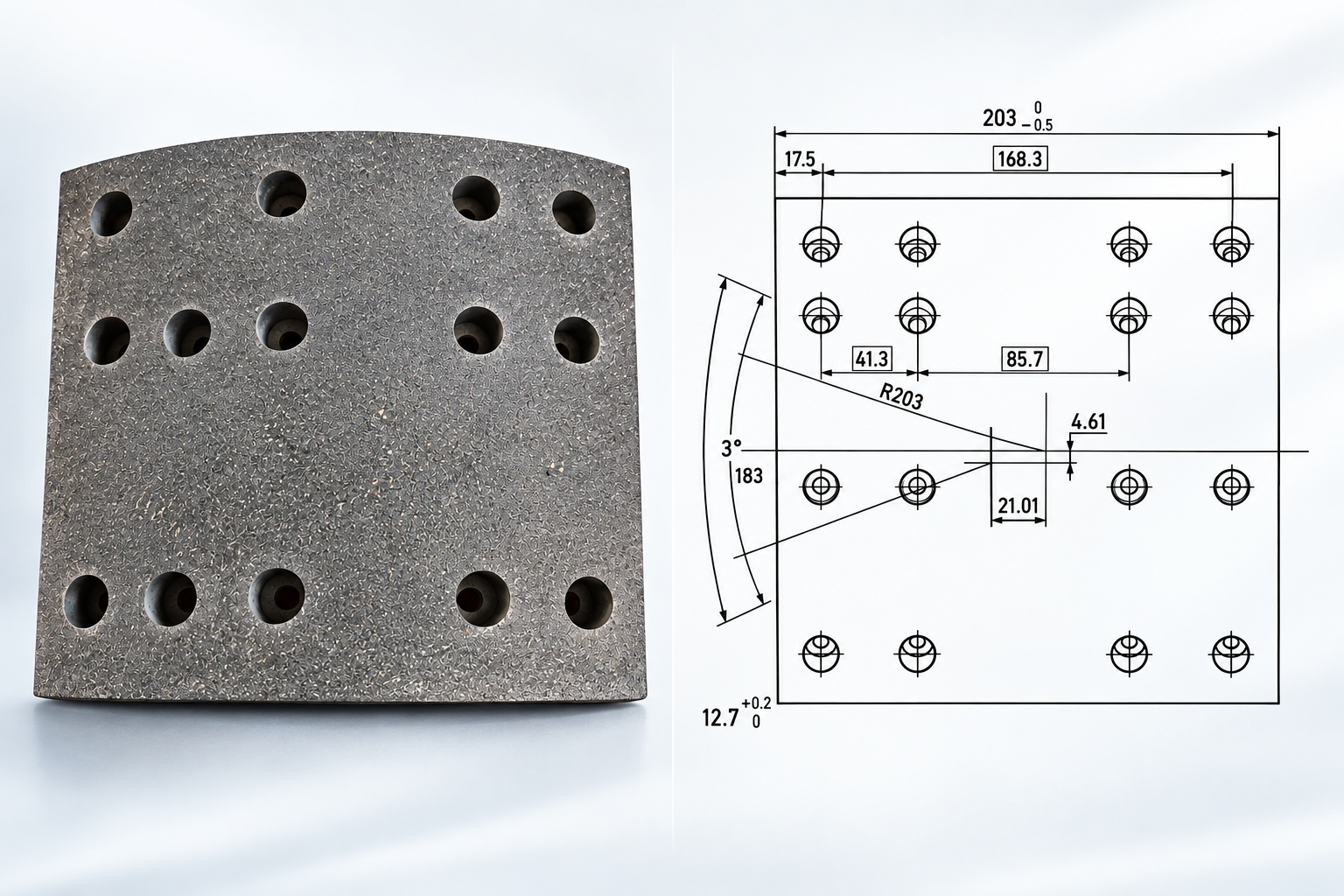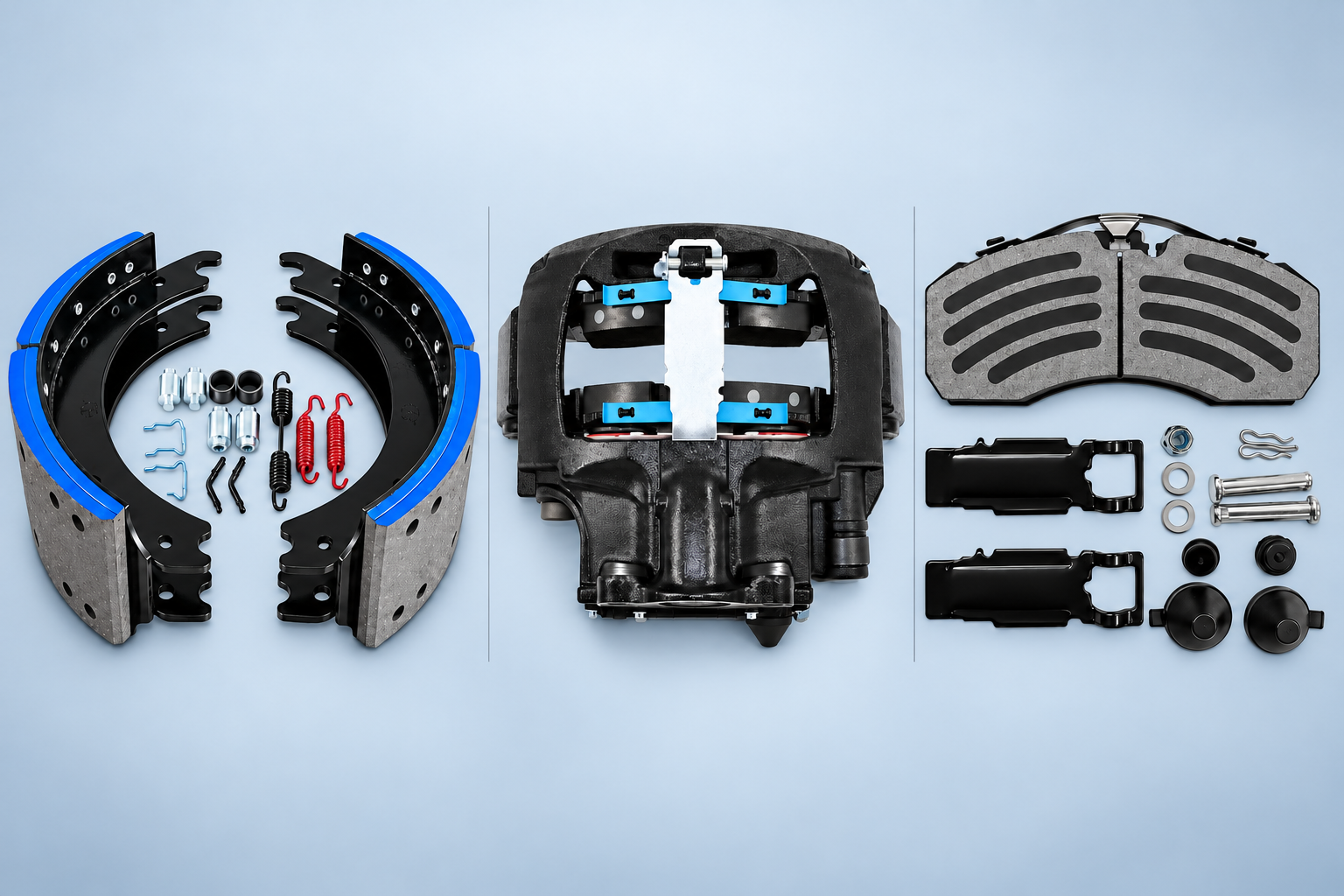
When buyers compare brake pad suppliers, most of the conversation happens around finished products — friction codes, certifications, pricing, sample performance. What rarely gets discussed in the same room is the place where every one of those outcomes is actually determined: the production line.
This matters more than you’d expect. Two suppliers can show you identical specifications, identical certifications, and identical samples — and ship products that perform very differently in your fleet six months later. The reason almost always traces back to what happens on the brake pad production line itself: how raw materials are inspected, how friction compounds are mixed, how pressure and temperature are controlled during hot pressing, how each pad is finished and inspected before it leaves the factory.
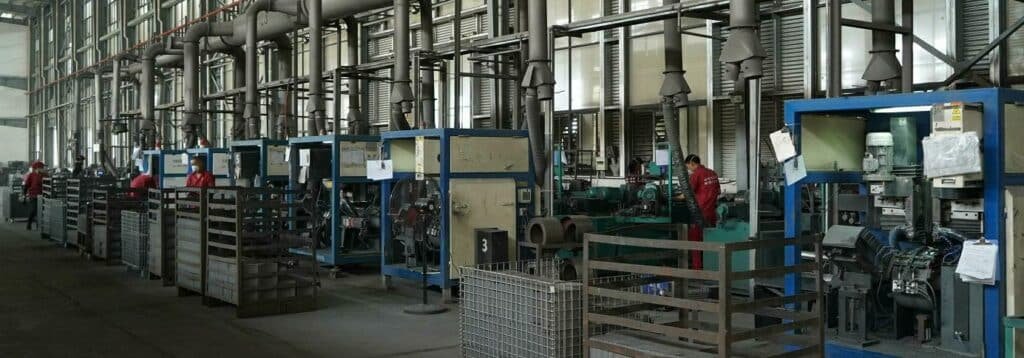
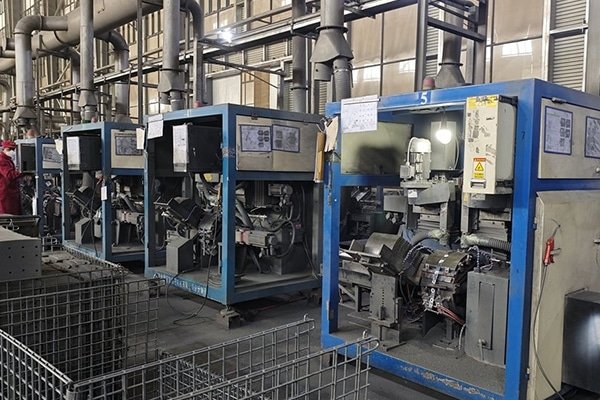
This guide walks you through a modern brake pad manufacturing process stage by stage — not as a marketing overview, but the way an OEM auditor or a fleet engineer would actually evaluate it. By the end, you’ll understand why production-line quality is the single most reliable predictor of long-term brake pad performance, and why commercial vehicle brake pad manufacturers with disciplined production systems consistently outperform suppliers competing on price alone.
This guide is for buyers of finished brake pads: OEM programs, fleets, distributors and private-label brands. We don’t sell brake pad production equipment or turnkey lines. What you’ll find here is what to look at on a supplier’s line, and which records to ask for before you sign off. If you want the process itself explained step by step, read our commercial vehicle brake pad manufacturing process guide first.
Why Fleet Buyers Care About Production Lines
If you’ve ever managed a commercial fleet, you already know that the most expensive brake pad isn’t the one with the highest unit price — it’s the one that fails unpredictably. A pad that wears out 20% earlier than expected pulls trucks out of service mid-route. A pad whose friction coefficient drifts between batches creates inconsistent pedal feel that drivers notice within days. A pad with marginal shear strength can shed friction material under sustained thermal load, and once that happens in a fleet of 200 vehicles, the warranty cost dwarfs whatever you saved per piece.
This is why fleet brake pad suppliers and commercial vehicle brake pad vendors are evaluated differently from passenger car aftermarket suppliers. Fleet buyers don’t really buy brake pads. They buy predictability — the confidence that pad #2,000 in batch #15 will behave the same as pad #5 in batch #1, eighteen months from now, across mountains and deserts and freeway traffic.
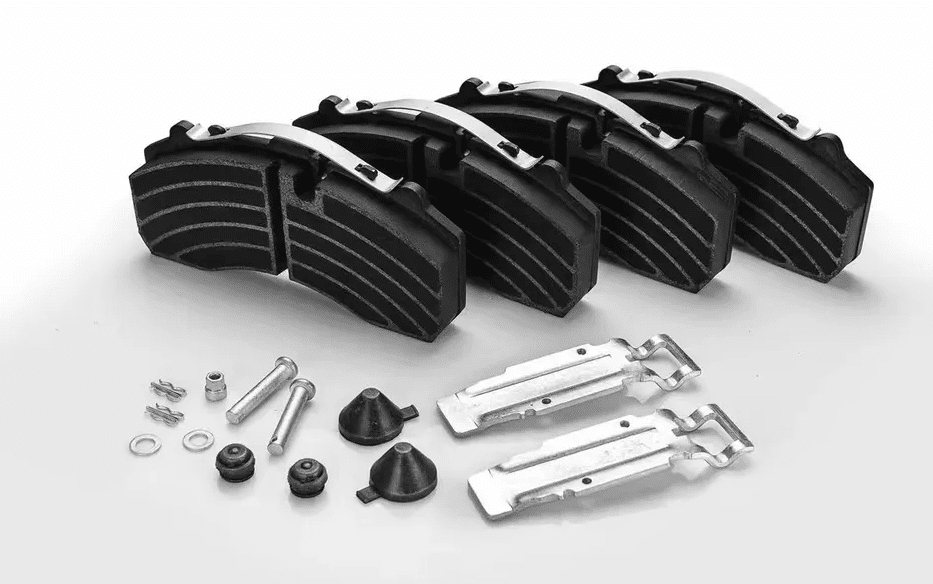
Predictability is manufactured. It doesn’t come from the friction formula alone, and it doesn’t come from the certificate on the wall. It comes from the brake pad production line — specifically, from how disciplined the line is at controlling raw material variability, mixing consistency, press cycle parameters, post-cure stability, and final inspection coverage. A factory that runs a tight line produces tight results. A factory that runs a loose line produces results that vary, no matter how good the original formula looked on paper.
For OEM buyers, the equation is even sharper. When you supply pads to a vehicle manufacturer under PPAP-grade quality requirements, the production line isn’t just where your product is made — it’s where your contract lives or dies. Every Cpk index, every SPC chart, every batch traceability record exists because OEMs learned a long time ago that a one-time sample doesn’t predict three years of serial production.
Raw Material Inspection Before Production Begins
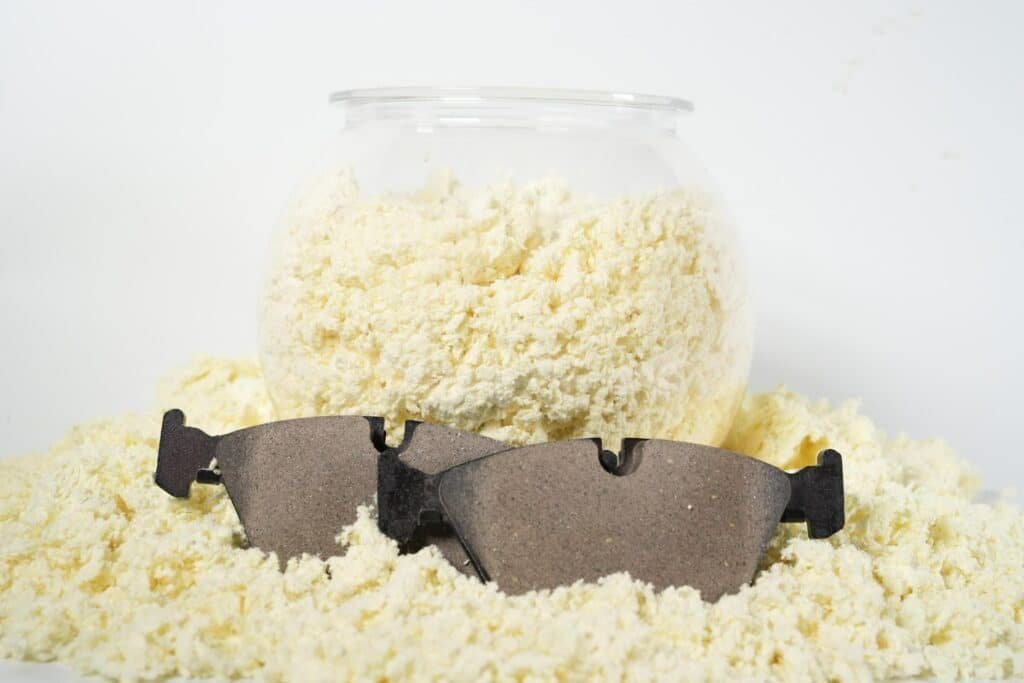
Quality on the production line starts before the production line. The single largest source of batch-to-batch variation in finished pads isn’t the press or the oven — it’s incoming brake pad friction materials. Professional brake pad manufacturers understand that raw material quality control is the foundation of stable friction performance, predictable wear life, and reliable commercial vehicle braking systems.
A brake pad formula pulls together 15 to 25 ingredients: binders, fibers, fillers, friction modifiers, abrasives and lubricants. Each one comes from a different supplier. Each one varies a little from lot to lot. That variation has to stop at the receiving dock, or it ends up in your pads.
A disciplined factory runs incoming inspection in three layers:
1. Documentation review
Every incoming lot must arrive with a certificate of analysis from the supplier, matched against pre-approved specifications. No documentation, no acceptance.
2. Physical and chemical verification
Particle size distribution, moisture content, bulk density, and chemical composition are verified against retained reference samples. Spectroscopic analysis (FTIR, XRF) confirms that the material chemistry matches what was approved during supplier qualification.
3. Retained sample archiving
Every accepted lot generates a small reference sample that’s archived for years. When a quality issue surfaces months later, the retained sample is what lets you isolate whether the issue came from the raw material or from the process — and that’s the difference between fixing a problem and chasing one.
This is also where friction material consistency is structurally protected. A factory that switches between three different phenolic resin suppliers depending on weekly pricing produces pads with three different thermal behaviors, regardless of how good the production line is downstream. Stable raw material relationships, with documented incoming inspection on every batch, are non-negotiable for any OEM brake pad manufacturer serving commercial vehicle programs.
If you’re auditing a supplier here, ask to see:
- The approved supplier list for resins, fibers and friction modifiers, and how often it changes
- Certificates of analysis for the last few lots of key materials
- FTIR/XRF incoming inspection records, checked against retained reference samples
- How long retained samples are kept, and where
How Brake Pad Mixing Affects Performance Consistency
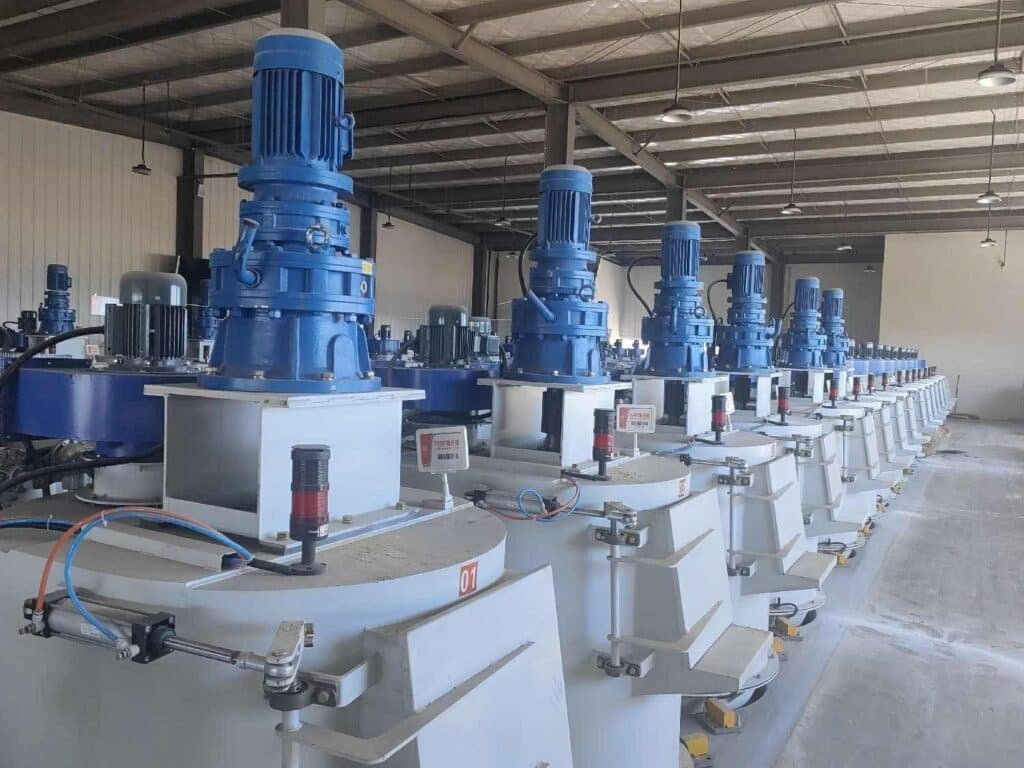
Three things have to go right at this stage:
Weighing accuracy
A friction formula specifies each ingredient to within fractions of a percent. Automated weighing systems hold tolerances around ±0.1% by mass; manual weighing introduces variation that can exceed ±2% — and that variation cascades through everything downstream. For commercial vehicle pads, where heat capacity and thermal stability are designed margins, a 2% miss on the abrasive content can change the friction curve enough to fail a dynamometer test.
Mixing sequence and time
Friction compounds aren’t homogeneous slurries — they’re heterogeneous composites where each ingredient class has to be distributed evenly without breaking down the fiber structure. The mixer typically uses a defined sequence: dry blend of powders first, then fibers, then liquid binder phases, with controlled mixing times for each stage. Over-mix and you damage the fibers, reducing shear strength in the finished pad. Under-mix and the composition isn’t uniform, creating hot spots and cold spots in the same pad.
Cross-contamination control
A factory that mixes ceramic and semi-metallic compounds on the same line, with the same equipment, in succession, can carry over enough of the previous compound to shift the friction coefficient of the next batch by 5% or more. Serious manufacturers run dedicated lines for each compound family — or, at minimum, full cleanout protocols with retained verification samples between formulations.
Real-time mixing quality is monitored via SPC (Statistical Process Control) systems. Mixing parameters — total mass, mixing time, temperature, motor current draw — are logged batch by batch, and trend analysis flags drift before it reaches the press. This is the discipline that holds brake pad batch consistency to the ±0.02 friction coefficient window that distinguishes OEM-grade output from generic aftermarket.
In the mixing room, ask for:
- Calibration records for the weighing system
- Batch mixing logs with total mass, mix time, temperature and motor load
- How the line is cleaned between compound families, and how they prove it
- SPC charts of friction coefficient for recent batches of your part number
Inside the Hot Pressing Process
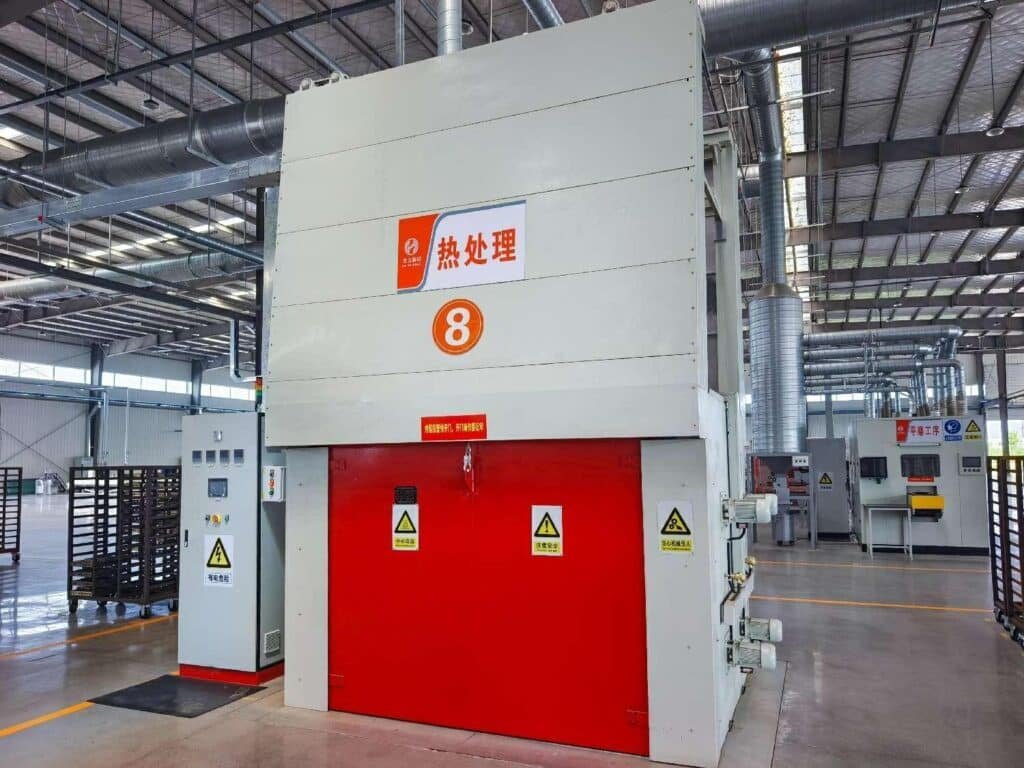
If mixing is where the formula is locked in chemically, hot pressing is where it’s locked in mechanically. This is the most capital-intensive single step in the brake pad manufacturing process and the one with the most direct impact on final pad density, structural integrity, and friction surface behavior.
We cover pressing parameters and resin chemistry in Step 3 of our manufacturing process guide. On an audit, the real question is simpler. Are those parameters controlled and recorded on every cycle, or only written in a manual?
What separates a controlled hot pressing process from an uncontrolled one:
Pressure curve precision
Modern presses don’t just apply pressure — they follow a programmed pressure curve that includes degas cycles (brief pressure releases that allow trapped gases to escape) and dwell phases that ensure full resin flow. A press without degas capability produces pads with internal voids — invisible from the outside but devastating to shear strength under thermal load.
Mold temperature uniformity
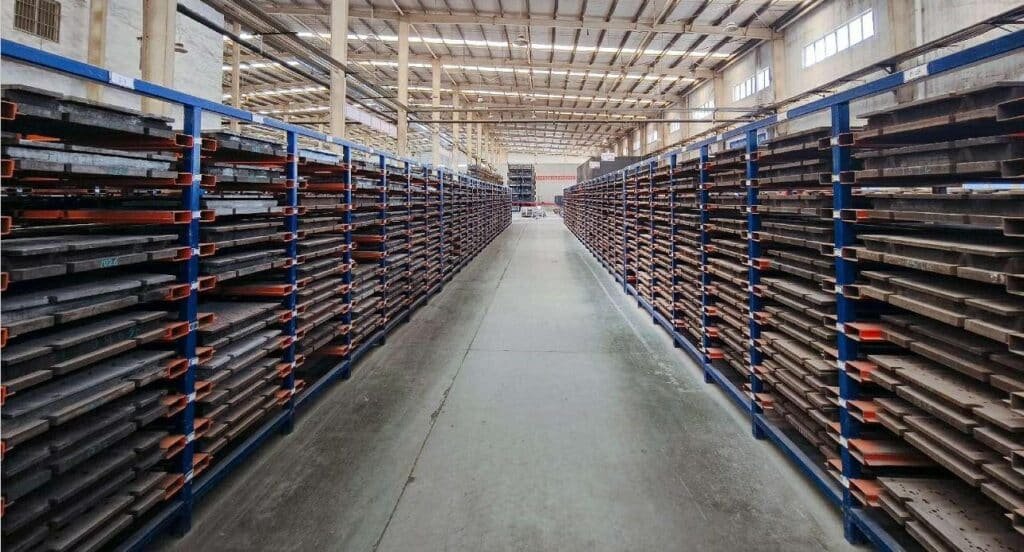
Heat distribution across the mold surface must be uniform within a few degrees. A mold with cold spots produces under-cured pad sections that wear faster than the rest of the pad. A mold with hot spots produces over-cured sections prone to glazing. This is why high-end brake pad manufacturing machines use multi-zone heating with individual temperature sensors at multiple mold locations.
Multi-cavity consistency
Most commercial production presses run multi-cavity tooling — 4, 6, or 8 pads per cycle. Every cavity must hold identical pressure and temperature, or you produce a batch where pads from cavity 1 perform differently from pads from cavity 4. SPC monitoring at the cavity level is what catches drift before it becomes a quality issue.
Bonding to the backing plate
During hot pressing, the friction material chemically bonds to the steel backing plate through a combination of mechanical interlocking and adhesive curing. The shear strength of this bond is one of the most safety-critical parameters in the finished pad. ECE R90 and IATF 16949 testing protocols both require shear strength verification on production samples — and a press running outside its specified parameters will fail this test even when the friction material itself is correct.
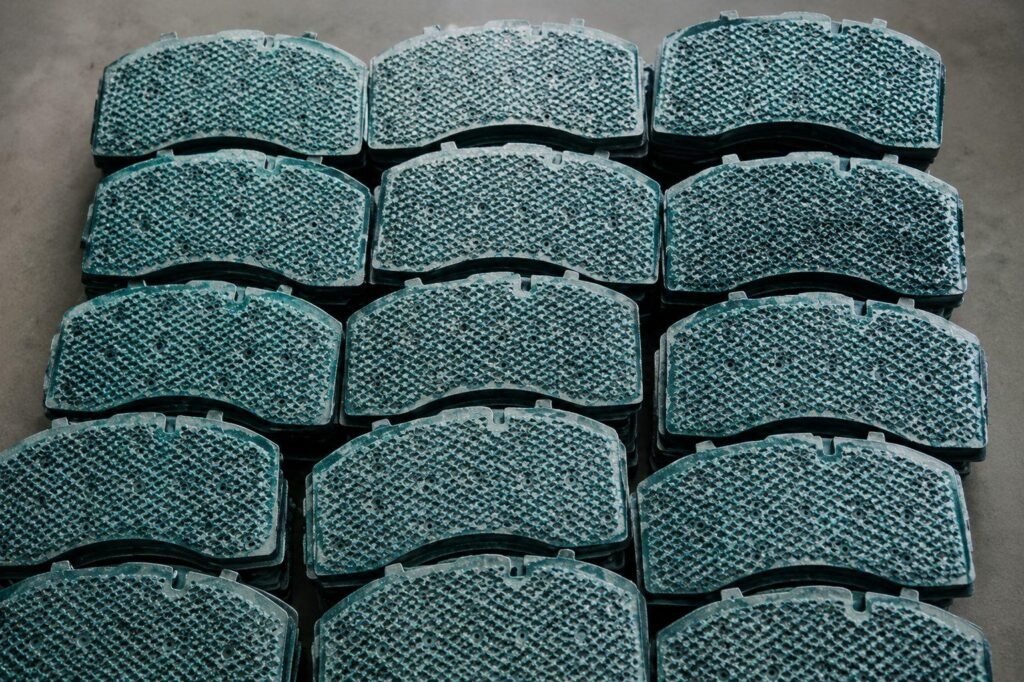
For OEM and commercial vehicle programs, hot pressing parameters are typically locked into the PPAP documentation and cannot be changed without formal engineering change requests. This is one of the reasons OEM-qualified facilities produce more consistent product than aftermarket-only operations — the parameters that drive consistency are written down, monitored, and protected.
At the press, ask for:
- The locked parameters for your part number, including pressure curve, degas cycles, mold temperature and cycle time
- Cavity-level SPC records if the tooling is multi-cavity
- Shear strength results from production samples, against ECE R90 or your OEM spec
- The change procedure. Who can change a press parameter, and who gets told?
Scorching, Grinding, Slotting, and Chamfering
After the press cycle, the pad has its basic shape and bonded structure — but it’s not yet ready to ship. The post-press finishing operations are where final performance characteristics are dialed in. Each of these steps has a specific purpose, and each can quietly hurt finished pad quality if done poorly.
Steps 4–5 of our manufacturing process guide explain how each finishing step works. On the factory floor you only need to check two things. Is the step actually done on your part number? And is there a record?
| Operation | What it controls | What to ask for |
|---|---|---|
| Curing | Full resin cross-linking | Oven temperature mapping and cure-profile records |
| Scorching | Early-life fade and bedding-in | Whether your SKU is scorched, plus temperature and time records |
| Grinding | Thickness and flatness | Measurements against your drawing (typically ±0.05 mm) |
| Slotting | Gas, water and debris escape; noise | Slot width, depth and position on the first-article report |
| Chamfering | Initial bite and squeal | Chamfer angle and depth against the drawing, on every cavity |
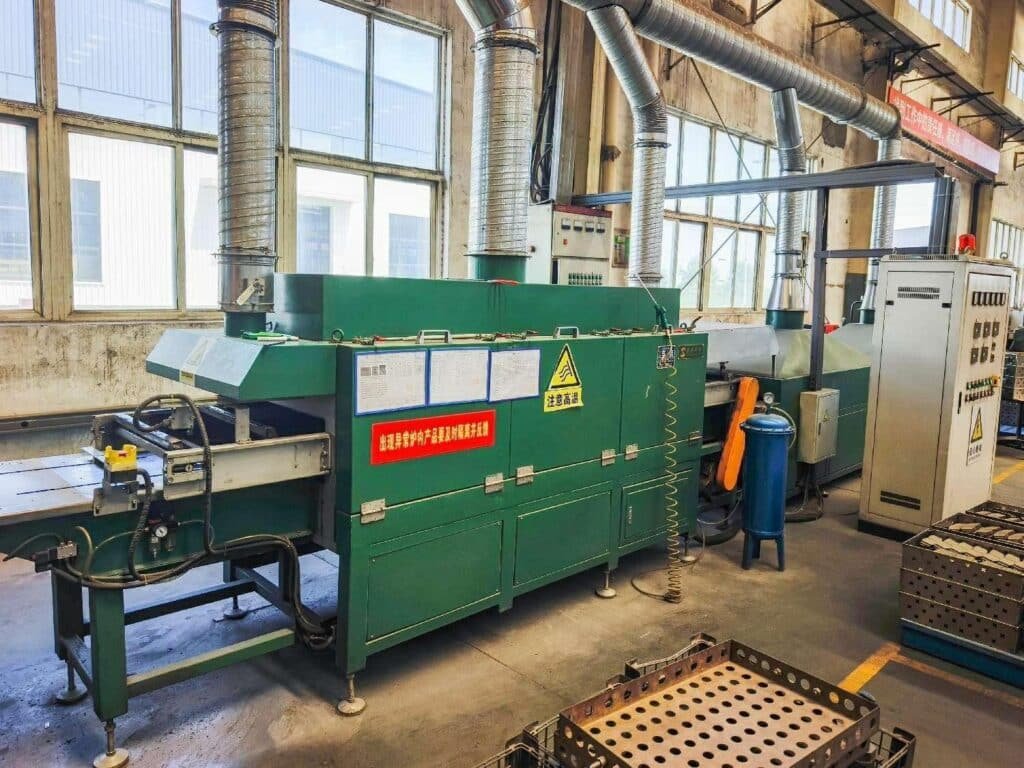
Each of these post-press steps is individually unglamorous — and collectively, they’re where most of the noise, wear, and bedding-in performance of a pad is determined. Factories that skip steps to cut cost (no scorching, no chamfering, minimal slotting) produce pads that look identical to properly finished ones until you actually install them.
How Modern Brake Pad Production Lines Reduce Noise
Brake noise — squeal, growl, groan, judder — is the single most common reason end customers reject otherwise functional pads. A pad with excellent stopping performance and unacceptable noise will still trigger warranty returns. This is why modern brake pad production lines dedicate significant engineering effort specifically to NVH control.
Noise originates from vibration. The pad-rotor interface generates micro-vibrations during braking, and if those vibrations couple efficiently with the caliper, suspension, or brake hardware at audible frequencies, the result is noise. Production-line interventions reduce noise by attacking each link in this chain:
Friction surface micro-geometry
Grinding quality determines the initial surface texture. Too smooth, and the pad squeals as it tries to break free of the rotor on each rotation. Too rough, and the surface creates audible irregularities. Production-grade grinding produces a controlled micro-roughness that beds in cleanly.
Chamfer geometry
Edge chamfers don’t just reduce initial bite harshness — they also disrupt the leading-edge resonance that produces high-frequency squeal. The chamfer angle and depth are tuned to specific vehicle applications.
Slot patterns
Slots break up the continuous contact area between pad and rotor, interrupting the standing wave patterns that generate low-frequency growl. Slot pattern selection is application-specific — a pattern that works for passenger cars may be wrong for heavy commercial vehicles.
Shim bonding
The damping shim attached to the back of the pad absorbs vibration before it reaches the caliper. Shim bonding consistency is one of the production-line quality control parameters that directly maps to noise complaint rates in the field. Inconsistent shim adhesion creates pads where some perform quietly and others squeal — same batch, same SKU, different real-world experience.
Backing plate flatness. A warped or out-of-tolerance backing plate transmits vibration directly into the caliper. Production lines verify backing plate flatness before assembly, rejecting plates outside tolerance rather than passing them downstream.
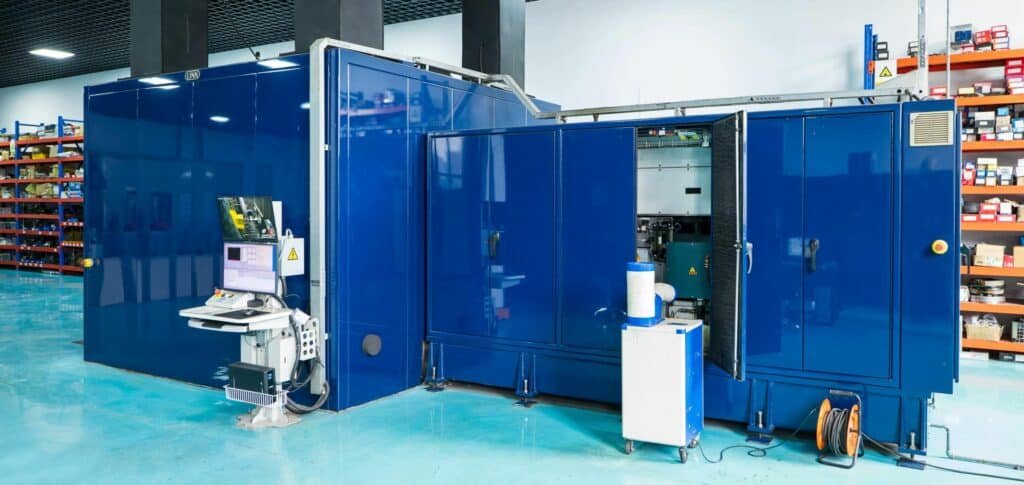
Final NVH validation happens on a noise dynamometer running SAE J2521 protocols, which characterize noise behavior across temperature, pressure, and speed combinations. A serious automated brake pad production line includes J2521 testing as part of batch sampling — not as a one-time certification exercise but as ongoing process verification.
For noise, ask for:
- SAE J2521 results for your application, or the closest one they’ve tested
- Who supplies the shims, and how shim bonding is checked
- Backing plate flatness records
Final Inspection Before Export
Before a pad leaves the factory, it passes through multiple inspection stages that verify dimensional accuracy, structural integrity, and friction performance. The goal isn’t catching defects at the final gate — by then it’s already too late — but rather confirming that the disciplined upstream processes produced output within specification.
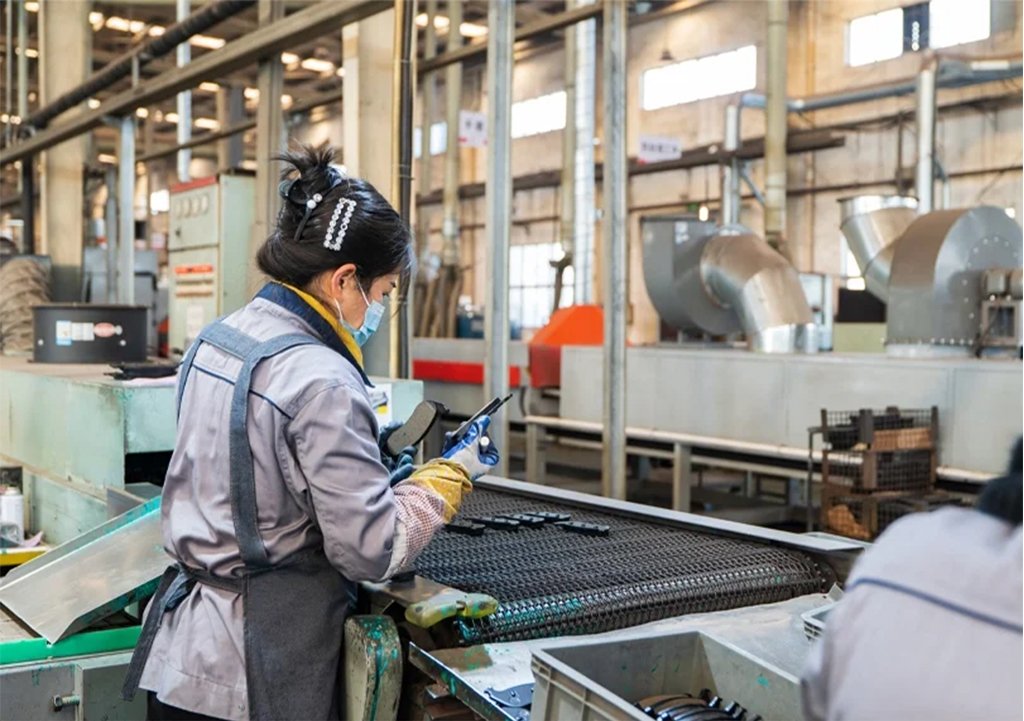
A complete brake pad inspection process typically includes:
1. 100% visual inspection
Every pad is examined for surface defects: cracks, voids, contamination, incomplete pressing, edge damage, missing chamfers, incorrect slotting. Visual inspection is labor-intensive but uncatchable by automated systems for some defect categories.
2. Dimensional verification
Sample pads from each batch are measured using CMM (coordinate measuring machine) or laser-based dimensional systems. Critical dimensions include overall thickness, friction material thickness, backing plate flatness, slot depth and width, chamfer geometry, and mounting hole position. Dimensional tolerances on commercial vehicle pads are typically held within ±0.1 mm on critical features.
3. Shear strength testing
This is the safety-critical destructive test. Sample pads from each batch are placed in a shear test fixture, and force is applied parallel to the friction material/backing plate interface until separation occurs. Shear strength must exceed the minimum specified in ECE R90, FMVSS, or applicable OEM specifications. A pad that fails shear strength testing in the lab would fail under extreme thermal load on a vehicle — typically catastrophically.
4. Compressibility testing
Pad compressibility under load is measured to verify pedal feel consistency. Excessive compressibility produces a spongy pedal; insufficient compressibility produces a harsh pedal that struggles with modulation. Specifications typically require compressibility within a narrow window characteristic of the pad’s friction formula.
5. Friction coefficient verification
Sample pads from each batch undergo friction testing — either on a CHASE friction tester (SAE J661) or a sub-scale dynamometer running an abbreviated AK Master protocol. The results verify that the batch falls within the declared friction code range (FF, GG, HH) and within the ±0.02 batch consistency window expected of OEM-grade production.
6. Density and porosity checks
Sample pads are sectioned and analyzed for internal density uniformity. Voids, porosity gradients, or layer separations identified at this stage indicate hot press parameter drift that would otherwise reach the field.
7. Documentation and traceability
Each pad or batch is marked with a traceable identifier — typically the batch code stamped on the backing plate or printed on the packaging. The marking links to production records covering raw material lots, mix batch, press cycle parameters, cure profile, scorching parameters, and final inspection results. Brake pad traceability is what allows a manufacturer to investigate field issues at the batch level rather than at the supplier level — and it’s a baseline requirement for any OEM relationship.
The volume of inspection should be proportional to the program’s risk profile. OEM and commercial vehicle programs typically use higher sampling rates and more inspection categories than entry-level aftermarket lines. A factory that runs the same inspection protocol for everything either over-inspects basic aftermarket (raising cost unnecessarily) or under-inspects OEM (failing PPAP requirements). Tier-one factories adjust inspection coverage to the customer’s program.
How Production Capacity Affects Delivery Reliability
Good quality doesn’t help much if the pads arrive two months late. So once quality checks out, ask about capacity: effective output rather than nameplate, how full the lines run in peak season, how many parallel lines there are, and whether molds for your part numbers already exist. We go through these questions in more detail in our guide to evaluating a brake pad production line.
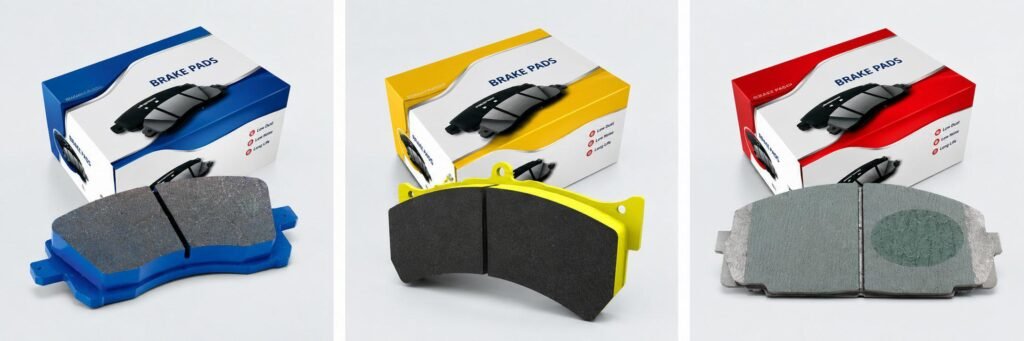
As a reference data point, Tuoba’s facility maintains 10,000+ tons of annual brake pad production capacity along with 600,000+ sets of brake shoe assemblies annually, supported by multiple parallel production lines for ceramic, semi-metallic, and low-metallic compounds. This level of brake pad production capacity is what allows us to hold lead times steady during global peak season while smaller operations fall behind.
Why Production Stability Matters More Than Low Price
The most expensive mistake in brake pad procurement is treating per-piece price as the primary decision variable. Buyers who optimize on price alone consistently spend more in total — and the additional cost shows up in places that don’t appear on the purchase order.
Consider the real cost equation for a commercial fleet operating 200 trucks:
- Unit price difference.
Supplier A offers pads at $18; Supplier B offers comparable pads at $22. On a year’s consumption of 4,800 pad sets, that’s $19,200 in apparent savings. - Warranty claim cost.
Supplier A’s loose production discipline produces a 6% warranty claim rate vs. Supplier B’s 1.5%. Each warranty claim costs roughly $180 in pad replacement, labor, and administrative handling — and on 4,800 sets, the difference is 216 extra warranty events × $180 = $38,880. - Unplanned downtime.
Each unplanned brake-related service event removes a truck from service for 4–8 hours. At a typical commercial revenue rate, that’s $400–800 of lost revenue per event. Across the 216 incremental warranty events, that’s another $86,400 to $172,800 in lost productivity. - Driver complaints and turnover risk.
Inconsistent pedal feel between batches produces driver dissatisfaction. In tight labor markets, this matters — though it’s harder to quantify precisely. - Customer reputation impact.
For distributors and brand owners, every pad failure in the field produces a review, a complaint, or a lost customer. The aggregate cost of reputational damage can dwarf direct warranty cost over a multi-year period.
In this scenario, the “savings” from the cheaper supplier turn into a net cost increase of $100,000+ per year — entirely traceable to production stability differences that weren’t visible at the purchase order stage.
This is the structural reason serious commercial vehicle brake pad vendors compete on stability rather than price. Brake pad batch consistency, predictable brake pad wear, and brake performance consistency are the metrics that determine total cost of ownership — and they’re all manufactured on the production line, not negotiated in the quote sheet.
How Tuoba Supports OEM and Fleet Brake Projects
Tuoba is a family-run brake pad manufacturer based in China with 20 years of production and export experience. Across that history, we’ve built the production-line capabilities described throughout this article — not as marketing claims, but as the operational baseline that lets us serve OEM and commercial vehicle programs at scale.
Production capacity
Our facility produces over 10,000 tons of brake pads and 600,000+ sets of brake shoe assemblies annually, supported by multiple parallel production lines configured for ceramic, semi-metallic, and low-metallic compound systems. Dedicated lines for each compound family eliminate cross-contamination risk and let us run OEM, commercial vehicle, and aftermarket programs simultaneously without compromise.
Quality system and certifications
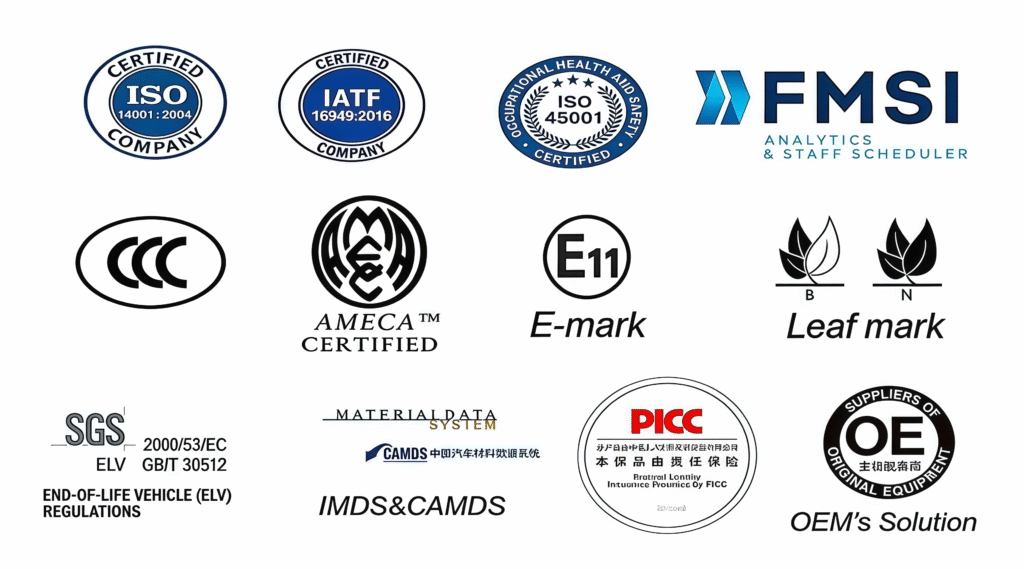
We operate under IATF 16949 automotive quality management, with ECE R90 homologation for the markets that require it. Internal testing capability includes inertia dynamometer, CHASE friction tester, SAE J2521 noise dynamometer, shear strength testing, and full dimensional verification using CMM equipment. Every batch generates documented friction coefficient sampling, dimensional verification, and traceability records linked to raw material lots and process parameters.
R&D depth
A 50+ member R&D team runs in-house formula development across passenger car, commercial vehicle, heavy-duty, and EV applications. We’ve developed application-specific formulations for long-haul trucking, mining heavy-duty transport, port operations, mountain transport routes, and extreme-climate fleet operations — each tuned to the duty cycle and environmental conditions of the application.
OEM and commercial vehicle experience
Our customer base includes domestic OEMs such as Yutong, DFM, XEV, Bethel Automotive Safety Systems, and Geely, alongside more than 110 international brand customers distributed across 50+ countries. The commercial vehicle production line specifically supports fleet operators, truck brake lining wholesale programs, and high-quality commercial brake pads manufacturer partnerships with documented batch-level performance histories.
Export readiness
Our export operations handle country-specific homologation requirements, region-specific packaging standards, multi-language labeling, and platform-ready barcoding for global e-commerce channels. Lead times during peak season are managed through capacity reserves and multi-line redundancy rather than through customer queue.
If you’re evaluating brake pad sourcing for an OEM program, a commercial vehicle fleet, a private-label brand, or a regional distribution channel, we’d be glad to walk through your specific part number requirements, application duty cycles, certification scope, and supply timeline. The conversation typically begins with an honest discussion of what production-line discipline you need — and whether our capability matches your program.
Conclusion
For fleet operators, OEM buyers, and commercial vehicle distributors, the production line is where every metric that matters is actually determined: friction coefficient stability, batch-to-batch consistency, thermal stability, shear strength, noise behavior, wear predictability, and ultimately fleet maintenance cost over the operating life of the program.
The takeaway isn’t that production lines are interesting — though they are. The takeaway is that production-line capability is the most reliable single predictor of long-term supplier performance. A factory that runs a disciplined line produces predictable pads. A factory that cuts corners on the line produces stories — and warranty claims — that buyers absorb at far higher cost than they saved on the purchase order.
When you evaluate brake pad manufacturing companies for your next program, look past the certifications on the wall and the samples in the briefcase. Ask to see the production line. Ask about incoming material inspection. Ask about SPC documentation on the press. Ask about final inspection coverage. Ask about traceability records. The answers — and how they’re delivered — will tell you more about the next three years of your supply relationship than any specification sheet ever could.
The factories that run tight production lines welcome those questions. The ones that don’t, deflect them. Either way, you’ve learned what you needed to know.
Related reading
- Brake Pad Manufacturer for OEM, Fleet, and Distributor Buyers: How to Evaluate a Production Line
- How Commercial Vehicle Brake Pads Are Manufactured Step by Step
- Brake Pad Shear Test: Evaluating Critical Safety Metrics
Reviewed by: Robert, Chief Executive Officer, Tuoba Auto Parts
Technical basis: UN ECE Regulation No. 90 · SAE J2521 · SAE J661 · IATF 16949
Ready to evaluate Tuoba’s production line for your brake pad program?
We invite OEM buyers, fleet operators, and commercial vehicle distributors to schedule a live production line walkthrough, review part-number-specific test data, and discuss application requirements with our engineering team.