The North American commercial vehicle aftermarket is entering a period in which replacement-parts demand may remain strong even while new-truck sales face pressure. Higher vehicle acquisition costs, tighter financing conditions, uncertain freight demand, and longer fleet retention are encouraging operators to keep existing trucks in service. As these vehicles accumulate more mileage and pass through additional maintenance cycles, recurring demand for brake pads, brake linings, brake shoes, drums, rotors, and related service components continues to expand.
For a North American brake pad supplier, parts distributor, aftermarket brand, or fleet service organization, this change presents an opportunity that extends beyond selling more replacement parts. Companies must now build product and distribution strategies around the changing age and model mix of vehicles in operation, regional duty cycles, inventory efficiency, supply continuity, and fleet uptime.
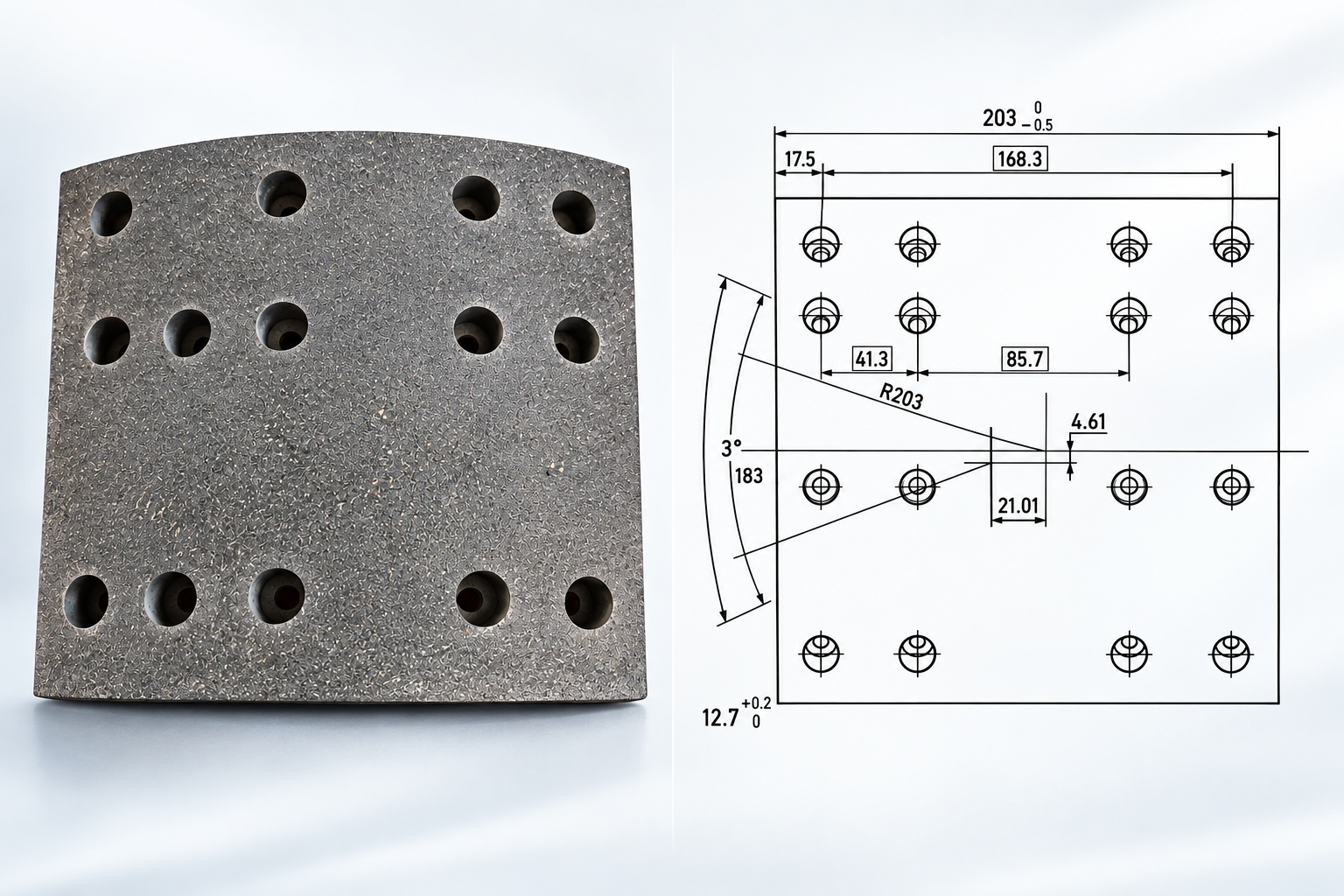
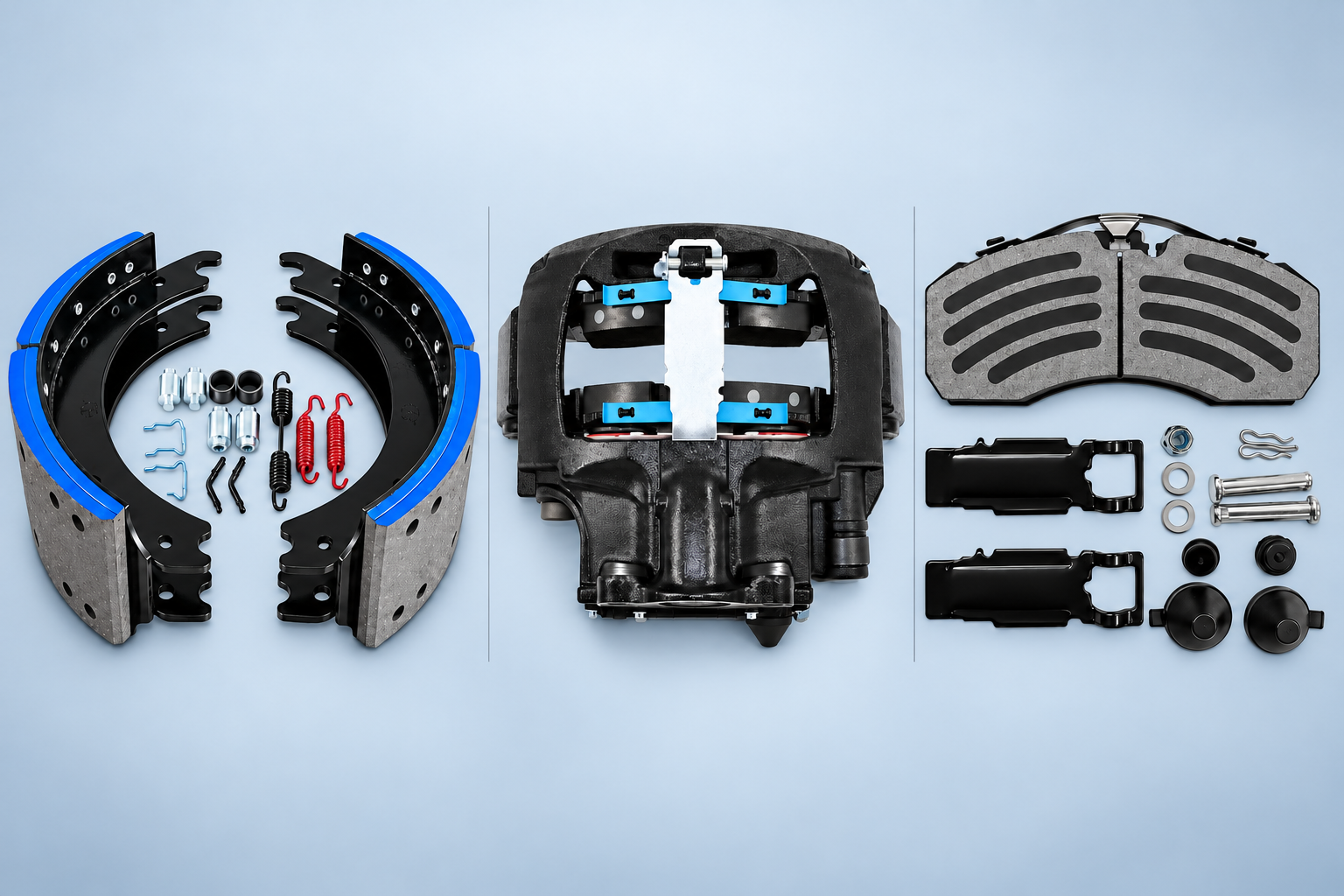
At the manufacturing level, meeting these requirements depends on organized production, efficient packaging, flexible inventory coordination, and consistent aftermarket delivery—capabilities Tuoba provides as a China-based manufacturer of commercial brake pads, linings, and shoes for North American importers, distributors, fleet-focused suppliers, and private-label brands. For North American commercial brake programs, this support includes:
- Commercial vehicle disc brake pads
- Molded and riveted brake linings
- Complete heavy-duty brake shoe assemblies
- FMSI, OE, and WVA cross-reference support
- Private-label packaging, labeling, and barcode support
- Sample validation before volume production
Send us your FMSI, OE, or WVA numbers, vehicle applications, and estimated quantities to confirm product availability, suitable materials, and sample options.
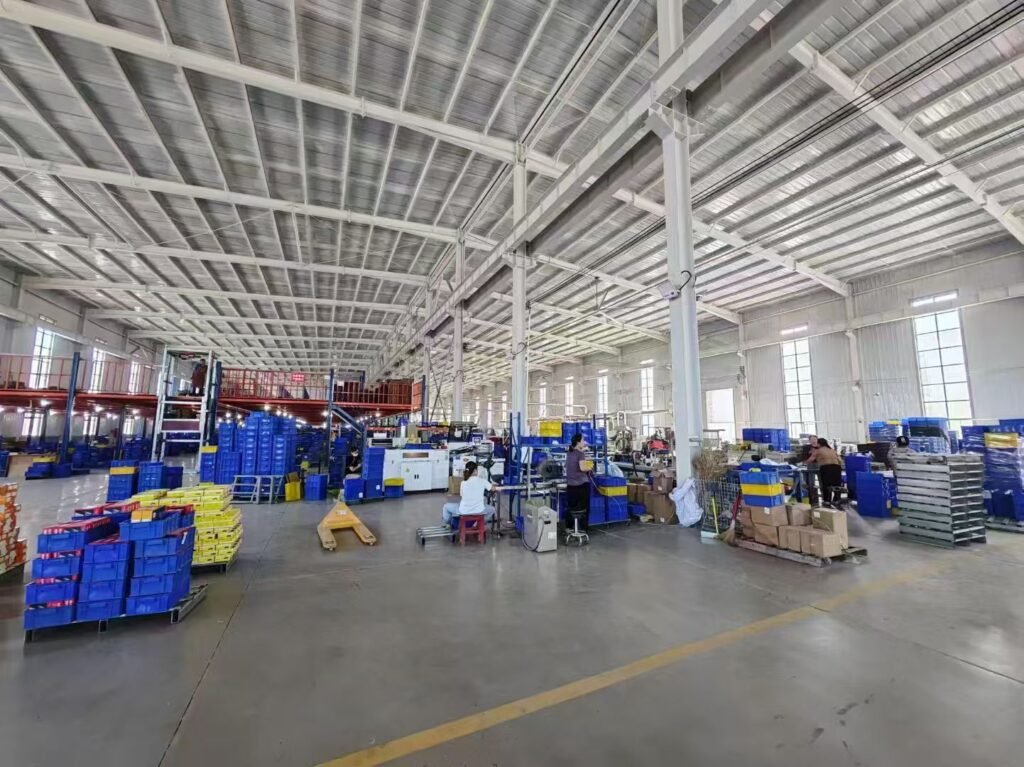
Tuoba’s brake pad production and packaging area supports efficient order preparation and consistent supply for global aftermarket customers.
The 2026 Commercial Vehicle Aftermarket Outlook
Frost & Sullivan’s Growth Opportunities for the 2026 Medium- and Heavy-Duty Commercial Vehicle Aftermarket describes a structural transition across the global commercial vehicle aftermarket. According to the report’s public summary, global sales of new medium- and heavy-duty trucks declined by approximately 4.1% in 2025, while the global commercial vehicle population is forecast to grow by 1.6% in 2026. Global aftermarket revenue is expected to increase by approximately 5.2% year over year, with North America, Asia-Pacific, and Europe remaining the major revenue-contributing regions.
This apparent contrast between weaker new-vehicle sales and stronger aftermarket revenue is central to understanding the market. Increased vehicle prices, financing pressure, and freight-market volatility are prompting many operators to retain trucks longer. At the same time, higher utilization means that existing vehicles continue to accumulate mileage and consume replacement parts. The result is a market in which brake-component demand is increasingly influenced by fleet age, vehicle usage, replacement frequency, and maintenance planning rather than new-truck sales alone.
The report evaluates the commercial vehicle aftermarket through variables including vehicle population, average vehicle age, annual mileage, replacement rates, regulations, operating conditions, parts categories, and distribution channels. Its North American section specifically examines revenue by part type, vehicles-in-operation ownership patterns, model mix, distribution-channel margins, and regional opportunity areas. Although the paid report does not publicly disclose all supporting figures, its structure indicates where market participants should focus: replacement demand, vehicle coverage, channel efficiency, fleet retention, and application-specific parts supply. Frost & Sullivan
Why Lower New-Truck Sales Can Strengthen Aftermarket Demand
A decline in new-truck sales does not automatically lead to lower demand for braking components. In many cases, it has the opposite effect. When fleets postpone vehicle replacement, existing trucks accumulate additional mileage and require more inspections, repairs, and component replacements. Brake pads, brake linings, brake shoes, drums, and rotors are all wear components, so their demand continues as long as vehicles remain active.
The U.S. Vehicle Inventory and Use Survey covers pickups, light and heavy single-unit trucks, and semi-trucks. It evaluates not only the number of vehicles but also weight, axle configuration, body type, annual mileage, lifetime mileage, commodities carried, and operating use. These factors are important because two vehicles of the same age may generate completely different aftermarket demand depending on their routes and workloads. U.S. Census Bureau
A long-haul tractor operating primarily on interstate highways will experience a different brake replacement cycle from a refuse truck making hundreds of stops, a regional delivery vehicle operating in urban traffic, or a vocational truck working on construction sites. For an aftermarket brake pad supplier in the USA, the market opportunity therefore depends on understanding how vehicles are used, not simply how many are registered.
This also means that product coverage should not concentrate exclusively on the newest vehicle platforms. As commercial trucks remain in operation longer, distributors must support several generations of vehicles simultaneously. Current models, vehicles between five and ten years old, and older fleet units retained beyond their original replacement schedules may all remain commercially important. Suppliers capable of covering older platforms and lower-volume references can help distributors fill catalogue gaps that larger brands may no longer prioritize.
An Aging Vehicle Population Is Expanding the Long Tail of Demand
One of the clearest consequences of longer fleet retention is the expansion of the aftermarket’s “long tail.” High-volume applications will continue to dominate sales, but older trucks and less common configurations create a growing number of smaller, fragmented replacement requirements.
For North American parts distributors, serving this long tail can be commercially attractive, but it also creates inventory challenges. Carrying large quantities of every reference ties up working capital and increases the risk of slow-moving stock. A more practical model is to combine inventory for fast-moving products with flexible replenishment for lower-volume applications.
This creates an opportunity for suppliers that can manufacture controlled quantities across a broad product range. Instead of focusing only on a few high-volume brake pad references, a manufacturing partner can help distributors support older trucks, regional platforms, vocational vehicles, trailers, and customer-specific applications.
In this environment, catalogue breadth becomes valuable when it is combined with accurate cross-reference data and realistic production flexibility. A large product list without dependable fitment information or replenishment support does little to improve a distributor’s market position.
Higher Fleet Utilization Is Changing the Structure of Brake Demand
Vehicle age is only one driver of replacement demand. Utilization can be equally important. A relatively new vehicle operating long hours or completing frequent braking cycles may require replacement parts earlier than an older truck used only occasionally.
Regional delivery, urban logistics, refuse collection, passenger transport, construction, mining, towing, and mountain-route operations all place different demands on braking systems. This creates opportunities for a fleet brake lining supplier or commercial brake pad provider to organize products according to duty cycle rather than treating the entire commercial vehicle market as one category.
For distributors, this may involve building separate product programs for highway, urban, trailer, and severe-duty applications. Such segmentation can improve product-market fit without creating an unmanageable number of SKUs. It also allows sales teams to communicate clear application value instead of relying on general claims about quality.
Detailed friction-material selection is already covered in Tuoba’s Fleet Brake Pads Guide and its comparison of ceramic and semi-metallic brake pads for trucks. From a market perspective, the more important issue is whether a distributor can offer a balanced portfolio capable of supporting different operating environments while maintaining manageable inventory.
The Aftermarket Is Moving From Repair-Led to Uptime-Led
Frost & Sullivan identifies a broader transition from a repair-led aftermarket toward an uptime-led service model. Under a traditional repair-led approach, replacement parts are ordered after wear, damage, or failure is discovered. An uptime-led model is more proactive. Fleets forecast replacement demand, monitor component condition, standardize suitable references, and schedule maintenance before unexpected failures remove vehicles from service.
This shift affects every participant in the supply chain. Fleets need predictable product availability and maintenance intervals. Repair networks need accurate fitment information. Distributors need better forecasting and replenishment. Private-label brands need consistent specifications. Manufacturers need to coordinate production more closely with actual market demand.
FMCSA requires commercial vehicles, including every segment of a combination vehicle, to undergo periodic inspection at least once every 12 months. Drivers must confirm that vehicles are in safe operating condition, and safety-related defects must be corrected before vehicles return to service. These requirements keep brake inspection, maintenance, and replacement closely connected to fleet availability. Federal Motor Carrier Safety Administration
For brake-component suppliers, the commercial implication is that availability and predictability increasingly influence purchasing decisions. A technically suitable product has limited value if it is unavailable when a fleet schedules maintenance. This is why production planning, order visibility, delivery stability, and application data are becoming part of the supplier’s overall value proposition.
Brake Linings and Brake Shoes Remain Important Commercial Categories
Although disc brake adoption is increasing in some commercial vehicle segments, drum brake systems remain widely used across heavy trucks, trailers, vocational vehicles, and fleet applications. This supports continued demand for brake linings, complete brake shoes, and related hardware.
The market includes molded brake linings, riveted brake linings, flexible brake lining material, complete brake shoe assemblies, and application-specific friction materials. Different customers may require different product formats. Some North American distributors prefer ready-to-install brake shoes, while local relining or assembly businesses may purchase linings separately.
A commercial brake lining supplier must therefore understand the customer’s position in the service chain. Supplying friction material to a relining business is different from supplying complete private-label brake shoes to a national distributor. The required packaging, documentation, order structure, technical support, and product identification may all differ.
The same principle applies to fleet and vocational applications. Long-haul vehicles, refuse trucks, construction vehicles, trailers, and municipal fleets expose brake components to different combinations of axle load, braking frequency, heat, contamination, moisture, and annual mileage. As a result, the strongest commercial opportunities are often found in application-specific programs rather than one universal product range.
An OEM heavy-duty brake shoe supplier or manufacturer of custom truck brake shoes can respond by combining broad application coverage with suitable lining options and complete assembled products. The supplier’s role is not only to manufacture a brake shoe but also to help the customer develop a commercially workable product range.
For OEM and large-scale aftermarket programs, these capabilities are often evaluated through on-site factory audits. During a recent visit, a German OEM customer’s technical team reviewed Tuoba’s automated production lines, manufacturing processes, quality-control procedures, laboratory capabilities, and final inspection system as part of its supplier assessment.
German OEM customer representatives evaluating Tuoba’s production and quality-control capabilities during an on-site factory audit.
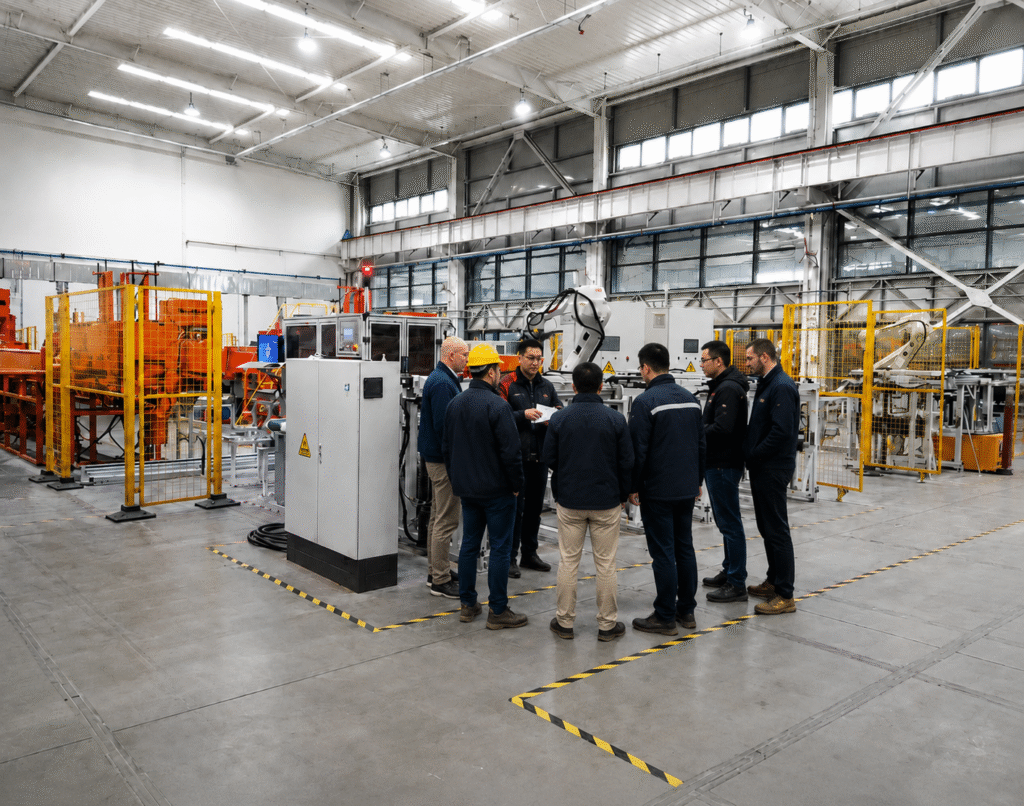
Such evaluations reflect the same priorities that matter to North American commercial vehicle customers: consistent product quality, process traceability, application-specific technical support, and reliable long-term supply.
Private Label Is Becoming a Strategic Growth Channel
Private-label brake products are becoming increasingly important for North American distributors and regional aftermarket brands. Rather than competing only through widely available national brands, distributors can use private-label programs to establish their own market position, protect margins, and build stronger customer loyalty.
A private-label program gives the distributor greater influence over brand positioning, packaging, product coverage, technical specifications, channel exclusivity, warranty policies, and market communication. It can also reduce direct price comparison because the product is developed around the distributor’s own commercial strategy.
Market demand may include private-label brake pads in North America, private-label brake linings, private-label truck brake shoes, distributor-exclusive product ranges, and fleet-specific brake programs. However, the success of such a program depends on more than placing a logo on existing packaging.
A commercially effective program begins with the target vehicle population and customer base. The distributor and manufacturer must identify which applications will generate sufficient demand, which products should be stocked locally, which lower-volume references can be replenished through planned production, and how the range will be positioned relative to economy, standard, and premium alternatives.
Detailed differences between OEM and private-label business models are already covered in Tuoba’s OEM vs Private Label Brake Pads guide. Within the context of the North American market, the key point is that private labeling gives distributors a practical way to turn supply capability into a differentiated market asset.
Regional Operating Conditions Create Product-Portfolio Opportunities
North America is not a single uniform braking environment. Climate, geography, traffic patterns, fleet composition, and vehicle use vary significantly between regions.
Northern markets must contend with cold weather and road salt, which can accelerate corrosion. Southern and southwestern regions expose braking components to high ambient temperatures. Mountain routes create sustained braking and higher thermal loads. Urban fleets experience frequent stop-and-go operation, while long-haul vehicles may cover large distances with fewer but more energy-intensive braking events. Coastal areas introduce moisture and corrosion concerns, and vocational vehicles encounter dust, debris, and irregular loads.
These differences create an opportunity for distributors to structure product ranges around real operating environments. A regional product program may distinguish highway, urban, trailer, and severe-duty applications without forcing customers to navigate an excessive number of overlapping product grades.
For suppliers, regional adaptation does not necessarily mean developing a unique formulation for every state or customer. It means using vehicle applications, duty cycles, climate, and service feedback to determine which existing product families are best suited to each market segment and where genuine customization is commercially justified.
Distribution Channels Are Becoming More Integrated
The Frost & Sullivan report dedicates part of its North American analysis to distribution channels and gross margins. This is important because the commercial value of a braking product is distributed across manufacturers, importers, brands, distributors, repair networks, and fleets.
Each participant views the market differently. Manufacturers focus on production efficiency, product coverage, and repeatability. Importers and brands focus on landed cost, positioning, and supply risk. Distributors concentrate on inventory availability and turnover. Repair networks need correct fitment and efficient installation. Fleets prioritize vehicle availability and predictable maintenance.
A successful brake pad supplier in North America must understand how these priorities connect. The supplier’s responsibility increasingly extends into cross-reference data, packaging, barcode support, forecast coordination, mixed-reference order planning, distributor catalogue documentation, replenishment, product-range development, and technical support for claims.
This broader service model is particularly important for overseas manufacturers serving the North American market through local importers, distributors, and aftermarket brands. Such companies should not present themselves as domestic American brake pad manufacturers unless they operate manufacturing facilities in the United States. A more accurate position is that of a global manufacturing partner supporting North American distribution and private-label programs.
Digital Product Data Is Becoming a Market-Entry Requirement
Frost & Sullivan identifies digitization of the service ecosystem as one of the major growth opportunities in the wider commercial vehicle aftermarket. For brake suppliers, digitization is not limited to advanced onboard technology. It also affects how replacement products are identified, listed, ordered, stocked, and supported.
Modern distributors increasingly rely on digital catalogues, OE cross-references, vehicle application searches, dimensional data, product images, technical drawings, barcode systems, warehouse software, and online ordering platforms. If a supplier’s product information is incomplete or inconsistent, even a competitive product may struggle to enter established distribution channels.
This makes digital product data a strategic asset. Accurate application information helps prevent returns and incorrect orders. Standardized images and dimensions support online catalogues. Structured cross-reference data allows distributors to integrate new references more efficiently. Batch and product identification also improve warranty analysis and traceability.
A supplier with strong physical manufacturing but weak data support may find itself at a disadvantage against competitors that make their products easier to catalogue, sell, and service.
Alternative-Fuel Vehicles Will Gradually Change the Product Mix
The Frost & Sullivan report also identifies the growth of alternative-fuel vehicles as a future aftermarket opportunity. Electric, hybrid, natural-gas, and other alternative-fuel commercial vehicles will gradually change model mix and service demand, although adoption will vary by vehicle class and application.
Regenerative braking can reduce the frequency of friction-brake use in some operating conditions, but it does not eliminate the need for brake pads, linings, rotors, drums, or related maintenance. Reduced friction-brake use may create different challenges, including corrosion, irregular surface contact, and changes in replacement patterns.
The transition will not occur uniformly. Urban buses and delivery vehicles may adopt alternative powertrains faster than long-haul or severe-duty trucks. Suppliers and distributors should therefore monitor new vehicle platforms, OE reference changes, regional adoption, braking-system architecture, corrosion-related service needs, and emerging maintenance intervals.
The immediate opportunity is not to abandon conventional commercial vehicle coverage. It is to maintain support for the large installed base while gradually developing knowledge and product coverage for newer vehicle technologies.
Compliance Claims Must Match the Target Market
Searches for an FMVSS brake pad supplier, ECE R90 brake pad manufacturer, or IATF 16949 brake shoe manufacturer reflect different buyer concerns. These terms should not be presented as interchangeable approvals.
FMVSS relates to U.S. vehicle safety requirements, while IATF 16949 concerns automotive quality-management systems. ECE R90 applies to replacement brake products in markets that adopt UNECE regulations. A supplier serving several regions should clearly identify which tests, certificates, and documents apply to each product and target market.
For North American customers, accurate positioning is more valuable than broad certification claims. Suppliers should be able to explain the scope of their documentation, the products or applications covered, and how test and production data are controlled.
Detailed explanations are already available in Tuoba’s guide to ECE R90 for truck brake pads and its article on FMVSS 135 in brake pad development. Keeping technical explanations on these dedicated pages allows the present article to remain focused on market opportunity and supply-chain strategy.
What North American Customers Need From Manufacturing Partners
The next stage of competition in the North American aftermarket will not be determined solely by whether a supplier can manufacture a brake pad, lining, or shoe. The more important question is whether the manufacturer can support the customer’s business model.
An aftermarket distributor may need broad OE coverage, manageable minimum order quantities, and flexible replenishment. A private-label brand may prioritize packaging, product positioning, and exclusive references. A fleet-focused supplier may need products organized around different duty cycles. A relining business may require molded, flexible, or riveted brake linings rather than finished assemblies.
A suitable manufacturing partner must therefore connect production with commercial planning. This involves supporting both fast-moving and long-tail references, balancing product coverage with inventory efficiency, coordinating forecasts with production schedules, maintaining accurate application data, managing branded packaging, and responding when regional demand changes.
The supplier must also help customers reduce catalogue gaps without encouraging an unnecessarily large and expensive product range. This requires understanding which applications should be stocked, which can be supplied through scheduled replenishment, and which do not justify development.
Detailed technical supplier-selection criteria are already covered in Tuoba’s truck brake pad sourcing guide and custom brake pad factory guide. The focus here is how those capabilities can be applied to a North American distribution strategy.
Market Entry Priorities for 2026
Companies seeking growth in the North America brake industry should begin with the vehicles already in operation. Product planning based only on current-year truck sales will overlook the replacement requirements of older fleets and discontinued platforms.
The next priority is application segmentation. Long-haul, urban, trailer, refuse, bus, and vocational vehicles should not be treated as one uniform market. A commercially balanced range should reflect real duty cycles without becoming too complicated for distributors and repair networks to manage.
Long-tail availability also deserves attention. Older and lower-volume references can create defensible opportunities when major suppliers focus on fast-moving applications. Flexible production and planned replenishment can help distributors serve these products without carrying excessive inventory.
Private-label development provides another route to growth. A well-structured program allows distributors to control positioning and margins while building a product range around their own customer base. Finally, strong product data is essential. Cross-references, drawings, packaging information, images, and digital catalogue records all influence whether a product can move efficiently through modern distribution channels.
A Manufacturing Platform for North American Brake Programs
Tuoba manufactures brake pads, brake linings, and drum brake shoes for commercial vehicles and global aftermarket brands. Its role in North American projects is to support importers, distributors, fleet-focused suppliers, and private-label businesses with product development and scalable manufacturing.
Cooperation can begin with OE numbers, vehicle applications, drawings, samples, or dimensional information. Based on the target market and expected volume, the product range can be organized around heavy-duty trucks, trailers, buses, vocational vehicles, or other commercial applications.
Tuoba can support custom brake lining materials, molded and riveted linings, complete truck brake shoes, private-label brake pads, branded packaging, barcode requirements, product data, technical documentation, and sample validation before volume production. Forecast-based planning can then be used to coordinate fast-moving products with lower-volume references and reduce supply gaps.
The objective is not simply to supply individual components. It is to help North American customers build a commercially workable brake-product program that balances market coverage, inventory efficiency, application requirements, and long-term supply.
Conclusion
The 2026 North American commercial vehicle aftermarket is being shaped by longer vehicle retention, higher utilization, changing ownership patterns, supply-chain pressure, digitized distribution, and the transition toward uptime-led maintenance.
These forces are sustaining replacement demand even while new-truck sales remain under pressure. Market opportunities now extend across commercial brake pads, brake linings, fleet brake shoes, private-label products, older vehicle references, and application-specific programs.
For distributors, fleet-parts suppliers, and aftermarket brands, future growth will depend not simply on offering a large catalogue, but on building reliable product coverage, filling long-tail application gaps, responding to regional operating conditions, and maintaining a resilient supply chain.
Frequently Asked Questions
Why is the North American commercial brake aftermarket growing?
Commercial vehicles are being retained longer and operated at higher utilization levels. As trucks accumulate more mileage and pass through additional maintenance cycles, demand for wear components such as brake pads, brake linings, brake shoes, drums, and rotors remains strong.
What opportunities exist for North American parts distributors?
Distributors can expand coverage for aging vehicles, fill long-tail catalogue gaps, develop private-label ranges, and build application-specific programs for fleets, trailers, refuse trucks, buses, and vocational vehicles.
What is the difference between a brake lining supplier and a brake shoe manufacturer?
A brake lining supplier may provide molded, flexible, bonded, or riveted friction material. A brake shoe manufacturer supplies a complete assembly that combines the steel shoe structure with the selected brake lining.
Why are private-label brake products attractive in North America?
Private labeling allows distributors to control product positioning, packaging, specifications, channel strategy, and margins. It also helps businesses build a differentiated range around their own customer base.
Does ECE R90 replace U.S. brake requirements?
No. ECE R90 applies to replacement braking products in markets using UNECE regulations. Products sold into North America must be evaluated according to the requirements applicable to their market, vehicle type, and use.
What information should a buyer provide for a commercial brake project?
Buyers should provide OE or cross-reference numbers, vehicle applications, dimensions, target market, operating conditions, packaging requirements, forecast volume, and any performance or supply problems they want to address.
What Is Tuoba’s Minimum Order Quantity for Brake Pads?
Tuoba’s minimum order quantity is 100 sets per model. For customers evaluating a new product or market, we recommend testing samples before placing a volume order.
Can Tuoba Send Brake Pad Samples?
Yes. Tuoba provides samples for product evaluation and testing. Customers are responsible for the sample and shipping costs. We will arrange delivery, provide the tracking number, and keep customers updated on the shipment status.
Can Tuoba Provide Private-Label Packaging for North American Customers?
Yes. Tuoba supports private-label packaging, customized labels, barcodes, and product identification for distributors and aftermarket brands. Specific requirements can be confirmed according to the product range and order quantity.
What Information Is Required to Request a Quote?
Please provide the OE or WVA number, vehicle application, product dimensions or drawings, required material, target market, packaging requirements, and estimated quantity. This information allows our team to identify the correct product and recommend a suitable solution.
Related reading
- Semi Truck Brake Pads: How to Identify, Compare and Source the Right Pads
- Top 10 Commercial Vehicle Brake Shoe Manufacturers in USA: Buyer’s Guide
- FMVSS 121 Brake Lining Test Reports: What Importers Should Verify
Reviewed by: Robert, Chief Executive Officer, Tuoba Auto Parts
Technical basis: 49 CFR 396.17 (FMCSA periodic inspection) · U.S. Census Bureau Vehicle Inventory and Use Survey
If you are looking for a dependable North American brake pad supplier or manufacturing partner, Tuoba can support your business with commercial vehicle brake pads and linings, application matching, private-label programs, product data, sample evaluation, and flexible production planning.
Share your OE numbers, FMSI references, vehicle applications, or target product list with the Tuoba team. Contact us today to request a product catalogue, discuss sample testing, or develop a brake product program for your market.