For commercial vehicles, braking performance is directly connected to safety, operating efficiency, and maintenance costs. Unlike passenger cars, heavy-duty trucks, trailers, and buses often operate under much more demanding conditions. They carry heavier loads, travel longer distances, and experience frequent braking cycles during daily transportation operations.
Because of these challenges, commercial vehicle brake pads must provide stable friction performance under high pressure and high temperatures. A brake pad that performs well in normal conditions may not deliver the same reliability when installed on a fully loaded truck operating on steep roads, in heavy traffic, or under continuous delivery schedules.
Among all brake maintenance factors, commercial truck brake pad thickness is one of the most important indicators of remaining service life. As friction material gradually wears down, the brake pad becomes less capable of managing heat and maintaining consistent braking performance.
For fleet operators, distributors, repair companies, and commercial vehicle users, understanding commercial truck brake pad thickness is essential for maintaining braking safety, controlling maintenance costs, and improving vehicle uptime. For different vehicle applications, choosing the right commercial brake pad solutions can also help fleets achieve more stable braking performance and longer service intervals.
This guide explains how commercial brake pads work, what materials they are made from, how thickness changes during operation, what minimum thickness limits mean in real-world applications, and how fleets can improve brake safety through proper inspection and maintenance.
What Is a Commercial Brake Pad?
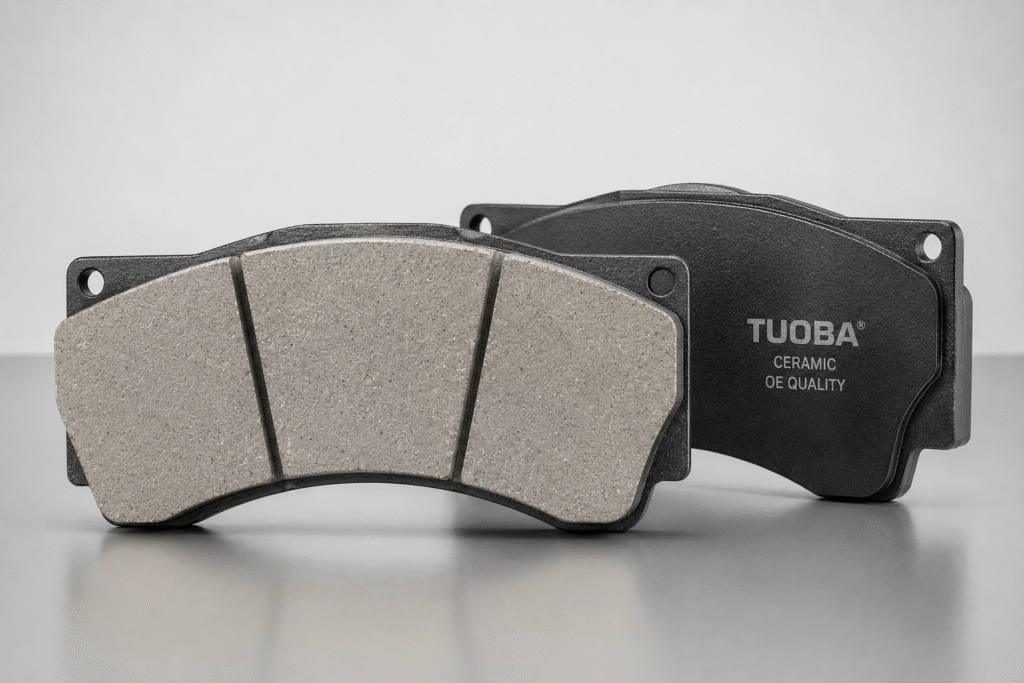
A commercial brake pad is a friction component designed to help heavy-duty vehicles slow down and stop safely. When the driver applies the brake, the brake pad is pressed against the rotating brake disc, creating friction that converts vehicle movement into heat and reduces speed.
Although the basic working principle is similar to passenger vehicle brake pads, commercial brake pads are designed for much more challenging conditions. A fully loaded tractor-trailer combination can weigh many times more than a passenger vehicle, meaning the braking system must absorb significantly greater energy during every braking event.
For this reason, commercial vehicle brake pads are developed with a stronger focus on durability, heat resistance, and consistent friction performance. They are widely used in applications such as long-haul trucks, semi-trailers, buses, construction vehicles, and delivery fleets.
Leading commercial braking suppliers such as Bendix Commercial Vehicle Systems, Meritor, Knorr-Bremse, and ZF Friedrichshafen develop braking solutions for heavy-duty applications where reliability and predictable wear performance are critical.
These industry applications show why commercial brake pads cannot simply be treated as larger versions of passenger car brake pads. They require different material formulations, different testing approaches, and different maintenance considerations.
Commercial Brake Pads vs Passenger Car Brake Pads
Although both commercial and passenger vehicles use brake pads to create friction and slow down the vehicle, their performance requirements are significantly different.
Passenger vehicle brake pads are generally designed around daily driving conditions. Factors such as low noise, smooth pedal feel, and reduced dust are often important considerations because comfort plays a major role in consumer vehicle ownership.
Commercial vehicle brake pads, however, are designed for working conditions. Trucks and trailers need brake pads that can handle heavier loads, longer operating hours, and higher braking temperatures. Fleet operators are usually more concerned about service life, braking consistency, and total maintenance costs.
For example, a delivery truck making frequent stops in urban areas requires brake pads that can handle repeated braking cycles without rapid performance loss. A highway tractor traveling long distances may require a formulation that provides stable friction over extended operation.
This difference is why commercial vehicle brake pads usually focus more on heat resistance during heavy braking, predictable wear characteristics, stable friction performance, and long service intervals.Choosing the correct brake pad specification based on vehicle usage is essential for achieving reliable performance.
Why Brake Pad Thickness Matters
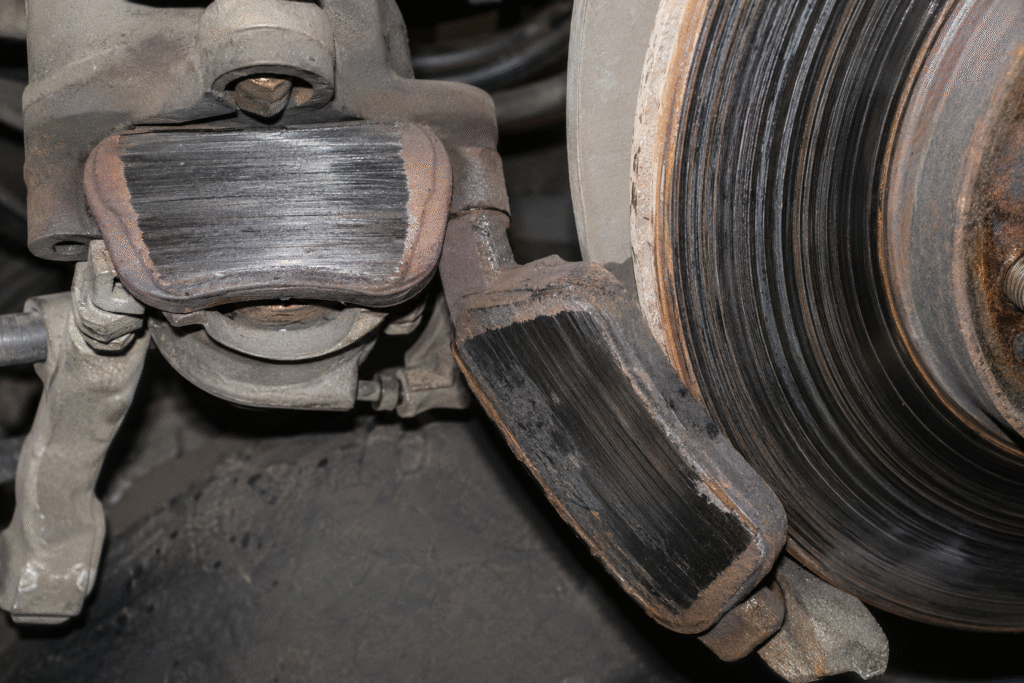
The thickness of a commercial truck brake pad provides important information about its remaining service life and overall braking condition. As the vehicle operates, the friction material gradually wears away each time the brakes are applied. These operating conditions also influence the selection of friction materials, which is why many fleets evaluate different brake pad technologies based on vehicle application and braking requirements. A truck transporting heavy goods through mountainous areas will usually experience faster brake pad wear than a vehicle operating mainly on flat highways.
As brake pad thickness decreases, the remaining friction material has less ability to absorb and control heat generated during braking. This can affect braking consistency, especially during repeated braking situations such as downhill driving, heavy-load transportation, or urban delivery routes where frequent stops are required.
Brake pad thickness also affects the overall condition of the braking system. Excessive wear can increase stress on other brake components, including brake discs, calipers, and related hardware. For fleet operators, regularly monitoring brake pad thickness as part of preventive maintenance helps identify wear conditions early, improve maintenance planning, and maintain reliable braking performance throughout vehicle operation.
Brake Pad Thickness Guide
Typical New Commercial Truck Brake Pad Thickness
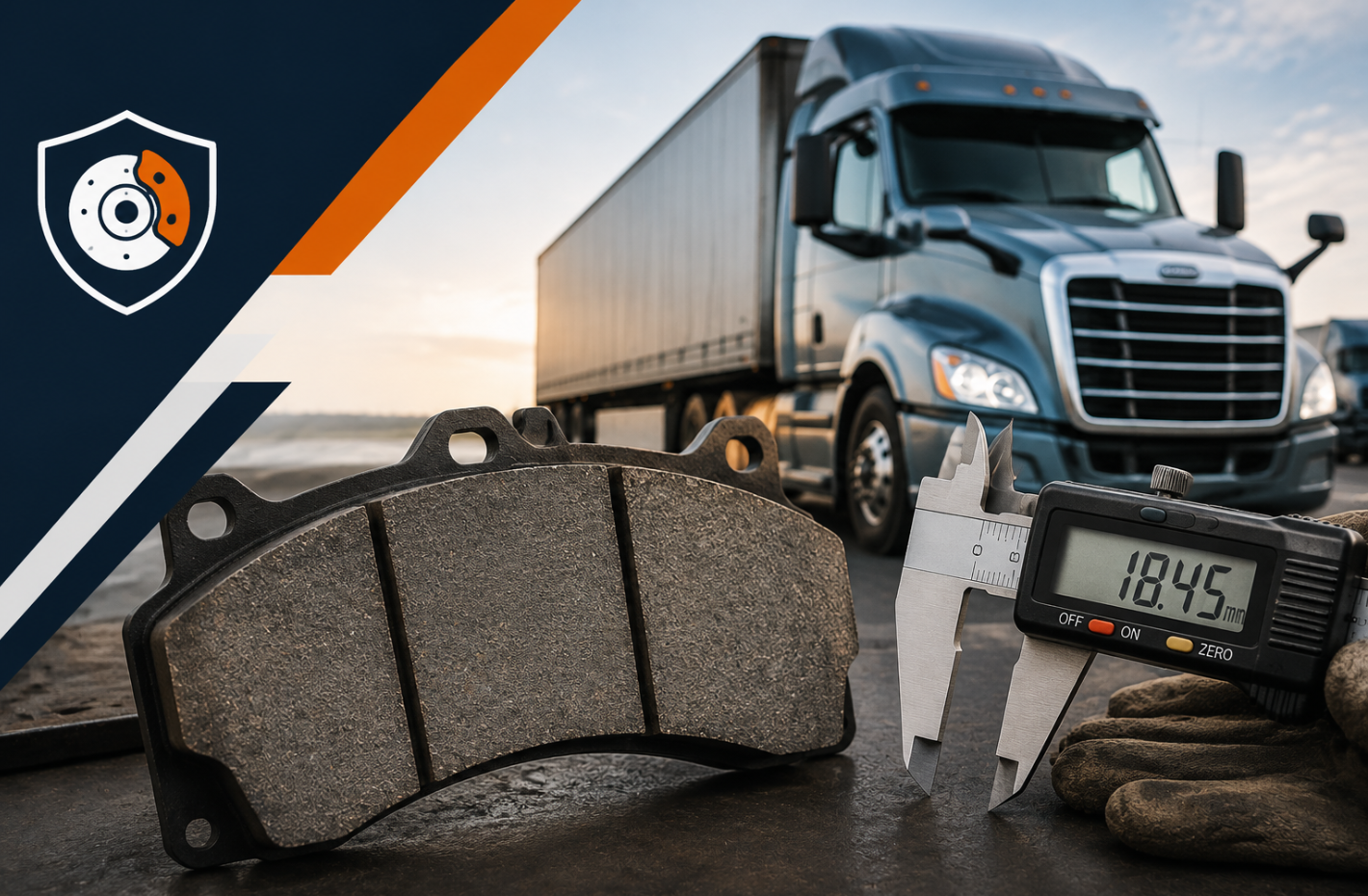
The thickness of a new commercial truck brake pad depends on the brake system design, vehicle application, and manufacturer specifications. However, for many heavy-duty disc brake applications, the friction material thickness of a new brake pad is commonly around 12–20 mm (0.47–0.79 inches). It is important to understand that this measurement refers to the friction material, not the total thickness of the complete brake pad assembly. The backing plate remains throughout the service life and does not contribute to braking performance.
These specifications are usually developed through controlled production processes and performance testing. Understanding the brake pad manufacturing process helps explain why different applications may require different friction material designs. Industry suppliers such as Bendix, Meritor, and other commercial brake system manufacturers provide application-specific brake components because vehicle operating conditions directly affect brake pad requirements.
How Much Brake Pad Thickness Is Safe?
During normal operation, commercial brake pads gradually move through several wear stages. A new brake pad provides maximum friction material thickness and the longest expected service life. As the vehicle accumulates mileage and braking cycles, the friction layer becomes thinner. When the remaining thickness decreases, maintenance teams usually increase inspection frequency to understand whether replacement will soon be required.
Many fleet maintenance professionals begin planning replacement when the remaining friction material reaches approximately 3–5 mm (0.12–0.20 inches). If the friction material reaches around 3 mm or below, replacement is generally recommended because the safety margin becomes significantly reduced. However, the exact replacement point should always follow the vehicle manufacturer’s recommendations and the brake supplier’s specifications.
Minimum Brake Pad Thickness Limits
The question of minimum brake pad thickness on commercial vehicle applications is one of the most common concerns among fleet operators and maintenance teams. However, there is no single thickness value that applies to every truck, trailer, or bus because braking systems vary depending on vehicle design, brake manufacturer specifications, and operating conditions.
In real-world fleet operations, brake pad replacement decisions are usually based on a combination of factors rather than thickness alone. Maintenance teams consider remaining friction material, wear patterns, braking performance, vehicle usage, and manufacturer recommendations before deciding whether replacement is necessary.
As a general industry reference, many heavy-duty brake applications follow a similar maintenance approach. However, actual service limits may vary depending on brake system design, vehicle application, and manufacturer specifications.
| Thickness | Maintenance Recommendation |
| 12–20 mm | Typical starting friction material thickness for many heavy-duty disc brake applications. Actual values vary by brake system design and manufacturer specifications. |
| Around 5 mm | Many fleets begin paying closer attention and increase inspection frequency. |
| 3–5 mm (0.12–0.20 inches) | Replacement planning is usually recommended. |
| Around 3 mm or below | The brake pad is generally considered close to the end of its service life. |
These values are practical maintenance references rather than universal legal limits. Actual minimum thickness requirements may vary depending on brake type, axle position, vehicle category, and regional regulations.It is important to note that maintenance replacement recommendations and legal minimum thickness requirements are not always the same. For fleets operating in different markets, compliance with relevant standards is also important. Brake components are often developed according to requirements such as ECE R90 brake certification and other regional testing standards.
How to Check Brake Pad Thickness on Commercial Trucks?
Many operators search for how to check brake pads on semi truck or how to check truck brake pads because regular brake inspections play an important role in preventing unexpected failures and maintaining safe vehicle operation. Unlike passenger vehicles, semi trucks and heavy-duty commercial vehicles operate under much more demanding conditions. Heavy loads, long-distance transportation, frequent braking, steep roads, and harsh weather conditions can accelerate brake pad wear. Therefore, commercial vehicle brake inspections require more detailed checks to ensure the braking system remains reliable.
A proper brake pad inspection usually starts with a visual examination of the entire brake system. Maintenance technicians should check the condition of brake pads, brake linings, brake discs or drums, and related components to identify signs of abnormal wear, physical damage, overheating, or contamination. Common issues include uneven brake pad wear, cracks or damaged friction surfaces, heat damage, and contamination from oil or grease. Uneven wear between inner and outer pads or different wheels may indicate problems such as improper brake adjustment, caliper issues, or uneven pressure distribution. Cracks, broken edges, or damaged friction material can reduce braking efficiency, while excessive heat from downhill driving or repeated braking may cause glazing, reduced friction performance, or accelerated wear. Any contamination on friction surfaces can also significantly reduce braking performance and should be addressed immediately.
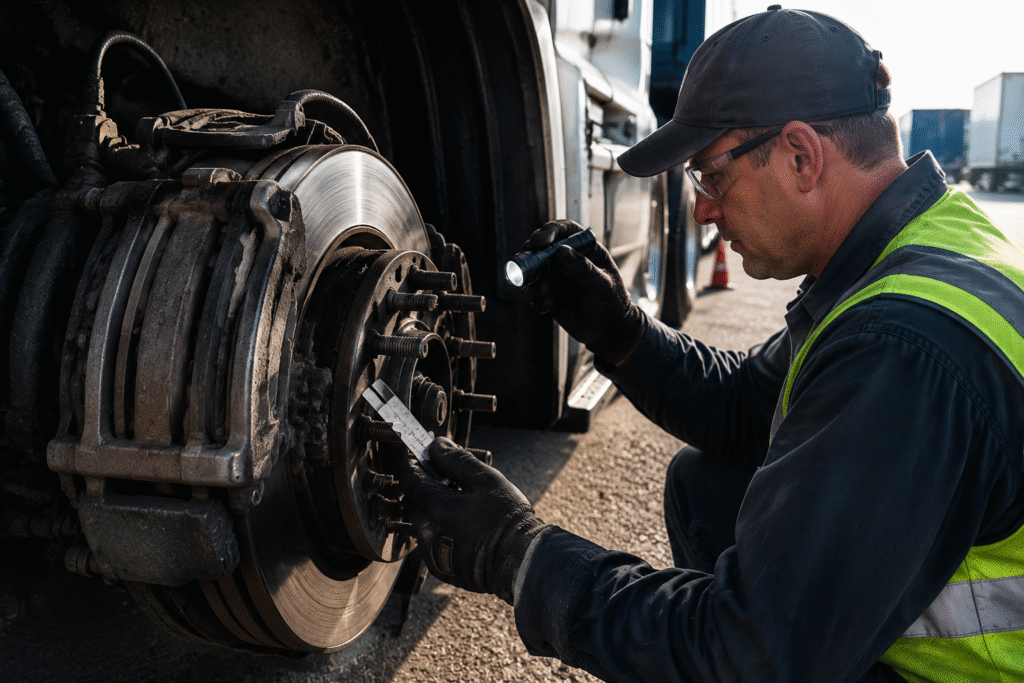
After the visual inspection, measuring brake pad or brake lining thickness is one of the most important steps in evaluating remaining service life. This measurement should focus on the remaining friction material thickness rather than the total brake pad assembly thicknessRegular inspection combined with proper replacement decisions can help prevent unexpected failures. Fleet operators can also refer to this guide on how to check if brake pads need replacement for additional maintenance information. However, thickness inspection should not be performed alone. A brake pad with enough remaining material may still require replacement if other safety concerns exist, such as uneven wear patterns across the axle, heat-related damage or discoloration, surface cracks or separation of friction material, abnormal contact between brake pads and discs, excessive brake dust or unusual wear debris, or reduced braking response and abnormal brake noise.
In addition, operators should pay attention to changes during vehicle operation. Symptoms such as longer stopping distances, pulling to one side during braking, vibration, unusual sounds, or changes in brake pedal feel may indicate potential brake system problems. For fleet operators, regular inspections combined with preventive maintenance can help identify brake pad wear before it becomes a safety issue. By checking brake pad thickness, wear condition, and overall braking performance, fleets can improve vehicle uptime, reduce unexpected repairs, and ensure safer commercial transportation.
Fleet Brake Inspection Practices
For commercial operators, brake inspection should be an essential part of a preventive maintenance program rather than a repair activity performed only after problems occur. A proactive inspection strategy allows fleets to identify brake wear early, reduce unexpected downtime, and maintain consistent braking performance throughout vehicle operation.
A well-managed fleet does not wait until drivers report braking issues before taking action. Instead, maintenance teams establish inspection schedules based on vehicle mileage, operating conditions, load requirements, and transportation routes.
Brake wear can vary significantly depending on how a commercial vehicle is used. A long-haul truck operating mainly on highways may experience slower brake pad or brake lining wear because braking frequency is relatively low and driving conditions are more stable. However, vehicles used for urban delivery, construction transportation, waste collection, or mountainous routes may require more frequent inspections because frequent stops, heavy loads, and repeated braking cycles generate additional heat and friction.
Key Factors Affecting Brake Inspection Frequency
When creating a fleet brake maintenance plan, operators should consider several factors that directly affect brake wear and inspection requirements. Vehicle application is one of the most important factors because different vehicles experience different braking demands. Heavy-duty trucks, trailers, buses, and delivery vehicles may require different inspection frequencies depending on their working conditions.
Load conditions also have a significant impact on brake wear. Vehicles that frequently operate near maximum load capacity place greater stress on braking components and may experience faster friction material wear. In addition, driving environments such as stop-and-go traffic, steep roads, extreme temperatures, and harsh operating conditions can accelerate brake wear.
Maintenance history is another important consideration. Previous brake replacement records and wear patterns can help maintenance teams better predict future service requirements and create more effective inspection schedules.
Many fleet operators include brake inspections during scheduled maintenance activities rather than waiting until braking problems occur. Common inspection opportunities include regular preventive maintenance services, tire replacement periods, wheel-end inspections, vehicle safety checks, and pre-trip or post-trip inspections.
During these inspections, technicians typically evaluate brake pad or brake lining thickness, wear patterns, heat damage, surface cracks, contamination, and overall braking performance to ensure the braking system remains reliable.
In addition to physical inspections, driver feedback is also an important part of fleet brake management. Drivers should report warning signs such as longer stopping distances, unusual brake noise, vibration, pulling during braking, or changes in braking response. Early identification of these issues allows maintenance teams to arrange repairs before they become major safety concerns.
A successful fleet brake inspection program combines regular checks, accurate maintenance records, and timely replacement decisions. By monitoring brake condition proactively, commercial operators can improve vehicle reliability, reduce unexpected repair costs, and maintain safer transportation operations.
Commercial Vehicle Brake Safety Regulations and Inspection Requirements
Brake failures can create serious risks for drivers, cargo, and other road users. In North America, commercial vehicle brake inspections are commonly associated with organizations such as the Federal Motor Carrier Safety Administration (FMCSA) and the Commercial Vehicle Safety Alliance (CVSA). Each year, CVSA organizes the Commercial Vehicle Brake Safety Week, a major inspection campaign focused on identifying brake system violations and improving commercial vehicle safety. The event typically involves inspectors checking commercial trucks, trailers, and buses for brake-related issues, making it an important reminder for fleets, operators, and maintenance teams to inspect brake components in advance.
While specific minimum thickness requirements may vary depending on vehicle type and jurisdiction, the general principle is consistent: commercial vehicle brakes must remain in safe operating condition. Fleets should regularly check brake pad or lining wear, braking performance, and other related components to reduce the risk of unexpected failures during operation.
For international fleets and distributors, it is also important to consider regional requirements such as North American commercial vehicle inspection requirements, European heavy vehicle safety regulations, manufacturer-specific maintenance procedures, and regional brake system testing standards. Professional brake pad suppliers typically develop products according to industry requirements and testing standards to ensure consistent performance across different markets.
When Should Commercial Vehicle Brake Pads Be Replaced?
Replacing commercial vehicle brake pads at the right time is essential for maintaining safe braking performance and controlling fleet operating costs. Unlike passenger vehicles, commercial trucks and trailers often operate under changing conditions, meaning brake pad replacement cannot be determined only by mileage or time. A highway tractor traveling long distances with limited braking may have a very different brake pad service life compared with a delivery truck operating in a city environment with frequent stops. Similarly, vehicles carrying heavy cargo loads usually experience faster brake wear because the braking system must absorb more energy during each stop.
Professional fleet operators typically consider multiple factors when deciding when to replace brake pads, including remaining friction material thickness, vehicle application, operating conditions, brake performance, and inspection results. As a general maintenance reference, replacement planning often begins when friction material thickness reaches approximately 3–5 mm (0.12–0.20 inches). When the remaining friction material reaches around 3 mm or below, many maintenance professionals recommend replacement to maintain a safe operating margin.
However, thickness should not be the only consideration when evaluating brake pad condition. A brake pad may require replacement earlier if technicians identify issues such as uneven wear, overheating damage, cracks, contamination, or poor contact between the brake pad and brake disc. These conditions can affect braking performance even when sufficient friction material remains.
In addition to inspection results, drivers and fleet operators should pay attention to changes during vehicle operation. Longer stopping distances, reduced brake response, unusual brake noise, vibration, pulling to one side during braking, or changes in brake pedal feel may indicate potential brake system problems. Uneven brake pad wear can also suggest issues with brake adjustment, caliper operation, or other related components.
For commercial fleets, identifying these warning signs early allows maintenance teams to arrange repairs before minor brake issues develop into more serious failures.More information about replacement timing can be found in our guide on the importance of replacing brake pads
Why Commercial Truck Brake Pads Wear Faster
Commercial truck brake pads generally experience faster wear compared with passenger vehicle brake pads because they operate under significantly higher loads, greater braking forces, and more demanding driving conditions. Unlike passenger vehicles, commercial trucks, trailers, and heavy-duty vehicles are designed to transport large amounts of cargo over long distances. The braking system must repeatedly convert a much higher amount of kinetic energy into heat to slow down or stop the vehicle. This increased workload places greater stress on friction materials and accelerates brake pad wear.
For this reason, professional fleet operators need to consider multiple factors that affect brake pad service life, including vehicle weight, driving environment, heat generation, trailer applications, brake material selection, and maintenance practices.
1. Heavy Vehicle Weight and Load Conditions
One of the primary factors affecting commercial brake pad wear is vehicle weight. A fully loaded truck requires much more braking force compared with an empty vehicle. When the vehicle weight increases, the brake system must generate higher friction levels to reduce speed safely. This additional friction creates more heat, which can accelerate wear on brake pads, brake linings, discs, and other braking components. For fleet operators, vehicles that frequently operate near maximum load capacity usually require more frequent brake inspections and maintenance compared with vehicles carrying lighter loads.
2. Frequent Braking and Driving Environment
Driving conditions have a significant impact on brake pad service life. Commercial vehicles operating in urban delivery environments often experience faster brake wear due to frequent stops at traffic lights and intersections, stop-and-go traffic conditions, repeated acceleration and braking cycles, and higher braking frequency during delivery routes. In contrast, long-haul trucks traveling mainly on highways may experience slower brake pad wear because braking cycles are less frequent and vehicle speeds remain more consistent. However, highway operation can still create significant brake stress when vehicles travel through mountainous areas, steep downhill roads, or regions requiring frequent speed adjustments.
3. Heat Generation and Brake Fade Risk
Heat management is one of the most important challenges for commercial vehicle braking systems. During braking, friction between the brake pad and disc or brake lining and drum generates heat. Under heavy loads or repeated braking conditions, excessive heat can cause accelerated friction material wear, surface glazing, reduced friction performance, brake fade, and premature component replacement. This is why heavy-duty commercial vehicles require brake pads with suitable heat resistance and stable friction characteristics to maintain reliable braking performance under demanding conditions.
4. Trailer and Heavy-Duty Applications
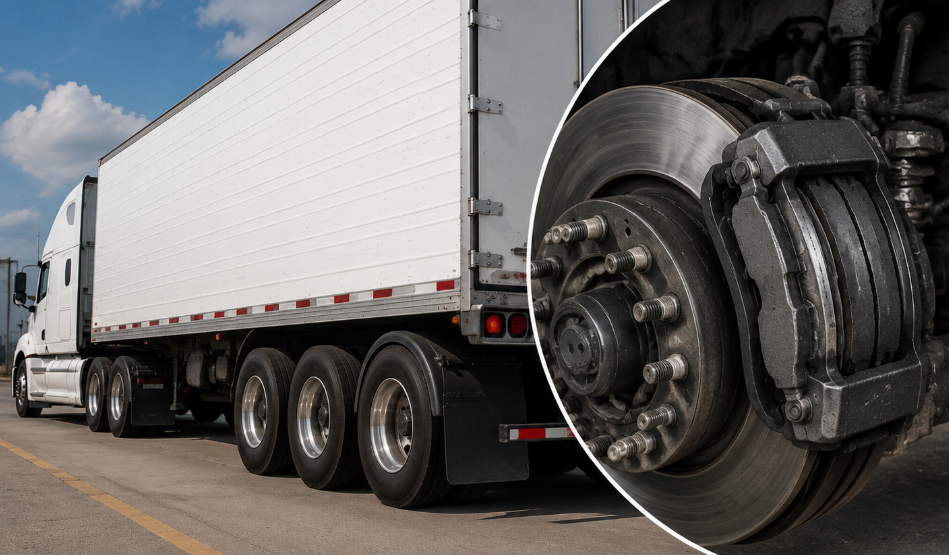
Trailer applications create additional challenges because trailers significantly increase the total weight controlled by the braking system. When transporting heavy cargo, both trucks and trailers must work together to provide sufficient braking force. Improper brake component selection, incorrect maintenance, or uneven braking distribution can lead to faster wear and reduced braking efficiency. For trailer fleets, choosing brake pads or brake linings specifically designed for heavy-duty applications is essential to ensure durability, safety, and consistent performance.
5. Brake Material and Application Matching
The service life of a commercial brake pad depends not only on the product itself but also on whether the friction material matches the vehicle application. Different operating conditions require different brake pad characteristics:
- Heavy-duty trucks and trailers: Require high durability, strong friction stability, and excellent heat resistance.
- Urban delivery vehicles: May require materials that balance braking performance, wear resistance, and noise control.
- Long-haul fleets: Need reliable performance over extended mileage and changing road conditions.
Selecting the correct brake pad material based on vehicle type, load conditions, and operating environment helps maximize service life and reduce unexpected maintenance costs.Different commercial vehicles also experience different braking demands depending on their operating conditions. Factors such as route type, vehicle load, braking frequency, and working environment can significantly influence brake pad wear and service life. More details can be found in our guide to commercial vehicle brake pad operating conditions.A properly matched brake pad combined with regular inspection and preventive maintenance can significantly improve braking safety, vehicle uptime, and overall fleet efficiency.
Commercial Brake Pad Materials and Application
The materials used in commercial vehicle brake pads are developed based on specific operating conditions, including vehicle weight, cargo load, driving environment, braking frequency, and expected service life. Unlike passenger car brake pads, which often focus more on comfort, low noise, and smooth braking feel, commercial brake pads must prioritize durability, heat resistance, and stable friction performance under heavy-duty conditions.
A typical commercial brake pad consists of friction materials, reinforcing fibers, minerals, fillers, lubricating components, and bonding materials. Manufacturers adjust these formulations depending on whether the brake pad is designed for trucks, trailers, buses, delivery vehicles, or other commercial applications.
Semi-Metallic Brake Pads
Semi-metallic brake pads are widely used in commercial vehicles and heavy-duty applications because of their excellent heat resistance, mechanical strength, and stable friction performance. The metal fibers contained in these formulations help improve heat transfer and maintain braking performance under high loads and frequent braking conditions.
These characteristics make semi-metallic brake pads suitable for long-haul trucks, trailers, buses, and heavy cargo vehicles that operate in demanding environments, such as mountain routes, highway transportation, and continuous heavy-load applications.
Low-Metallic Brake Pads
Low-metallic brake pads provide a balance between braking performance, durability, and driving comfort. Compared with semi-metallic formulations, they contain less metal content while still offering good friction stability and heat resistance.
They are commonly selected for light commercial vehicles, delivery trucks, and applications where both reliable braking performance and reduced noise characteristics are important considerations.
NAO (Non-Asbestos Organic) Brake Pads
NAO brake pads use organic fibers and non-asbestos materials to provide smoother and quieter braking performance. They are designed to reduce brake noise, vibration, and harsh braking sensations, making them suitable for applications where comfort and low noise are priorities.
However, compared with metallic friction materials, NAO brake pads generally have limitations under extreme temperatures and heavy-load conditions. Therefore, they are usually selected based on the vehicle’s operating environment and braking requirements.
Ceramic Brake Pads
Ceramic brake pads are known for clean operation, low brake dust, reduced noise, and smooth braking characteristics. They are commonly used in passenger vehicles and some light-duty applications where comfort and cleanliness are important.
For heavy-duty commercial vehicles that frequently carry heavy loads or experience severe braking conditions, semi-metallic or other heavy-duty friction materials are often preferred because they provide higher thermal capacity and mechanical strength.
Matching Brake Pad Materials with Vehicle Applications
The correct brake pad material depends on the specific requirements of each vehicle application. Long-haul trucks and trailers typically require high heat resistance and wear durability because they operate under heavy loads and repeated braking conditions. Urban delivery vehicles may place greater emphasis on braking consistency, noise control, and service life due to frequent stop-and-go operation. Buses require a balance between reliable braking performance, passenger comfort, and long-term durability.
Choosing the right friction material not only improves braking safety but also helps extend brake pad service life, reduce maintenance costs, and improve overall fleet reliability.
Commercial Brake Pad Applications in Different Vehicles
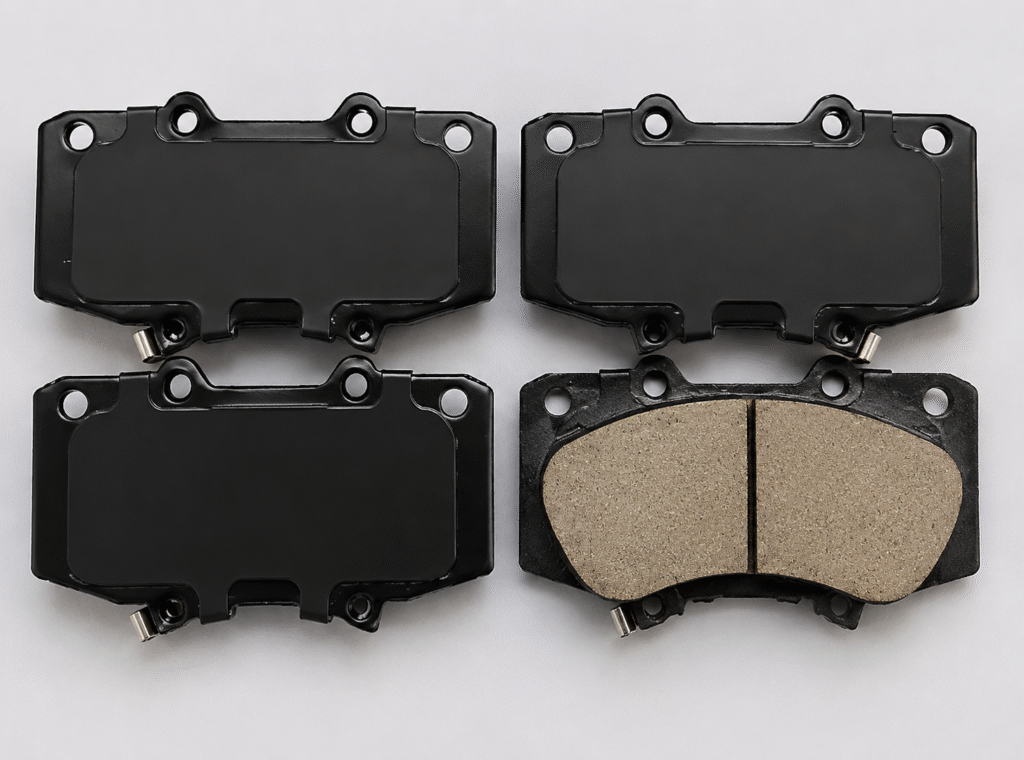
Commercial vehicles operate in very different environments, and brake pads need to handle much more than simply stopping the vehicle. A highway truck carrying heavy cargo, a city delivery vehicle making hundreds of stops every day, and a passenger bus operating on urban routes all place different demands on the braking system.
The right commercial brake pad is usually selected based on the vehicle’s working conditions, including load, driving environment, braking frequency, and expected service life. Different applications require different balances between friction performance, heat resistance, durability, and driving comfort.
Long-Haul Trucks
Long-haul trucks spend many hours on the road and often operate under heavy loads. During long-distance transportation, brake components may experience repeated high-energy braking, especially when vehicles travel through mountainous areas, downhill roads, or carry maximum cargo weight.
For these applications, brake pads need to maintain stable friction performance even after continuous use at elevated temperatures. Durability is also a key consideration because commercial fleets prefer products that can reduce maintenance frequency and keep vehicles operating efficiently.
Many heavy-duty truck brake pad formulations focus on achieving a balance between strong braking performance, wear resistance, and thermal stability to meet the challenges of long-distance transportation.

Urban Delivery Vehicles
Unlike long-haul trucks, urban delivery vehicles usually face frequent stop-and-go driving. Daily routes with repeated acceleration and braking can place continuous stress on brake pads, even when vehicle speeds are relatively low.
For delivery fleets, brake pad performance is often evaluated by consistency, wear life, and overall operating cost. A well-designed friction material helps maintain smooth braking throughout repeated cycles while reducing unnecessary replacement and downtime.
Noise control and comfortable braking behavior are also becoming increasingly important as delivery vehicles operate more frequently in residential and urban areas.
Buses and Passenger Transport Vehicles
Buses have unique braking requirements because passenger safety and riding comfort are equally important. City buses, school buses, and other passenger vehicles often experience frequent braking due to traffic conditions, stops, and changing passenger loads.
In these applications, brake pads need to provide reliable stopping performance while maintaining smooth engagement and low noise levels. Stable friction characteristics help drivers control the vehicle more comfortably and provide passengers with a better riding experience.
For bus operators, long service life and consistent performance are also important factors in reducing maintenance costs.
Trailers and Heavy Load Applications
Trailers and heavy-load vehicles operate under high braking demands because the braking system must control additional weight during transportation. The greater the vehicle load, the more braking energy needs to be converted into heat.
Brake pads used in these applications are designed to handle heavy-duty working conditions, including long-distance hauling, frequent loading operations, and challenging road environments. Good heat resistance and wear performance help maintain reliable braking throughout the vehicle’s service cycle.
Selecting the right brake pad for trailer applications is important not only for brake performance but also for overall transportation safety.
Why Brake Inspections Matter for Commercial Fleets
Brake safety remains one of the most important areas of commercial vehicle maintenance because braking performance directly affects driver safety, cargo protection, and overall fleet reliability. Even a high-quality brake pad or brake lining can only deliver reliable performance when the complete braking system is properly maintained and regularly inspected.
Commercial trucks and trailers operate under much more demanding conditions than passenger vehicles. Heavy loads, long-distance transportation, frequent braking, and changing road conditions can accelerate brake component wear. Without regular inspections, issues such as excessive brake pad wear, uneven friction material wear, overheating, or brake adjustment problems may develop and affect vehicle safety.
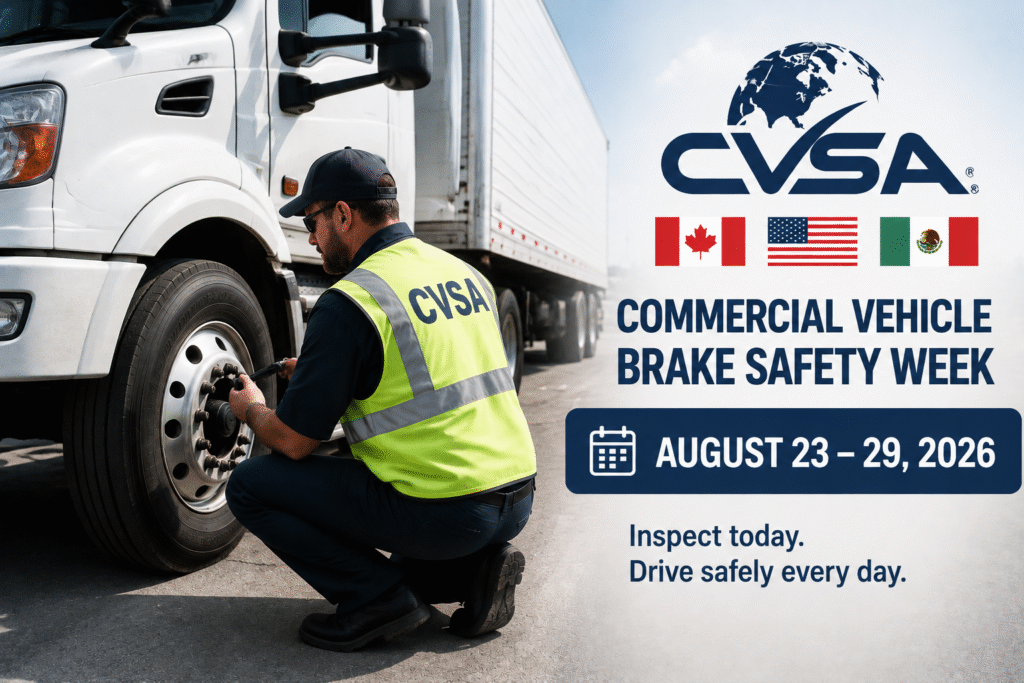
According to the Commercial Vehicle Safety Alliance (CVSA), Brake Safety Week is an annual inspection campaign focused on identifying brake-related safety issues in commercial vehicles and promoting better brake maintenance practices among fleets and operators.
The 2026 Brake Safety Week will take place from August 23–29, 2026. During this period, commercial vehicles across North America will receive increased attention regarding brake system conditions, making it an important reminder for fleet operators to review maintenance procedures and ensure vehicles are properly prepared.
Preparing Commercial Vehicles Before Brake Safety Week
Before scheduled safety inspections, fleet operators should conduct a comprehensive review of key brake system components. Preparing in advance not only helps vehicles pass inspections but also reduces the risk of unexpected brake-related failures during daily operation.
Important inspection areas include brake pad and brake lining thickness, brake wear condition, brake adjustment, brake discs, drums, and related components. Technicians should check remaining friction material to determine whether replacement may be required, while also inspecting for uneven wear, cracks, heat damage, glazing, or contamination caused by oil and grease.
For heavy-duty trucks using air brake systems, operators should also verify that air pressure, connections, and related components are functioning correctly. Proper brake adjustment helps maintain balanced braking performance across the vehicle and prevents unnecessary wear.
Fleet operators should also review maintenance records before inspection periods. Vehicles with high mileage, heavy-duty applications, frequent braking cycles, or previous brake issues should receive additional attention.
Brake Pad Monitoring for Commercial Fleets
Brake pad monitoring refers to the process of tracking brake pad wear and evaluating when maintenance or replacement may be required. For traditional commercial vehicles, brake pad monitoring is often performed through regular physical inspections. Technicians measure remaining friction material thickness and evaluate whether the brake pad continues to meet performance expectations.
Modern commercial vehicles may also use electronic monitoring systems. These systems can detect brake pad wear and provide warnings to drivers or fleet management systems. For large fleets, brake pad monitoring helps improve maintenance planning, reduce unexpected downtime, improve vehicle availability, and achieve more predictable operating costs.
Instead of replacing brake pads based only on mileage, fleet operators can make decisions based on actual wear conditions.
Mechanical and Electronic Brake Monitoring Systems
Mechanical brake wear indicators are still widely used in many commercial brake applications. These indicators provide a simple and effective way to identify when brake pads or brake linings are approaching the end of their service life.
Common mechanical wear indicators include wear grooves, warning tabs, and inspection markings. Wear grooves provide visual reference marks that help technicians evaluate remaining friction material, while warning tabs create a noticeable sound when brake pads reach a critical wear level. Inspection markings are used during maintenance inspections to determine whether replacement is required.
Electronic brake pad monitoring systems are becoming increasingly common in newer commercial vehicles. These systems use sensors to monitor brake pad wear and provide real-time information to drivers or fleet management systems. Advanced commercial braking solutions from companies such as Bendix and Knorr-Bremse integrate electronic monitoring technologies into modern brake systems to improve fleet safety and maintenance efficiency.
For fleet operators managing hundreds or thousands of vehicles, electronic monitoring systems can reduce manual inspection pressure, improve maintenance planning, and help technicians prioritize vehicles that require immediate attention. However, electronic monitoring should work together with regular physical inspections. Maintenance teams still need to evaluate overall brake system conditions, including friction material wear, brake components, and possible damage caused by heat or contamination.
Understanding Commercial Brake Systems
Commercial vehicles use braking systems specifically designed to safely control heavy loads. Unlike passenger vehicles, many heavy-duty trucks and trailers rely on air brake systems because they provide reliable braking force for large and heavily loaded vehicles.
Understanding the main brake system functions helps fleet operators better manage maintenance schedules and identify potential safety risks before they affect vehicle operation.
Service Brake System
The service brake system is the primary braking system used during normal driving. When the driver presses the brake pedal, the system activates braking components and creates the friction required to slow down or stop the vehicle.
Because service brakes are used continuously during daily operation, components such as brake pads, brake linings, discs, drums, and related parts experience regular wear. Regular inspection and brake pad monitoring help ensure stable braking performance and prevent unexpected failures.
Commercial Vehicle Parking Brake System
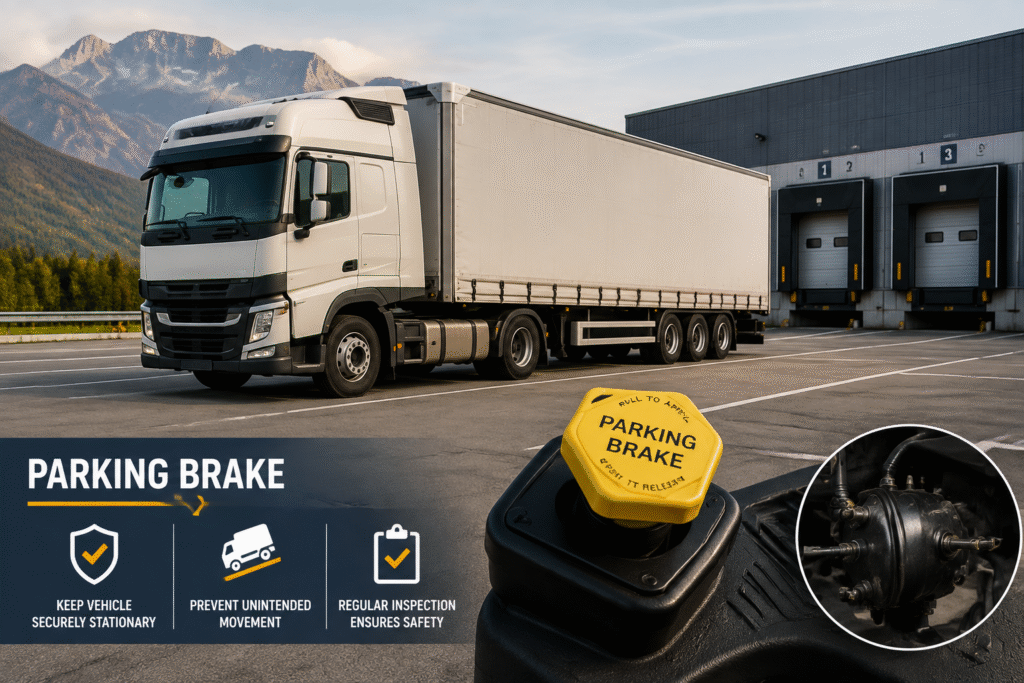
The commercial vehicle parking brake is designed to keep heavy trucks, trailers, and other commercial vehicles securely stationary when parked. This function is especially important because their large weight creates significant movement force even when the vehicle is not operating. A properly functioning parking brake system helps prevent unintended movement during loading and unloading operations, driver rest periods, parking on slopes, and trailer coupling or uncoupling procedures.
Fleet maintenance teams should regularly inspect parking brake components to ensure they can safely hold the vehicle under different operating conditions. Proper inspection and maintenance of the parking brake system are essential parts of a complete commercial vehicle brake safety strategy.
Emergency Brake System
The emergency brake system provides additional safety protection when the primary braking system experiences a failure or when maximum stopping assistance is required.
In heavy-duty commercial vehicles, emergency braking capability is especially important because trucks and trailers operate with significantly higher weights compared with passenger vehicles. A properly maintained emergency brake system provides an additional layer of protection and helps reduce safety risks during unexpected situations.
Regular inspection of emergency braking components, together with service brake and parking brake maintenance, helps ensure that the entire braking system can perform reliably when needed.
For commercial fleets, maintaining all three brake functions—service braking, parking braking, and emergency braking—is essential for safe operation. A complete brake maintenance strategy that combines inspection, monitoring, and preventive replacement helps improve vehicle reliability, reduce downtime, and support safer transportation operations.
How Commercial Brake Pad Quality Affects Total Fleet Cost
Many fleet operators initially focus on the purchase price of brake pads, but the real cost of a brake pad is influenced by much more than the initial product price.
A lower-quality brake pad may wear faster, require more frequent replacement, or create additional maintenance issues. These factors can increase costs through labor expenses, vehicle downtime, and delayed transportation schedules.
A high-quality commercial truck brake pad with stable wear characteristics can help fleets achieve more predictable maintenance planning. When operators know approximately how long brake pads will last under specific conditions, they can schedule servicing more efficiently.
For example, a logistics company operating hundreds of trucks may prefer a brake pad with consistent performance and reliable supply rather than selecting the cheapest available option. Reducing unexpected maintenance events can create significant savings over the lifetime of the fleet.
This is why many professional fleets evaluate brake pads based on total cost of ownership rather than only the purchase price.
Choosing a Commercial Brake Pad Supplier
Selecting the right commercial vehicle brake manufacturers and suppliers is an important decision for distributors, fleet operators, and aftermarket companies.
For commercial applications, price should not be the only factor considered. A low-cost brake pad may appear attractive initially, but inconsistent quality can result in shorter service life, higher replacement frequency, and increased vehicle downtime.
A reliable commercial brake pad supplier should understand the challenges of heavy-duty applications and provide products that deliver stable performance in different operating environments.
Important factors when selecting a supplier include product consistency, application coverage, manufacturing capability, technical support, and supply reliability.
For example, global commercial braking companies such as Bendix, Meritor, Knorr-Bremse, ZF, and Brembo have built their reputations by developing braking solutions designed for different commercial vehicle applications. Their products are typically developed around specific requirements such as load capacity, heat resistance, and predictable wear performance.
For distributors and fleet customers, the key consideration is not simply choosing the most recognized brand name, but finding a supplier that can provide the right balance between performance, availability, and total operating cost.
Commercial Vehicle Brake Pads: Frequently Asked Questions
What is the minimum brake pad thickness on a commercial vehicle?
There is no single minimum thickness value that applies to every commercial vehicle because brake system designs vary. As a general industry reference, many fleets begin replacement planning when friction material reaches approximately 3–5 mm. Final replacement decisions should follow vehicle manufacturer and brake supplier recommendations.
How thick are new commercial truck brake pads?
The thickness of new commercial truck brake pads varies depending on the brake system and application. For many heavy-duty disc brake systems, the friction material thickness is commonly around 12–20 mm (0.47–0.79 inches).
How do you check brake pads on a semi truck?
Checking brake pads on a semi truck usually involves visual inspection and thickness measurement. Technicians check remaining friction material, uneven wear, cracks, and other visible conditions. Professional maintenance teams often use brake pad thickness gauges to determine remaining service life.
Are commercial brake pads different from passenger car brake pads?
Yes. Commercial brake pads are designed for heavier loads, higher temperatures, and longer operating cycles. Passenger car brake pads usually focus more on comfort, noise reduction, and everyday driving conditions.
What materials are commercial brake pads made from?
Commercial brake pads are typically made from a combination of friction materials, fibers, fillers, lubricants, and bonding materials. Common formulations include semi-metallic, low-metallic, and NAO materials depending on application requirements.
How long do commercial truck brake pads usually last?
Brake pad service life depends on vehicle weight, driving conditions, load capacity, braking habits, and product quality. Highway trucks may experience different wear rates compared with urban delivery vehicles or heavy-load applications.
What causes uneven brake pad wear?
Uneven brake pad wear can be caused by several factors, including brake system adjustment issues, uneven pressure distribution, caliper problems, improper installation, or operating conditions.
Are brake pads covered in a service?
Brake pads are usually considered wear components because they naturally lose material during operation. Whether they are included in a service package depends on the vehicle manufacturer, warranty terms, and maintenance agreement.
How much does commercial truck brake pad replacement cost?
Replacement costs vary depending on the vehicle type, brake system design, brake pad specification, labor costs, and local market conditions. For fleets, the overall cost should be evaluated together with service life, reliability, and downtime impact.
Who are the major commercial brake pad manufacturers?
The global commercial braking market includes companies such as Bendix, Meritor, Knorr-Bremse, ZF, Brembo, and other specialized friction material manufacturers. The best supplier depends on application requirements, product quality, testing capability, and supply capacity. In addition to established international brands, Tuoba Auto Parts is a Chinese manufacturer specializing in commercial vehicle brake pads, brake linings, and brake shoes, providing OEM and aftermarket solutions for trucks, buses, trailers, and other heavy-duty applications.
Conclusion
Commercial truck brake pad thickness is an important factor in maintaining safe and efficient vehicle operation. Because commercial vehicles operate under much heavier conditions than passenger cars, brake pads require regular inspection, proper maintenance planning, and correct product selection.
Understanding brake pad thickness levels, material differences, inspection methods, and replacement timing helps fleet operators reduce unexpected downtime and improve overall vehicle reliability.
For fleet operators, brake pad selection should also consider long-term maintenance costs, service intervals, and vehicle operating requirements. A proper fleet brake pad strategy can help improve uptime, reduce unexpected downtime, and optimize total operating costs. Learn more in our guide to fleet brake pads.
By combining regular inspection, preventive maintenance, and high-quality brake pad solutions, commercial fleets can achieve safer operation, lower maintenance costs, and more predictable vehicle performance.
For fleets, distributors, and OEM customers, selecting a reliable brake pad supplier is as important as understanding brake pad thickness and maintenance requirements. Tuoba provides customized commercial brake pads and brake linings for different heavy-duty vehicle applications. Contact the Tuoba team today via WhatsApp to get customized brake pad solutions and professional support for your specific requirements.