When you’re choosing a brake pad supplier, the real question isn’t whether they can make a good sample. It’s whether the tenth container will be made to the same standard as the first. Certificates help, but I’d also want to see what happens on the factory floor: how materials are mixed, how pressing and curing are controlled, what gets tested, and whether a finished part can be traced back to its production batch.
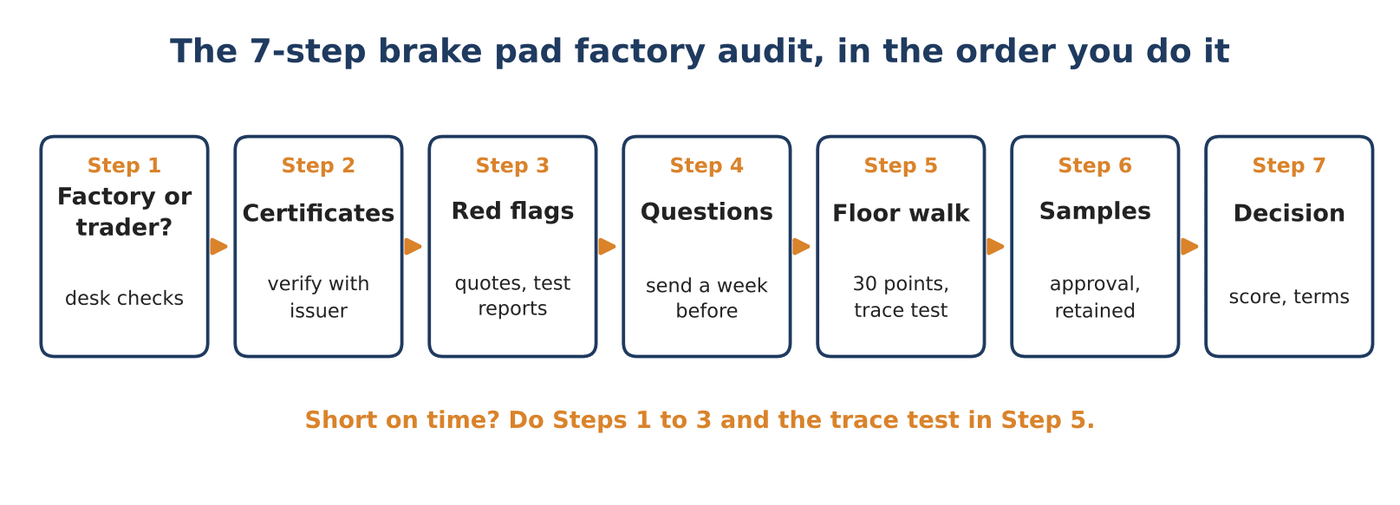
This is the route I’d follow when reviewing a new supplier. Start with the company and its documents, look for any gaps worth clearing up, then visit the factory and follow a real order through production. From there, the next steps are agreeing on samples and deciding whether the supplier is ready for a trial order. The aim isn’t to collect paperwork for its own sake. It’s to find out whether the factory can repeat the quality you’ve approved.
Our Ningguo factory in Anhui has been making brake friction products for around 20 years, and we’ve welcomed overseas customers for factory visits and audits. Those conversations have shaped a lot of the practical points below. If you only have a little time, I’d focus on Steps 1–3 and the batch trace in Step 5.
Step 1: Find Out Who Will Actually Make Your Brake Pads
Some suppliers run their own production lines; others work with partner factories. Either arrangement can work. Before getting into prices or booking flights, make sure you know which factory will make your order. That’s the site you’ll want to check, not just the address on the supplier’s website.
- Start with the business license. Ask the supplier for their Chinese business license. You can look up the company using its unified social credit code on the National Enterprise Credit Information Publicity System. Check whether the business scope includes manufacturing brake parts or friction materials, or just selling them.
- Make sure the addresses match up. Take a look at the addresses on the business license, certificates, and test reports. They won’t always be the same, and that’s not necessarily a problem. A company might have a separate registered office, multiple factories, or use an outside testing lab. Just ask which factory will make your order and whether the documents cover that site.
- Ask for a quick video tour. If you can’t visit right away, a live video call is a good place to start. Ask to see the production lines and some of the equipment in use. You may need to arrange a time in advance, especially if certain areas have safety rules or customer confidentiality requirements.
- Have a look at their equipment. Ask what machines they use, how many they have, and which factory they’re located in. If possible, ask to see some production or maintenance records too. That’ll give you a better idea of how the equipment is actually being used, rather than just looking at photos.
- Take a closer look at the test reports. Check which lab issued them, what products were tested, and whether the reports match the brake parts you’re buying. Some factories have their own labs, while others use independent testing companies. Either is fine, as long as the reports are relevant to your order.
By this point, you should know who you’re dealing with and where your order would be produced. The next question is whether the certificates and test reports actually apply to that site and the parts you want to buy.
You can also read our China brake pad factory guide and China brake pad manufacturer page for more information on finding and checking suppliers in China.
Step 2: Check Which Certificates and Test Reports Actually Apply
Ask for the paperwork before you travel. A certificate can look impressive at first glance, but the useful details are the company name, site, scope, dates and, for product documents, the exact parts covered. A little checking now can save a long discussion later.
| Certificate / Report | What It Covers | What I’d Check | What to Watch Out For |
|---|---|---|---|
| ISO 9001 | How the factory manages quality | Look up the company on IAF CertSearch, or check the certificate number with the issuing body. | The certificate has expired or only covers trading, not manufacturing. |
| IATF 16949 | Quality management for automotive suppliers | Check the company name, factory address, certificate number, scope and expiry date. | The certificate belongs to another company or a different factory. |
| ECE R90 | Approval for specific replacement brake pads or linings in markets where R90 applies | Check the approval number and see which part numbers are actually covered. | The supplier shows one approval and claims it covers everything in the catalogue. |
| FMVSS 121 Dyno Report | Brake performance testing for specific air-brake applications | Make sure the brake size, test setup and parts tested match what you’re buying. Also check the lab and test date. | The supplier uses a test report for one brake size to support other, unrelated products. |
One thing worth knowing is that these documents don’t all mean the same thing.
IATF 16949: This certification is mainly for suppliers in eligible automotive OEM supply chains. If a factory only serves the aftermarket, it may not qualify for IATF 16949. So not having it isn’t necessarily a problem. I’d still look at its ISO 9001 certificate and ask for test reports on the products I’m buying.
ECE R90: Just because a supplier has R90 approval doesn’t mean every brake pad or lining in its catalogue is covered. The important thing is to check which part numbers are actually approved. If you’re not sure what to look for, our guides on what ECE R90 means and E-mark and COP documents explain the details.
FMVSS 121: There’s no separate FMVSS 121 certificate for an individual brake lining. If you’re buying for U.S. air-brake applications, I’d ask for a dynamometer test report that matches the brake size and setup you need. Our FMVSS 121 brake lining test reports guide explains how to read these reports. You can also visit our brake pad certifications page for a broader overview.
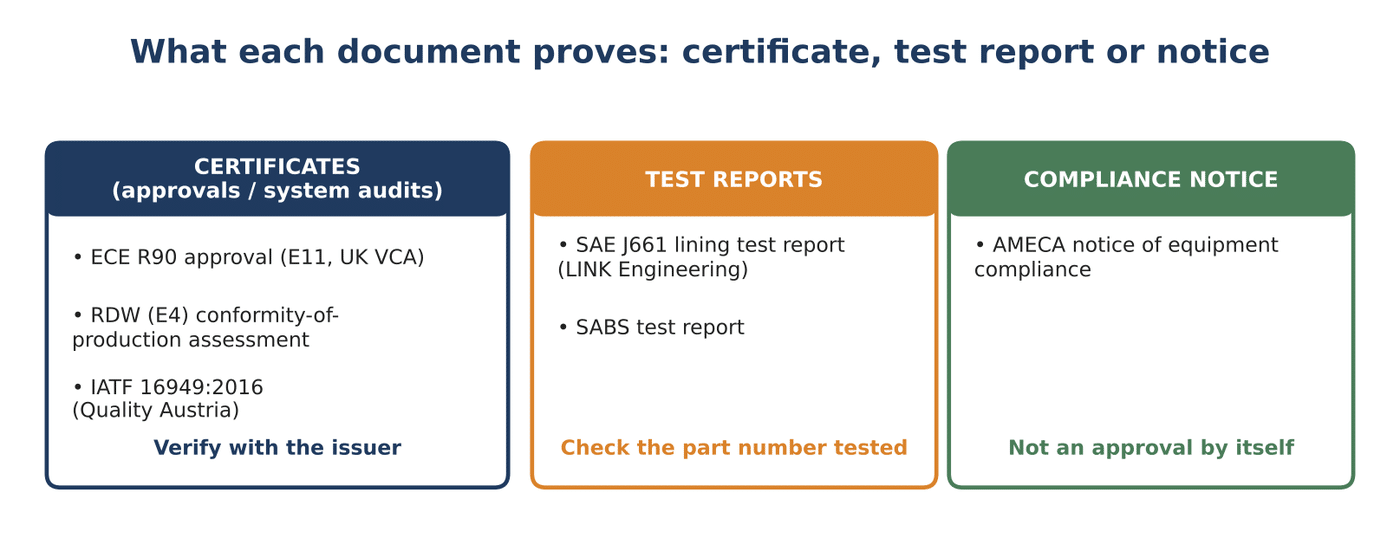
The main thing is not to treat a quality-system certificate, a product approval and a test report as the same thing. Each serves a different purpose. Once you’ve checked which documents are valid and relevant to your order, I’d move on to the quotation and see how the supplier answers your questions. That’s often where you start to spot potential problems.
For U.S. Orders, Check the Material Rules Too
If you’re sourcing brake pads or linings for the U.S. market, there are a couple of material requirements worth checking. Having ISO 9001 or other quality certificates doesn’t necessarily mean the products meet these rules.
Asbestos: The EPA introduced restrictions on chrysotile asbestos in 2024 under 40 CFR 751.509. Certain uses, including aftermarket automotive brakes and linings, have been prohibited since November 25, 2024. The rule has also faced legal challenges. On November 19, 2026, the Fifth Circuit dismissed those challenges because the petitioners lacked standing, without deciding whether the rule itself was valid.
Before placing an order, I’d check the latest EPA requirements and ask the supplier for a written material declaration covering the specific parts I’m buying.
Copper: California and Washington also have rules limiting copper in certain brake friction materials. A 0.5% by-weight limit took effect on January 1, 2025, but it doesn’t necessarily apply to every type of brake lining.
If you’re supplying either market, it’s worth checking which of your part numbers fall under these rules. Ask your supplier for supporting material test results or LeafMark documentation where applicable.
For our heavy-duty drum linings, just send us the part numbers and let us know where you’ll be selling them. We can check which material documents are available for those products.
Which Documents Can Our Ningguo Factory Share?
Here are some of the documents we can share from our Ningguo factory. What’s available depends on the specific parts you’re interested in and how you plan to use them.
- ECE R90 Approval (E11):Our product approval issued through UK VCA.
- RDW (E4): An assessment of our production conformity by RDW in the Netherlands.
- IATF 16949:2016: Our factory’s quality management system certification from Quality Austria.
- SAE J661 Test Report:Friction testing carried out by LINK Engineering.
- SABS Test Report: A report showing the results of product testing.
- AMECA Compliance Notice: A notice covering equipment compliance.
I wouldn’t really put all six of these under the same “certification” label. They’re not all the same thing. Some are about the factory’s quality system or production control, while others are product approvals, test reports, or compliance notices. So when you review them, the key thing is to check the original documents and see who they belong to, which site they cover, whether they’re still valid, and which parts they actually apply to.
If you’re considering us as a supplier, just let us know which products you’re looking at. We can help check which documents are relevant and share the ones available for your review. You can also compare the company name, factory address, validity, and covered part numbers against the original documents yourself.
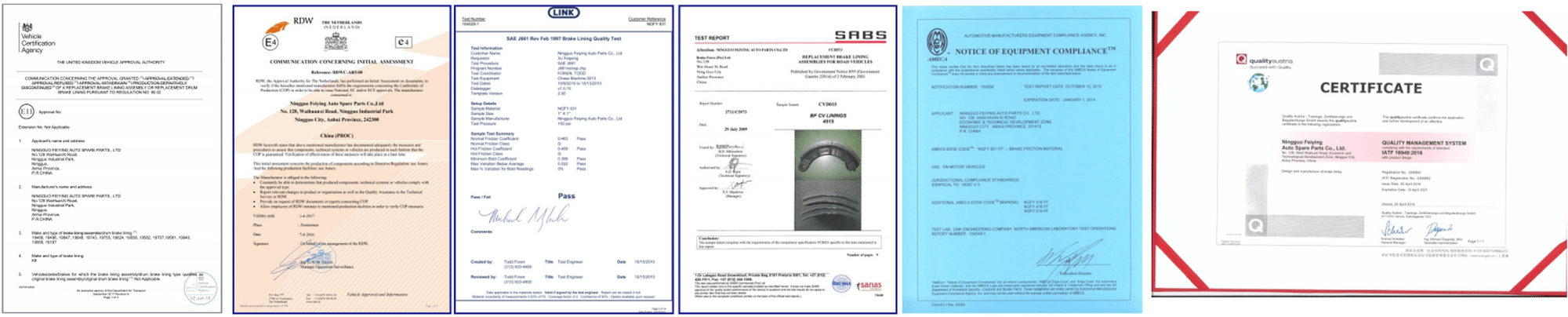
Here are some certificates and test reports from our Ningguo factory. You can check the originals to see who issued them, what they cover, and whether they’re still valid.
Step 3: Spot Problems Before You Spend Money on a Visit
You can learn quite a lot before setting foot inside a factory. Look at the quote, the sample information and the test reports, then pay attention to how clearly the supplier answers follow-up questions. A few small inconsistencies aren’t always a reason to walk away, but they’re worth sorting out early.
These are the things that would make me ask another question:
- One test report for every product. If a supplier uses the same report to cover hundreds of part numbers, ask which models were actually tested and whether the results apply to the products you’re buying.
- Incomplete or outdated test reports. Check the lab name, address, test date and tested part numbers. If the report is older than the product itself, that’s worth asking about.
- Claims of “DOT certified” or “DOT approved.” Be careful with these terms. DOT doesn’t issue product approval certificates for brake friction materials. Ask what standard was tested and request the actual report.
- A price that’s unusually low. A lower price isn’t necessarily a problem, but I’d want to know what’s different. Is it the friction formula, the backing plate or something else?
- No clear formula code. You don’t need to know a supplier’s exact recipe, but they should be able to tell you which formula they’re quoting and how they’ll keep it consistent across orders.
- No access to the mixing area. Most factories won’t share their exact formulas, and that’s understandable. But they should still be willing to explain their mixing process and quality controls, even if some areas are restricted.
- No proof of asbestos-free materials. If a supplier says its products are asbestos-free, ask for a written declaration or supporting test documents. The U.S. requirements are covered in Step 2.
- Another company’s logo on the sample. If a sample carries someone else’s brand or OE logo, ask whether the supplier has permission to use it.
A competitive price on its own wouldn’t put me off. Plenty of good factories quote competitively. I’d be more concerned if a very low price came with vague specifications, missing records or answers that changed every time I asked.
If any of these points come up, get them cleared up before booking the trip. That leads to the next step: sending a short, useful set of questions in advance so your factory visit can focus on what really matters.
Step 4: Get the Important Answers Before You Visit
About a week before the visit, send the supplier your questions and product list. You don’t need a polished presentation in return. You need specific answers, plus enough notice for the factory to have the right staff and records ready when you arrive.
| Questions I’d Ask | What I’d Like to Hear | What I’d Look Into Further |
|---|---|---|
| Which factory will make my order? | A clear factory address and an explanation of how it matches the company documents. | They mention a partner factory but won’t tell me its name or location. |
| What certificates does that factory have? | Certificate numbers, expiry dates and scope, so I can check them myself. | The documents belong to another company, with no clear explanation. |
| Do you have test reports for the parts I’m buying? | Reports showing the part numbers, testing lab, brake size and test dates. | They send the same report for every product in the catalogue. |
| Can you trace a finished product back to production? | A batch number that links to the mixing, pressing and curing records. | They say they can trace it but can’t show me how. |
| Have you changed any materials or production processes recently? | An explanation of what changed, when it happened and how they checked the results. | They say nothing has ever changed but can’t show any records. |
| What’s your MOQ, sample lead time and production time? | Clear figures for the products I need, including anything that could affect delivery. | Every product has exactly the same lead time, regardless of quantity or specifications. |
| How do you handle quality complaints? | A clear process and, if possible, an example of how they’ve handled a problem before. | They simply say they’ve never had complaints or returns. |
It’s also worth agreeing on what you can see during the visit. A factory may need to protect its exact formulas or other customers’ orders. That’s normal. You can still ask for redacted records or a live demonstration of how the process is controlled.
Agree on MOQ, Lead Time and Warranty Early
Technical checks matter, but a supplier also has to work for your purchasing plan. MOQ, sample timing, delivery and warranty are better discussed before the visit than after it.
For most of our standard models, the MOQ starts at 100 sets per model. If you need something less common, or you’re working on a custom product, the minimum quantity may be different. Just send us your part numbers and quantities, and we’ll check what’s possible before quoting.
Lead time depends on what you’re ordering, how much you need, any tooling involved and the factory’s current schedule. We’d rather check the actual part numbers and give you a workable delivery window than quote the same number for every model.
I’d also want warranty terms in writing for the order and application. Don’t assume a warranty published by another brand applies to the products you’re buying here.
If you’re still comparing suppliers, our guides on how to choose a brake lining manufacturer and top brake pad manufacturers cover a few more things worth considering.
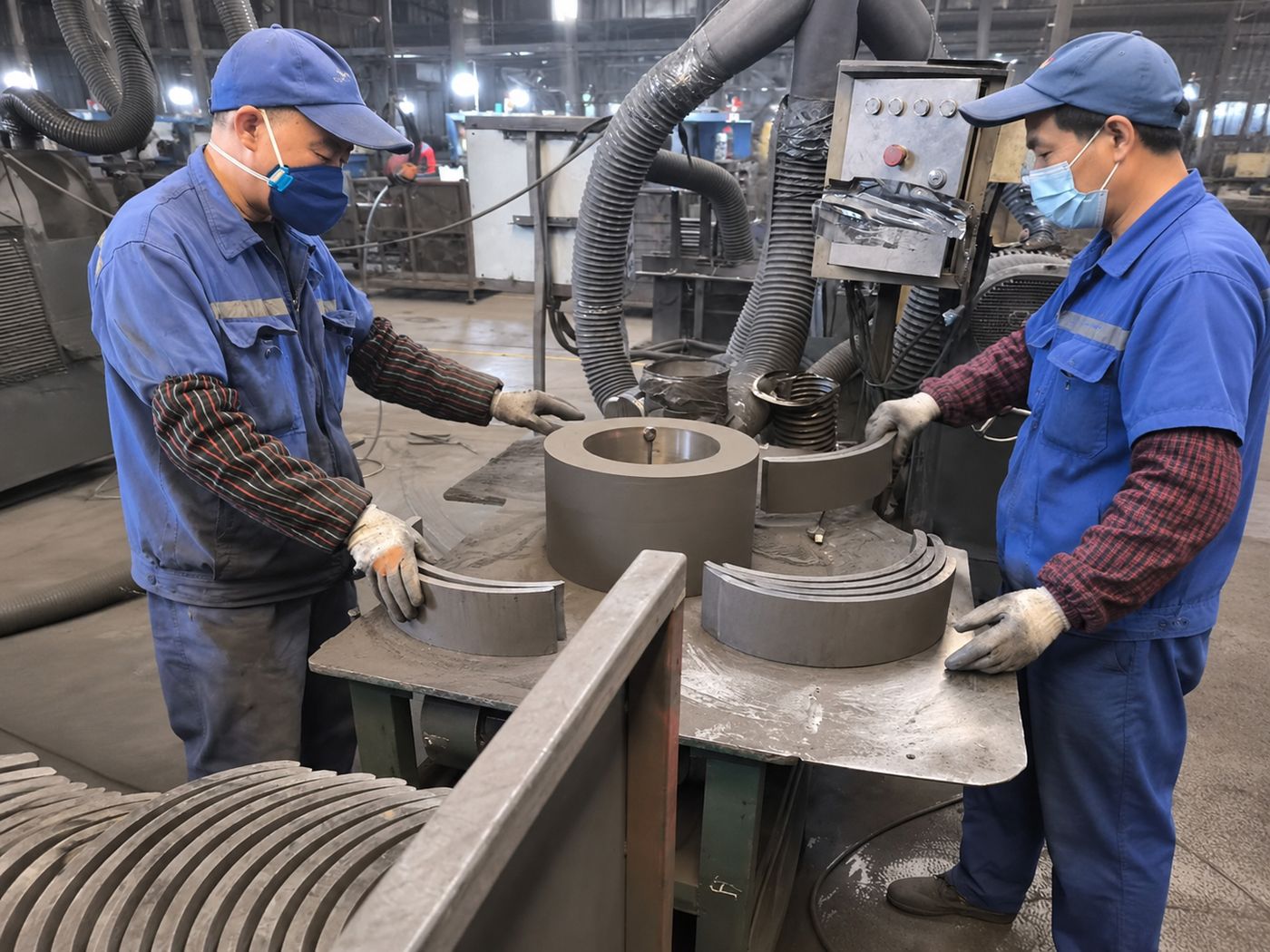
Step 5: Walk the Production Line and Check the Records
Once you’re there, follow the way a part is actually made, from incoming materials through mixing, pressing and finishing to packing. If possible, look at an order that’s genuinely running, not just a display prepared for visitors. The goal isn’t to inspect every machine. It’s to see whether the factory’s records match what happens on the floor.
Early in the visit, pick a finished carton and write down its batch number. Keep it for later. Asking the team to trace that one carton back through production is one of the simplest ways to see whether the system works in practice.
If you’d like to get familiar with the process before your visit, our brake pad manufacturing process guide walks you through the main steps.
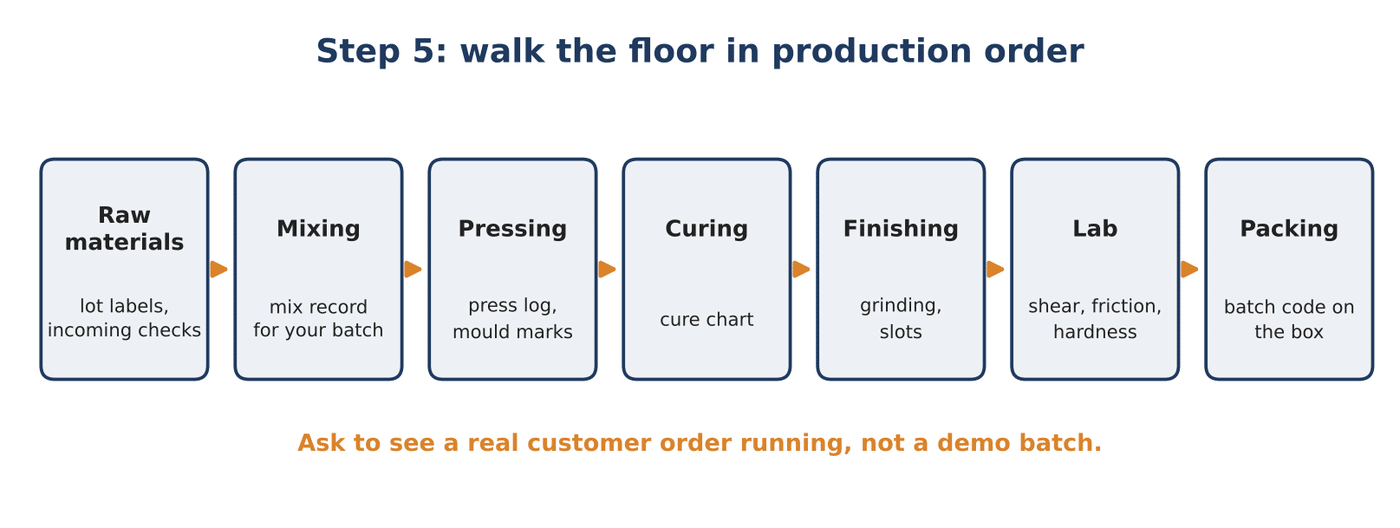
The 30 Checks: From Raw Materials to Finished Cartons
Use the table as a route through the factory, not a rigid pass-or-fail form. Some checks apply to disc pads, others to drum linings or complete shoe assemblies. Focus on the steps that matter for your product and ask for records from a recent, relevant batch.
| # | Area | What I’d Check | What I’d Ask to See |
|---|---|---|---|
| 1 | Raw Materials | Are fibers, resins, steel fibers and fillers clearly labeled and separated by batch? | Inspection records for the last three deliveries. |
| 2 | Raw Materials | Are resins and rubber used before they expire? | Shelf-life records and FIFO (first-in, first-out) labels. |
| 3 | Raw Materials | Are backing plates or brake shoe tables checked for thickness and flatness? | Measurement records and calibration labels on the gauges. |
| 4 | Raw Materials | Does the factory have approved raw-material suppliers? | The supplier list and how they handle supplier changes. |
| 5 | Formulation | Are different formula versions properly controlled? | The revision history for one formula. They don’t need to reveal the actual recipe. |
| 6 | Mixing | Is each ingredient weighed and recorded for every batch? | A weighing record for a batch currently being produced. |
| 7 | Mixing | Do operators follow a set mixing time and sequence? | The work instructions used at the mixer. |
| 8 | Mixing | Are mixed materials labeled so different batches don’t get confused? | The batch and formula codes, or the corresponding production records. |
| 9 | Pre-forming | Is the weight of each pre-form checked? | Recent weight-check records. |
| 10 | Hot Pressing | Are temperature, pressure and pressing time controlled for each product? | Press settings and actual records from the machine or PLC system. |
| 11 | Hot Pressing | Are molds regularly checked and maintained, including their venting? | Mold maintenance records. |
| 12 | Backing Plates | For bonded products, are the backing plates prepared and adhesive applied correctly? | The relevant surface preparation and adhesive application records. |
| 13 | Curing | Does the factory use the right oven temperature profile for each formula? | Temperature records from a recent curing cycle. |
| 14 | Curing | Is there a standard way to load products into the oven? | Oven-loading instructions. |
| 15 | Grinding | Are finished thickness and parallelism checked? | First-piece inspection records or grinding SPC records. |
| 16 | Finishing | Are slots, chamfers or scorching applied according to the product drawing? | The drawing and first-piece inspection record. |
| 17 | Finishing | For disc pads that need shims, sensors or clips, are these parts fitted correctly? | The assembly checklist. |
| 18 | Drum Brake Shoes | For riveted brake shoes, are the rivet holes, rivet type and fastening process checked? | Riveting and assembly inspection records. |
| 19 | Testing Lab | For bonded pads or linings, are the required bond or shear strength tests carried out? | A recent applicable test report, such as ISO 6312 where relevant, showing the part and batch. |
| 20 | Testing Lab | Are properties like compressibility, hardness and density checked when required? | Test records showing the results and acceptable limits. |
| 21 | Testing Lab | Does the factory run friction tests for the formulas and markets that require them? | Recent Chase test results, such as SAE J661, for the relevant formula. |
| 22 | Testing Lab | Has the product been tested on the brake assembly it’s intended for? | A recent dynamometer report for one of the parts you’re buying, from the factory or an outside lab. |
| 23 | Testing Lab | Are testing instruments calibrated regularly? | Calibration certificates and dates. |
| 24 | Testing Lab | Is noise testing carried out when it’s relevant to the product? | A sample report, such as an SAE J2521 test where applicable. |
| 25 | Final Inspection | Are products checked for cracks, blisters or lining separation? | Final inspection records and a log of rejected parts. |
| 26 | Final Inspection | Does the factory have a clear sampling method? | Its sampling plan or AQL table. |
| 27 | Traceability | Can you identify the production batch from a finished part or carton? | A finished product or carton with its batch code and matching production record. |
| 28 | Traceability | Can the factory trace that code back through pressing, curing and mixing? | Ask them to trace the batch number you picked earlier in the visit. |
| 29 | Packing | Do carton labels show the required part numbers, batch details and applicable market markings? | A finished carton ready for shipment. |
| 30 | Customer Complaints | What happens when a customer reports a problem with a product? | The last three complaint records, where available, and what the factory did to fix the issues. |
How to Make Sense of What You Find
I use a straightforward 0–2 score: 0 when there’s no evidence, 1 when the process is explained but supporting records aren’t available, and 2 when the factory can show records for a recent applicable batch. Across 30 checks, that’s 60 points at most. But I wouldn’t judge the factory by the total alone. Pressing controls, relevant strength tests and batch traceability matter a lot, and the right checks depend on whether you’re buying bonded pads or riveted shoes.
The Batch Trace I’d Make Time For
If I had to choose one hands-on check, this would be it. Give the quality manager the batch number you picked from a finished carton and ask them to follow it back to the relevant mixing, pressing and curing records. Their system doesn’t have to look like anyone else’s. It does need to produce a clear trail. If records are confidential, ask to see a redacted example or walk through the trace together on site.
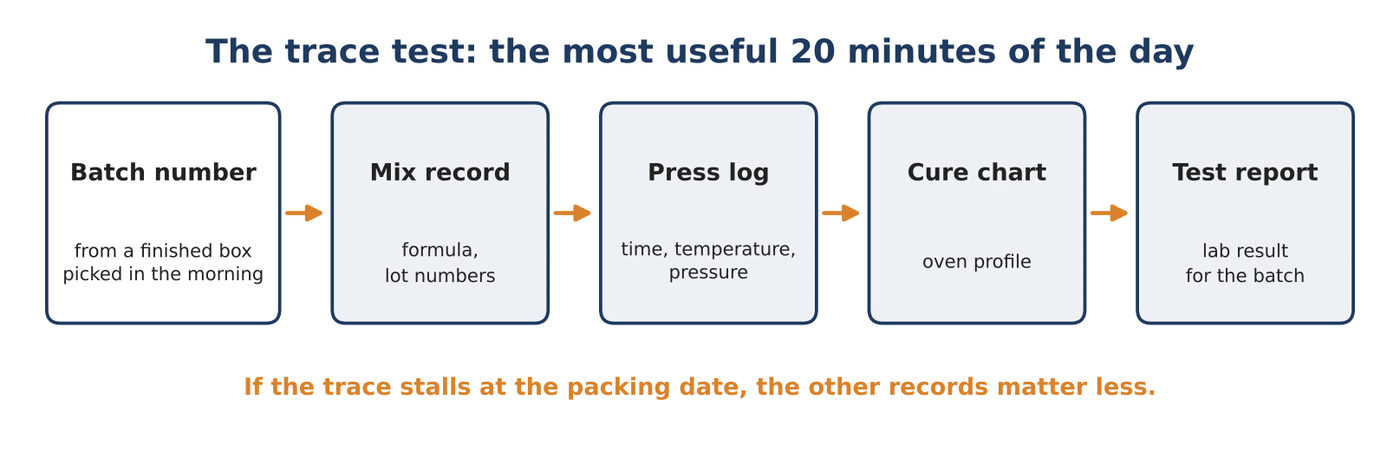
I’d also spend some time on shear strength. It helps reveal bonding problems before they show up as separation in service. Our brake pad shear strength article explains the test and its results, and our commercial vehicle brake pad testing guide puts it alongside the other checks.
Check that each test in the 30-point table applies to the product under audit. For example, slots and shims are disc-pad features where specified; rivet inspection applies to riveted shoes; ISO 6312 shear testing is especially relevant to bonded friction material; and SAE J2521 noise testing is application-dependent. Ask for suitable evidence, not a report simply because it’s on the checklist.
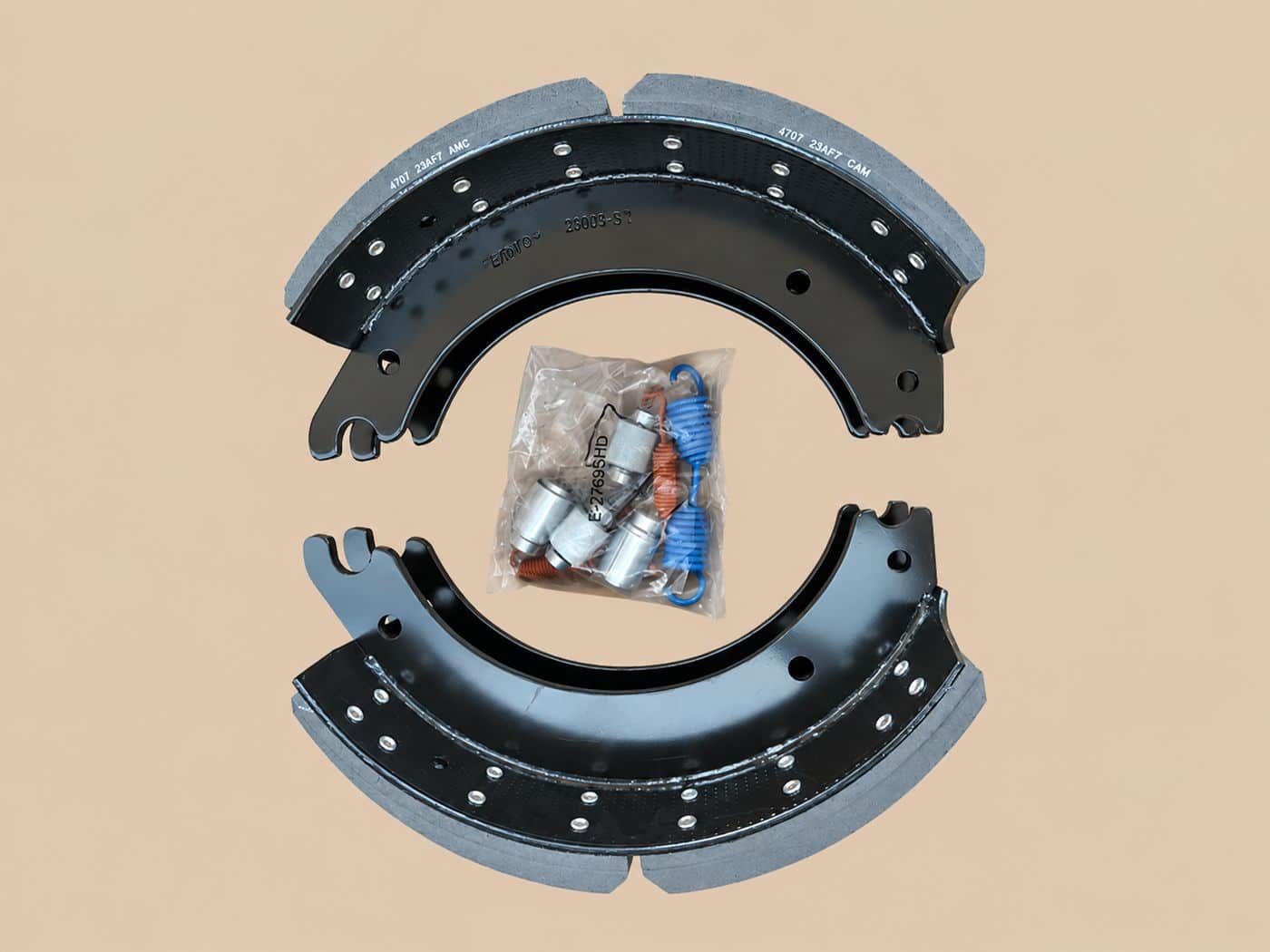
Buying Drum Linings or Brake Shoes? Check These Six Details
The 30-point list covers a lot of disc-pad production. If you’re buying heavy-duty drum linings or complete brake shoe assemblies, spend extra time on fitment and assembly. Bring a known part number, drawing or physical reference if you can.
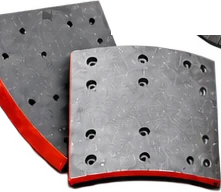
- ANC/CAM block pairing. These two lining blocks may have different dimensions. In our 4720Q reference, ANC is 211 × 127 × 20.3/12.2 mm and CAM is 208 × 127 × 21.4/17.9 mm (L × W × two specified thickness values). Check each against the corresponding Tuoba drawing, including the measurement locations and tolerances; the listed sizes alone do not confirm complete brake-shoe fitment.
- Rivet holes. Count the holes and compare the pattern with your reference part. Similar-looking brake shoes can have different hole layouts, and matching widths alone don’t confirm fitment.
- Riveted or bonded? For a riveted lining, ask for rivet type, hole layout and evidence of the applicable assembly checks. For bonded linings, review the bond-strength/shear test specified for that construction rather than treating every test method as universal.
- Shoe frame. Before the lining is fitted, check the shoe web and table for flatness, weld quality and finish.
- Part marking. Ask where the part number, friction grade and lot/batch identifier are recorded—on the product, packaging and/or batch documents as required by the relevant specification. Check that the finished item can really be traced back to production.
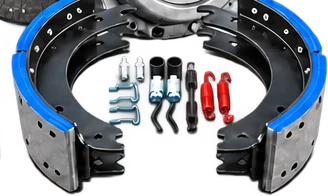
- Included hardware. Check exactly what’s in the box—springs, rollers, anchor pins or other fittings. A lined shoe and a complete wheel-end kit aren’t the same quote.
If you’re sourcing complete assemblies, our brake shoe manufacturer page gives an overview of the models we offer. The brake pad failure analysis guide also covers what to do when a returned part needs more than a replacement.
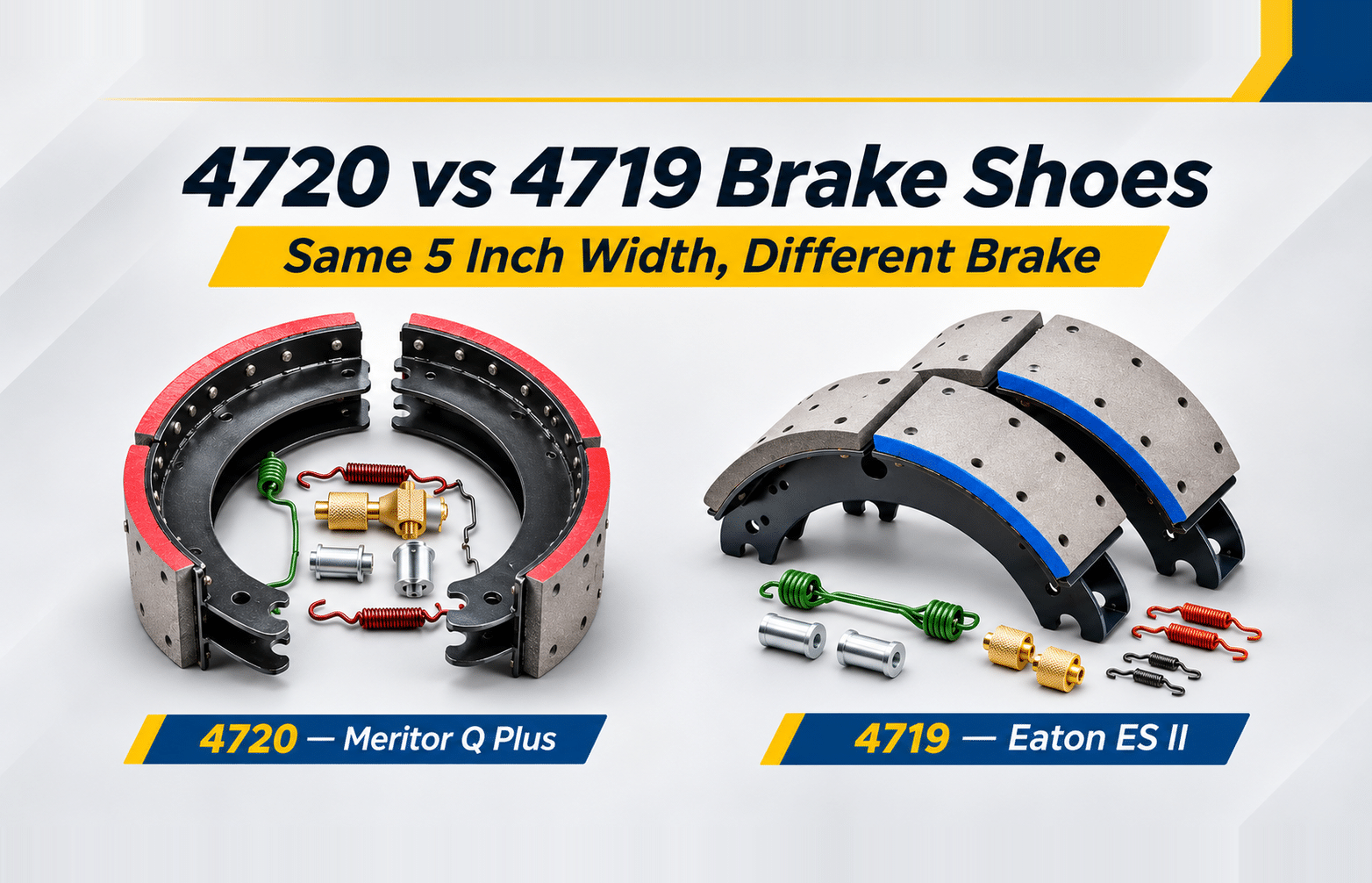
If the shoe in question is a 4719 or a 4720, our 4720 vs 4719 brake shoes comparison shows why two shoes with the same 16.5 × 5 in. size still fit different brake systems.
Not sure which brake shoe you need? Send us the part number or a few photos and we will check it with you.
Step 6: Turn a Good Sample Into a Clear Production Standard
A sample can look right and still leave too much open to interpretation. Months later, when the next shipment arrives, both sides need to know exactly which dimensions, formula version and performance requirements were approved. That’s why sample approval should create a shared reference, not just a quick ‘looks good’ message.
Here’s the order I’d follow:
- Send the OE or FMSI numbers, drawings or a physical sample, along with the target market and how the part will be used.
- Confirm the formula or friction grade, the drawing and agreed tolerances with the factory. If a detailed formulation is confidential, a controlled formula code and agreed performance requirements can still be used for approval.
- Agree which checks will come with the sample shipment. These might include dimensions, weight, hardness or a relevant bond/assembly test, depending on the product type and the purpose of the sample. Don’t assume every sample shipment includes the same complete first-article report.
- Test the samples on your own vehicles or through a lab you trust.
The practical details vary by project. Before we ship, we’ll confirm the sample quantity, available tests, express freight cost and expected timing, rather than assume every sample package comes with the same reports.
- Agree on an approved reference sample where practical. Both sides should identify it clearly, record the drawing/formula revision and retain a sample or signed approval record.
- Check the trial order against the approved sample, drawing and agreed acceptance criteria, and set out how inspection and payment milestones will work in the order terms.
We can arrange sample shipments by UPS. For bus brake pads, we can also provide relevant reports on material analysis, friction coefficient and heat resistance. If you’re planning a private-label line, our OEM and private label brake pad guide covers the details to settle before sampling.
Getting sample approval right can take a little longer, especially if you’re running a fleet trial. But it’s much easier to settle a specification before production than argue about it after a full container arrives. Once the reference is agreed, the final question is whether the factory is ready for your first order.
Step 7: Decide Whether to Start With a Trial Order
A factory visit should leave you with a decision, not just photos and a good impression. Within a few days, I’d sort the findings into three groups:
- Go ahead. The key checks passed, and the factory could show real records. Start with a trial order.
- Go ahead with conditions. The factory looks capable, but a few gaps need fixing. Agree on each action, who owns it and when it will be done, then close the important items before releasing the order.
- Not yet. A critical item scored zero or the batch trace couldn’t be completed. Explain what needs to change and consider checking the fix by video before travelling again.
If you’re ready to move forward, put a few controls around the first order:
- Link the order to the approved golden sample and formula revision.
- Put a batch code on every carton, and agree that both sides keep a sample from each batch.
- Set a pre-shipment sampling plan, whether the inspection is done by you or a third party. Use the checklist above to guide it.
- Agree on change control in the order or supply agreement. Important changes to formula, material source, tooling or process settings should be evaluated and communicated according to the agreed process before being applied to your product.
- Agree on the complaint process: who examines a failed part, how quickly they respond and how the affected batch will be handled.
None of this needs to become a huge paperwork exercise. Agreeing on the sample, batch records, inspection plan and complaint process early gives both sides something clear to work from when production starts.
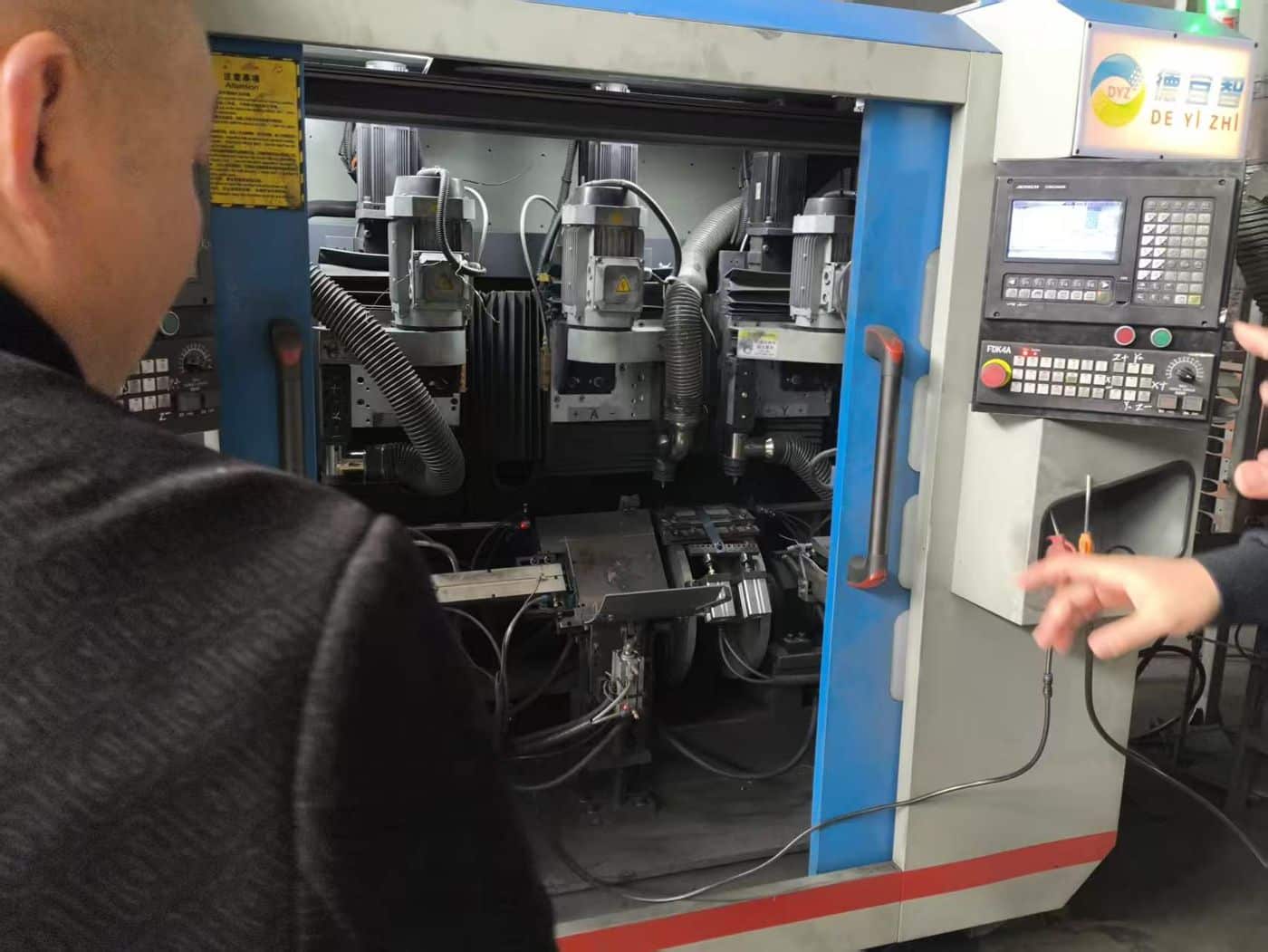
Common Questions Before a Brake Pad Factory Audit
What should I check during a brake pad factory audit?
Start with the certificates, incoming-material controls, mixing records, press and curing settings, final inspection and lab tests. Then ask the factory to trace a finished batch back to the mix. The 30-point table in Step 5 gives you a practical route through all of this.
How can I check a Chinese supplier’s ISO 9001 certificate?
Look up the company or certificate number in IAF CertSearch, or contact the certification body listed on the document. Make sure the scope includes brake-part or friction-material manufacturing and check which address is covered.
Does every brake pad factory need IATF 16949?
No. It’s designed mainly for suppliers in the vehicle-maker supply chain. A factory focused on the independent aftermarket may not qualify. For an aftermarket project, I’d look at ISO 9001 together with testing for the exact parts you’re buying.
Do I need ECE R90 for brake parts sold in the U.S.?
ECE R90 approval is used in E-mark markets such as the EU; it isn’t a general U.S. requirement. It can still tell you something useful about an approved part. For U.S. air-brake applications, I’d also ask for a dynamometer report that matches the brake size and setup.
Can I check a factory without travelling there?
You can do quite a lot remotely: a live video walk-through, sample records and a batch trace over a call. For a large first order or a new private-label program, though, I’d still prefer an on-site visit.
How much time should I allow for the visit?
I’d set aside a full day for one site if you want to follow production and complete a proper traceability check. Seeing one real order from mixing through packing tells you more than a quick tour of several demonstration lines.
Should I use a third-party factory inspector?
If you can’t make the first visit yourself, that’s a sensible option. Give the inspector your checklist and ask for pictures of the records as well as the equipment.
How do I find the best brake pad factory?
There isn’t one best answer for every vehicle or market. Start with the application, duty cycle and local rules. Our top brake pad manufacturers guide compares some of the major names, but for an import or private-label project I’d focus on which factory can show you consistent results from batch to batch.
Before You Book a Visit, Start With the Parts You Need
A useful factory visit starts with a clear product list. If you’re considering our Ningguo factory, send us the part numbers, brake size, target market and estimated quantities. We’ll check which products we can make, which certificates or test reports are relevant, and what we can share before you travel. That way, when you visit, we can spend more time looking at the production that matters to your order—and less time sorting out basic details.
Tuoba Brake Lining and Drum Brake Shoe Catalog (PDF, 26.8 MB)
Browse brake lining models, WVA references, dimensions, applications and drum brake shoes before you send an RFQ.
Sources
- 40 CFR 751.509, chrysotile asbestos prohibitions (Cornell LII)
- EPA: Since asbestos was banned, do I need to be worried about products on the market today containing asbestos?
- Chemical Processing: EPA seeks delay to potentially overturn chrysotile asbestos ban
- Washington Ecology: Better Brakes Law
- Washington RCW 70A.340.030, 0.5% copper limit from January 1, 2025
- California DTSC: Limiting Copper in Brake Pads
- Beveridge & Diamond: TSCA mid-year update 2026 (chrysotile asbestos, Fifth Circuit)
- National Law Review: EPA to reconsider the asbestos Part 1 rule
- Haldex: Standard Aftermarket Product Warranty Policy for commercial truck and trailer products
- Tuoba lining catalogue, for the 4720Q ANC and CAM block dimensions