Here’s the short answer: a replacement brake lining can’t be “FMVSS 121 certified” on its own. FMVSS 121 covers the whole air-brake vehicle, not a lining you buy separately. What a supplier can give you is an FMVSS 121 dynamometer report for a specific brake size and axle rating. So that’s what you should ask for, and check, before you approve a lining.
Key Takeaways
- When a supplier says “FMVSS 121 certified”, read it as “tested to the FMVSS 121 dyno procedure”, then ask to see the report.
- A good report names the brake size, axle rating, lining, test lab, and a result for every dyno section.
- Match a 20K or 23K lining to the axle’s weight rating. That rating sets the test load.
- Use TMC RP 628 or the PRI listing to compare torque and fade, not to rank quality.
- An SAE J866 edge code is a friction label. It doesn’t prove braking performance.
- Get copper and material declarations too, separately from the test data, if you ship to states with copper limits.
Does FMVSS 121 Certify Aftermarket Brake Linings?
No, it doesn’t. FMVSS 121 applies to trucks, buses and trailers with air brakes, and NHTSA doesn’t certify any product. The most a lining supplier can show you is that its material passed the FMVSS 121 dyno tests on one specific brake. That’s a much smaller claim than “the vehicle complies”.
If you read the Code of Federal Regulations text of FMVSS 121, you’ll see it covers trucks, buses and trailers with air brake systems, with dyno requirements for each brake. There’s no separate approval for replacement linings. The NHTSA New Manufacturer’s Handbook says the same thing another way: NHTSA doesn’t issue type approvals. Manufacturers certify themselves. Its list of regulated equipment includes brake hoses and brake fluid, but not brake linings. And neither document tells you whether any aftermarket lining is actually good.
There’s one more rule worth knowing. The 2009 reduced stopping distance (RSD) rule cut the 60 mph stopping limit for most loaded heavy tractors from 355 feet to 250 feet, phased in during 2011 and 2013. It applies to new tractors. No federal rule says a replacement lining has to keep that performance.
So here’s how the pieces fit together:
- Vehicle compliance: the truck maker certifies the whole air-brake system to FMVSS 121.
- Lining test claim: a friction supplier says one lining material passed the FMVSS 121 dyno sections on one brake size.
- Government approval: there isn’t one for replacement linings. If a certificate hints at NHTSA approval, be suspicious.
- Scope: a pass on a 16.5 x 7 drum brake doesn’t cover other brake sizes.
In practice, ask the supplier to word the claim as “tested to FMVSS 121 dynamometer procedure”, tell you the brake size, and send the report. If you see “DOT approved” or “NHTSA certified” on a lining, push back. Disc brake pads use different schemes, which we cover on the brake pad certifications page.
What About Replacement Linings on RSD Tractors?
RSD tractors left the factory with a specific brake and lining combination, and many got bigger front brakes than older tractors. Nothing in federal law says your replacement lining has to match that. But if a lining was only tested on a smaller brake or a lower axle rating, it may not perform like the original. So for an RSD tractor, ask two things: was the replacement dyno-tested on the same brake size and axle rating as the OE lining? And how do its RP 628 torque numbers compare with the original? We go deeper into that trade-off in OEM vs aftermarket brake linings.
What Should an FMVSS 121 Dynamometer Report Include?
A useful report tells you the brake size, axle rating, lining, lab, and whether the lining passed the retardation, power and recovery sections of FMVSS 121. One line that says “meets FMVSS 121” isn’t enough. You can’t compare suppliers or approve a lining with that.
The dyno section of FMVSS 121 (S5.4) has three tests:
- Retardation force: braking force measured at set chamber pressures. The standard applies this one to trailers and other towed vehicles, so it matters most if you’re buying for trailer axles. If you’re still deciding on the brake itself, here’s how fleets weigh air disc vs drum brakes for semi-trailers.
- Power (fade): 10 stops in a row from 50 mph down to 15 mph, averaging 9 ft/s², one every 72 seconds.
- Recovery: 20 stops in a row from 30 mph, averaging 12 ft/s², one a minute, within a set pressure range.
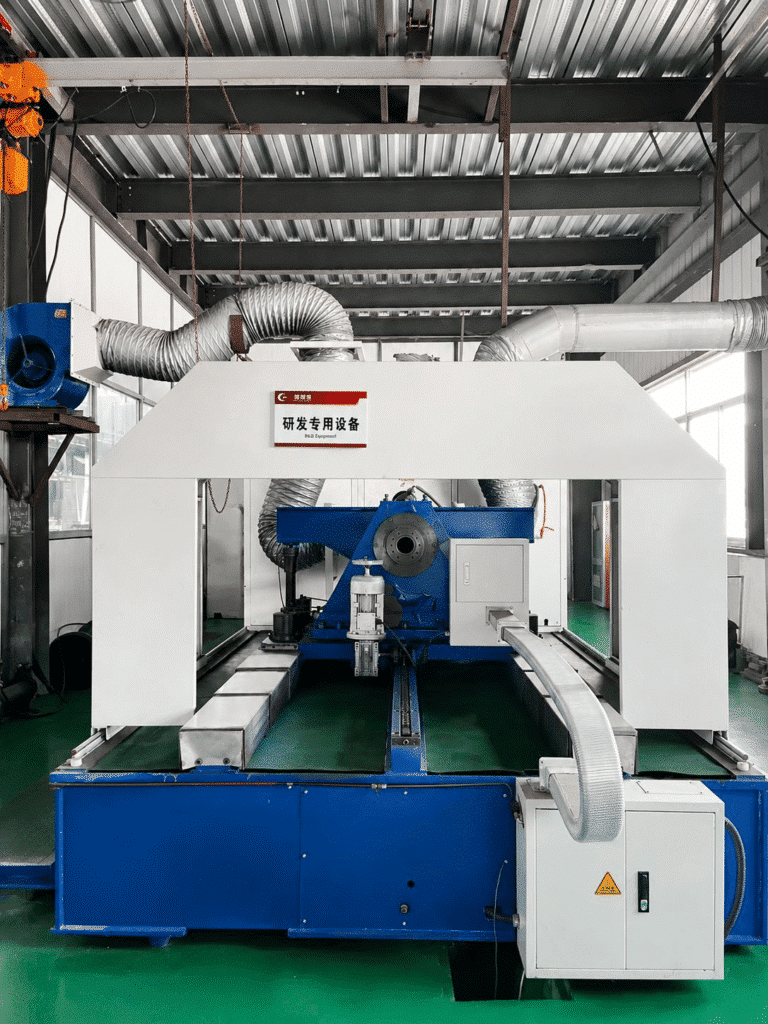
Keep in mind these are pass/fail tests. They don’t tell you anything about wear life or noise, and the results only apply to the brake size and setup that was tested. For how dyno work fits alongside shear, wear and other lab checks, see our guide to commercial vehicle brake testing.
Table 1. What to check in an FMVSS 121 dyno report for a replacement brake lining
| Report field | What to look for | Why it matters | What you need to know first |
|---|---|---|---|
| Brake size and type | e.g., 16.5 x 7 S-cam drum, or the air disc model | Results only apply to the brake that was tested | Your fleet’s brake sizes, axle by axle |
| Axle rating and RSD use | Axle rating (e.g., 20,000 or 23,000 lb), and whether the tractor is an RSD build | The axle rating sets the test load, and RSD brakes were certified as a set | Axle ratings and build year of each vehicle |
| Lining ID | Supplier part number, FMSI number, edge code, batch | Ties the report to the parts you’ll actually get | The part numbers on your PO |
| Test lab and date | Lab name, report number, test date | Lets you check the report is real and recent | Whether you’ll accept in-house data or only an independent lab |
| Retardation force (S5.4.1) | Result at each chamber pressure vs. the required value (applies to trailers and other towed vehicles) | Shows braking output in light and heavy stops | Whether the lining goes on trailer axles or on a truck or tractor |
| Power / fade (S5.4.2) | Pass or fail over the 10 stops | Shows whether braking holds up as the brake heats | Your duty cycle: long downhills, stop-and-go, highway |
| Recovery (S5.4.3) | Pass or fail over the 20 stops, plus the pressures used | Shows whether braking comes back after heating | Your climate and routes |
Ask for the full report, not just a certificate page. When you look through our range of heavy-duty truck brake linings, match every part number and brake size to a report. If a report is more than a few years old, call the lab and confirm the report number and date yourself.
4707 FMVSS 121 Brake Lining Test Reports: 20K vs 23K
Our 4707 brake lining dynamometer tests were conducted by Link Engineering, an independent testing laboratory. The reports cover both 20,000 lb and 23,000 lb GAWR test configurations for 16.5 × 7 in brake assemblies.
| Report field | 20K report | 23K report |
|---|---|---|
| Report number | 108548-1-1 | 108548-2-1 |
| Brake | Meritor drive axle, 16.5 x 7 S-cam drum | Meritor drive axle, 16.5 x 7 S-cam drum |
| Axle rating tested | 20,000 lb | 23,000 lb |
| Lining and edge code | FY329, 4707 20KFF | FY329S, 4707 23KFF |
| Retardation / Power / Recovery | Pass / Pass / Pass | Pass / Pass / Pass |
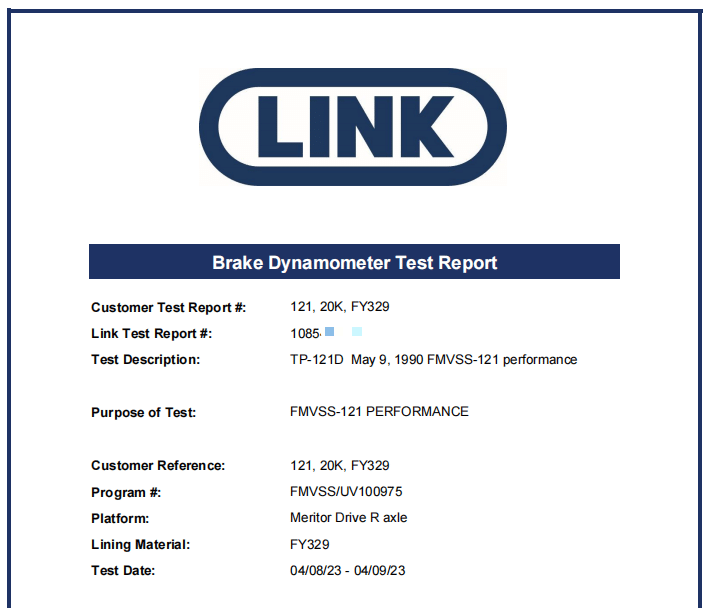
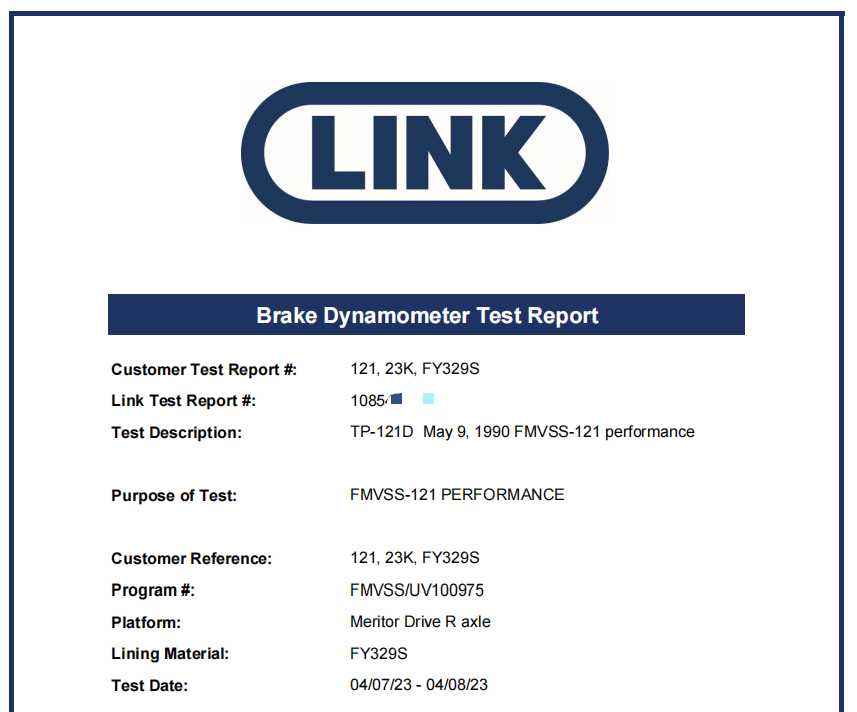
Notice that each report names the lab, brake, axle rating and lining. That’s what you should expect from any supplier. Request the full reports if you’re sourcing 4707 linings.
Should You Choose a 20K or 23K Brake Lining?
Pick a lining whose test documentation matches the gross axle weight rating (GAWR) and brake configuration of the axle it will be used on. The FMVSS 121 dynamometer test loads each brake according to the wheel load corresponding to the axle’s rated GAWR.
23K lining: tested at the wheel load corresponding to a 23,000 lb axle. Use it where the axle rating, brake configuration, and supporting test documentation match the application. A 23K test rating should not be treated as a universal severe-duty upgrade.
Here’s where that comes from. Under S6.2.1 of FMVSS 121, the dyno inertia for each wheel equals the load on that wheel with the axle loaded to its GAWR. That means a lining tested for a 20,000 lb axle went through fade and recovery at a lower energy level than one tested for a 23,000 lb axle. Using a lining supported only by a 20K test report on a 23K axle means the available report does not demonstrate performance at the 23K test load.
Here’s where that comes from. Under S6.2.1 of FMVSS 121, the dyno inertia for each wheel equals the load on that wheel with the axle loaded to its GAWR. That means a lining tested for a 20,000 lb axle went through fade and recovery at a lower energy level than one tested for a 23,000 lb axle. Put a 20K lining on a 23K axle, and it’s carrying a load it was never tested at.
You can see this in our own reports. For the 20K test, the lab set the wheel load to 10,000 lb and the dyno inertia to 829 slug·ft². For the 23K test, it was 11,500 lb and 954 slug·ft². Same brake, same drum, but a higher load to pass.
- 20K lining: tested at the wheel load corresponding to a 20,000 lb axle. Check that the brake configuration and supporting test documentation match the application.
- 23K lining: tested at the wheel load corresponding to a 23,000 lb axle. Use it where the axle rating, brake configuration, and supporting test documentation match the application. For application-specific considerations in demanding duty cycles, see our guide to refuse truck brake linings.
- Where to find the rating: the GAWR is shown on the vehicle certification label or axle identification information. Check the lining’s test documentation for the applicable test configuration.
- Don’t mix on one axle: use compatible friction material and brake components at both wheel ends according to the vehicle, axle, brake, and supplier specifications.
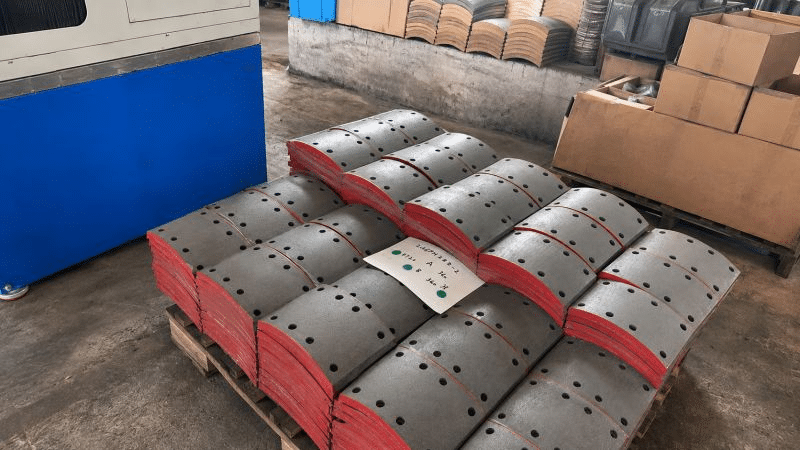
Before you order, get the supplier to confirm the axle rating for each part number in writing, and check it against the GAWR of every axle in your fleet. It’s one of the first questions in our guide on how to choose a brake lining manufacturer.
Match the Test Report to the Correct Brake Configuration
FMVSS 121 dynamometer results should always be matched to the brake configuration and FMSI reference used in the test.
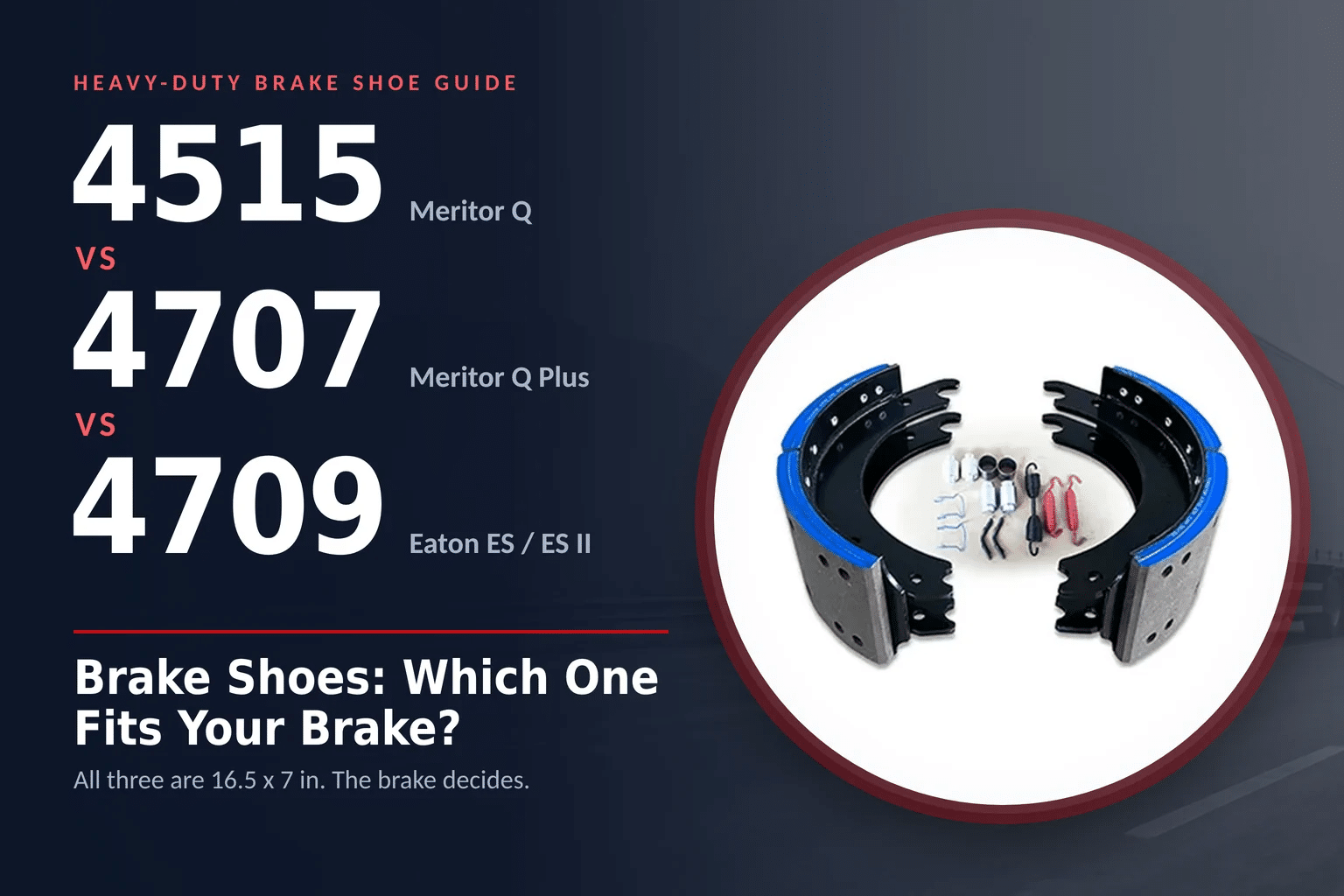
For example, 4515, 4707 and 4709 brake shoes may all be available in a 16.5 × 7 in size, but they are designed for different brake assemblies and may use different shoe designs, rivet patterns and lining profiles. A test report for one configuration should therefore not be assumed to represent another.
When reviewing a brake lining test report, buyers should confirm:
- FMSI reference or brake shoe type
- Brake size
- Brake assembly or application
- Axle rating used in the dynamometer test
- Friction material tested
The same principle applies to 20K and 23K linings. A higher test rating does not mean the brake shoe is physically larger; it indicates the friction material was evaluated under a different axle-rating test condition.
For a detailed comparison of these common brake shoe references, see our guide to 4515 vs 4707 vs 4709 brake shoes: FMSI, fitment and differences.
How Do TMC RP 628 and the PRI Listing Help Compare Linings?
TMC RP 628 gives fleets one common way to compare replacement linings on the same brake size, using FMVSS 121 dyno testing. It’s great for comparing torque and fade. It’s not a quality ranking, and it doesn’t cover wear or noise.
The TMC Recommended Practice RP 628B points out that OE linings are covered by FMVSS 121 but aftermarket replacements aren’t. RP 628 lists each lining by brake size, with torque at 20, 40 and 80 psi and a fade index from snub 1 to snub 10. It says clearly that the listing order has nothing to do with quality. It also says an aftermarket lining’s torque should roughly match the OE lining it replaces. Since 2000, when SAE handed it over, the Performance Review Institute has run the RP 628 qualification program.
How to read the numbers:
- Torque at 20 psi: light, everyday braking.
- Torque at 40 psi: medium braking.
- Torque at 80 psi: hard or panic stops.
- Fade index: how much braking force changes from the first snub to the tenth.
- Listing status: tells you the lining passed on that brake size, not that it fits every vehicle.
Ask each supplier if the lining is listed under RP 628 for your brake size, and get the torque values and fade index. Compare candidates on the same brake size. And don’t just grab the highest torque. You want something close to the OE lining.
What Can an SAE J866 Edge Code Tell You About a Lining?
An SAE J866 edge code tells you the friction class of the lining material, based on a small-sample lab test. It’s handy for making sure you don’t mix very different friction levels on one vehicle. What it can’t do is tell you how the full brake will perform on the road.
The SAE J866 recommended practice gives everyone the same way to label brake lining friction, based on SAE J661 testing. The standard itself says it doesn’t set friction requirements, and that the codes can’t reliably predict how a brake system performs. RP 628 adds that small-sample SAE J661 tests aren’t considered accurate for full-size brakes. Put simply, the edge code describes the material. The dyno test describes the brake.
Here’s how to read one:
- First letter: friction class when the brake is cold (normal temperature).
- Second letter: friction class when it’s hot.
- Letter scale: C means a friction coefficient up to 0.15, then D, E, F and G go up in steps of 0.10, and H is above 0.55, according to this industry training summary of SAE J866.
- Environmental code: the edge code can also show a copper level and year, like B18, as NSF explains.
- What it won’t show: fade on a full brake, recovery, wear life or noise.
- How to use it: keep the same or a similar code on both ends of an axle, and across axles if the vehicle maker recommends it.
For example, one of our lining materials (NGFY831ZP), tested by Link Engineering to SAE J661, measured 0.449 cold and 0.414 hot. Both fall in class F, so it’s marked FF. That tells you the friction level, not how the full brake performs.
When samples arrive, write down the edge code printed on the lining and check it against the code in the dyno report. If they don’t match, ask the supplier which material was actually tested.
Which Other U.S. Requirements Should a Lining Supplier Document?
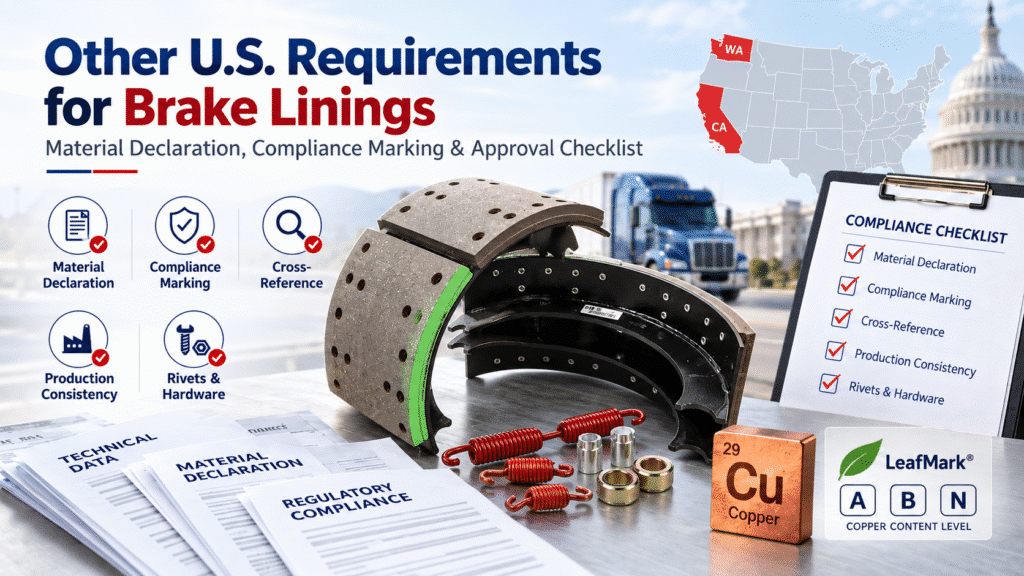
Test data is only half of your import file. Several U.S. states limit copper and other substances in brake friction material and require a compliance mark. So ask for a material declaration and a marking plan on their own, separate from the dyno data, and check they cover your vehicles.
California restricts copper and other substances in covered motor vehicle brake friction materials and requires applicable products to be certified and marked under the state’s brake friction material program. Exemptions apply to certain vehicles and model years.Washington’s Better Brakes law (Chapter 70A.340 RCW) caps copper at 0.5 percent by weight for friction material sold in the state from 2025. The industry LeafMark shows the level: A means more than 5 percent copper, B means 0.5 to 5 percent, and N means under 0.5 percent. Whether these rules cover heavy-duty air-brake linings, and which exemptions apply to your vehicles, is something to confirm with the state program or your lawyer before you ship.
What to collect from your supplier:
- Material declaration: copper content and restricted substances, signed by the manufacturer.
- Compliance marking: how the mark is applied to each lining, and where.
- Cross-reference: FMSI and OE numbers matched to the supplier’s part numbers.
- Production consistency: how often they retest the friction material after the first qualification.
- Rivets and hardware: whether linings ship loose with rivets or already riveted to shoes, and which rivet spec they use.
Put it all into one approval checklist: dyno report, axle rating, RP 628 status, edge code, material declaration and marking. Don’t place the first order until every item is in. For what to check beyond paperwork, see our truck brake lining supplier guide.
To sum it up: if you’re approving a replacement brake lining for U.S. air-brake vehicles, you need evidence, not a label. FMVSS 121 covers the vehicle, so look for a dyno report tied to your brake size and axle rating, with retardation, fade and recovery results from a named lab. Match 20K or 23K linings to each axle’s GAWR, and take extra care with RSD tractors. Use RP 628 or the PRI listing to compare torque and fade on the same brake size, but remember neither covers wear or noise. Treat the SAE J866 edge code as a friction label, not a test result. And for states that limit copper, get the material declarations and compliance marking. Keep all of it in one approval file.
FAQ
Is an FMVSS 121 certificate the same as NHTSA approval?
No. NHTSA, the National Highway Traffic Safety Administration, issues FMVSS 121 (49 CFR 571.121), but it doesn’t approve or certify vehicles or parts. Vehicle makers certify their own air-brake vehicles, and brake linings aren’t even on NHTSA’s list of regulated equipment. So a supplier’s “FMVSS 121 certificate” only sums up its own test results. Ask for the full dyno report behind it.
What size are 4707 brake shoes, and can you swap them with 4515 or 4709?
All three are 16.5 x 7 in, but they’re built for different brakes: 4515 for Meritor Q, 4707 for Meritor Q Plus and 4709 for Eaton ES. Shoe design and rivet pattern differ, so they aren’t interchangeable. Check the FMSI number, shoe type and axle rating before you order.
What do brake lining edge codes like FF mean, and are they enough?
The two letters come from SAE J866. The first letter is the friction class when the lining is cold, and the second is the class when it’s hot. F means a friction coefficient between 0.35 and 0.45, so FF means the lining stays in the same class hot and cold. But the code comes from a small-sample lab test, and SAE itself says it can’t reliably predict how a full brake performs. Use the edge code to avoid mixing friction levels on one axle, then check the dyno report or RP 628 data.
Are riveted brake linings better than bonded linings?
It depends. Riveted linings are the norm on heavy-duty air drum brakes, because you can reline the original shoe cores when the lining wears out. That’s also why many fleets buy relined or new heavy-duty drum brake shoes as complete assemblies. Bonded linings don’t have rivet holes, but you usually have to replace the whole shoe. Ask the supplier how the tested sample was made, because the dyno report only covers that construction.
Do copper-limit laws apply to heavy-duty brake linings?
It depends on the state and the vehicle. California and Washington both restrict copper in brake friction material, and both list exemptions. Compliant friction material carries a LeafMark showing its copper level: A, B or N. Check with the state program for your vehicles before you lock in a supplier.
Tuoba has made brake linings and drum brake shoes since 2006. We run dynamometers in our own test facility and we’re IATF 16949 certified. If you’re sourcing replacement brake linings, we’re happy to share our product range and talk through test documentation for your brake sizes. Contact us to request samples.
Reviewed by: Written by Robert
Test evidence: FMVSS 121 dynamometer reports for 4707 20K and 23K linings (Link Engineering, 2023)
Technical basis: FMVSS 121, TMC RP 628, SAE J866 / J661