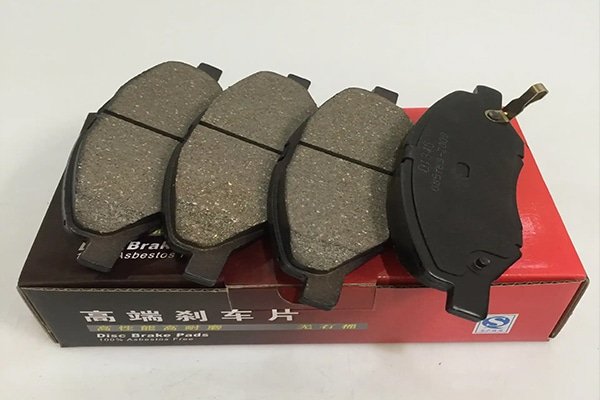
If you’ve sourced private label brake pads or OEM brake pads before, you know the pain points. Specs that look identical on paper behave very differently on the dynamometer. A custom brake pad supplier promises certifications but can’t show the test reports behind them. Lead times slip. Friction levels drift from batch to batch, so the pad your customers liked in the first shipment feels different by the third.
None of this is bad luck. It’s what weak brake pad quality control upstream looks like. Buyers who avoid it learn to judge a factory’s system, not just its sample.
This guide shows you how: which project type you’re running, the seven criteria that matter, the test standards to check, the questions to ask, what drives price, and the red flags that should make you walk away.
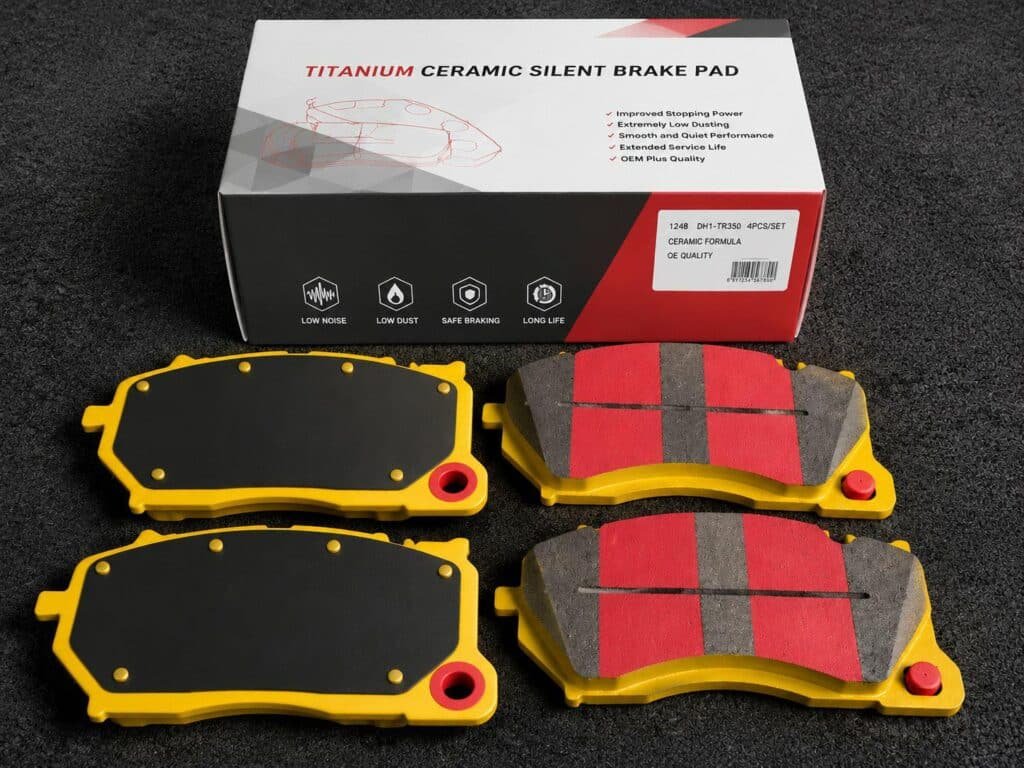
Why Choosing the Right Custom Brake Pad Factory Matters
The Growing Demand for Private Label Brake Pads in the Global Aftermarket
The market behind your sourcing decision is large and steady. According to MarketsandMarkets, the global brake friction products market was worth USD 13.32 billion in 2025 and is projected to reach USD 15.52 billion by 2032, a compound annual growth rate (CAGR) of 2.2%.
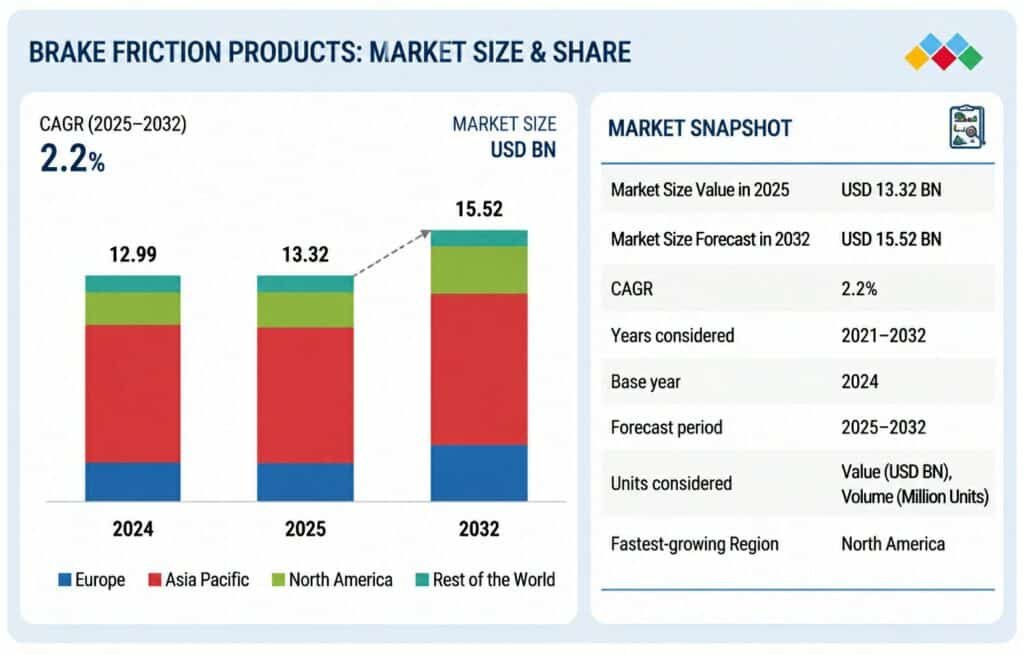
That growth doesn’t swing with short-term demand. It comes from a bigger global vehicle parc, vehicles working harder, and the simple fact that friction parts wear out. Nobody skips brake pads. Ever. Every vehicle on the road needs new pads, linings and other friction materials again and again over its life.
The same MarketsandMarkets report points to rising demand for better safety, less noise, lower dust and longer service life in both passenger car and commercial vehicle segments. Those expectations are pushing buyers away from generic aftermarket products toward engineered, application-specific friction solutions.
That’s where private label brake pads come in. More distributors, importers and aftermarket brands now treat them as a core growth strategy. Instead of fighting on price in a commodity market, they’re putting money into brand ownership, product differentiation and supplier-controlled quality.
Private label programs let distributors build brand equity while keeping control of price, packaging and positioning. And factories that can deliver OEM-level consistency, proper testing and flexible formulations are becoming the long-term partners of choice.
You see this most in commercial vehicle fleets and other high-use markets, where total cost of ownership (TCO), brake stability and pad life directly affect running costs. Suppliers with scalable production and certified quality systems (ECE R90 and FMVSS compliance, for example) are gaining ground.
How a Reliable Brake Pad Manufacturer Impacts Brand Reputation
In the automotive aftermarket, brand reputation isn’t built by marketing. It’s built over millions of real stops. Each one tests your product strategy and, in the end, how reliable your brake pad manufacturer is.
From a product management view, a reliable brake pad manufacturer is more than a production partner. It’s an extension of your own quality system. It decides if your brand keeps the same friction, NVH behavior and wear across batches, production runs and regions. Put simply, the custom brake pad supplier you pick decides how much control you have over your product’s life cycle.
For distributors and private label owners, the biggest edge isn’t how one sample performs. It’s consistency across the whole system. The best brake pad manufacturer keeps formulas stable, raw materials traceable and processes repeatable, even when production spreads across several product lines and vehicle platforms. Without that, even a well-positioned brand will see unpredictable results in the field.
The Hidden Costs of Choosing the Wrong Supplier
The real cost of the wrong supplier rarely shows on the first invoice. It shows up later, in ways that are harder to measure:
- Brake pad warranty claims: returns and replacements that eat margin and staff time.
- Brake pad quality issues: noise, dust, early wear or uneven friction that lead to complaints.
- Brake pad consistency problems: when batch three doesn’t match batch one, customers stop trusting the product, even if average quality is fine.
A useful rule of thumb: every dollar saved on a suspiciously cheap pad can cost several dollars later, once you add up returns, damage to your name and lost repeat business. It adds up fast.
Why Long-Term Partnerships Matter in the Aftermarket
Strong aftermarket brands aren’t built on one lucky order. They’re built on a long relationship with a brake pad factory that grows with them. That gives you predictable lead times, formulas proven over many production runs, and an engineer who already knows your program, your vehicles and the complaints you heard last season, so you don’t start from zero every time you add a new reference.
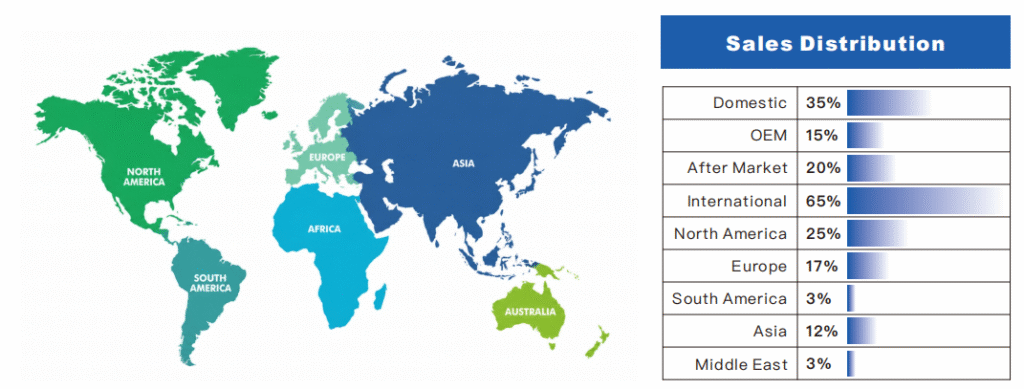
Manufacturers with deep roots in the category tend to work this way. Tuoba, for example, has worked with more than 110 OEM and aftermarket brands in over 50 countries since 2006. That kind of continuity only happens when a supplier treats each program as a multi-year partnership, not a one-off sale. For OEM brake pads especially, that stability is what secures your supply.
Understanding the Different Types of Custom Brake Pad Projects
Before you judge a factory, be clear about the kind of project you’re running. The right partner for one model can be the wrong one for another. Here’s a quick look at the four common types.
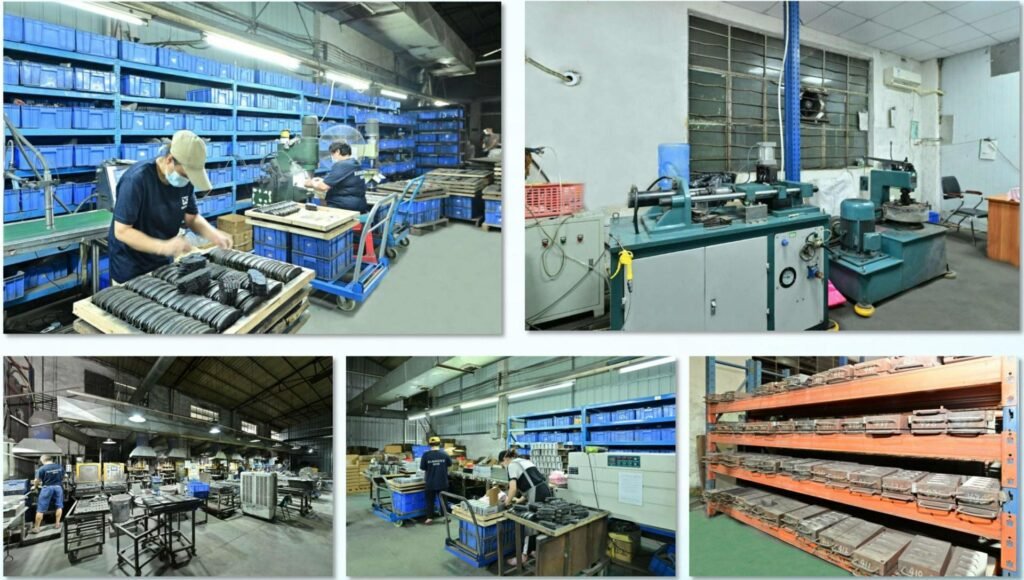
Private Label Brake Pads for Distributors and Importers
Private label brake pads are the easiest and most scalable way into the global aftermarket. Distributors and importers don’t develop friction technology from scratch. They take a validated brake pad formulation that has already passed engineering and field checks and sell it under their own brand. Still deciding between OEM supply and your own label? Our OEM vs private label brake pads guide covers that choice.
What you need here goes beyond production: a capable brake pad manufacturer should also help you get to market, with a clear part-number system, application catalogs and packaging that fits your regional branding. That’s what turns a private label brake pad program from generic supply into a range you own.
OEM and OE Replacement Programs
OEM and OE replacement brake pad programs set a higher bar. The goal isn’t just a pad that works. It’s a pad that matches the original equipment performance the vehicle maker defined: fitment, braking behavior under heat and repeated stops, pedal feel, noise and service life.
So a qualified OEM brake pad supplier needs a controlled development process. Every formulation must be traceable, every batch validated, and every application tuned to its vehicle platform. In this segment, the best brake pad manufacturer isn’t the one with the most options. It’s the one that can reproduce OE-level braking behavior again and again without drift.
Custom Made Brake Pads for Specific Market Requirements
Standard catalog products cover the most common vehicles, but they rarely fit every regional operating environment. That’s why custom made brake pads matter in markets where climate, regulation, driving habits and fleet usage shape what a pad has to do.
Typical cases are easy to spot. Cities with high expectations for clean wheels want low-dust ceramic formulas with good NVH comfort. Mountain regions and heavy-load corridors need high-temperature semi-metallic compounds that hold friction through long, hot braking. Markets with tighter environmental rules are moving to copper-reduced or copper-free formulas. Our custom commercial vehicle brake pads guide shows how fleet operating conditions change pad design.
So a custom brake pad supplier has to work like an engineering team, not a catalog assembler. It needs to turn market limits into controlled formula changes in composition, thermal stability, wear rate and noise.
A true custom brake pad manufacturer doesn’t just offer a custom option on paper. It follows a real development path: application data, material choices, prototype validation and field checks. That way each custom brake pad replacement fits dimensionally and also behaves right in its target market.
Customization isn’t cosmetic. Designing pads around real market conditions, instead of forcing markets to accept standard products, is what separates a true manufacturer from a re-boxing or trading operation.
Wholesale Brake Pads vs. Custom Brake Pads
Wholesale brake pads and custom brake pads play different roles in an aftermarket business.
Wholesale brake pads are ready-made products bought in bulk. They’re built for broad vehicle coverage and standard performance, so you get fast market entry, lower unit cost and simple inventory. The catch: competitors in your region can often buy the same spec, which pulls you into price fights and leaves little room for your brand.
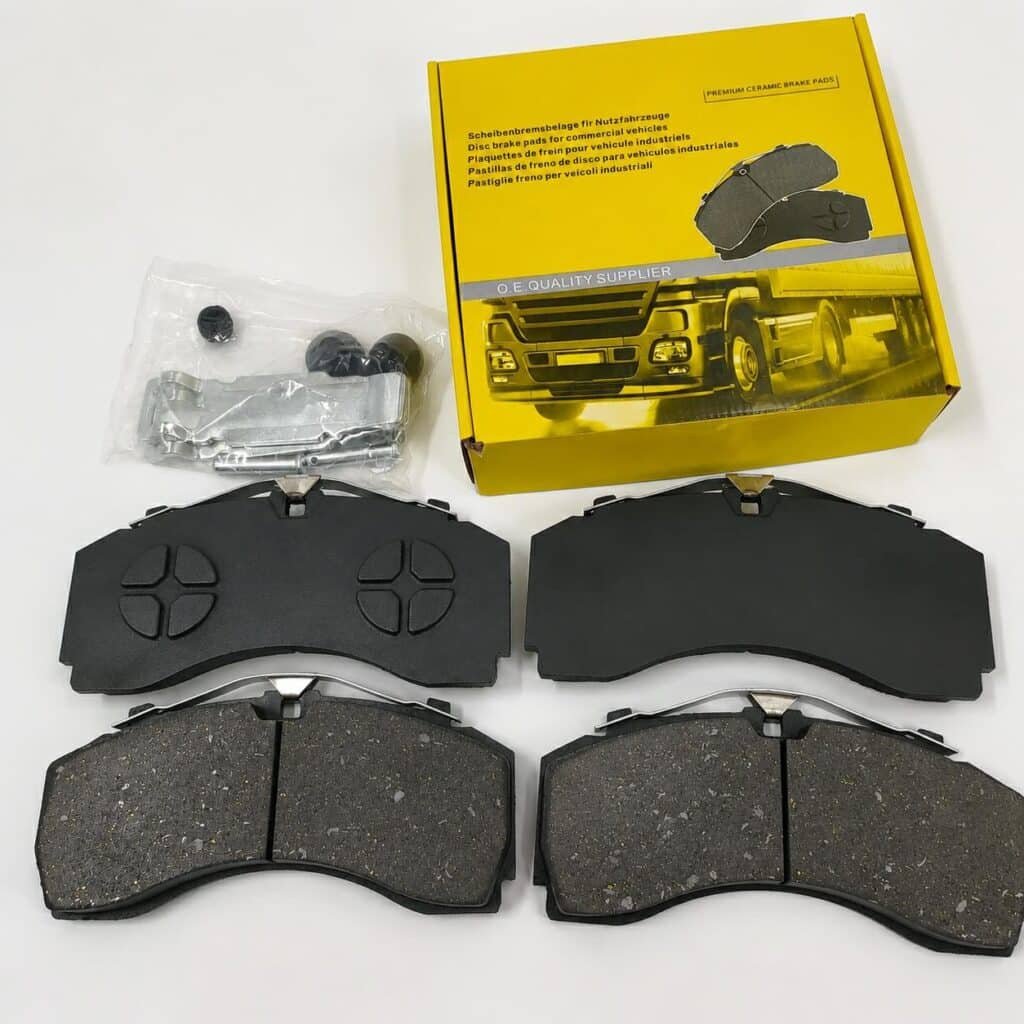
Custom brake pads are developed or adjusted for specific technical, regulatory or market needs: friction formula, NVH tuning, heat resistance, wear, even packaging for a dedicated private label program. Beyond performance, the big win is exclusivity. Your product can’t be swapped one-for-one with a competitor’s.
Most successful aftermarket brands use both. A wholesale brake pad range covers the high-volume applications quickly and cheaply. Custom brake pad development goes into high-value segments, key vehicle platforms or markets with special rules.
That mix only works if the brake pad factory can handle both: steady batch-to-batch mass production for the wholesale range, and controlled formula development and validation for custom projects, all inside one quality system.
7 Key Criteria for Evaluating a Custom Brake Pad Factory
This is the core of supplier evaluation. When you assess custom brake pads and the factories behind them, these seven criteria separate a real manufacturing partner from a reseller with a nice catalog.
1. Formula Development Capability
The clearest sign of a real manufacturer is in-house friction formula development. Formulation is a discipline. It balances dozens of raw materials to hit targets for friction level, fade resistance, wear life, noise and rotor compatibility, and those targets pull against each other. A custom brake pad manufacturer that can formulate can tune a product to your application. One that can’t will only sell you what already exists.
Depth in formulation capability is one of the most reliable signs of a true brake pad manufacturer. It’s also one of the hardest advantages to copy. Friction development isn’t about one variable. Friction stability, fade, wear rate, noise and rotor compatibility all have to be balanced at once, across different operating conditions.
So a capable custom brake pad manufacturer doesn’t just pick materials from a list. It keeps making trade-offs at the formula level to suit specific vehicles, loads and temperatures. Without that, customization just means reshaping an existing product.
You can measure formulation depth by looking at a factory’s own material library. Tuoba, for example, has developed 32 independent brake pad formulations, each built for a different mix of vehicle class, load, climate and heat stress. Over time a library like that becomes a body of technical knowledge, not just a product list. It reflects years of materials work, validation and field feedback.
So for B2B buyers of custom brake pads, the question isn’t only how many products a factory sells. Ask how many distinct engineering problems its formulas solve, and how carefully those formulas are checked in real use.
2. Testing and Validation Capability
A formula is only a guess until it’s tested. Brake pad validation testing, especially on a dynamometer, is where a factory proves its product works as claimed across temperature, speed and load. Brake pad performance testing to a recognized standard like SAE J2522 gives you the effectiveness, fade and recovery data serious buyers ask for.
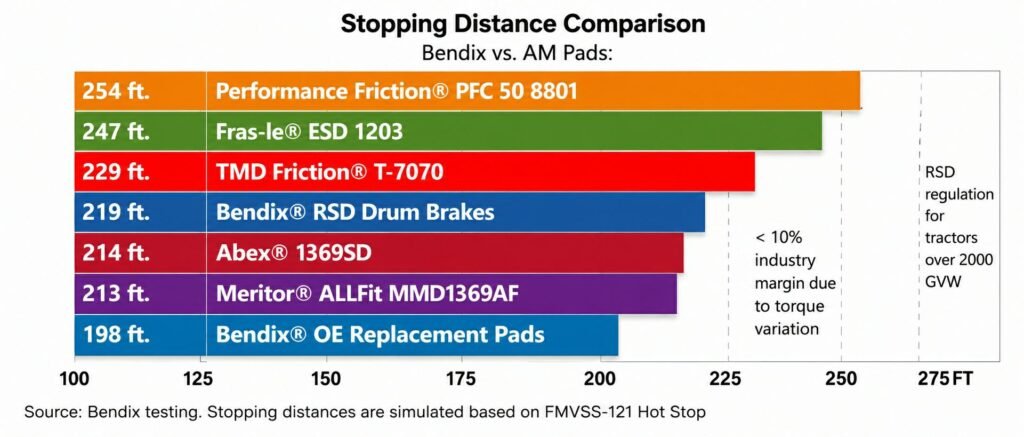
Look for a factory that benchmarks its products on the dyno against known reference brands. Tuoba, for example, benchmarks its formulations against Bendix, Fras-le, TMD Friction and Meritor, and validates to SAE J2522, SAE J2521 (noise) and SAE J866 (material classification). Comparative, standards-based testing like that lets you trust a performance claim instead of hoping it’s true.
3. Certification and Regulatory Compliance
Certifications are a shortcut to checking that a factory’s systems and products meet recognized benchmarks. Which ones matter depends on your market:
- FMVSS 135 brake pads: the U.S. standard for light-vehicle service brake performance.
- ECE R90 brake pads: the European rule for replacement friction material. Performance has to stay within a set tolerance of the original equipment.
- IATF 16949: the automotive quality management standard, and a sign of real OE-grade process discipline.
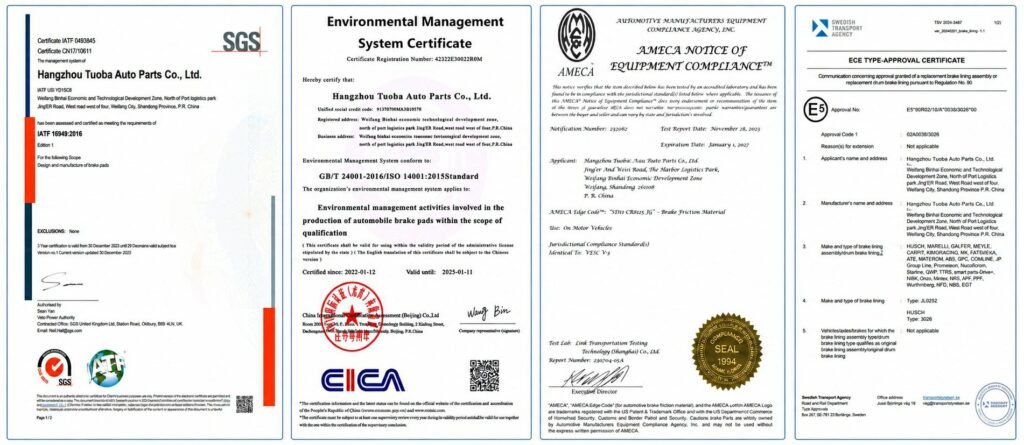
An ISO certified brake pad manufacturer with the right market approvals saves you a lot of due-diligence work. Tuoba’s products, for example, carry IATF 16949, ISO 9001, ECE R90, FMVSS 135, E-mark, INMETRO and AMECA, covering both European and North American requirements. Always ask to see the actual certificates with current validity dates. Don’t accept a verbal claim.
4. Supply Chain Stability and Production Capacity
A great formula is worthless if the factory can’t deliver it reliably at volume. Brake pad manufacturing capacity and supply chain stability decide whether a program survives demand spikes or raw material shortages. It comes down to two things: how much the factory can make, and how secure its materials are.
In B2B brake pad sourcing, capacity is a system-level measure, not just an output number. It shows whether a manufacturer can keep supply steady through demand swings, multiple markets and long-running private label programs.
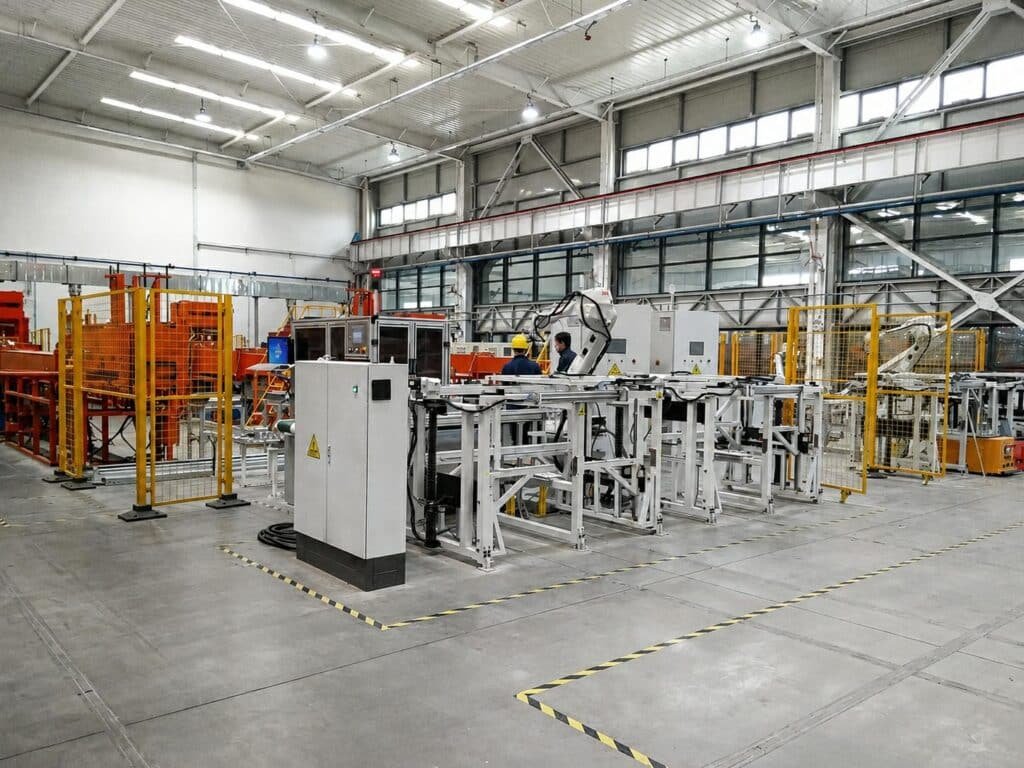
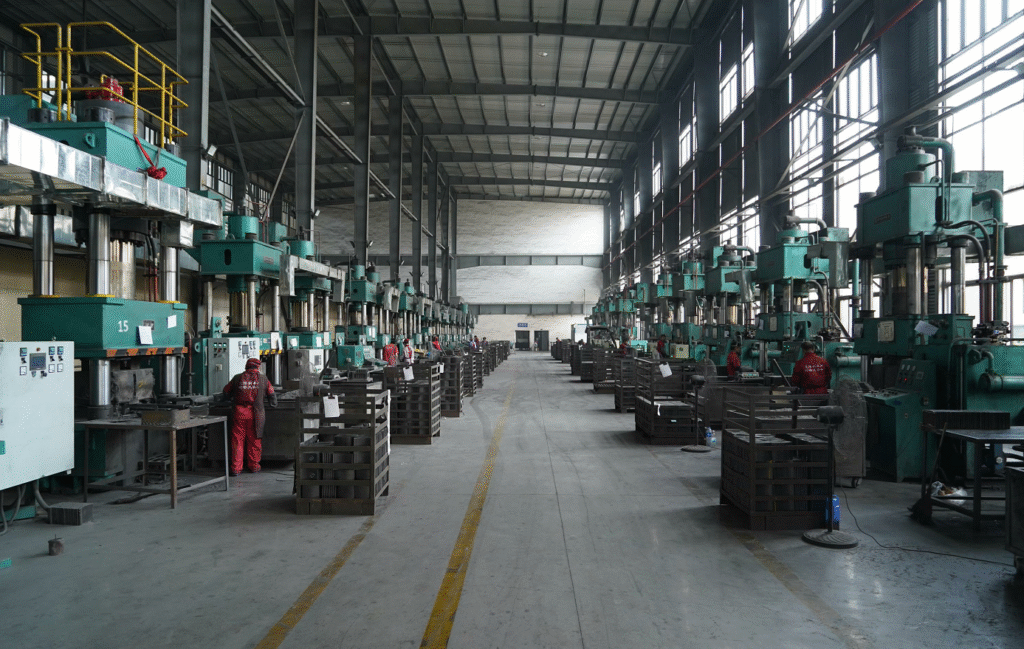
Tuoba, for example, produces over 3.6 million sets of brake pads and 600,000 brake shoe assemblies a year across two production bases: commercial vehicle parts in Ningguo, Anhui, and passenger car pads in Ruian, Zhejiang. Our main facility covers 43,000 m². With each base focused on one product line, we can plan capacity by line and keep delivery steady across regions and order cycles.
Materials matter too. A reliable brake pad supplier needs steady sourcing from established friction material suppliers, so formulas behave the same from batch to batch.
At that scale, a manufacturer can absorb demand swings, raw material price moves and logistics problems that often trip up smaller producers.
So for B2B buyers, treat capacity as a risk check that covers scale, the number of production bases and material supply. All three decide how long your program keeps running. And how reliable your brand looks.
5. MOQ Flexibility and Scalability
Your needs change as your program grows, and the right custom brake pad vendor grows with you. At the start you may want a modest minimum order quantity to test a range without tying up cash. Later you’ll need the factory to scale to full containers without missing a beat.
Good partners offer MOQ flexibility early and proven scale later. Buying wholesale brake pads for breadth, or OEM brake pads for a specific platform? Check both ends: the smallest order the factory will take today, and the largest it can reliably ship as you grow.
6. Packaging and Private Label Support
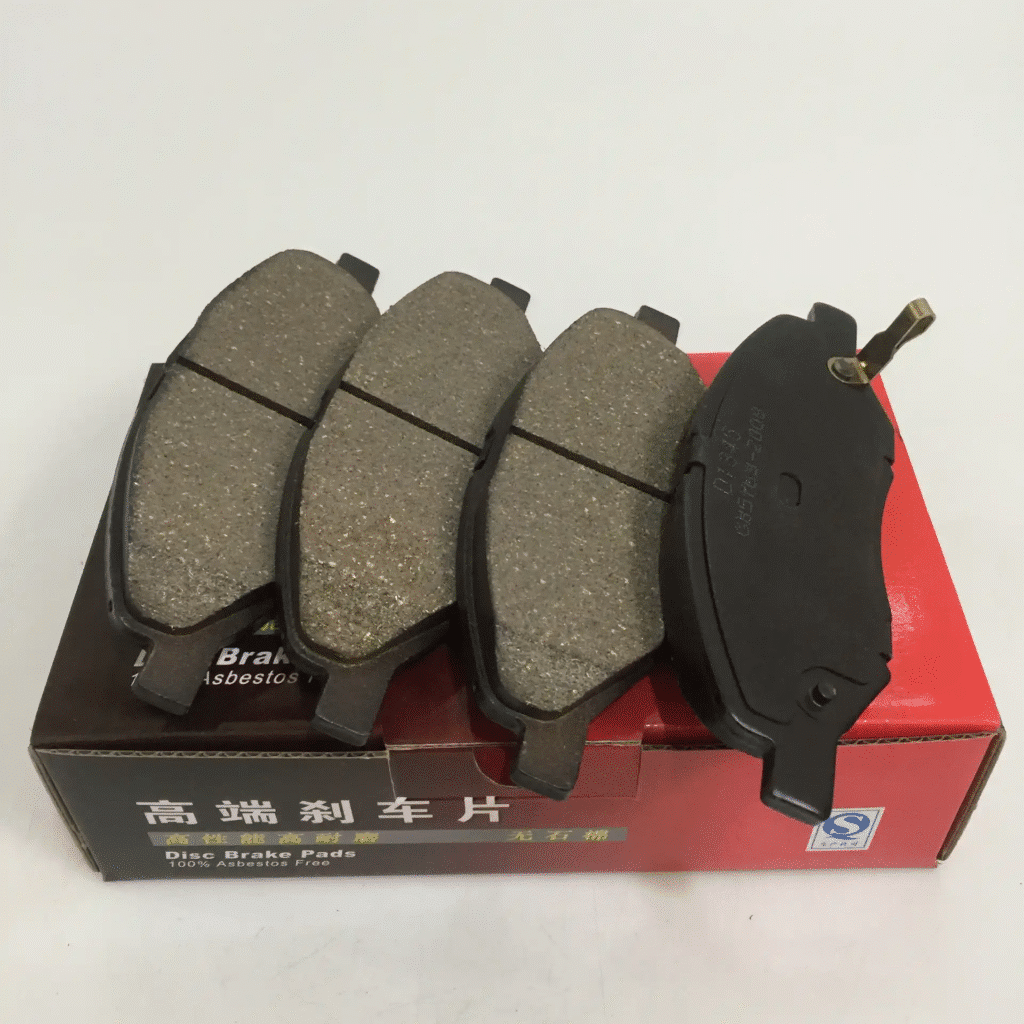
For private label brake pads, packaging is part of the product. A factory that supports custom packaging and brake pad labeling helps you build a consistent, professional brand on the shelf: your design, your logo, your part numbers, your barcodes. How good this support is often shows how seriously the factory takes private label customers. Ask if it can handle full custom artwork, multi-language labels for export, and barcodes that fit your inventory system.
7. Export Experience and Project Management
Then there’s shipping. The best product in the world is no use if it can’t clear customs or arrive on time. Custom brake pad manufacturers with real export experience know brake pad export requirements: documents, market approvals, packaging rules and how international shipping actually runs. Project management matters just as much. You want one capable contact who moves the program from sample to mass production.
A brake pad supplier that exports to over 50 countries, as Tuoba does, has solved these problems many times. That experience is what keeps your first order, and every order after it, from turning into a shipping emergency.
Essential Testing Standards Every Buyer Should Verify
You don’t need to be a friction engineer to source brake pads well. But you do need to know which standards separate tested products from unproven ones. Here are the ones to check, starting with the U.S. rule most buyers ask about first and ending with the performance tests that decide whether drivers complain.
FMVSS 135 Performance Testing
FMVSS 135 is the U.S. Federal Motor Vehicle Safety Standard for light-vehicle service brake performance. It sets stopping-distance and performance requirements under a range of conditions. When a factory talks about FMVSS 135 brake pads, it means its products are designed and tested to the benchmark the U.S. market expects. If North America is a target market, brake pad performance testing to this standard is a must.
ECE R90 Compliance Requirements
ECE R90 is the European regulation written specifically for replacement brake friction material. Its core rule is simple but tough: a replacement pad must perform within a set tolerance, typically ±15%, of the original part’s cold and hot performance. That protects drivers from parts that behave unpredictably. If you sell in Europe, ECE R90 brake pads aren’t optional. They’re a legal requirement for market entry.
GB 5763 Quality Standards
GB 5763 is China’s national standard for automotive brake linings and pads. It covers friction coefficient, wear and mechanical strength. Even if you don’t sell in China, a brake pad manufacturer that meets GB 5763 shows basic material discipline. It’s one more piece of the picture.
NVH, Wear, Fade, and Shear Testing
Beyond the regulations, four kinds of performance decide if your customers are happy:
- NVH (Noise, Vibration, Harshness): tested under standards like SAE J2521, this tells you if a pad squeals or stays quiet. NVH brake pads validated for quiet running get far fewer complaints.
- Wear : brake pad wear testing measures how long a pad lasts, which drives how much customers value it.
- Fade: how well the pad keeps its stopping power when hot. Critical for loaded vehicles and tough routes.
- Shear: the brake pad shear test checks the bond between friction material and backing plate. Basic, but a must for safety.
Ask which of the four a factory runs as standard. A factory that runs all of them on every formula, not just when a customer asks, takes performance seriously.
Questions Every Buyer Should Ask Before Placing an Order
Often the best due diligence is a good list of questions. How a factory answers tells you as much as the answers themselves.
Questions About Formulation and Performance
Ask about custom brake pads and the engineering behind them. What’s the brake pad friction level (the SAE J866 code) of the formula you’re quoting? Was it designed for this vehicle class? Can you adjust it for my market’s dust sensitivity, climate and load? A factory that answers easily has real formulation depth.
Questions About Quality Control and Testing Reports
Ask for evidence. Not promises. What brake pad quality control checks run on every batch? Can you share brake pad testing reports for the exact formula I’m buying? Can you trace a finished pad back to its raw material lot? A supplier willing to share documents is one you can trust.
Questions About Lead Time and MOQ
Ask about the practical side. What’s the brake pad lead time for samples, and for mass production? What’s the MOQ for private label brake pads, and how does price change at higher volumes? Clear, specific answers protect you from the slipping schedules that sink so many programs.
Questions About Packaging and Branding Support
Ask how far private label support goes. Can you make private label brake pads with my full custom packaging and artwork? Can you do multi-language labels and barcodes for my export markets? The answer shows whether private label is a core service or an afterthought.
How We Answer These Questions at Tuoba
Here’s how we answer the practical ones. Use it as a yardstick when you compare other quotes:
- Samples: ready in 3–7 days and shipped by UPS.
- Lead time: 15–60 days for mass production, depending on formula, quantity and packaging.
- Payment: T/T only, 50% deposit before production and the other 50% before shipment.
- Test reports: available for the formula you’re actually buying.
- Warranty: usually 3–6 months or 5,000–10,000 km.
If a supplier can’t be this specific, keep asking until they are.
Understanding Private Label Brake Pads Cost and Pricing Factors
To negotiate well, you need to know what’s actually inside the price you’re quoted.
What Determines Private Label Brake Pads Price
Private label brake pads price is built in layers: the friction formula and its raw materials, the backing plate and hardware, testing and certification costs, packaging, and the factory’s margin. A higher private pads price isn’t automatically a worse deal. It often means better materials, more thorough testing or certifications a cheaper quote quietly leaves out. The skill is working out why one quote is higher.
How Order Volume Affects Unit Cost
Volume is the easy one. As order quantities grow, fixed costs like tooling, setup and testing spread over more units, and the unit price of your wholesale brake pads drops. Knowing where the custom brake pad cost steps down helps you plan order sizes for the best value, instead of always ordering the minimum and paying the highest unit price on every single reorder for the life of the program.
The Impact of Materials, Certifications, and Packaging
Three things move private label brake pads cost more than anything else. Materials first: a real low-copper ceramic formula costs more than a basic organic compound, and you can see the difference in the product. Certifications second: ECE R90 brake pads and other approvals carry real testing costs. Packaging third: full custom packaging adds cost but builds brand value. When you compare quotes, make sure they cover the same material grade, certifications and packaging. If they don’t, you’re not really comparing prices.
Why the Lowest Price May Not Deliver the Best Value
The lowest quote often turns out to be the most expensive. A pad that saves a few cents a set but brings returns, complaints and lost repeat business costs far more than a properly validated one. The best brake pad manufacturer for your program is the one with the lowest brake pad total cost of ownership, not the lowest sticker price. Keeping that in mind is the most useful habit in brake pad sourcing.
Red Flags When Evaluating a Brake Pad Factory
Knowing what to avoid matters as much as knowing what to look for. These warning signs should make any buying team stop and check.
Suppliers That Compete Only on Price
A brake pad supplier whose only pitch is being cheaper than everyone else is telling you something. Low-cost brake pads made by cutting corners on materials and testing push the risk straight onto your brand. When price is the whole pitch, ask what’s been taken out to hit it. Something always is.
Lack of Testing Reports or Certifications
If a factory can’t quickly show brake pad testing reports or current certificates, treat that as a red flag, not a hassle. A genuine ISO certified brake pad manufacturer keeps these documents ready and shares them gladly. Reluctance usually means they don’t exist. Walk away.
No Engineering or Technical Support
Talk to the engineers. A real custom brake pad manufacturer has them. If nobody at the factory can discuss formulation, testing or brake pad engineering support in any depth, you’re probably dealing with a trader or a basic press shop. That’s not a partner who can fix problems when a program hits trouble.
Unclear Production Capacity and Lead Times
Vague answers on brake pad manufacturing capacity and brake pad lead time are a reliable sign of delivery problems ahead. A well-run factory knows its numbers and says them plainly. Dodging now usually means missed shipments later.
Limited Export Experience
For international buyers, thin export experience is a serious risk. A supplier that doesn’t know brake pad export requirements (documents, approvals, logistics) can turn a routine shipment into a costly delay. Choose a brake pad supplier with a proven record of shipping to your region.
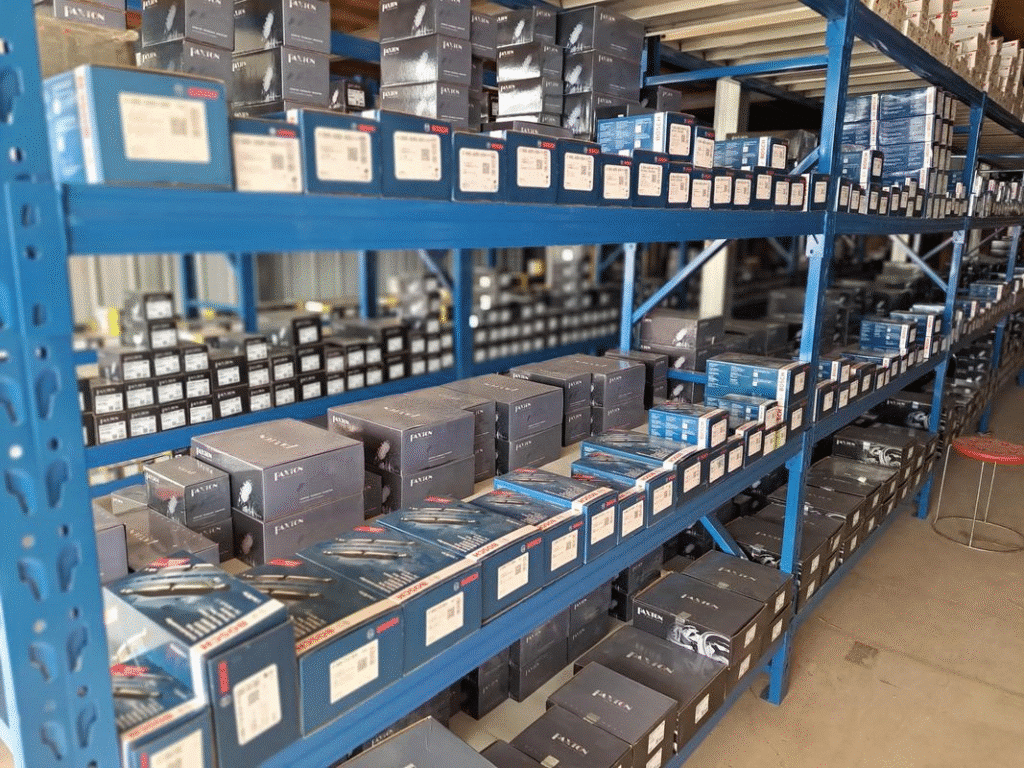
Custom Brake Pad Factory vs. Trading Company: Which Is the Better Choice?
One of the biggest sourcing decisions is whether to buy from the factory directly or through a middleman. Both have their place, and the right one depends on how many product lines you buy, how much time you can spend managing suppliers overseas, and how close you need to be to the people making your pads.
Advantages of Working Directly with a Factory
Going straight to a custom brake pad factory gives you what a middleman can’t: direct access to engineers, a clear view of the actual manufacturing process, better pricing with no extra margin, and a direct line for quality and traceability questions. When you deal with the brake pad manufacturer itself, accountability has nowhere to hide. For any program where performance and consistency matter, which is all of them, that’s a real advantage.
When a Trading Company May Be a Better Option
That said, a trading company isn’t always wrong. If you need to combine many small lines from several factories, or you don’t have time to manage overseas suppliers yourself, a good trading partner can make life easier. The trade-off is margin, transparency, and an extra layer between you and the people who actually make your wholesale brake pads.
How to Identify a Genuine Brake Pad Factory
The real risk is paying factory-direct prices to a trading company in disguise. A genuine factory can show you its production lines, state its certifications and capacity without hesitating, share its own test reports, and ideally welcome a brake pad factory audit or video tour. A real brake pads factory has a physical address, a quality system and engineers you can reach. Checking these before you commit is the easiest way to avoid the most common sourcing mistake. Planning a trip? Our China brake pad factory guide explains how to prepare for a factory visit.
Supplier Evaluation Checklist for Procurement Managers
Here’s a working checklist you can take into any supplier evaluation.
Technical Capability Checklist
- Does the factory develop its own custom brake pads, or only resell existing products?
- How many proprietary friction formulations does it own, and for which applications?
- What brake pad testing does it run as standard: dynamometer (SAE J2522), noise (SAE J2521), material classification (SAE J866)?
- Does it benchmark against recognized reference brands?
- Can it adjust formulas for your specific market conditions?
Quality and Compliance Checklist
- Is it an ISO certified brake pad manufacturer, and does it hold IATF 16949?
- Does it carry the market approvals you need, such as ECE R90, FMVSS 135, E-mark and AMECA?
- Can it produce current certificates and batch-level brake pad testing reports on request?
- What does its brake pad quality assurance and traceability system actually look like in practice?
Commercial and Supply Chain Checklist
- What is the brake pad supplier’s monthly and annual capacity?
- How stable is its raw material sourcing, and how is brake pad manufacturing capacity protected against disruption?
- What are the MOQ, pricing breakpoints and lead times, stated plainly?
- What is its export track record in your region, and who is your single point of contact?
A supplier that answers these confidently, with evidence, is worth building a relationship with.
Conclusion: How to Reduce Sourcing Risks and Choose the Best Brake Pad Manufacturer
Sourcing brake pads well isn’t about finding the cheapest box. It’s about finding a partner whose system you can trust to protect your brand, shipment after shipment, year after year.
Focus on Total Cost of Ownership, Not Just Unit Price
The biggest shift is moving from unit price to brake pad total cost of ownership. A properly validated, well-documented pad that costs a little more per set almost always costs far less once you count returns, claims and damage to your name. Judge private label brake pads cost by the value it brings over the life of a program, not the first number on a quote.
Build Long-Term Partnerships with Reliable Suppliers
The brands that win in the aftermarket build long-term partnerships with a reliable custom brake pad supplier instead of chasing the cheapest quote each season. A steady relationship with a capable brake pad manufacturer gives you proven formulas, predictable supply and an engineering partner who knows your business. Those advantages build over time and can’t be bought in one order.
Key Takeaways for Importers, Distributors, and Brand Owners
If you remember nothing else, remember these:
- Choose a genuine custom brake pad factory over a reseller. Direct access to engineering, testing and traceability is the foundation of a safe program.
- Ask for evidence: certifications, batch-level test reports and stated capacity, not verbal promises.
- Match the supplier to the project. Private label brake pads, OEM brake pads and custom development each need different strengths.
- Judge value by total cost of ownership, and let that lead you to the best brake pad manufacturer for your brand, not just the cheapest one.
Brake pads are a promise your brand makes to every driver who buys them. Pick the factory that helps you keep it.
Tuoba has made commercial-vehicle and passenger-vehicle braking solutions since 2006 and supplies more than 110 OEM and aftermarket brands in over 50 countries. To talk about a private label or OEM brake pad program, contact our engineering team.